The Four Places Fleas Can Survive in a Huntsville Yard
Posted by Mosquito Squad Plus
August 28, 2026
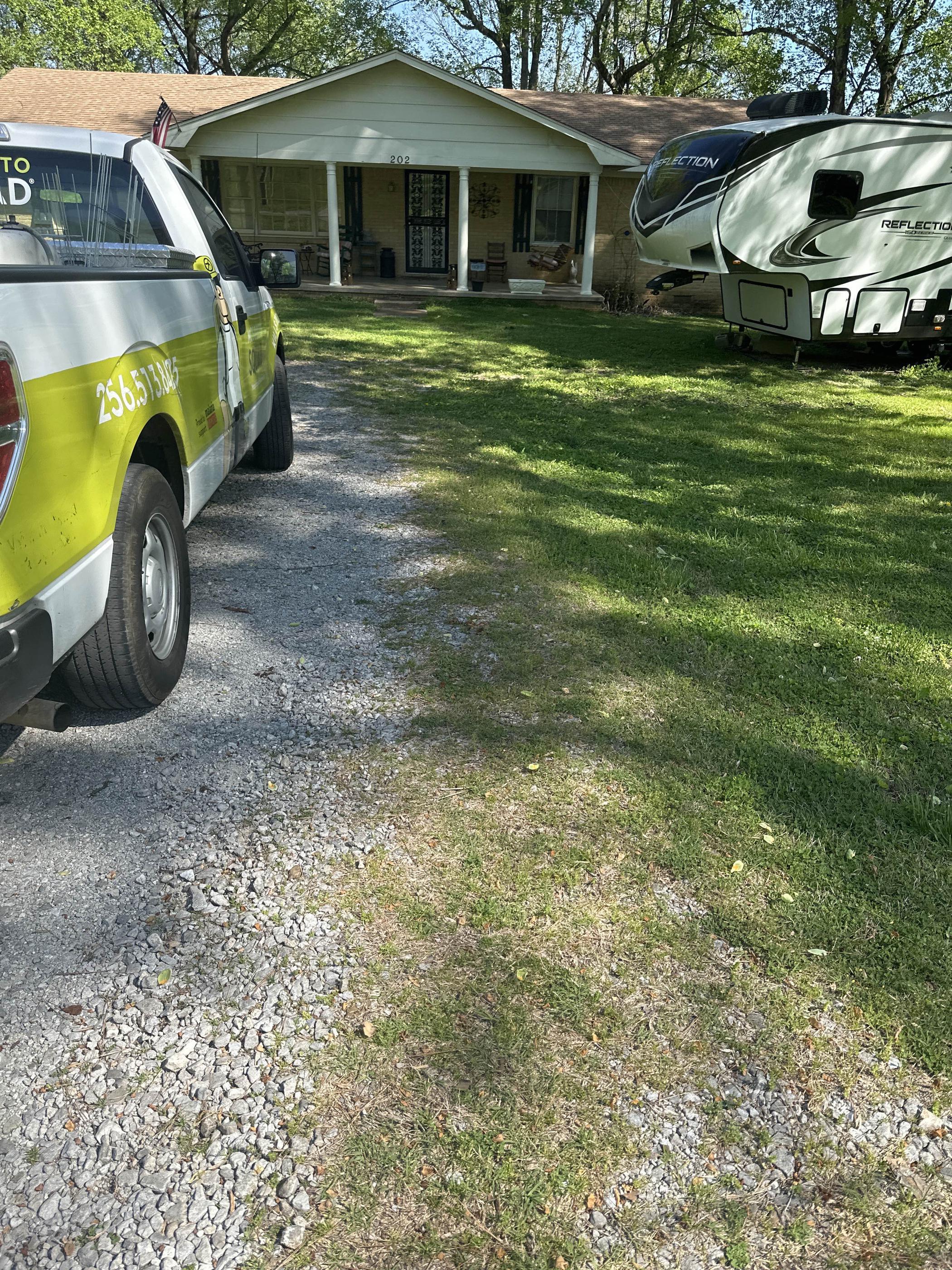
Most of a Huntsville yard is already lethal to fleas, and the homeowner standing in the middle of it has no idea. Open turf in July gets hot enough at the soil surface and dry enough at ground level to finish off a flea before it ever grows up. What produces fleas is a narrow set of shaded, protected ground that stays damp when the rest of the lot dries out, and on most properties in Madison County you can count those spots on one hand.
That changes what a treatment should look like. Broadcasting product across a sunny back lawn spends money on ground that was never going to produce a flea. The ground that does produce them is small, and on most lots it sits within twenty feet of a door.
Open Lawn Kills Fleas Before They Grow Up
Adult fleas ride the animal. Everything else happens on your ground, and your ground is where the population gets built or broken.
A female cat flea starts laying within two days of her first blood meal and averages 27 eggs a day after that, according to Texas A&M AgriLife Extension. Those eggs aren't sticky. They fall off wherever the animal happens to be. Your egg map is a map of where your dog naps and where the wildlife walks.
What happens next depends entirely on the microclimate those eggs land in. Flea larvae avoid light, burrow down under organic debris, and feed on dried blood passed by the adults above them. They develop in five to eleven days when conditions hold. Texas A&M puts the failure conditions plainly: relative humidity under 50 percent kills flea larvae, and so does soil temperature above 95 degrees. Their summary of where you should look runs one sentence. Moist, shaded spots near pet resting areas. That threshold is why your August mosquito problem and your August flea problem live in completely different parts of the yard.
The UF/IFAS Extension flea publication documents the same species profile across the Gulf South, where the cat flea drives essentially all residential flea work. And the Georgia Pest Management Handbook from UGA Extension, written by veterinary entomologist Nancy Hinkle for this exact climate, states it as an operating rule: fleas cannot survive in sunlit areas, so outdoor effort belongs on shaded ground with high humidity and minimal air movement.
Minimal air movement is the part you will skip if nobody tells you. Shade by itself won't do it when a breeze moves through and dries the surface. The spots that work for a flea are shaded, damp, and still all at once.
Hinkle names four of them: the ground around foundations, the space under porches and decks, crawl spaces, and outbuildings where wildlife or feral animals have moved in.
The Shaded Strip Against Your Foundation
Your north and east foundation beds spend most of the day in the shadow of the house. Add landscape fabric, three inches of mulch, and a row of shrubs planted close enough to touch the siding, and you've built a place where the surface stays damp past noon in a Huntsville August while the lawn ten feet away has already cooked off.
Irrigation makes it more reliable, not less. A zone that runs on a schedule keeps that strip in the humidity band flea larvae need through the driest stretch of the summer. So does a downspout that discharges into a bed instead of out onto turf, and a gutter that overflows into the same corner every storm.
This is also the strip your dog uses. Dogs lie against the house in shade for the same reason the larvae survive there. Egg supply and nursery end up in the same square footage. That's the single most productive flea habitat on a typical lot, and it's usually eight feet wide.
Established neighborhoods amplify it. Tree canopy over homes in Jones Valley and Five Points leaves foundation beds that never see direct sun, and we've written before about what historic housing changes in that part of town.
If your house is newer, out in Harvest or toward Meridianville, you have less canopy and a narrower band of foundation shade. The habitat compresses rather than disappearing, and a tighter band is easier for you to miss on a walkthrough.
The Ground Under Your Deck and Front Porch
Under your deck you have permanent shade, no wind, and a floor of soil or gravel nobody has disturbed in years. Rain never reaches it to wash anything out. Texas A&M's outdoor guidance names the ground under decks and shrubbery directly as a breeding site worth treating, and says well-maintained lawns in sunny sites are unlikely to harbor many fleas at all.
What finishes the job is the animal traffic. Your dog goes under the deck to get out of the heat, and so does everything else in the neighborhood. A raised deck with open lattice is a covered, dry, undisturbed den, and the eggs of whatever sleeps under there drop straight into ideal larval habitat.
Front porches on older homes behave the same way when the skirting is decorative instead of sealed. So does the gap under a storage shed set on blocks, and the shaded lane between your fence and the back of the garage where the mower never quite reaches. Storm debris piled in those lanes makes it worse, and we covered what a Huntsville spring leaves behind in a separate piece.
You can fix a lot of this without chemistry. Close off your deck and porch skirting and animals stop denning underneath, which cuts the egg supply at its source. Hinkle's guidance is direct on that point for buildings generally. Pull the leaf litter and old mulch out from under a low deck and you take away the organic debris your larvae feed in, which is a Saturday with a rake rather than a service call.
Your Crawl Space Holds Conditions the Weather Can't Reach
Nothing else on your property competes with a crawl space, and the reason is stability. Every other spot on this list answers to the weather. Underneath your floor, permanent shade holds, a vented masonry skirt moves almost no air, and the temperature swings that kill larvae outdoors get buffered down to nothing.
That means the 95-degree soil ceiling and the 50 percent humidity floor stop applying. Conditions under there sit in the survivable band for a much longer stretch of the year than the yard above it does.
Our piece on how mice get into Huntsville homes treated the space underneath as a corridor, somewhere animals pass through on the way up into wall voids. Fleas have no interest in going anywhere. For them the crawl space isn't a route. It's the destination, and nothing has to reach your living space for you to have a problem, because adults emerging down there will take the first host that walks past the access door.
UGA's guidance closes the loop by recommending crawl spaces be sealed so animals can't get in. It is the same repair the rodent work calls for, done for a completely different reason. Two pest problems rarely share a fix this cleanly.
Crawl space construction runs heavy through Hampton Cove and Brownsboro, and those spaces hold moisture. Red clay drainage works against you, and so does a lot that sheds water slowly the way ground out in New Hope does.
Nobody Inspects the Shed
Hinkle's handbook singles out outbuildings, and specifically flags the ones housing feral animals or wildlife: opossums, raccoons, skunks. Texas A&M extends the list to bats, roof rats, squirrels, and wild dogs and cats, and answers the question homeowners ask most often about outbuildings. Buildings get infested with fleas even when there are no pets around, because something else is nesting in them.
That's the case we see argued backward all the time. Somebody treats the dog, treats the house, gets bitten again three weeks later, and concludes the product failed. The product didn't fail. There's a colony under the shed floor that was never part of the treatment.
Closing a shed to wildlife does more work than it sounds like. Texas A&M notes that without a host, an adult flea lives only a few days to two weeks. Cut off the animals feeding the colony and the adult population starves out on its own, though the cocoons already in the floor will keep releasing for a while.
We've made a version of this argument about hornets and second buildings in Huntsville. On acreage properties out toward Gurley, Toney, and New Market, a population in a detached building can run a full season before anything shows up at the house.
Something Keeps Restocking All Four
Treating habitat without addressing the host is a temporary result, because none of those four places generates fleas on its own. Something has to walk over them and drop eggs.
Your pet is the obvious one, and the veterinarian handles that side. Topical and oral preventives work well now, and no yard program substitutes for one. The MSU Extension flea bulletin notes that cat fleas feed on outdoor animals including rodents, foxes, and opossums as readily as they feed on pets, which is why a house with no animals in it can still have a yard problem.
The wildlife side is where a Huntsville property gets interesting. Opossums move through residential neighborhoods constantly here, and they carry cat fleas heavily. Feral cats do the same. So does anything treating your fence line as a travel corridor, or the wooded edge behind it. If your lot backs to undeveloped ground, more of that traffic crosses it than you will ever see. Monte Sano and the mountain-side properties get the heaviest version of it, but subdivisions in Madison and Owens Cross Roads backing to fields and creek corridors see plenty.
A nationwide flea activity model published through the NIH forecasts outdoor risk in real time from meteorological data, on the premise that weather sets the season. The University of Saskatchewan's parasitology reference notes the same species infests a wide range of free-ranging mammals, not just dogs and cats.
None of that makes your yard dangerous. Cat fleas don't carry plague, and Texas A&M says so explicitly. What they do carry is dog tapeworm, which pets pick up by swallowing an infected flea during grooming, and that's a vet conversation, not an emergency.
Why Your Treatment Looked Like It Quit After a Week
A flea sealed inside its cocoon sits beyond the reach of any insecticide sold, and that single gap drives your whole treatment schedule.
A larva spins a cocoon and becomes a pupa. Inside that cocoon, the fully formed adult can sit and wait. Texas A&M documents that the adult may remain in the cocoon for up to five months and then emerge within seconds when a passing animal stimulates it. UGA's handbook is blunt about the consequence: no insecticide can effectively target fleas still inside the cocoon, so there's no immediate flea suppression method available to anybody.
If anyone has told you a single treatment would finish your flea problem, that is the sentence to hold them to. Nothing reaches your pupae. A treatment kills the adults and larvae present on the day it goes down, and then a fresh cohort emerges from cocoons that were never vulnerable to begin with.
Texas A&M's answer is a follow-up application seven to ten days after the first. That is biology, not upselling, and it is why our outdoor work runs on a recurring cycle instead of as a one-time call. It also explains the granular component. Insect growth regulators hit eggs and larvae, not adults. They work on the generation that hasn't hatched yet instead of the one biting your ankles today.
What Flea Control in Huntsville Covers
Our flea control work is built around exactly the four zones above instead of a blanket lawn application. The inspection targets moist, shady, cool ground, tall grass, the border where managed turf meets natural area, and low-lying damp spots. That's the Squad Yard Defender protocol, and it pairs an EPA-registered flea and tick yard spray that works on contact and deters for up to 21 days with granules applied periodically to reach the immature stages.
Because we do both indoor and outdoor pest control in Huntsville, the interior side gets handled on the same visit instead of referred out. That matters once fleas are established in pet bedding and carpet.
The tiers confuse people, so here is the short version. Fleas fall under Complete Home & Yard at $119 a month, year-round, spanning fleas plus rodents, mosquitoes, ants, roaches, ticks, spiders and 40-plus others, indoors and out. Squad Home Shield runs $99 and works the structure and entry points, leaving the yard flea component out. Barrier treatment at $74 buys mosquitoes and nothing else. Ask for Complete Home & Yard if fleas brought you here. No contract, and our satisfaction guarantee applies either way.
If you already run mosquito control in Huntsville you have an advantage here, because adult mosquitoes spend the day resting in the exact beds where your flea larvae are developing. Tick control in Huntsville overlaps further still, since ticks work the same lawn-to-woods border your dog crosses twice a day.
Check the Four Yourself This Weekend
Flea control in Huntsville gets cheaper when you already know which zones are live. Give it an hour on a Saturday and you'll have your answer before anybody shows up.
Kneel at the north and east foundation beds and put a hand flat on the mulch under the shrubs. If it's cool and damp in the middle of a hot afternoon, that's habitat. Note where irrigation heads throw and where downspouts discharge.
Look under the deck and the porch. You're checking two things: whether the surface underneath stays dark and undisturbed, and whether anything has been denning there. Flattened areas, scat, and a worn path through the lattice all answer that.
Find your crawl space access and check whether the door still closes and whether the vent screening is intact. An opening a cat can use is an opening that turns your crawl space into a flea source.
Open the shed. Look at the floor and the underside if it sits on blocks. Buildings nobody enters are where this hides.
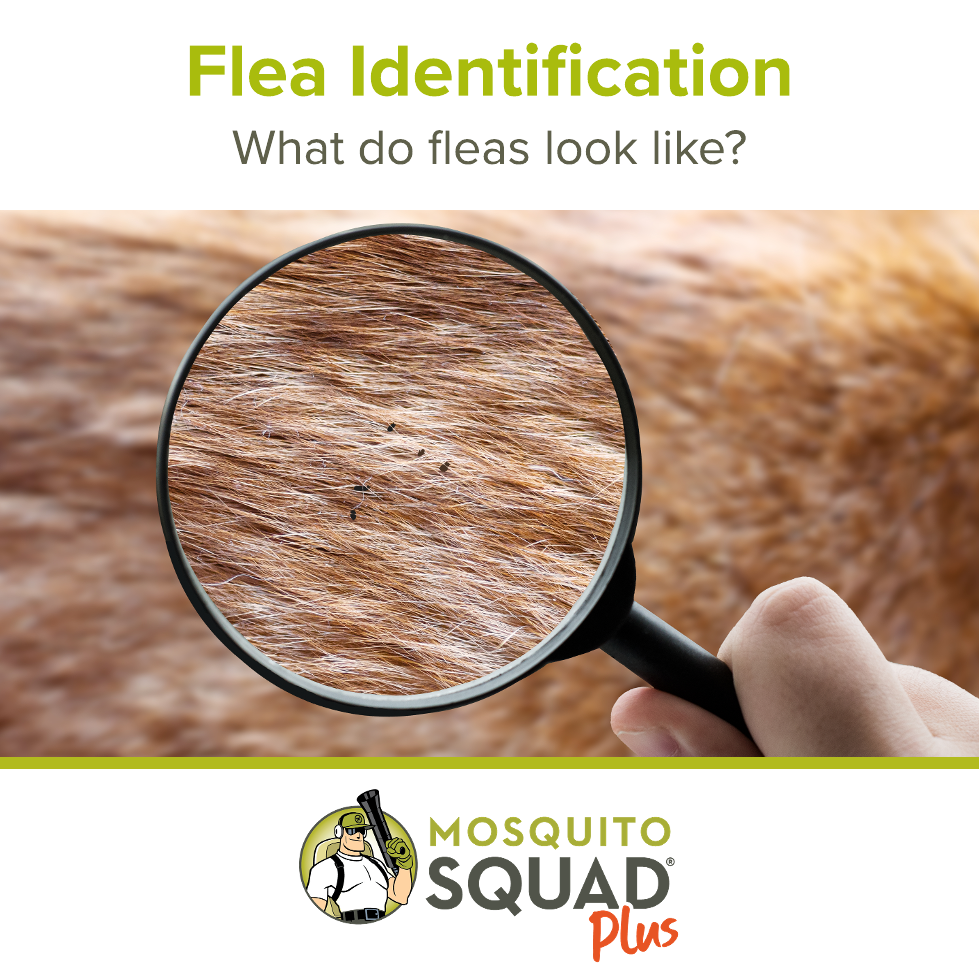
Then check your pet, not your yard. Part the fur at the base of the tail and behind the ears and look for fine reddish-black grit. That's flea dirt, and finding it tells you the cycle is running somewhere on the property even if you haven't seen an adult flea.
If the four spots check out and you're still getting bitten around the ankles, walk your fence line for the fifth thing nobody wants to think about: whatever is crossing the yard at night. Call (256) 907-8493 or reach our Huntsville office and somebody will walk the four spots with you. Free estimate. Check whether your community sits on our coverage list, and once flea season winds down, read what late fall pushes indoors.