Why Pest Control in Five Points Huntsville Reads Different Than the Rest of Madison County
Posted by Mosquito Squad Plus
April 28, 2026
If you live in Huntsville's Five Points Historic District, you already know your house is not the same as the newer builds out toward Hampton Cove or the tract homes off Memorial Parkway. What most homeowners here do not fully account for is that the pest control conversation is not the same either. The 1890s Queen Anne on Randolph Avenue, the 1915 Craftsman bungalow on Wells Avenue, the 1920s Colonial Revival on White Street, they all have a pest pressure profile shaped by the specific character of this neighborhood, and that profile is genuinely different from what any Madison County pest blog written for a newer subdivision can address.
This is the conversation most pest content misses about Five Points. The neighborhood is Huntsville's oldest intact residential district outside of downtown itself, listed on the National Register of Historic Places, bounded by Pratt Avenue, Oakwood Avenue, California Street, and Andrew Jackson Way. The housing stock is 100 to 135 years old. The drainage patterns trace back to the original spring-fed water system that gave Huntsville its founding identity. And the neighborhood sits at the eastern base of Monte Sano Mountain, which creates microclimate and moisture conditions you do not find anywhere else in Huntsville. Pest control here requires understanding all three of those factors, not just applying the standard North Alabama treatment playbook.
What the Historic Housing Stock Actually Does
Five Points was developed primarily between 1890 and 1925 as Huntsville's first streetcar suburb. The homes built in that era were constructed with techniques that modern builders no longer use and modern pests exploit freely. Balloon framing on the Queen Anne Victorians creates continuous vertical pathways from the basement to the attic with no fire blocking between floors, which means a mouse that enters through a foundation gap can travel unseen from the basement to the attic through the wall cavity. Original stone and brick foundations, still standing after more than a century, are permeable in ways modern poured concrete is not. Moisture wicks through the foundation wall consistently enough to keep basement conditions humid year round, which supports silverfish, centipedes, carpenter ants establishing in damp rim joists, and the occasional camel cricket population that finds the conditions ideal.
The original lath and plaster walls common in pre-1930 Huntsville homes create dense wall cavities that pests use as travel corridors and nesting sites. Original windows, even when restored to period accuracy, rarely seal the way modern double-hung units do. The plumbing penetrations on a 1910 Craftsman were never caulked to modern pest-exclusion standards because those standards did not exist yet. Every one of those details is part of what makes Five Points beautiful. Every one is also part of what requires a different pest control approach than a 2015 build in Owens Cross Roads.
The Alabama Cooperative Extension System out of Auburn documents that structural age is one of the most reliable predictors of residential pest pressure in Alabama homes. In North Alabama's climate, that age factor compounds because pests remain active for nine or ten months of the year rather than the six-month activity window that colder states experience. On a 120-year-old Five Points Queen Anne, that cumulative pressure produces pest conditions that a 20-year-old Madison subdivision home simply does not experience.
Why the Big Spring Drainage Matters for Your Foundation
Huntsville was founded in 1805 at Big Spring, the limestone-fed water source that gave the city its name and defined its settlement pattern. Five Points sits just east of Big Spring Park, and the historic drainage patterns that once fed the spring still run through this part of the city. Modern stormwater infrastructure has routed most of that drainage underground, but the water table characteristics, the limestone bedrock proximity, and the natural moisture patterns that made this the founding location of Huntsville have not changed.
For pest control, that geological reality matters in specific ways. Limestone bedrock near the surface produces foundation moisture that concrete alone cannot fully exclude. Spring-fed drainage patterns keep groundwater higher in this part of the city than in neighborhoods built on different geology further from downtown. Historic homes built before modern foundation waterproofing technology have particular vulnerability to this moisture, which translates to higher subterranean termite pressure, more carpenter ant activity in damp sill plates and rim joists, and the moisture-loving species that thrive in basement conditions.
Beyond foundation issues, the tree canopy in Five Points is mature and consistent. Huntsville's tree ordinance has protected street trees in the historic districts for decades, which means the 80 to 100 year old oaks and pecans lining Pratt Avenue and California Street create shaded yard conditions that dry out more slowly than open suburban lots. Slow-drying yard conditions produce mosquito habitat consistently, and the Asian Tiger mosquito documented throughout Madison County by the Alabama Department of Public Health takes full advantage of those conditions.
What April Pushes Into Five Points Homes
North Alabama winters do not kill indoor pest populations. They slow them down briefly. When ground temperatures climb past about 50 degrees in late February or early March, indoor pest populations are already reactivating from the mild winter conditions that characterized the region this year. The 2026 NPMA Bug Barometer forecast for the Southeast region specifically flagged early spring pest activation driven by mild winter conditions, with continued indoor cockroach and rodent pressure building through March into April.
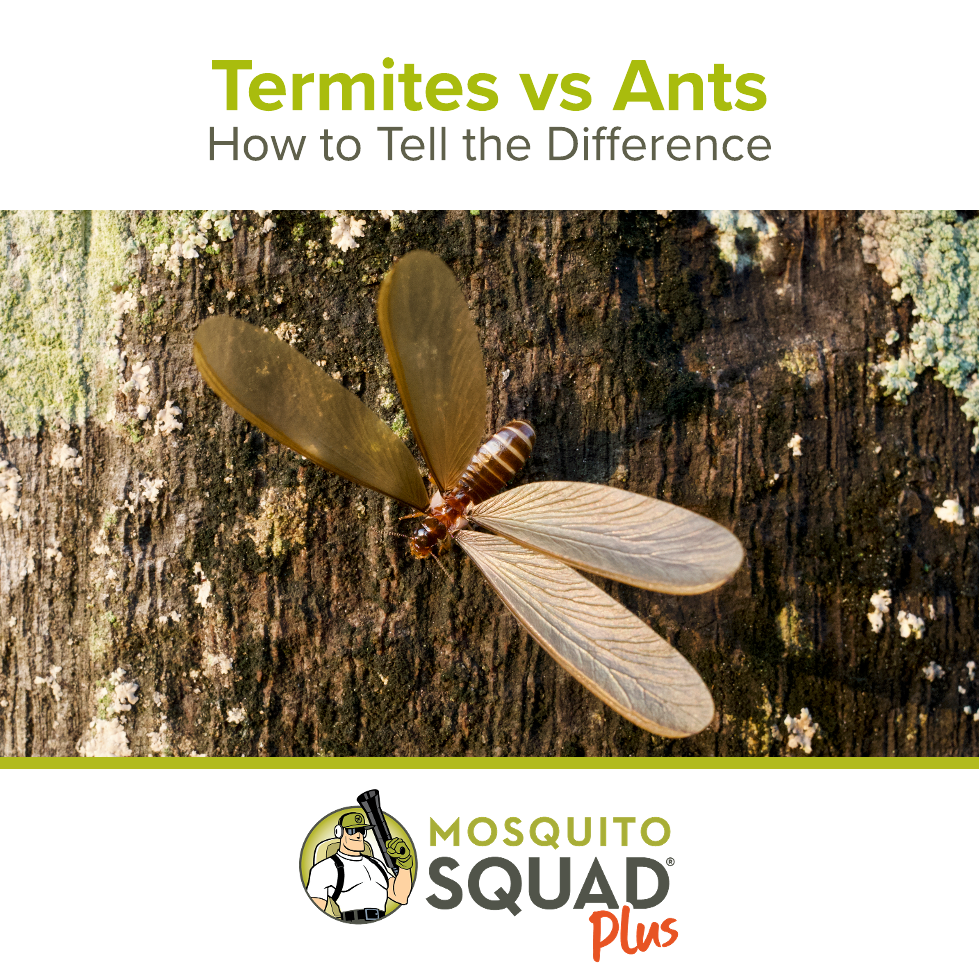
In a historic Five Points home, that reactivation looks different than it does in a newer neighborhood. Ants that wintered in wall voids behind original lath and plaster are scouting for water as indoor humidity drops with the heating system winding down. German cockroaches established in warm voids around the hot water heater and behind appliances are visibly active. Carpenter ants in damp rim joists are producing the first swarmers of the season, which homeowners sometimes mistake for termite swarmers because the two look similar under a kitchen light. Mice that came in through the old foundation gaps in November are producing their first spring litter, which means a small winter problem has become a real April problem.
Properties at the far eastern edge of Five Points, closer to the base of Monte Sano, share some pest pressure characteristics with Brownsboro and the rural-to-suburban transition communities on that side of the metro. Cooler microclimates, more wooded edge habitat, and different tick and spider exposure patterns that urban Five Points properties do not experience to the same degree.
The Carpenter Ant Conversation Five Points Homeowners Should Have
Carpenter ants deserve specific attention in Five Points that they do not require in newer neighborhoods. These ants do not eat wood the way termites do, but they excavate wood to build nests, which means a mature carpenter ant colony in a rim joist or sill plate on a 110-year-old house can do real structural damage over years. Alabama Cooperative Extension entomology research documents that carpenter ants prefer damp or water-damaged wood for nesting, and the foundation moisture common in pre-1930 Huntsville homes provides exactly those conditions.
The visible carpenter ants you see walking across a kitchen counter or along a bathroom baseboard in April are scouts. The nest is somewhere else, almost always in a location you cannot easily access, and it has probably been there for two to four years before you noticed it. Large carpenter ants, especially the ones with wings that appear in spring, are a signal worth acting on rather than dismissing as seasonal activity. On a historic home, the difference between treating a carpenter ant problem early and treating it after structural damage has occurred can be significant.
The Cockroach Conversation That Applies Everywhere
Cockroaches in Five Points are not what most people picture. The neighborhood is not dealing with the open-kitchen infestations the species is associated with culturally. What does happen here, and what gets missed regularly, is small populations of German cockroaches establishing in basements, behind dishwashers, in warm voids around hot water heaters, and in the shared wall cavities that multi-unit historic conversions produce.
The CDC's environmental triggers documentation is direct that cockroach allergens in feces, saliva, and shed body parts are documented asthma triggers, with sensitization rates between 23 and 60 percent among urban populations. The CDC documentation specifically notes that recent studies have found cockroach allergen exposure as a meaningful factor in suburban homes as well. A small cockroach problem in a restored Craftsman bungalow is not visually obvious, but the allergen load in the indoor air is present whether anyone is clinically allergic or not. On a historic home with original plaster walls and pre-1930 construction, the allergen can persist in ways that modern sealed construction reduces.
What to Check Around Your Five Points Home This Saturday
Before calling anyone, walk your property with a checklist. None of this costs anything and most homeowners can do it in under an hour.
Start in the basement or crawl space. On a historic Five Points home, this is where most pest pressure originates. Walk the perimeter and look at where the wood framing meets the foundation. Any gap, any settled section, any spot where mortar has failed between stones or bricks is a working pest entry point. On limestone or sandstone foundations common in the oldest Five Points homes, do not seal failed mortar with modern caulk or expanding foam because it will fail within a few years and can damage the historic stone. Have it repointed with matching lime mortar by someone who knows historic masonry.
Walk the exterior foundation and look at every plumbing and utility penetration. AC line set, gas meter line, water spigot, cable and wire entries. Every one is a potential gap. On a historic home, these penetrations were added to the original structure over the decades as utilities were modernized, and they are rarely sealed to modern pest-exclusion standards.
Check every original window and door for gaps at the frame. Period-correct restoration preserves historic character but sometimes at the cost of modern weather sealing. A thin bead of paintable caulk at the frame seam is reversible and does not affect the historic character of the window itself.
Go into the attic on a sunny day with the lights off. Anywhere you see daylight coming through the roof line, the eaves, or the gable vents is an entry point that carpenter ants, wasps, and sometimes squirrels are using. Historic homes with original roof systems often have attic vents that were sized for a different era of pest pressure than what North Alabama produces today.
Check the rim joist above your basement walls. On a Five Points home, this is where carpenter ants most commonly establish. Any damp or soft wood, any visible sawdust that looks like fine wood shavings, any clean oval holes in the wood roughly the size of a pencil eraser are signs worth acting on.
What Actually Works in a Five Points Home
Professional pest control on a historic Five Points home comes down to three things done together.
First, an inspection that accounts for the specific building age and construction type. A 1905 Queen Anne Victorian requires a different inspection than a 1925 Craftsman bungalow, which requires a different inspection than a restored Colonial Revival. The entry points, the interior conditions, and the treatment strategy all follow the building.
Second, treatment that addresses the cumulative pressure of 100+ year old construction. The Home Shield package covers indoor and outdoor pest control on a recurring schedule specifically designed for the kind of ongoing pressure that historic housing stock accumulates. On a Five Points property, that recurring treatment is doing work that one-time interventions cannot replicate.
Third, the service relationship. Historic home pest pressure is constant and does not resolve on its own. Original construction vulnerabilities do not self-repair. Foundation moisture from limestone bedrock and spring-fed drainage does not decrease over time. A recurring program adjusts treatment intensity to the actual pressure rather than reacting to visible problems after populations are established.
When to Act
The honest window for Five Points is right now. April is already active for carpenter ants, cockroaches, mice, and the first mosquito generation. By May the populations are established. By July, North Alabama heat and humidity are pushing everything indoors looking for cooler moisture, and the indoor pressure is at full summer intensity.
Schedule a free property inspection in Five Points and get eyes on the structure before summer pressure peaks. We are headquartered at 1305-B Fletcher Street right here in the Five Points neighborhood, License Nos. 2025-7000320 and 2025-5000660, phone (256) 907-8493. We have been working the historic housing stock in this corridor long enough to know what Queen Anne Victorians, Craftsman bungalows, and Colonial Revivals each actually let through.