
How to Help Get Rid of Gnats: Simple Indoor and Outdoor Tips
Posted by Emma Grace Crumbley, Entomologist
April 30, 2026
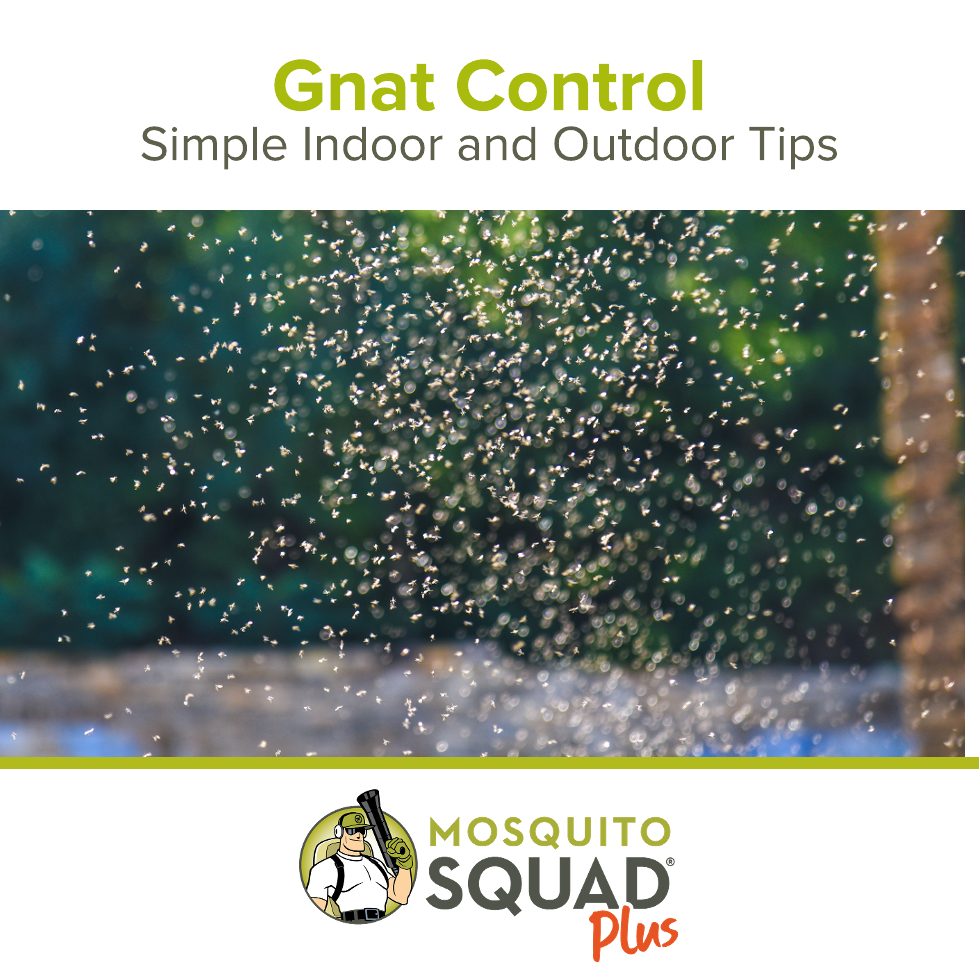
Nothing kills the vibe of a nice summer day like a swarm of gnats flying in your face. And seeing those gnats inside your home? Even worse! Check out these simple tips to get rid of gnats indoors and outdoors this summer.
What are gnats, and what do they look like?
The term “gnat” is both colloquial and scientific. “Gnat” is both a common name for any small fly and a scientific name used to describe certain flies in the suborder Nematocera. Though entomologists debate the exact list of flies in this category, most scientists agree that gnats include fungus gnats, wood gnats, eye gnats, black flies, and biting midges.
These small flies are semiaquatic, laying their eggs in shallow water or moist substrate, and swarm together during warm months to mate. They may be black, brown, or yellow and resemble other fly pests, such as fruit flies or mosquitoes.
What attracts gnats?
Gnats feed, breed, and hang out in sludgy, moist substrates. These include oversaturated soil, animal waste, build-up in trash cans, and clogged drains and gutters. The key to gnat and small fly control is to identify these problem areas and reduce or remove them as much as possible.
Getting Rid of Gnats Indoors
Most indoor gnat problems can be solved easily and without using any pest control products. To get rid of gnats indoors:
Check your House Plants
Fungus gnats prefer overly watered soil, and house plants in containers with poor drainage make a perfect home for these pesky flies. If you notice more flies indoors, consider adjusting the watering habits of your indoor plants.
Look for Build-Up
Food build-up in kitchen sinks, dishwashers, and under refrigerators can all be conducive to gnat problems. Additionally, check for build-up around sinks, drains, showerheads, and toilet bowls. Cleaning these areas will remove the food sources for nearby gnats.
Clean out Waste Bins
Waste bins can collect rotting organic material and food waste fluids, creating breeding grounds for gnats. Keep trash and recycling cans clean, especially if you start noticing more flies inside the home.
Inspect the Infrastructure
If there isn't an obvious attractant for gnats (no moist substrates or food waste that you can find), there might be something wrong with the infrastructure of your home that is attracting these pests. Flooding and water damage can create moist wood and mold, which attract these flies to your home. Thoroughly inspect your house and address these problems to reduce pest entry.
Getting Rid of Gnats Outdoors
Outdoor gnat problems are more difficult to control on your own, but there are still many solutions that can help reduce swarming before a pest control professional needs to be called in. To get rid of gnats outdoors:
Check for Flooding
Fungus gnats prefer overly watered soil. These pests feed on the fungus that grows in the ground and lay their eggs on moist substrate. Check your yard for areas that collect water or flood, and do not overwater potted plants.
Pick Up After Your Pets (or other wildlife)
Some gnats prefer to feed on animal waste. If your yard has animal droppings from wildlife or your pets, gnats will be attracted to your yard and will feed and breed on this waste. Keeping a tidy yard reduces gnat problems.
Pick Up After Your Plants
Your pets aren't the only ones leaving behind waste. Plants and trees that produce fruit will drop their crop throughout the summer, whether due to heavy weather or heavy fruit. Leaving dropped fruit to rot in your yard is bound to attract flies and other pests.
Clean out Waste Bins
Just like the waste bins indoors, outdoor garbage cans and recycling bins can create breeding grounds for gnats. Keep waste bins stored away from the home and clean them out occasionally if you notice flies gathering near them.
Calling in the Pros
When a fly problem becomes too much to handle, it's time to call in pest control professionals, like the technicians at Mosquito Squad Plus. Our technicians are trained to inspect your yard for fly problems, identify problematic areas, and create a custom management plan tailored to your property’s pest problems. To learn more about our Squad Fly Control services and get a free quote on your service, call a Squad near you today! Services vary by location.