
How Long Do Ticks Live Off A Host: Survival Facts
Posted by Emma Grace Crumbley, Entomologist
August 27, 2026
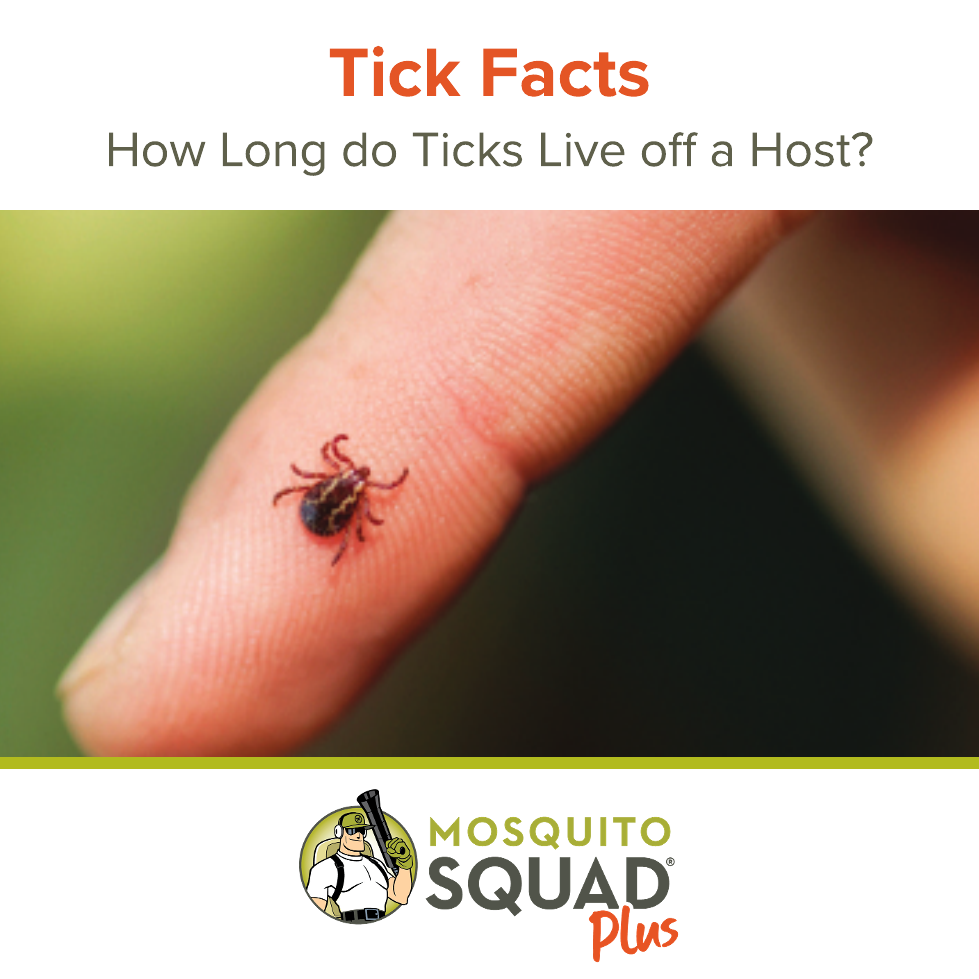
Finding a tick on yourself that you didn't know was there is disgusting enough. Finding a swollen tick on you is not just gross; it can be dangerous.
How Ticks Bite
Ticks are blood-feeding insects, similar to mosquitoes and biting midges. Unlike mosquitoes and biting midges, ticks don't just drink a little blood and move along to the next host. Instead, ticks use their haustellum, a saw-like mouthpart, and a cementing enzyme in their spit to chew their way through our skin and "glue" themselves to us, slowly drinking our blood over time. If left unchecked or unnoticed, ticks can feed on people for days.
When a tick bites you, you may not even notice. Ticks are stealthy biters and target exposed, creased areas, such as along sock lines, under armpits, behind the ears, or on the backs of knees. When you find a tick on you, take notice of how large it is. The more swollen the tick appears, the longer it’s been feeding on you.
According to experts, it takes 24-36 hours of attachment for any diseases the tick is carrying to spread to its host. Depending on the tick's species and life stage, a tick that bites you may stay on you for anywhere from 3 to 10 days unless removed.
Thankfully, ticks are easy to notice if you do regular tick checks. Run your hands along the creases of your body, starting with your ankles and working your way up. Carefully examine any bumps you find to determine if they are ticks or not. Once you find a tick, follow the steps to remove it safely.
Tick Survival Facts
Though ticks might seem unstoppable, understanding how they’re able to survive can help you develop better habits and environments to prevent ticks from taking over:
- Indoor Survival – Though ticks can be accidentally brought indoors, their survival rate is much lower inside the home due to lower humidity and less access to hosts. The main exception to this is the Brown Dog Tick (Rhipicephalus sanguineus), which is extremely resilient indoors.
- Outdoor Survival – While ticks constantly search for hosts to feed on, many species can survive days or even years without finding one. By slowing down their metabolisms, ticks can allow themselves to starve without dying, a trait that is particularly helpful when waiting around for a host.
Humidity and proximity to hosts are key indicators of how likely a tick is to survive. To fully understand tick biology, though, there are a few other traits and behaviors to keep in mind when mitigating ticks:
- Flightless – Ticks don't have wings, so their movement is limited. Most of the ticks you'll find around your yard will be in shaded, forested areas around the perimeter of your property, not open, exposed areas like the middle of your yard. Treating the shaded areas of your yard and wearing tick-conscious clothing when working there can help manage ticks and prevent tick bites.
- Questing - A common misconception is that ticks climb into trees and drop down on hosts from above. Instead of rappelling down Mission-Impossible style on their hosts, ticks use a host detection method called questing. By climbing up long pieces of vegetation, shrubbery, and overgrown grass, ticks place themselves at "host level" where they use their front legs to reach out and grab hosts that brush by. Keeping a tidy lawn with short grass reduces tick questing zones.
- Three-Host Species – Ticks target different hosts as they move through three distinct life stages: larvae, nymph, and adult. As larvae, ticks feed on small rodents and birds. After they develop into larger nymphs, ticks begin targeting larger animals like dogs, birds, and even people. Finally, fully grown adult ticks look for larger hosts to feed on, like deer, livestock, and humans. As part of an effective tick management plan, take steps to reduce these intermediate hosts before ticks grow large enough to feed on people and pets.
Tick Control Options
The best way to protect yourself from tick bites is to prevent ticks from entering your yard. Professional tick control services with Mosquito Squad Plus are easy, effective strategies that help provide long-term tick prevention and protection. To get started on your next service or learn more about the ticks in your area, call a Squad near you today or check out our Interactive Tick Map. Services vary by location.