
How to Get Rid of Chiggers: Effective Outdoor Solutions
Posted by Emma Grace Crumbley, Entomologist
June 15, 2026
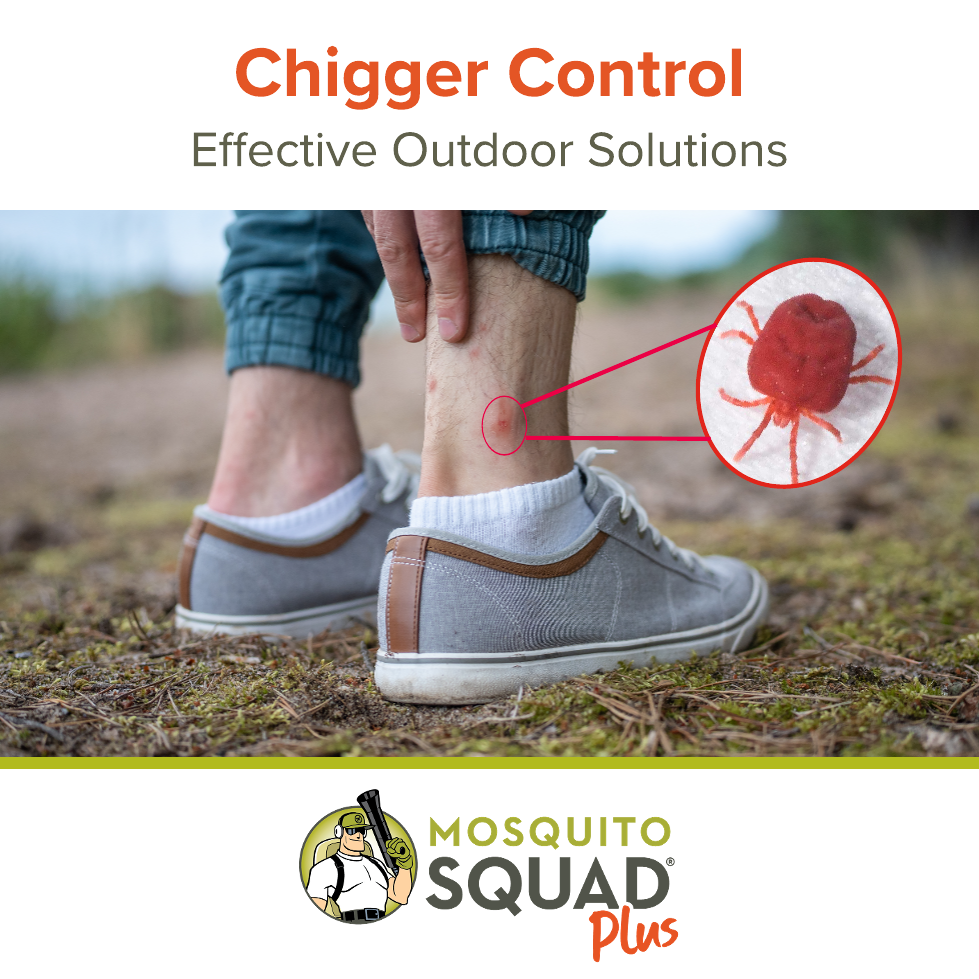
Have you ever come in from spending time outside only to find your ankles and legs are covered in itchy, red bumps? It’s possible a swarm of mosquitoes got to you when you weren’t looking… but it’s more likely you were eaten up by chiggers.
Chiggers are microscopic, bright red mites that live in the tall grass and wooded areas of your yard. Chiggers are similar to mosquitoes in that they pierce the skin to feed and leave behind itchy, red bites. Unlike mosquitoes, which feed on blood, chiggers feed on skin tissue. When a chigger bites you, it injects digestive enzymes to liquify the skin tissue and drinks it up as it feeds. Humans don't usually feel this bite at first, but as our body's immune system responds to the foreign enzymes, the bite site will become red, inflamed, and itchy.
Aside from their bites, the other concern with chiggers is that they don’t work alone. Chiggers tend to reside together in similar environments, and given their small size, it's common to get several chigger bites from one encounter with a chigger-harborage area. Fortunately, these mites aren't known to carry any diseases. Unfortunately, their bites are really, really itchy.
If you spend a lot of time outside, have kids that play in the yard, plan on entertaining outside, or have outdoor pets (yes, chiggers bite pets, too!), the last thing you want is a cluster of chiggers hanging around.
So, what can you do to prevent these pests? Thankfully, simple yard maintenance and connecting with your local Squad can help you reduce and remove chigger infestations from your yard:
- Cut back grass – Chiggers tend to live in tall grasses, where the density of the foliage provides them with shade and humidity. Cutting back overgrown grass and keeping a well-mowed lawn can reduce these harborage areas and significantly impact your likelihood of getting chigger bites.
- Remove excess moisture – Chiggers are very receptive to drying out, so they seek out humid, damp, or moist areas to hide nearby. Areas of your yard that flood or hold excess moisture may lead to chigger problems.
- Increase sunlight – Any area you can open up to more sunlight is an area where chiggers will be less likely to be found. Cutting back tree branches, trimming bushes, and moving woodpiles and leaf litter away from the home are all ways to add more sunshine to your outdoor spaces.
- Reduce wild animal presence – Since chiggers ride and feed on wild animals, like birds, reptiles, and rodents, they can create new problems and worsen existing problems by coming into your yard. Deterring these animals by building a fence around your home or implementing a Squad Rodent Control* program can help prevent new chigger swarms from taking over your yard.
- Call in the Pros – Integrated pest management techniques can also help prevent chiggers. Several Mosquito Squad Plus locations offer professional chigger and mite treatments* to help reduce the number of these pests in your yard and prevent them from returning. Learn more about these treatment options by calling a Squad near you today!
*Services vary by location. Contact your local Mosquito Squad Plus to learn about treatment options available in your region.