Built for the Most Engineer-Dense City in America: Research Campuses, Defense Contractors, Advanced Manufacturing Plants, and the Businesses Growing Up Around Them
No other city in the country has the building stock Huntsville does. You can drive from a federal arsenal to a NASA flight center to a research park packed with engineering firms in about ten minutes, and then out west run into auto and powersports plants the size of small towns. It's a commercial landscape made of clean rooms, production floors, research labs, and corporate campuses, and the people running them tend to care a great deal about who they let through the door and whether the work gets done by the book. Mosquito Squad of Huntsville handles commercial pest control for those facilities and for the whole economy growing up around them, across Madison County and North Alabama.
We're a veteran-owned, family-run operation, and we've been working this market since 2018. The growth here has been relentless, and the pest pressure has grown right along with it, especially out where new construction meets the undeveloped land, drainage fields, and creek corridors that ring the metro.
The Core: Research, Defense & the Facilities That Run on Precision
Everything else in Huntsville's economy orbits this. Cummings Research Park, the Redstone Gateway corridor, the engineering firms and labs and corporate campuses along Discovery Drive and Bridge Street, these are the facilities the whole metro is organized around, and they set the standard for how serious commercial work gets done here. They're also the most demanding pest accounts in the market, because in a lab or an engineering office a pest sighting isn't just unpleasant, it's an embarrassment in front of clients and a distraction from work that runs on focus. The pest issues are quieter than a warehouse but no less real: ants and spiders working in from the landscaping, the occasional rodent testing an entry point, mosquitoes coming off the retention ponds nearly every campus here is built around.
We service these accounts the way they have to be serviced: on a schedule that bends around the workday, documented on every visit, discreet, and out of the way of people who have real work to do. Access and clearance requirements vary from one campus to the next, so we work inside each site's protocols rather than around them. It's the discipline these facilities expect, and it's the discipline we built the commercial side of this business on.
The Economy That Grew Up Around It
The arsenal and the research park pulled in everything else, and each piece brought its own pest reality.
The advanced-manufacturing plants out the western corridor, the automotive and powersports operations, the defense-production campuses that keep expanding, the suppliers feeding them, are big, complex facilities with the exposures that come with scale: floor drains, wash bays, parts storage, loading docks, and acres of exterior ground with retention basins built to hold water. We schedule against shifts and clean zones, going after the rodents and crawling pests that threaten product and the standing water outside that breeds mosquitoes. For large sites that need it, we install automatic misting systems that run continuous coverage on their own.
The distribution that supports all of it comes with one reliable problem: dock doors stay open and pests ride in on the trucks. Rodents are the constant, nesting in stored product and racking, with spiders and flies behind them. We run these heavy on rodent control and interior trapping mapped to the dock doors and storage runs.
The dining scene that fills in around Bridge Street and Madison every time the population grows is a health-inspection environment, with the Alabama Department of Public Health inspecting food service across the county. It's flies and gnats around prep and the bar, roaches in the warm corners, rodents wherever food is stored. We work the interior hard, swap fly stations every visit, and for kitchens and exposed-product areas we run an all-natural, essential-oil treatment with no synthetic product near the food.
The hotels stay busy on all that business travel, and nobody rebooks after a bad night in a room, so we treat guest areas, common spaces, and grounds discreetly and on schedule. Offices and retail centers get the everyday nuisances handled before a client or customer notices. And the apartment and master-planned communities going up against the undeveloped edges, where pest pressure concentrates, run on our Home Shield program: exterior-focused coverage for mosquitoes, ticks, and chiggers across pools, clubhouses, dog parks, and shared green space. For event and wedding venues, where mosquitoes and biting gnats decide whether guests stay outside, we treat the grass and the landscaping around the gathering areas, add Yard Defender on bigger properties, and cover one-off bookings with special event sprays.
The City Fogs the Streets. Your Property Is on You.
Here's something worth knowing if you run a facility here. Huntsville actually operates a municipal mosquito program, the city's Vector Control Division surveys for breeding sites, treats them with larvicide, and fogs city streets with trucks that run weeknights from 7 p.m. to midnight during the season. You can look up the last time your street was fogged on the city's site. It's a genuinely good program, and most cities this size don't run one.
But read the fine print on what it covers: public streets and the right-of-way. The trucks fog the road in front of your building. They don't come onto your campus, your parking lots, your loading docks, your retention ponds, or your patios, which is exactly where a commercial property's mosquito problem actually lives. For a business with employees, clients, or guests on the property, the city handling the street is a help, not a solution. The CDC is direct about this: it points to community- and property-level mosquito control as a core defense against West Nile, which it calls the leading cause of mosquito-borne disease in the continental United States. A recurring mosquito control program is how you cover the part of the property the city trucks never reach. You can read what the city program does and doesn't do straight from the source at the City of Huntsville Vector Control page, and the Alabama Cooperative Extension System, run by Auburn and Alabama A&M, lays out what commercial mosquito work actually requires in this state.
What a Commercial Account Includes
Our General Pest commercial service is built for properties that need the highest level of protection for their staff and guests. Licensed applicators treat both the inside and the outside of your property once a month, and every account comes with our 100% satisfaction guarantee. If you notice an increase in activity between treatments for anything we target, you call us and we come back out and re-treat at no charge. The general pest service runs monthly, while mosquito treatments come more often, every 21 days on the breeding cycle, so on most commercial accounts you're seeing us more than a standard monthly plan would.
The standard commercial program covers:
Outdoor: fire ants, mosquitoes, ticks, no-see-ums, fleas, and small paper wasp nests.
Indoor: ants, spiders, roaches, and gnats.
Two rodent trap units come included with the commercial service, and from there the program flexes to the property. Interior trap units run $20 each with baiting included, exterior EVO stations are $60 per unit, and fly traps are $36 each and get changed out and re-baited every service. Re-baiting an existing station is $10. Anything outside the standard coverage is handled case by case, so you're only paying for what your facility actually needs.
The Difference Against the National Chains
Orkin, Terminix, and the big names run mosquito service monthly, because that's the billing cycle. We treat every 21 days with our mosquito barrier treatment, because that's the mosquito life cycle. North Alabama humidity keeps mulch beds, retention ponds, and low spots breeding longer than a drier climate would, and a property treated on the actual breeding interval stays ahead of one treated on a calendar convenience. A facilities manager notices the difference by the second summer.
How Pricing Works
Commercial pricing comes down to the size of the property, what it needs, and how often we service it, which is why every commercial account starts with a free on-site walkthrough. We see the actual layout, find where the activity's coming from, and build the monthly program around it. You get an upfront, no-obligation quote with no hidden fees, and no long-term contract holding you to anything.
Why Huntsville Businesses Call Us
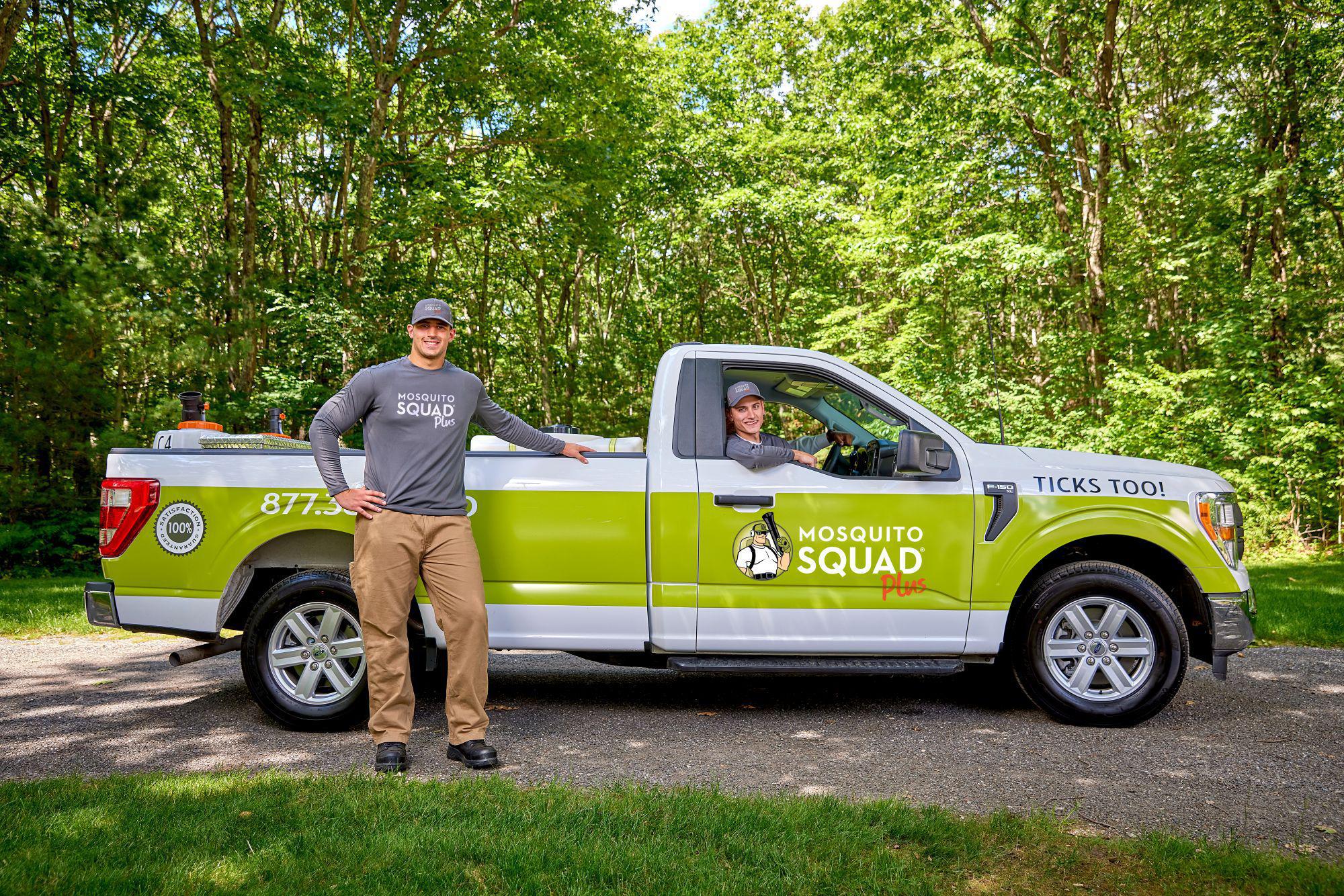
We didn't parachute in from a national call center. We're the local team that knows a research campus's problem is what's coming off the retention pond, a plant's problem is what's breeding around the floor drains, and a warehouse's problem is rodents through open dock doors, and we know the tick pressure that comes off the wooded edges near Monte Sano and the Flint River that so much of this metro backs up against. We cover the business corridors across Madison, Owens Cross Roads, and greater Huntsville. Working this market since 2018, every job backed by our 100% satisfaction guarantee, and the reviews from Huntsville businesses to back it up. Our technicians show up on time, in uniform, in marked trucks. If it's not right, we make it right.
Ready to put a real commercial pest program on your facility? Call (256) 803-2282 or request a free commercial walkthrough online. Monthly service, no contract, and a team that already knows what your kind of facility is up against.
Frequently Asked Questions
Do you service research park, defense, and other high-security facilities?
We service commercial accounts across Cummings Research Park, the Redstone Gateway corridor, and the office and industrial parks around them. Access and clearance requirements vary by facility and by what's controlled on a given campus, so we work within each site's specific protocols. The simplest path is a walkthrough where we map the property and confirm exactly how service needs to run for your building.
Can you work around our shifts, clean zones, and operating hours?
That's how most of our commercial accounts run. We schedule around production shifts, lab and office hours, and the areas where treatment isn't an option during operations, building the visit into the window that works for your facility rather than ours.
Do you provide treatment documentation for inspections and audits?
Yes. Every visit is documented with records of what was applied and where, kept on the account. For food service inspected by the Alabama Department of Public Health, and for any facility with its own audit requirements, that paper trail is part of the standard service.
Doesn't the city's mosquito fogging handle it?
Only partly. Huntsville's Vector Control program fogs public streets and the right-of-way, which helps, but the trucks don't come onto your property. Your parking lots, campus grounds, retention ponds, loading docks, and patios are where a commercial mosquito problem actually sits, and that's the part a recurring program covers.
We've had a problem a national company couldn't stay ahead of. What's different here?
Usually it's frequency and knowing the property. The big chains tend to run a fixed monthly route. We treat mosquitoes on the 21-day breeding cycle rather than a billing cycle, and we map rodent and interior work to where activity actually starts on your specific building. More visits, in the right spots, is what keeps a recurring problem from cycling back.
Is there a long-term contract?
No. Commercial service is month to month, backed by our satisfaction guarantee. If activity returns between scheduled visits for something we treat, we come back out and re-treat at no charge.
How fast can you get started?
It starts with a free on-site walkthrough so we can see the layout and find where the activity's coming from, then we build the program and get you on the schedule. Call (256) 803-2282 or request a walkthrough online to set it up.