
Signs of a Rodent Infestation
Posted by Emma Grace Crumbley, Entomologist
September 1, 2026
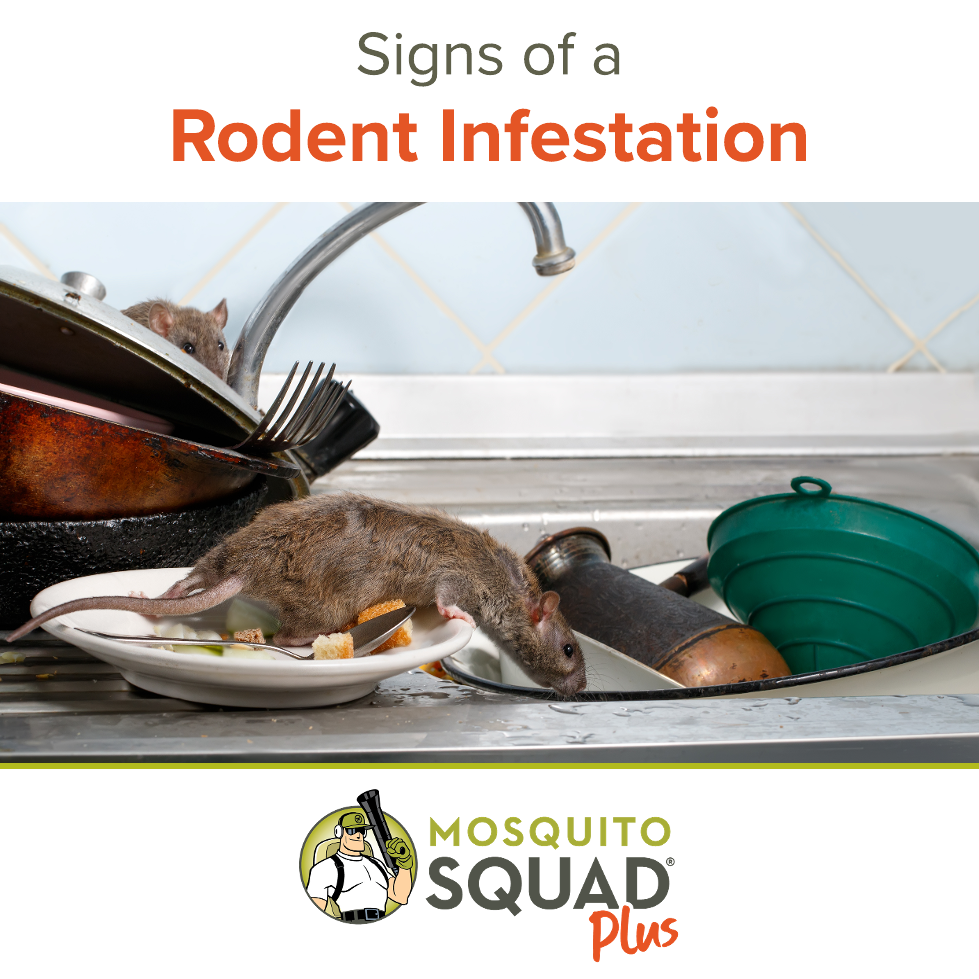
Rodents like mice and rats multiply quickly, can spread diseases, and can damage your home and belongings. Don't let rodents turn your home into theirs. Spot the signs of a rodent infestation early, and call your local Mosquito Squad Plus today for comprehensive rodent control services.*
Know The Pests: Commensal Rodents
When we say “rodent infestation," we’re talking about an unwanted visit from one of our three commensal rodents: the house mouse, the roof rat, or the Norway rat. Each of these rodents behaves a little differently from the others, but all leave behind distinct signs you can use to figure out if you have a rodent infestation and what kind of infestation you're dealing with.
Briefly, the three commensal rodents are:
1. House Mouse (M. musculus)
Of the three commensal rodents, mice are the smallest, usually measuring about 4 to 6 inches from snout to tail. House mice are also known for their big ears and small, pointy snouts.
2. Roof Rat (Rattus rattus)
These rats have long, slender bodies with even longer tails that help them balance as they climb along branches, wires, and, you guessed it, roofs. If you hear noises in your attic, it’s likely roof rats.
3. Norway Rat (Rattus norvegicus)
Unlike the other two commensal rodents, Norway rats are large and chunky. These rats prefer burrowing and infesting at the ground level.
Signs of an Infestation
Thankfully, rodents are not as cryptic as insect pests. There are many signs mice and rats leave behind to tell you if you’re dealing with a rodent infestation:
- Droppings – You can tell a lot about a rodent from its droppings. As mice are the smallest commensal rodent, their droppings are also small, resembling brown or black rice. Roof rats have larger droppings found along gutters, attics, and roofs. Norway rats are the largest commensal rodents and produce large droppings with blunt ends.
- Gnawing – All three commensal rodents share one interesting trait: their sharp teeth never stop growing. To help file down these teeth, make existing holes bigger, or get into a food source, rodents chew and gnaw. If you see gnaw marks on trash cans, food packaging, or wires, it’s a clear sign of rodents.
- Grease Marks – Rodents have naturally oily bodies, and when they run along walls and baseboards, their grease rubs off, leaving a stain. The darker the grease marks, the more times a rodent has brushed by, meaning that area is either a well-traveled route, or you’re dealing with a large number of rodents.
- Noises – Rodents are noisy. Scurrying, scratching, and squeaking sounds in the house are common signs of mice and rats moving about as they forage. If you're hearing signs during the day, you likely have a mouse problem. Noises at night could indicate a rat infestation. And noises in the attic point to a roof rat problem.
- Nesting Material – Other than food, mice hunt for nesting materials. If you notice paper debris, packing materials, insulation, or fabric scraps strewn about the house, it may be a sign of a rodent problem.
- Odor – Rodents don't have great bladder control and usually urinate small drops as they scamper about. If you start to notice a funky, musty smell in your house and can't identify the source, you may have a mouse infestation.
- Seeing Rodents – If you see a mouse or a rat, you know you have a mouse or rat problem. While mice are usually nocturnal, you may spot them during the day. Mice are more curious than rats and will explore more openly to find food. Rats are neophobic and will avoid new things in their environments. You’ll catch rats scurrying about more often at night than during the day.
Preventing the Pest
The best way to prevent a rodent infestation is to prevent mice and rats from getting inside in the first place. Emphasizing preventative measures helps keep rodents from making your home theirs. Seal any unwanted entry points, remove food and water sources from around your home and yard, make sure your trash cans seal tightly and are structurally sound, and keep your yard tidy to prevent rodents from nesting nearby.
Mosquito Squad Plus Rodent Control
If you experience one or more of the signs listed above, you might have a rodent infestation. Thankfully, Mosquito Squad Plus is here to help.
When you work with Mosquito Squad, our trained technicians will inspect your property to identify evidence of rodent activity and potential entry points. Then, our techs will develop a customized, comprehensive plan to address the current rodent problem and prevent a future one. Call your local Squad today to set up your next service.*
*Services vary by location. Call your local Mosquito Squad Plus to learn about available rodent treatments.