Hornet Removal in Huntsville Usually Starts in the Second Building
Posted by Mosquito Squad Plus
July 14, 2026
Ask anyone who runs pest routes across the northern end of Madison County and they will tell you the hornet call usually comes from the shop. A homeowner in Toney walks out to the barn for the first time in three weeks to grab the tiller, rolls the door open, and the doorway is busy with large insects that were not consulted about the visit. The house, thirty yards away, has been fine all summer, because the house gets looked at every day, the barn gets looked at when something in it is needed, and that difference in attention is the entire story of hornet pressure in this market.
North Alabama properties come with buildings. Around Toney, the working parcels still carry their original barns and equipment sheds, the Hazel Green corridor mixes old farmsteads with new acreage lots that inherit the outbuildings of whatever they were carved from, and New Market keeps enough active farm ground that a property without a second structure is the exception. Even the newer acreage lots in Harvest and Meridianville come with a detached something within the first year of ownership. Every one of those structures is quieter, darker, less sealed, and less visited than the house beside it, which makes each one better hornet real estate than the house will ever be. So this post is a building-by-building tour, starting with the structure most likely to be occupied right now.
The Barn and the Shop: Prime Territory, Light Supervision
The European hornet leads this market, and it is the first market in our footprint where that is true. Alabama Extension entomologists place the state at the southern edge of the species' range, which puts the Tennessee Valley squarely inside hornet country while most of the state below Birmingham sees them only in scattered pockets. It is a big insect, better than an inch of reddish brown and gold, and its nesting preferences read like a checklist of every barn in Limestone and Madison counties: enclosed cavities, high entry points, undisturbed wood, and steady dark. Per the University of Georgia's C1354 fact sheet, a single founding queen lays around 500 eggs across her season and a mature colony carries 800 to 1,000 workers, all of it assembled between April and September inside a structure nobody entered in between.
The signs inside a barn or shop are unmistakable once named. Steady traffic at a gap under the gable or a missing knot in the siding. A low working hum from a wall or the loft on a still evening. Papery construction material accumulating in a corner of the rafters. Sawdust-fine debris on a workbench under a ceiling void. Any of these in a building on the weekly-or-less visitation schedule deserves a careful look from the doorway and no closer, because the colony inside has had uninterrupted months to reach a size the house would never have permitted.
If the discovery happens the way it usually does, mid-errand with the door already open, the protocol is short. Do not swat, do not investigate the source, and do not grab the tiller after all. Back out the way you came, moving steadily instead of fast, leave the door in whatever position it is in, and take note of where the traffic concentrated while it is fresh. The colony was not hunting you, it was reacting to vibration and light, and a calm exit almost always ends the encounter. What you observed on the way out is worth money, because it tells us where to start.
The bald-faced hornet works the same properties from the outside. It hangs its covered paper nest from the tree lines, fence rows, and equipment-yard edges that stitch these parcels together, and the University of Kentucky's entomology program rates it among the most dangerous stinging insects to approach carelessly. A nest over the gate you swing twice a month, or in the hedgerow beside where the trailer parks, sits undiscovered for exactly as long as the second building does, and for the same reason.
The Small Structures: Well Houses, Pump Houses, and the Carport Ceiling
Below the barn on the size chart sits a whole class of structures that are essentially hornet furniture. The well house gets opened a handful of times a year. The pump house by the pond, the deer-lease shed, the pool equipment enclosure, the lean-to over the firewood, all of them combine three or four walls, a roof, and near-total privacy. Around Owens Cross Roads and the valley properties toward New Hope, these little buildings produce a share of our stinging insect work far out of proportion to their square footage, and the discovery is usually somebody reaching for a valve six inches from a colony.
The calendar makes one collision predictable enough to circle in advance. September is when North Alabama opens up the deer shed, the lease camper, and the box blinds for the first time since February, and September is also when every colony in the region hits its maximum size and its shortest temper. The stand that sat untouched through the entire building season is a textbook second building, and climbing into an enclosed box at dawn is the wrong moment to learn who else moved in. Whatever your season prep list looks like, a daylight stinging insect check belongs at the top of it, done from the ground, before the first sit.
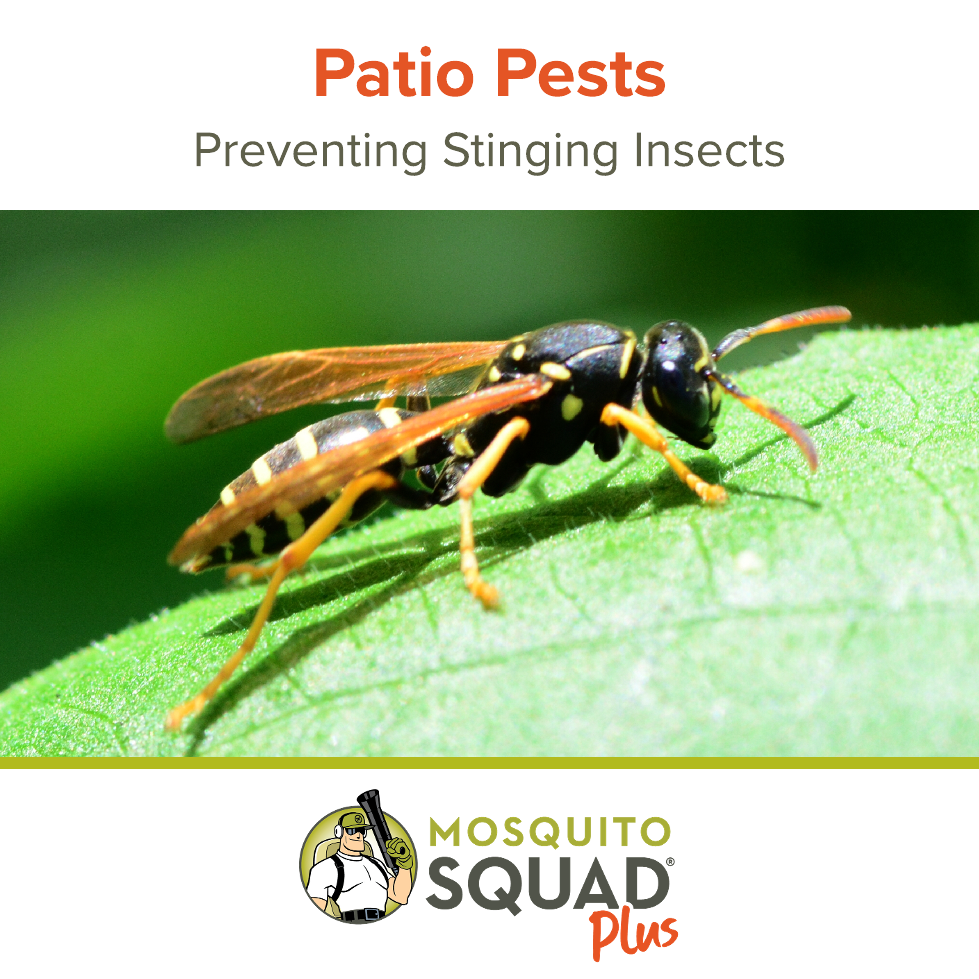
The carport deserves its own mention because it hides in plain sight. It is attached to daily life, cars move under it twice a day, and homeowners assume that traffic means protection. It does not. The ceiling of a carport, the boxed corners, and the gap where it meets the house go unexamined for months at a time, and paper wasps and bald-faced hornets both exploit ceilings that people walk under but never look at. The same blindness applies to boats on trailers, campers between trips, and the grill cover that stayed on through June. Anything with a roof and a schedule of neglect is a candidate, and the fix costs nothing at all: look up at your own ceilings once a month between April and October.
Lake properties compound the pattern. A place on Guntersville used seasonally runs the Guntersville version of the second-building problem, where the boathouse and the dock box are the least-visited structures on a property that is itself not visited much, and the July discovery arrives with the whole family present and the cooler already unpacked.
The House Has Second Buildings Too
Even a suburban lot in Madison or Jones Valley with no barn in sight runs a smaller version of the same equation, because every house contains zones on the outbuilding visitation schedule. The garage attic and the crawlspace go months between visits, the soffit run over the side yard gets seen only by the meter reader, and the big-box shed that holds the mower receives eleven openings a year. Then there is the playset in the corner of the yard the kids aged out of two summers ago, which combines a roof, shade, hollow tubing, and total abandonment into one of the most reliable nest platforms in suburbia.
The pattern holds regardless of lot size. We made a related point in our post about why a brand-new Madison house does not come with a bug-free yard, and the stinging insect version is that new construction comes with brand-new unwatched zones from the day of closing, and the hornets do not care about the build date.
Storm season adds inventory. North Alabama's severe weather leaves behind snapped limbs, standing dead trunks, and brush piles, and we covered what severe weather season leaves behind in its own post. For hornets the relevant leftovers are hollow wood and sheltered debris, which is nesting stock for European hornets and cover for overwintering queens, so the property that cleaned up slowly after spring storms is carrying more candidate sites into summer than the one that hauled everything off in May.
The Alabama Asterisk: Some Nests Do Not Die Here
Every pest company in the country tells homeowners the same comforting fact: colonies die at frost, only new queens survive, nests are never reused. For hornets in North Alabama that holds. For their yellowjacket cousins, this state is the place where the rule bends, and it bends inside exactly the buildings this post is about. When winters run mild, some yellowjacket colonies keep their queens, keep eating, and keep building instead of dying, and the result is the Alabama super nest, a perennial colony documented by Science magazine at up to 15,000 insects, three times a normal colony's ceiling. Alabama Extension officials tracked ninety of them in a single year, formed on the sides of homes, sheds, and famously the interior of a 1957 Chevrolet.
Super nests are rare and most homeowners will never meet one. The reason they belong in this post is where they happen: protected, undisturbed, seldom-visited structures, which is to say the second building. A colony can only run through the winter if nothing bothers it for twelve straight months, and nothing achieves twelve undisturbed months like the back corner of a barn or a parked project car. The practical takeaway is a calendar entry. Walk your outbuildings once in late winter, when everything should be dead and quiet, and anything still flying in February has earned a phone call.
What the Spray Can Cannot Reach
Alabama's own extension service settles the DIY question with unusual directness. Per ACES guidance, the aerosol sprays have limited effect against an entire colony, or none, and large colonies belong with licensed professionals. The physics inside an outbuilding make it worse than the label suggests. A colony in a barn wall or loft sits behind wood, insulation, or stored equipment the spray never penetrates, the enclosed space concentrates defenders between you and the one exit, and a half-treated colony inside a structure you need to keep using is a worse arrangement than the one you started with.
The EPA's stinging pest guidance draws the professional line at established colonies and proper protective equipment, and the CDC's stinging insect page explains the stakes that make the line worth respecting: severe venom reactions arrive without warning in people whose history says they are fine, and a defended colony delivers its stings wholesale. Add the outbuilding factors, ladders over concrete floors, stored fuel, one door, and the barn colony becomes the least appropriate DIY target on the property.
What Hornet Removal in Huntsville Involves
Our work on these properties is structured around the buildings, the same way this post is. The inspection covers the house last, because the odds run the other way: barn and shop first, gable ends and lofts, then the small structures, the well house, the pump house, the carport ceiling, then fence rows and tree lines for hanging nests, then the house's own quiet zones. On acreage in the northern tier, that walk routinely turns up a second colony the homeowner never suspected, and finding both on one visit is the difference between solving the season and rescheduling it. Bring the gate codes and the barn keys when we come, because a building we cannot enter is a building we cannot clear.
Treatment order is fixed and species-driven. A hanging nest is treated until the colony is completely dead and only then removed. A colony inside a structure gets the treatment delivered to the void or cavity while every opening stays exactly as the hornets left it, since closing an entrance early sends the survivors deeper into the building. Afterward comes a barrier application around the treated structures, because a proven site pulls in next spring's queens the way an empty barn pulls in barn cats, and one treated colony without follow-up tends to become a subscription nobody signed up for.
The maintenance answer for a property with multiple buildings is a program with eyes on all of them. Our Home Shield package works the perimeter of the structures, Squad Yard Defender handles the ground between them, and the wider pest packages lineup scales from a Madison quarter-acre to a Hazel Green farmstead. The standing clarification: automatic misting systems are the scheduled tool for mosquito pressure, and a colony inside your barn wall needs direct treatment where it lives, so we will always name which tool your situation calls for before anything gets sold. The rest of how we operate is on the why Mosquito Squad Plus page, our guarantee covers the work, and the whole footprint, Athens and Tanner across Limestone County, tiny historic Mooresville, and everything east to the mountains, is listed under areas we service.