The Gray Smudge on Your Hebron Shutters Is Next Spring's Lanternflies
Posted by Mosquito Squad Plus
October 16, 2026
Reviewed by Brandon Robertson
This summer a Hebron homeowner wrote in about lanternflies. A lot of them, sitting on the shutters and all over the deck. They asked for a one-time treatment, then asked the question underneath it: what does long-term control look like, and are follow-up visits usually part of it?
That second question is the one that matters, and October is when the answer changes. The adults you saw in July and August are still around, slower now, gathering on warm siding and deck rails in the afternoon. But the thing worth looking for this month isn't the bug. It's a flat, grayish patch about the size of a thumb, stuck to a shutter, a fence post, the underside of a patio table, or the back bumper of a car. It looks like somebody wiped a little dried mud there and forgot about it.
That smudge is next year. For anyone sorting out spotted lanternfly control in Hebron, understanding what that patch is, and why a single spray in October doesn't touch it, is where the plan starts.
Why Hebron Is Seeing This Now
Lanternflies aren't a rumor in Boone County anymore. The Boone County Extension horticulture newsletter traced the timeline: the insect was first found at three locations in the county in August 2024, all on the western side, and by late July 2025 sightings were coming in from across the whole county. A year later, the calls our office takes from Hebron, Union, and the rest of the county line up with that. Our northern crew was still seeing lanternflies on their routes this past week.
Cornell's integrated pest management program keeps a county-by-county map of reported populations, and it carries a fair warning: a shaded county doesn't mean every street in it's infested. That matches what we see. Some Hebron yards have none, and some have them stacked on the deck rail.
So the population is here, and it's past the stage where anyone expects it to disappear on its own. What changes in October is which life stage matters.
October is egg month
Lanternflies only produce one generation a year. The adults feed through late summer, mate, lay eggs, and die. Penn State Extension reports that egg laying runs from late summer into early winter, with most of it happening in October. Each mass holds roughly 30 to 50 eggs, and a single female lays at least two.
Do the math on a deck rail with a dozen adults on it in September and it's easy to see why people who ignored the smudges last fall are seeing more insects this summer.
The airport sets the clock
The official cold-weather record for this whole corner of Northern Kentucky is kept at the airport, which sits in Hebron. The National Weather Service in Wilmington lists the Covington station at CVG with a normal first freeze of October 25, an early freeze around October 12 in one year out of ten, and a late one around November 5 in nine years out of ten.
That freeze window is the deadline for the adults. They won't survive real cold. The eggs will. Penn State's entomologists put it plainly: the adults die off in winter, but the egg masses are built to ride out harsh weather and hatch in spring.
So when someone in Hebron says "I'll just wait for the frost," they are half right. The frost takes care of what is flying around. It does nothing about what was already laid on the shutters.
What That Smudge Actually Is
The University of Kentucky Department of Entomology describes a fresh egg mass as starting out white under a putty-like coating, then darkening to tan or khaki until it looks like a smear of mud. Kentucky entomologists have found them on fence posts, lawn furniture, mailboxes, and cars, not just on trees. After the nymphs hatch in spring, the empty mass looks like a row of tiny open coin purses.
A few habits make them easier to find:
- They like the underside. Penn State found that females prefer protected spots: the underside of limbs, picnic tables, and other surfaces that face down or tilt toward the ground. Check under the deck rail, under the lip of the patio table, and on the shaded side of shutters.
- Where there is one, look for more. Females prefer to lay next to existing egg masses, so they cluster. One smudge on a post usually means a second and third nearby.
- They hitchhike. The USDA's Animal and Plant Health Inspection Service lists grills, vehicles, trailers, firewood, outdoor furniture, bikes, and toys as surfaces where eggs get laid. That list reads a lot like a Hebron garage in October.
One more tell: old egg masses hang around. Penn State notes that masses from as far back as two years can still be stuck to trees and posts. A spent one has lost most of its coating and shows a neat oval exit hole at the top of each egg, where the nymphs climbed out. Fresh ones still have the dull gray cover. Scraping last year's empties won't hurt anything, but it won't change next summer either.
A clean walk-around this week doesn't mean nothing is there. More on that in a minute.
Why It Happens in Hebron Specifically
Two things make the Hebron version of this a little different.
The river is also a rules line
In February 2026, the Ohio Department of Agriculture expanded its spotted lanternfly quarantine to cover the entire state. Under Ohio's rules, items like trees, nursery stock, firewood, and anything that might carry the insect are regulated, and the state asks residents to check vehicles, outdoor furniture, and firewood before moving them.
Kentucky has handled it differently so far, leaning on education and identification rather than a quarantine. The state entomologist's office keeps a running map of Kentucky counties already known to have lanternflies. For a household that lives in Hebron and works, shops, or hauls things across the river, the checking falls on the homeowner. Nobody is going to inspect a trailer pulled back from a job site or a patio set bought secondhand. The egg masses don't care which state they are in.
Hebron also handles more freight than just about anywhere in the region. Kentucky's economic development cabinet announced Amazon's $1.49 billion air cargo hub at CVG in Hebron. Nobody has proven how lanternflies first reached Boone County, and we won't pretend to. But APHIS asks businesses to look over pallets, shipping containers, propane tanks, and anything stored outdoors before it leaves the lot, and that advice fits a lot of Hebron addresses. If you manage a building along the corridor, our piece on commercial pest control near CVG covers the dock-door side of it.
The deck is where it shows up
The two lanternfly notes we pulled from Boone County this summer both came back to the deck. The Hebron homeowner saw them on the shutters and deck boards. A property over in Union had lanternflies in the foliage at the same time the owners were dealing with hornets swarming the deck steps and mud daubers underneath.
We can't say one caused the other at that house. But UK entomologists list honeydew, the sticky, sugary waste lanternflies leave behind, as something that draws flies, bees, and wasps. The Boone County extension office notes that honeydew lands on leaves, sidewalks, and cars, then turns black as sooty mold grows on it. APHIS adds that as honeydew ferments it can pick up a sour, vinegar-like smell, which is often the first thing people notice under a heavily used tree. If your deck has been sticky, your rail has gone dark and spotty, and you have had more wasps and hornets than usual hanging around the steps, that combination is worth paying attention to. If one has already built on the house, read what to know before anyone pulls a hornet nest down. We have written before about why wasp nests in Union cluster the way they do, and honeydew gives them one more reason to stick around.
What Hebron Homeowners Usually Try
Most lanternfly calls come after someone has already tried a few things:
Squishing them. It works one at a time, and the Ohio Department of Agriculture says it's fine when numbers are low. It stops being realistic when there are forty on the shutters.
A spray from the hardware store. Penn State researchers have found some contact insecticides are effective on adults, but they also warn against household cleaners and home remedies, which can be unsafe for people, pets, and plants and sometimes aren't legal to use that way. A can of something aimed at the deck rail kills what it hits. It does nothing to the eggs above your head.
Sticky bands on the tree. Bands catch nymphs climbing up in spring, but they also catch birds and small animals if they aren't caged, and Penn State notes many adults avoid the tape anyway. By October they are mostly the wrong tool.
A shop vac. Honestly, not a bad move for a heavy cluster on a wall. It's cleanup, though, not control.
Waiting for the freeze. As covered above, the cold handles the adults and leaves every egg mass intact.
None of these are wrong. They are just aimed at the stage you can see, which in October is the stage that is about to die anyway.
What Actually Works
So, back to that Hebron homeowner's question. Lanternfly control works on a calendar, not in a single visit, and it breaks down by season.
This month: adults and the eggs you can reach
While adults are still active, knocking them down where they gather keeps the deck usable and cuts down how many more eggs get laid before the freeze. Our spotted lanternfly control service targets the spots where they cluster with a treatment that kills on contact and keeps deterring them for as long as 21 days. It runs on our Barrier Treatment Plus service, the same treatment built into the Home Shield and Complete Home & Yard plans.
At the same time, walk the house and scrape the egg masses you can reach. Penn State's method is simple: press a plastic card or putty knife into the mass, scrape it into a bag or jar of rubbing alcohol or hand sanitizer, and keep it sealed. Scraping eggs onto the ground isn't enough, because they can still hatch there.
Before you put the patio furniture, grill cover, kayak, or trailer away for winter, look them over. APHIS specifically recommends checking outdoor items as part of winter prep, including anything you bring inside.
Be realistic about the trees
Then there's the math on the trees. Penn State measured egg masses on maples 30 to 40 feet tall and found that, on average, less than 2 percent were within reach of the ground, roughly the bottom 10 feet. The other 98 percent were higher up, and they don't recommend ladders or climbing to get them.
That's why one round of scraping or one spray in the fall won't finish the job. You are cutting into next year's numbers, not eliminating them. The real payoff is pairing what you can reach now with treatment when the eggs you could not reach start hatching.
Winter: keep scraping
Egg masses can be scraped anytime from September through May. The Ohio Department of Agriculture also lists horticultural oils in winter or early spring as an option for masses you can spray but can't easily scrape, and Penn State's trials found oils applied before hatch killed a good share of treated eggs. Scraping still beats oil on anything within arm's reach.
Spring and summer: the window that decides the year
Nymphs hatch in spring, and Ohio's agriculture department marks April as the start. They walk up trees to feed on soft new growth and move through four stages before reaching adulthood by midsummer. This is when recurring treatment earns its keep, because you are hitting the population from the eggs you missed before it can fly, feed on everything, and lay the next round.
For larger trees, the Boone County Extension office notes certified arborists can treat with a systemic product containing dinotefuran that is labeled in Kentucky for lanternflies. It isn't sold to homeowners. If you have a big maple or a stand of trees along the back line, that is a conversation worth having with an arborist alongside your yard treatments.
Look for tree of heaven
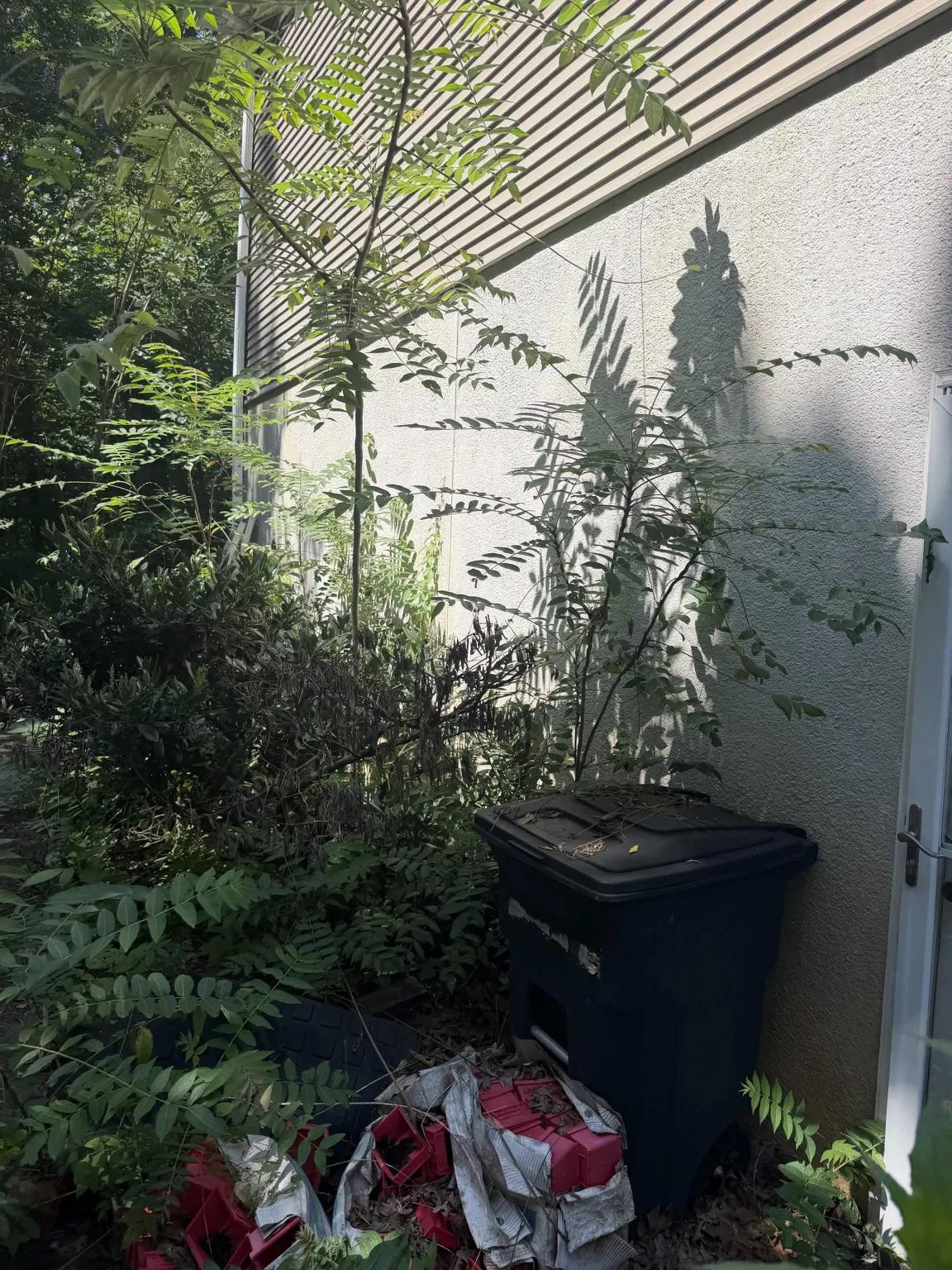
Tree of heaven is the lanternfly's favorite host. UK describes it as having long compound leaves with many smooth-edged leaflets and a smell like rancid peanut butter when the stems are cut. The Ohio Department of Natural Resources notes a mature tree can throw off more than 300,000 wind-blown seeds a year, so one at the fence line rarely stays one. It shows up along fence rows, roadsides, and disturbed ground, the kind of edge you find behind plenty of newer Hebron subdivisions. If you have one growing at the property line, removing it takes away the main draw, though it usually takes more than one round of treatment to keep it from coming back.
When to Treat in Hebron
Put it all on a calendar and the answer to "is one visit enough" becomes clear.
Now through the first hard freeze (normally late October, sometimes into early November). Treat where adults are gathering on the deck, siding, and shutters. Scrape every egg mass you can reach. Check anything you are about to store or move.
November through March. No adults. Keep scraping when you are outside. Look at the trunk base, fence posts, the underside of outdoor furniture, and anything sitting in the yard over winter.
Spring. Hatch. This is where a recurring plan matters most. Ask about starting treatment early in the season rather than waiting until you see adults.
June through September. Adults show up, feed, and start the cycle again. Staying on a schedule through late summer keeps the numbers from getting to the forty-on-the-shutters stage.
So, to the Hebron homeowner who asked: a one-time treatment in October can make your deck livable for the rest of the fall. It won't change what you see next summer. The eggs already on the house are the reason why, and the spring hatch is where real spotted lanternfly control happens.
Getting Ahead of Next Year
Lanternflies don't bite, sting, or damage the house itself. What they do is coat decks and cars in sticky residue, turn rails black with mold, pull in wasps, and make an otherwise good fall afternoon on the patio something you avoid. That's a quality-of-life problem, and in Boone County it's going to be part of the yearly pest calendar for a while.
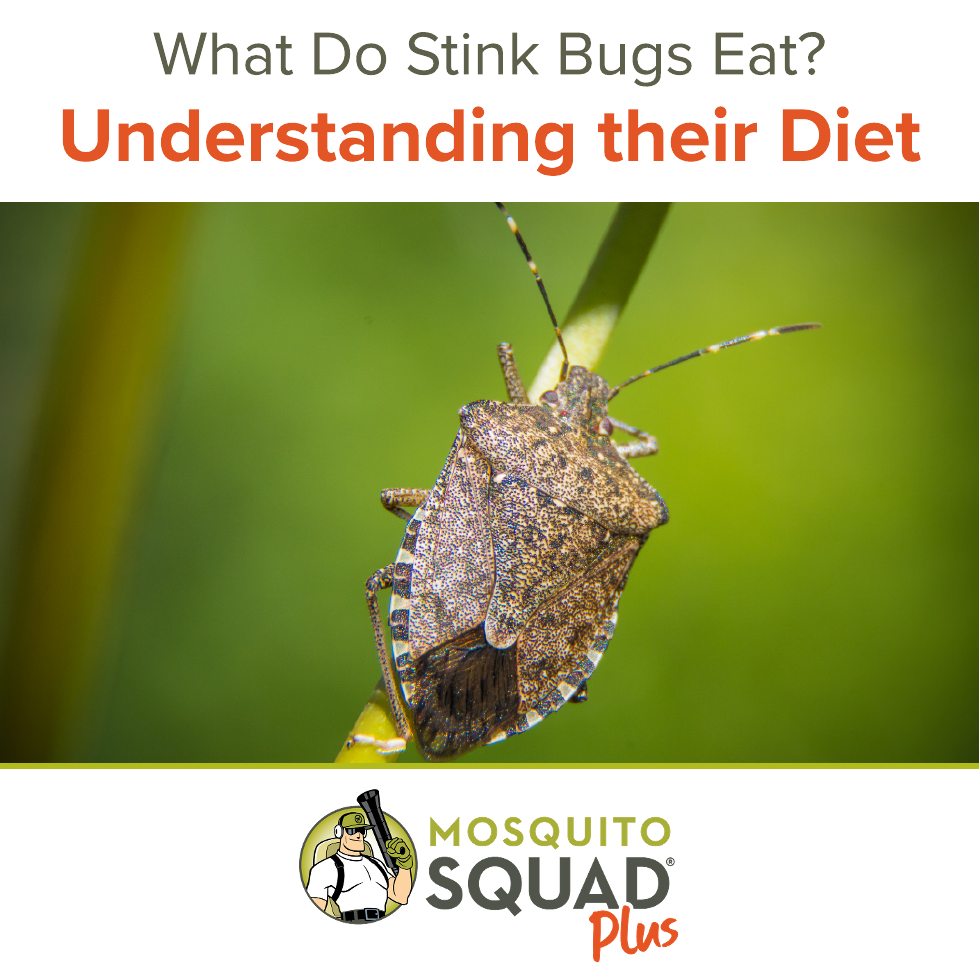
Our crews cover Hebron, Burlington, Florence, Union, and the rest of Northern Kentucky. If lanternflies are only one of the things you are fighting on the property, the same visits can cover a lot more. The Complete Home and Yard program pairs yard treatment with house-side pest protection, and Home Shield works the perimeter: the foundation, windows, doors, and soffits where pests try to get in. That's the same ground the stink bugs and the rest of the fall invaders start probing this time of year. Hebron's mosquito season has its own story, too, and we covered it in where Hebron's mosquitoes are really coming from.
For background on the insect itself, our national team put together a primer on what spotted lanternflies are and why they cause so much trouble. And if you want to know whether that gray patch on the shutter is what you think it is, mention it when you call, and we'll take a look on the first visit.
Every visit is backed by our satisfaction guarantee. Call Mosquito Squad of Northern Kentucky at (859) 222-7345 or request a free quote online. We'll look over the deck, siding, trees, and outdoor gear, mark where the lanternflies are gathering and laying, and lay out a plan for your Hebron home that runs from this fall through next summer's hatch.