Why Wasp Nests in Union KY Cluster by Construction Year
Posted by Mosquito Squad Plus
May 19, 2026
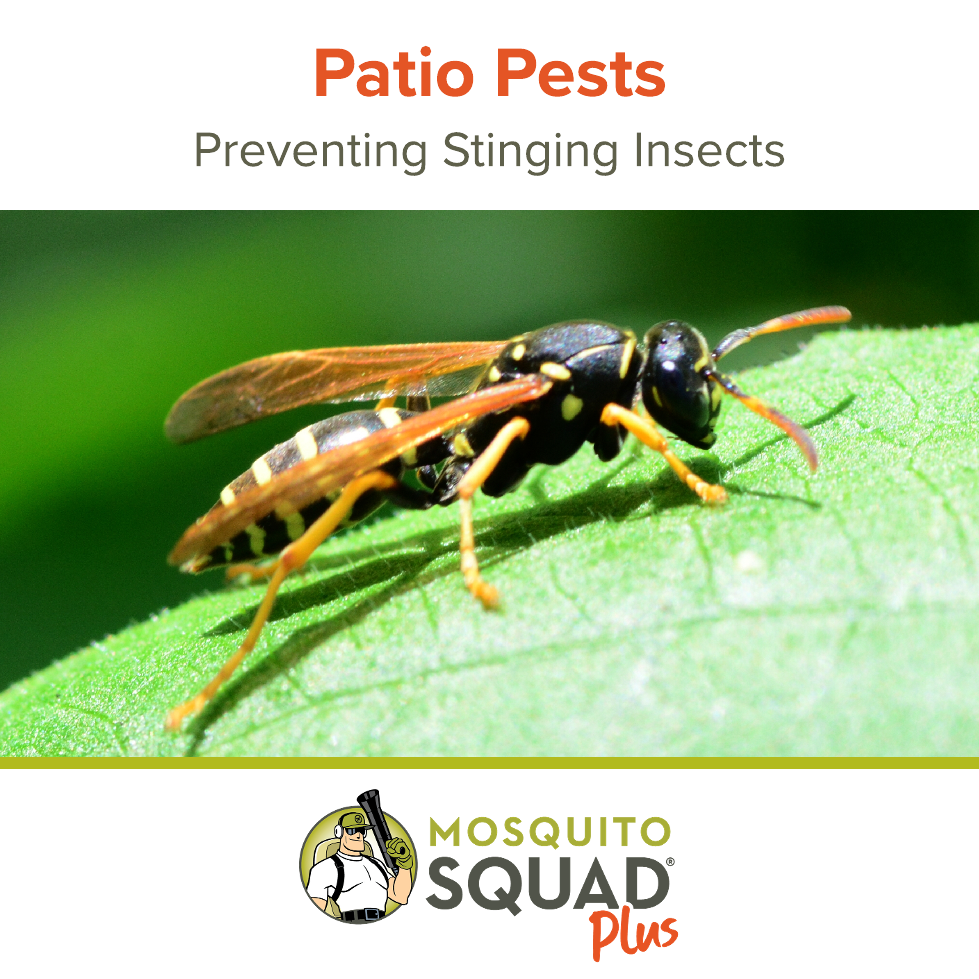
A homeowner in Hempsteade called us last week about a paper wasp nest forming under her front porch. When our tech got there he found two more on the same property, all on the south-facing eave line, all in early build stage. She had noticed the first one about a week prior and assumed it was isolated. It was not. He finished the treatment and drove two streets over for his next stop. Same subdivision, different house, same construction year, same three spots. By the end of that afternoon the pattern was obvious. Every property seeing active nest-building in early May was built between 2005 and 2008. The ones built after 2012 had almost nothing.
That is not random. That is a construction cohort hitting peak nesting conditions at the same time, and it is playing out across south Union right now.
Union's wasp pressure follows the construction timeline more tightly than any other variable I track, and the south side subdivisions are seeing it play out in real time this season. Hempsteade, Harmony, Lassing Green, parts of Triple Crown…these neighborhoods filled in during Union's big growth push from the early 2000s through 2010, and now that housing stock is hitting the age where trim weathering, settled landscaping, and minor structural gaps converge to open nesting opportunities that were not there even three years ago. The homes aged into peak wasp conditions at the same time, which means the nests are not appearing randomly across town. They are showing up in clusters, across entire streets, within the same seasonal window. If you are dealing with wasp control in Union KY, the construction year of your home is a more useful starting point than almost anything else.
Union Built Fast, and That Speed Created a Synchronized Problem
Union's population jumped from roughly 2,900 residents in 2000 to over 7,400 by 2020. The city's median construction year sits at 2005, and 45.8% of all housing units were added between 2000 and 2009. That growth concentrated heavily on the south side of town where developers had access to larger parcels along Mt. Zion Road, around the Ryle High School corridor, and spreading toward Triple Crown along US 42. Subdivisions went in fast. Hempsteade alone added hundreds of homes within a roughly three-year window in the mid-2000s. Harmony followed a similar pace. Lassing Green filled in slightly earlier but still lands squarely in that same development era.
The result is a housing stock that shares construction methods, material choices, and age profiles across hundreds of properties simultaneously. Builders during that period used similar trim packages because they were pulling from the same regional suppliers and working off comparable plan sets. Most homes in these south Union neighborhoods feature 8 to 12-inch eave overhangs with exposed fascia boards. Garage door trim uses pine or composite materials that weather on a predictable schedule. Foundation plantings went in as small 3-gallon shrubs that have now matured into dense cover along the base of the structure. According to the University of Kentucky Entomology Department, paper wasps, yellow jackets, and European hornets evaluate nesting sites based on specific structural features and microclimate conditions. When an entire subdivision hits those conditions at the same maturity level in the same season, wasp pressure concentrates in clusters rather than distributing evenly across town. Right now in Union that means the south side. The Florence service area sees similar clustering in neighborhoods that developed during the same Boone County growth period, which gives us a clear read on how the pattern plays out as a housing stock ages.
What 20-Year-Old Construction Looks Like to a Wasp
Wood trim installed in 2005 is now 21 years old. That is old enough for paint to have cycled through two or three applications and still show raw grain exposure at the edges where moisture collects after rain. Fascia boards develop minor separation at the joints where they meet soffit panels. Those gaps do not cause structural damage but they are exactly what a paper wasp queen is looking for in early May when she is scouting protected sites to start building. She needs a quarter-inch recess out of the wind and rain with some thermal mass nearby to warm the nest in the morning. The south-facing eaves on Union homes built in the mid-2000s deliver both, consistently, across hundreds of properties.
Attached two-car garages are nearly universal in south Union neighborhoods, and the trim around garage door headers provides one of the most reliable paper wasp attachment points on a residential property. The horizontal header above the door creates a rain-protected ledge. The vertical trim on either side forms corners where wasps anchor the top of the nest while building downward. Homeowners usually do not notice nests in these locations until they are well established because garage access is quick and attention stays on the door mechanism rather than the trim above it. A nest that started in the first week of May can have 30 to 40 active cells and a full defensive workforce by the time someone looks up and sees it. Wasp and yellow jacket control that addresses only the visible nests on the structure while ignoring ground activity is half a treatment.
Vinyl siding was the dominant exterior material during Union's construction boom, and the J-channel trim used to finish edges around windows and doors leaves small channels where European hornets investigate during spring scouting. If that channel connects to a void behind the siding or leads into an attic space through a small gap at the soffit line, a European hornet queen may establish a colony inside the wall. These nests are invisible from the exterior and only reveal themselves when hornets are observed entering and exiting the same spot repeatedly. The UK Extension's Kentucky Pest News notes that European hornet nests in wall voids can reach 200 to 400 workers by late summer, at which point removal becomes significantly more complicated.
Yellow Jacket Ground Nests and the Landscaping Problem
Yellow jackets prefer underground nests, often in abandoned rodent burrows or loose disturbed soil around shrubby cover. The foundation planting beds in Hempsteade, Harmony, and Lassing Green have been reworked multiple times over 20 years as homeowners replaced mulch, adjusted drainage, or swapped out shrubs. Each disturbance creates loose soil pockets. Each new mulch layer adds the moisture retention and insulation that yellow jacket queens seek when establishing spring colonies.
The dense mature boxwoods and ornamental grasses lining the front of most south Union homes now provide significant ground-level shade. That shading keeps soil cooler during hot weather and retains moisture better than exposed beds, which is exactly the microclimate yellow jackets consistently prefer. When a queen finds that combination under a mature foundation shrub in early spring, she establishes a colony there and it builds through summer without any visible surface activity beyond a small entrance hole. Homeowners in Triple Crown and Harmony discover these nests in June and July when a lawn mower or a child playing near the bed accidentally vibrates the ground above the entrance.
According to the National Pest Management Association, yellow jacket stings account for a significant portion of the roughly 500,000 emergency room visits from stinging insect encounters annually in the United States. A ground nest disturbed by a mower can produce dozens of stings in seconds because the entire defensive workforce exits simultaneously. In a family neighborhood like Hempsteade where kids are regularly outside and lawn care happens weekly, an undiscovered ground nest is a genuine hazard that gets worse every week as the colony grows toward its late-season peak. Wasp control in Union KY that skips the inspection of mature foundation beds is not a complete treatment.
Why Timing Compounds the Risk Through Summer
May nests are manageable. The colonies are small, the defensive workforce is limited, and treatment is relatively straightforward. Most homeowners do not call in May though. They notice something forming, keep an eye on it, try a home remedy or two, and let the season move forward. By August, the same nest that had 20 cells in early May can have several hundred workers defending it. Yellow jacket colonies reach peak population between August and October, and their behavior changes significantly as summer progresses. Early season yellow jackets focus on colony growth and stay close to the nest entrance. Late summer yellow jackets scavenge aggressively, range farther from the nest, and respond to perceived threats much faster.
The CDC notes that stinging insect encounters send hundreds of thousands of Americans to emergency rooms annually, with serious reactions occurring even in people with no prior known allergy. The late summer escalation in aggression is when those serious encounters are most likely, particularly in residential neighborhoods where outdoor activity is still high. The timing problem compounds for homeowners who attempt treatment themselves. Over-the-counter wasp sprays kill surface-foraging workers but rarely penetrate far enough into a ground nest to reach the queen and developing larvae. A disturbed colony that is not fully treated becomes more aggressive, not less. According to UK Extension, professional treatment is the safest approach for established wasp and hornet nests, particularly for ground-nesting yellow jackets and any European hornet colony inside a wall void.
Proactive wasp control in Union handled in May costs less, involves less risk, and produces better outcomes than treatment attempted in August when colonies are at peak population. A natural treatment option works well for mosquito pressure on the same property but stinging insects at an established nest require a different approach entirely. Calling early is not cautious. It is just practical.
What Professional Treatment Actually Addresses
Effective wasp control in Union KY starts with a full property inspection rather than just treating the nests already visible. Our technicians check eaves and fascia boards on all four elevations, garage door trim, porch ceilings, exterior light fixtures, and any equipment stored against the structure. They check foundation planting beds for ground nest entrance holes, paying particular attention to spots where mulch is deep and shrub cover is dense. They look at the soffit line for signs of European hornet activity and check gaps around utility penetrations where trim work has separated. The EPA's guidance on stinging insect control reinforces that inspection-first treatment consistently outperforms reactive spot treatment on established colonies.
The inspection matters because wasp control that only addresses what the homeowner noticed leaves active nests in place. A homeowner who spots a paper wasp nest on the front porch eave may have a yellow jacket ground nest in the foundation bed on the side of the house that never got flagged. Those two problems require different treatment approaches, and missing one means the homeowner is back on the phone in six weeks. Our Home Shield package covers the full perimeter of the structure and addresses multiple pest pressures simultaneously, which is the right fit for south Union properties dealing with both aerial and ground-nesting species at the same time.
Nest removal is part of the process but not the whole process. Barrier treatment application after removal reduces the likelihood that replacement nesting activity starts in the same locations within the same season. Paper wasps are persistent about returning to sites where previous colonies succeeded because of chemical cues left on the structure. A treated eave that gets barrier application after nest removal is far less likely to see a new nest established than one that just had the nest knocked down without follow-up. For homeowners in Hempsteade and Harmony dealing with the synchronized pressure that comes from the construction cohort pattern, proactive treatment before colonies reach defensible population is the most cost-effective approach. The Independence service area sees similar patterns in Boone County neighborhoods built during the same era, and the timing principle holds consistently.
The Neighborhood Pattern and What to Do About It
The synchronized nature of wasp pressure in south Union's subdivisions means individual treatment is less effective than it would be in a neighborhood with staggered construction years and mixed structural profiles. If your home was built between 2003 and 2009 and you are seeing paper wasp activity on your eaves or garage trim this May, the property two doors down likely has the same conditions even if that homeowner has not spotted anything yet. Late-season yellow jacket scavenging does not respect property lines, and nests allowed to develop on neighboring properties generate foraging workers that range into your yard regardless of what you have done on your own side.
The Burlington service area and the Hebron service area have seen similar synchronized pressure patterns in communities that developed quickly during the same regional growth period. The treatment approach is consistent across all of them: get ahead of the timeline, address both aerial and ground-nesting species in the same visit, and follow up with barrier treatment to reduce re-establishment.
If you are not sure whether what you are seeing is an established nest, a queen scouting site, or foraging activity from a nest elsewhere, call for an inspection. The guarantee behind every treatment means the investment is protected, and an early-season inspection costs considerably less than emergency treatment on an August colony at full population. Mosquito Squad of Northern Kentucky has been treating yards across Boone County since 2013. The south Union construction pattern is something we have watched develop over multiple seasons, and we know how to address it before it becomes a summer-long problem.