Hornet Removal in Northern Kentucky: What Homeowners Should Know
Posted by Mosquito Squad Plus
July 14, 2026
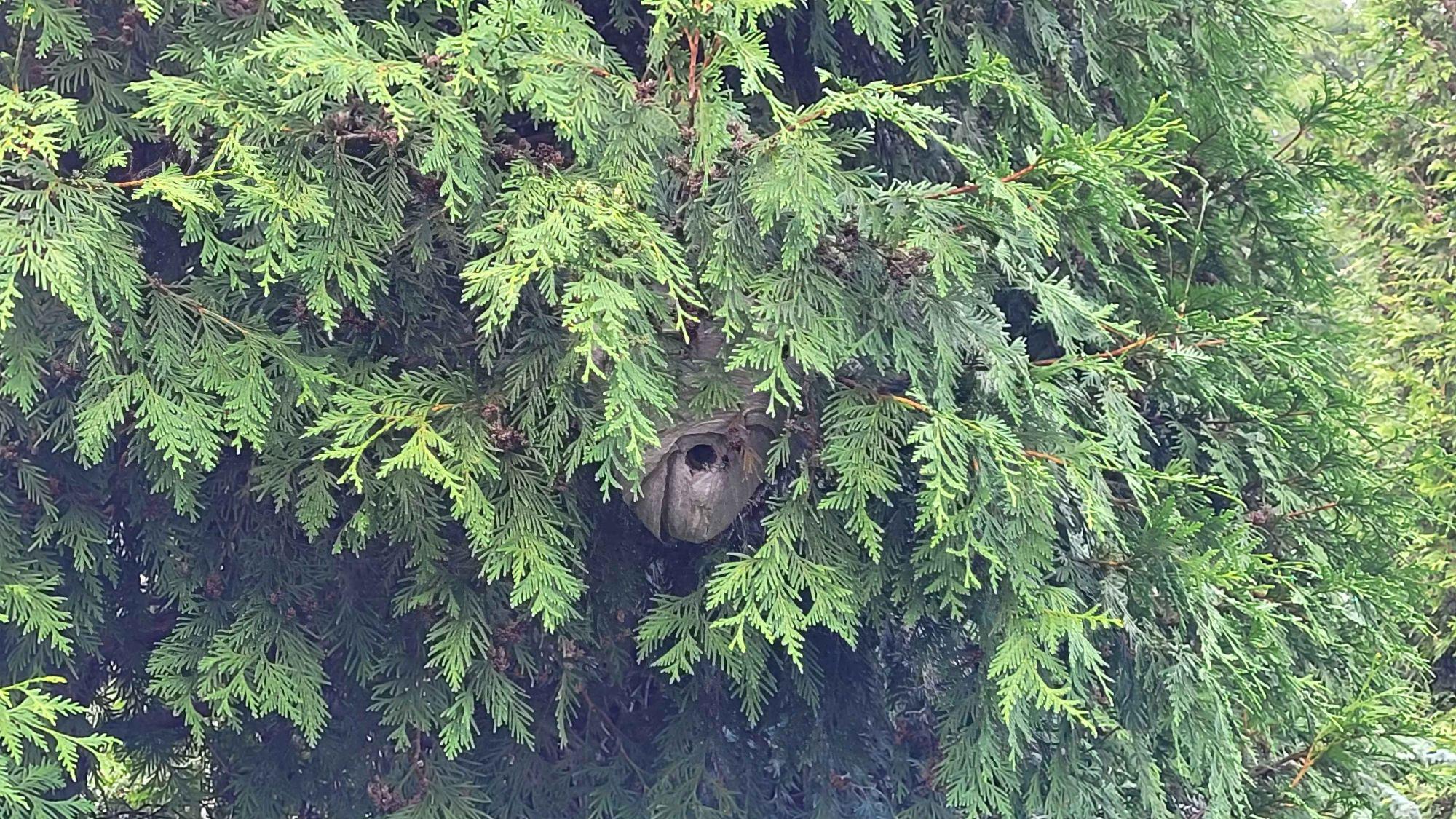
Most of the hornet calls we take in Northern Kentucky come in during July, and they almost always start with a ladder. Someone went up to clean gutters in Fort Mitchell, or stepped back to size up a limb hanging over a driveway in Fort Thomas, and there it was. A gray paper ball the size of a football, sometimes considerably bigger, hanging in a tree they walk under every single day.
That nest did not appear overnight. A bald-faced hornet queen started it back in April, working alone, and for weeks the whole operation stayed small enough to hide behind a handful of leaves. By the time a nest is big enough to catch your eye from the ground, it is running a workforce of a few hundred and adding more every week. According to the University of Kentucky Entomology program, bald-faced hornet nests in this region commonly hold 200 to 400 hornets by late summer. Homeowners find them in July, and the colonies keep building toward a peak through August and September, which is when the defensive behavior sharpens.
That timeline is the most useful thing to understand about hornet removal in Northern Kentucky. The second most useful thing is knowing which hornet you have, because the two species that dominate Boone, Kenton, and Campbell counties choose completely different real estate, and everything about safe removal changes with the address.
The Two Hornets Northern Kentucky Homeowners Meet
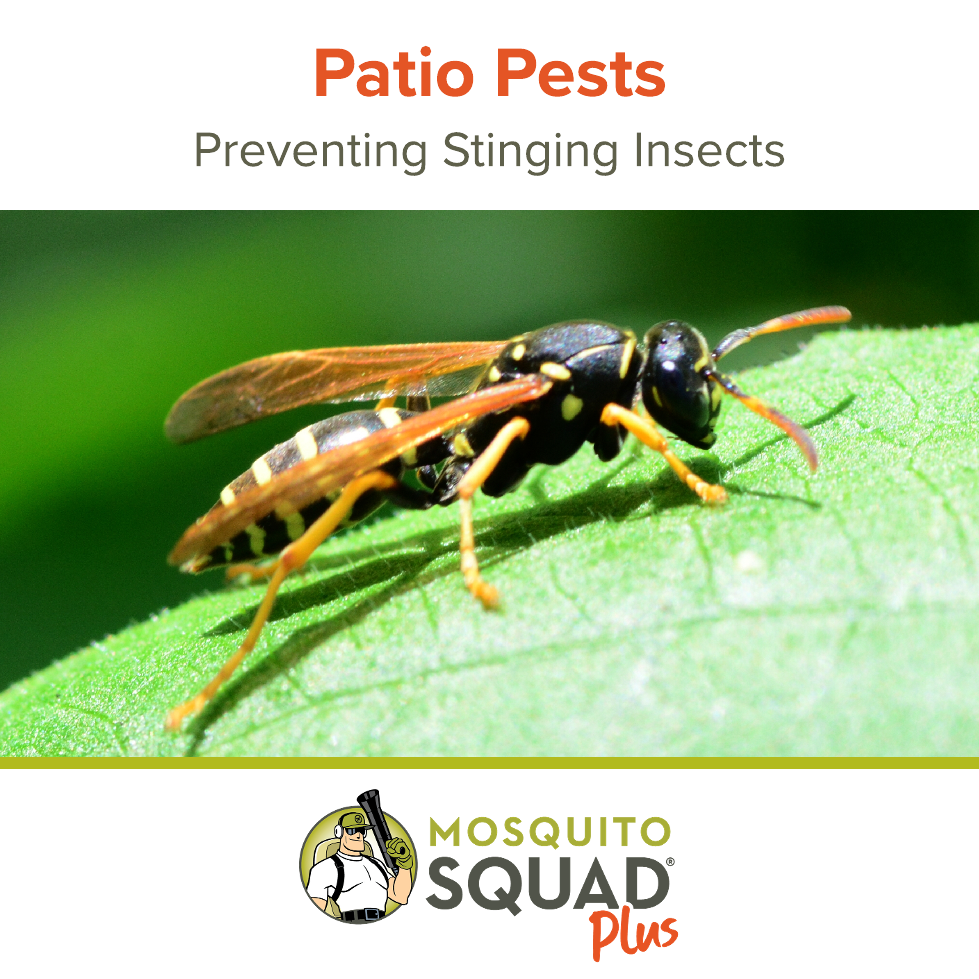
The bald-faced hornet is the one behind the classic gray football nest. It is black with a white face and white markings toward the tail, about three quarters of an inch long, and it defends its nest with more commitment than any other stinging insect you will run into around here. Entomologists will tell you it is technically an aerial yellowjacket rather than a true hornet. Nobody standing under an active nest has ever found that distinction comforting. The nests hang from tree branches, dense shrubs, deck structures, and occasionally the side of a building, and each hornet can sting repeatedly when the colony decides you are a threat.
The European hornet is a different animal in nearly every way that matters for removal. It is the only true hornet established in Kentucky, and per Ohio State University Extension, it runs 1 to 1.5 inches long with a reddish brown body, a yellow face, and yellow and black banding on the abdomen. Its size alone generates panicked calls, and every summer a few homeowners are convinced they have found an Asian giant hornet. They have not. That species has never been confirmed anywhere near Kentucky. What they have found is a big, loud, native-by-now hornet that prefers to nest where you cannot see the nest at all.
European hornets build inside cavities. Hollow trees, wall voids, attics, barns, and the gaps behind window shutters are the preferred sites, and they like an entry point six feet or higher off the ground. That habit matters enormously in this market. The third player worth naming is the ground-nesting yellowjacket, which is a separate problem with separate tactics. We covered the ground nest issue in depth in our post on why wasp nests cluster by construction year in Union, and the short version is that yellowjackets follow landscaping age while hornets follow something else entirely.
Hornets Follow the Canopy, and the Canopy Is Not Evenly Distributed
Here is the pattern we see across our route sheets every summer. Bald-faced hornet work concentrates in the older, heavily treed communities along the river and the ridge lines, and thins out fast in the newer subdivisions further south and west. The reason is straightforward. A bald-faced queen wants an established branch structure with height, cover, and a stable anchor point, which rules out the maple planted in a 2018 subdivision and points straight at the sixty year old oaks on the ridge streets.
The distribution of those older trees in Northern Kentucky is lopsided, and Campbell County holds the heavy end. The Fort Thomas Forest Conservancy cites a Campbell County forest assessment prepared by Northern Kentucky University showing Fort Thomas contains 1,146 acres of urban forest, about 31 percent of the city, more than any of the county's 13 municipalities, including 86 acres of high quality large-crown forest. Many residential streets there run along ridges with woods directly behind the houses. That is precisely the tree structure bald-faced hornets want, which is why the Fort Thomas service area hands us a steady share of our aerial hornet nest work every summer.
Kenton County has its own version of this. The City of Covington maintains Devou Park at more than 700 acres of largely wooded hillside, and the city runs an active urban forestry program that has earned repeated Tree City USA recognition. Mature street trees and wooded slopes wrap through the older neighborhoods of Covington, where the housing predates the park by decades in places, and the canopy continues along the hillsides above the Licking River into the shade streets of Edgewood, which carry the mature branch structure hornets scout for. A regional canopy assessment by the Northern Kentucky Urban and Community Forestry Council mapped tree cover across Boone, Campbell, and Kenton counties, and the takeaway for our purposes is simple. The oldest, densest canopy sits in the river cities and the ridge communities, and so does the aerial hornet pressure.
None of this means newer communities are exempt. Hebron keeps wooded edges along its older farm parcels, Independence has the tree cover of the Banklick Creek corridor threading between its subdivisions, and a nest fifty feet inside a tree line can still send foraging hornets across the nearest six backyards. The gradient is real, though. If your street was built under an old canopy, your odds of hosting a bald-faced nest this season are meaningfully higher than your odds in a ten year old subdivision in Union, where the wasp pressure runs to paper wasps on garage trim instead.
European Hornets and the Older Housing Stock
The European hornet flips the geography question from trees to walls. The housing stock in Covington and Latonia includes a large share of homes built before modern sealed construction, and the same goes for Newport, where block after block of older frame and brick homes carries the wall voids, deep soffits, original wood windows, and settled foundations that come with age. Those same blocks carry big old street trees, some with hollows. Every one of those features is candidate real estate for a European hornet queen scouting in spring.
A colony inside a wall void is invisible in the way that matters most. Instead of a gray football hanging where anyone can see it, the only sign is a single entry point, often high on the structure, with large hornets moving in and out on a steady schedule. Kentucky Pest News, published by University of Kentucky Extension entomologists, notes that European hornet colonies in protected voids can also reach 200 to 400 workers by late summer. A homeowner can share a wall with that population for months and only piece it together in July when the traffic gets too heavy to miss.
There is one more behavior that separates European hornets from everything else in the yard, and it is the one that generates the strangest phone calls we get. European hornets fly at night. They are drawn to light, and on warm summer evenings they will bang into porch lights and lit windows hard enough to sound like someone flicking the glass. If something large and buzzing is hitting your windows after dark, you are not imagining it, and it is worth finding out where those hornets are living, because the answer might be a hollow tree two doors down or it might be your own attic.
Why the Twenty Foot Spray Can Goes Wrong
Every July, somebody in Northern Kentucky stands on a ladder at dusk holding a hardware store hornet spray with a plan and a porch light behind them. We end up meeting a fair number of these folks the following week. The plan runs into the math of an established colony, and the math wins every time.
Start with the bald-faced nest. By mid July it holds hundreds of workers that respond to threats as a group, and the trigger is not just contact. Vibration against the branch, a stream of spray hitting the outer paper envelope, even the ladder bumping the trunk can bring out the defensive response. Each hornet stings repeatedly. The spray reaches the hornets near the surface and the entry hole, and the rest of the colony exits ready to work. A partially treated nest is more dangerous than an untreated one, because now the colony is agitated and you are the closest explanation. The EPA's guidance on stinging pests is blunt about leaving established colonies to people with proper equipment, and this is exactly the scenario they have in mind.
Wall voids raise the stakes differently. Spraying the entry point of a European hornet colony can drive activity deeper into the structure rather than out of it, and in some cases hornets emerge inside the living space looking for another exit. Sealing the hole while the colony is alive produces the same result. The nest has to be eliminated before the entry gets closed, and the treatment has to reach the colony where it lives, which is rarely possible with an over the counter product aimed at a hole in the siding.
Even the old advice about treating at night needs an asterisk in this market. Night treatment works on the logic that the colony is home and calm after dark. European hornets fly at night, so the assumption fails for the exact species most likely to be living in your wall. The CDC's guidance on stinging insects notes that stinging insect encounters send large numbers of Americans to emergency care every year, and that serious reactions occur even in people with no known allergy history. The late season is when colonies are largest and most defensive, which makes it the worst possible time to learn something new about your own reaction to venom while standing on a ladder.
When Leaving a Nest Alone Is the Right Call
Not every nest needs removal, and it would be dishonest to pretend otherwise. Hornet colonies in this region are annual. The workers and the founding queen die with the first hard frosts, the newly mated queens leave to overwinter under bark and in other protected spots, and the nest is never used again. A bald-faced nest hanging high in a tree at the back of a wooded lot, well away from the house, the play set, the fence line, and the mower's route, can often be left to run out its clock. By November it is an empty paper shell, and by spring the weather is pulling it apart.
The calculation changes completely when the nest overlaps with daily life. A nest over a doorway, along a walkway, at deck height, in a shrub beside the driveway, or anywhere kids and pets move every day is an escalating hazard, because the colony grows and gets more defensive from now until fall. And a European hornet colony inside a wall void is never a leave-it-alone situation. That colony is chewing paper, generating moisture, and occasionally finding its way into the house, and it will only get bigger until frost. If you are unsure which situation you have, that uncertainty is itself the reason to have someone look, and our guarantee means an inspection call carries no risk of paying for treatment you did not need.
What Hornet Removal in Northern Kentucky Involves
Proper hornet removal starts before anyone touches a nest, with two identifications that drive everything downstream. First the species, because a hanging bald-faced nest in a Hebron maple and a European hornet colony inside a Fort Mitchell wall void have almost nothing in common as removal jobs. Second the full extent of activity on the property, because the nest the homeowner spotted is frequently not the only one. Our technicians walk the eave lines, check soffit gaps and utility penetrations, look into dense shrubs and hollow trunks, and watch flight lines, which reliably point back to entries a visual scan misses.
Treatment itself is a matter of the right products, the right protective equipment, and timing matched to the species. For an aerial nest, the colony is eliminated first and the nest comes down only after enough time has passed to confirm there are no returning stragglers, because knocking down a live nest is how bad afternoons happen. For a wall void, the treatment reaches the colony inside the cavity before the entry is addressed, in the correct order, so nothing gets pushed into the house. Afterward, a barrier application around the structure reduces the odds of replacement activity, since successful nest sites carry chemical cues that attract next spring's scouting queens.
For homeowners dealing with more than one pressure at a time, which describes most of the properties we service by August, the stinging insect work folds into a broader plan. Our Home Shield package covers the structure's perimeter against the mix of pests that older Northern Kentucky homes attract, and our full lineup of pest packages lets us match the program to the property instead of forcing every yard into the same service. One distinction worth knowing before you call: automatic misting systems are a scheduled defense against mosquito pressure, and they are excellent at that job, but an established hornet colony requires targeted treatment at the nest. A misting system will not solve a wall void, and we will tell you that plainly rather than sell you the wrong tool.
We have been treating yards across Boone, Kenton, and Campbell counties since 2013, and stinging insect work has grown every year as the region's housing stock and tree canopy both age into prime conditions. If you want the longer version of how we approach this work and why the treatment standards run the way they do, the why Mosquito Squad Plus page lays it out. If you have already found the nest, skip the reading and get someone out to look at it while the colony is still July sized. Every community we cover is listed on our areas we service page, and the mosquito side of the seasonal picture is covered in our post on mosquito season in Fort Thomas.