Mosquito Control in Harvest Starts With the Subdivision Pond
Posted by Mosquito Squad Plus
July 20, 2026
Sit in the drop-off line on Jeff Road on a warm May morning and you will pass a half dozen of them before you reach Sparkman. A pond at the entrance of every subdivision, brick sign beside it, little fountain going in the middle, a sign that says no swimming and no fishing. They look like landscaping. Come back to that same pond at dusk in late July and you will see something different hanging over the water, a thin haze of mosquitoes lifting off the edges as the light goes.
That pond is not landscaping. It is stormwater equipment, and when it quits doing its job it turns into the biggest mosquito source your whole neighborhood shares. Nobody put it there to look nice. They put it there to keep the street from flooding, and whether it also breeds mosquitoes by August comes down to one thing nobody in the subdivision tends to be watching, which is how well it gets maintained.
The Neighbor Two Streets Over Is Feeding Your Yard
Harvest homeowners get caught off guard by this all the time. You can keep a spotless yard, dump every bucket, clean every gutter, and still get eaten alive on your own deck. That happens because the mosquitoes are not coming from your yard. They are coming from the shared basin down the street, and they will fly a few blocks to find you.
The mosquito that takes over a stagnant subdivision pond is not the same one that comes off the farm fields out in Capshaw. Out there the mosquitoes ride in off the farmland, off flooded row crop and ditches spread across land nobody can treat. In a Harvest subdivision the problem is the house mosquito, genus Culex, and a neglected basin gives it everything it wants: still water, warm water, water gone thick and green with grass clippings, leaf litter, and whatever the lawns upstream washed in after the last storm.
You can usually see it. The Minnesota stormwater guidance names Culex as the mosquito that shows up in stormwater basins and ponds clogged with vegetation, and flags shallow water under a foot deep and overgrown edges as the conditions that produce it. A silted, weedy pond margin is doing the same job as the old bucket in the backyard, just at neighborhood scale.
Why the Bug Matters More Than the Bite
Culex is not just another itchy nuisance. It is the mosquito that carries West Nile virus, and that changes the math on a green neighborhood pond.
The Alabama Department of Public Health names the Culex group as the state's most common West Nile carrier and has recorded the virus in every one of Alabama's public health districts. West Nile is the most reported mosquito-borne disease in Alabama, running in a loop between birds and mosquitoes with people and horses picking it up along the way. The CDC points to Culex as the main vector nationally and tells you to go after the permanent standing water, ponds included, where it breeds.
This is not cause for panic. Most people who catch West Nile never feel a thing, and serious illness is uncommon, landing mostly on folks over sixty and people already fighting other health problems. But 2026 has been a rough West Nile year across a lot of the country, and for a Harvest family the point is straightforward. A bad neighborhood pond does not breed some harmless bug, it breeds the one that carries disease, and it breeds it a short flight from the back porch.
A Good Pond Barely Breeds. A Bad One Never Stops.
The internet usually gets this part wrong. The pond at your entrance is not automatically the problem. A well-built, well-kept one barely produces mosquitoes at all. Dry detention basins, the kind that sit empty between storms, are engineered to drain within two or three days. A mosquito needs roughly seven to ten days of standing water to get from egg to biting adult, so a basin that empties on schedule never gives them the runway. The EPA recommends these structures dewater within 72 hours for that exact reason.
A healthy wet pond, the kind that holds water year round, does not breed heavily either, because deep open water carries fish and dragonfly nymphs that eat the larvae and wind that keeps the surface moving. The Wisconsin DNR makes the point directly that a properly built wet pond with real depth is not where West Nile mosquitoes prefer to breed.
The trouble is what happens over the years, once the ribbon is cut and nobody is looking. A dry basin fills with sediment until it can no longer drain. A wet pond grows up in cattails until the edges are a shallow warm swamp. A forebay silts in and holds a stagnant puddle for weeks at a stretch. Peer-reviewed work bears this out. A 2024 study of central Ohio stormwater ponds found mosquito numbers tracked directly with each basin's design and how overgrown it was, and research on retention ponds in built-up areas found that basins holding water more than two weeks in breeding season turn into West Nile vector habitat. The pond is only as good as its last cleaning.
Why Harvest, and Not Madison Next Door
Every growing suburb has these ponds. What sets Harvest apart is who is supposed to take care of them, and the answer is often nobody.
Harvest is not a city. It is an unincorporated community in northwest Madison County, one of the fastest growing in North Alabama, and it has no town government of its own. Incorporated neighbors like Madison and Huntsville run public works departments with crews, equipment, and a budget line for drainage upkeep. In unincorporated Harvest the county regulates stormwater and publishes the standards, but the hands-on maintenance of a subdivision basin is not the county's to do. When a developer finishes a subdivision, the pond and its upkeep get handed to the homeowners association, and from there it falls to volunteers, or to a developer who cashed out and left, or in plain practice to nobody with a dredge and a reason to use it.
That handoff is where it breaks down. Madison County's own stormwater basin maintenance guide spells out that keeping a basin working means routine sediment removal, vegetation management, and insect control, and it says outright that mosquitoes become a problem in retention ponds and dysfunctional detention basins whenever water is allowed to pool for extended periods. That is a real job with real cost, and it is precisely what slips when there is no public crew assigned and the HOA is a handful of neighbors running on volunteer hours and dues.
The pond gets built to spec, passes its one inspection, and then quietly fills in over a decade while everybody assumes somebody else has an eye on it. By the time it is visibly green and holding a warm shallow pool all summer, it has been pumping out Culex for seasons. This is the opposite of the New Hope drainage problem we have written about, where the water hides in the soil. In Harvest it is sitting right out in the open at the front of the neighborhood, in plain sight, and still nobody touches it.
The Sources You Can Do Something About
Blaming the pond for everything is a mistake too, because it lets a homeowner ignore the water inside their own fence, and Culex is a container specialist. The same bug from the basin will happily breed in whatever around your house holds still water for a week.
Clogged gutters top the list, a full gutter is a long skinny pond nobody ever looks up at. The corrugated downspout extension that traps a little water in every ridge. A tarp over the boat with a sag in it. Plant saucers on the deck. A kid's wagon left out, a wheelbarrow standing up, the low corner of the yard that stays soggy for days after a storm. The CDC recommends larvicide for water you cannot dump and draining everything you can, because one forgotten container can pump out mosquitoes all summer long.
This is why treating a Harvest yard right means walking it, not just fogging it. The 7 T's of mosquito control open with tipping and tossing standing water and clearing out the containers before anything else, and on a subdivision lot that walk-around is half the battle. You cannot do much about the shared pond, but the handful of hidden breeding spots in your own yard are all within reach.
What a Barrier Does That a Garden Hose Cannot
Emptying your containers cuts down what your own yard makes. It does nothing about the grown Culex drifting over from the shared basin two streets away, and that is the job a barrier treatment is built for.
Our barrier works by coating the shaded undersides of leaves, the insides of shrubs, and the fence lines where adult mosquitoes hole up during the heat of the day. Culex rests in cool, dark, damp vegetation and comes out hungry at dusk, so hitting those resting spots knocks the incoming adults down before they ever reach your patio. We run it on a 21 day cycle spring through fall, and the interval is deliberate. Twenty one days is about how fast a mosquito population rebuilds in North Alabama heat, which is why we treat on that clock instead of the monthly one some outfits bill on, leaving a wide open gap every single month right when the pressure peaks. For a full walkthrough of how the pieces fit, the mosquito control page lays it out.
If you would rather go botanical, our natural treatment runs the same schedule on essential oil active ingredients. For a patio or screened porch that gets heavy evening use, an automatic misting system lays down a fixed layer right over the spot where a family spends its summer nights, which happens to be the dusk window when Culex is out feeding.
When the Pond Itself Has to Be Dealt With
Sometimes the yard work and the barrier still are not enough, because the basin itself is a wreck, and then the pond has to be handled head on.
Both the CDC and Alabama public health point to larvicide for permanent standing water you cannot drain. Bti dunks, a bacterial larvicide that kills larvae without harming fish, birds, or pets, are made for exactly this and go right on the shallow vegetated margins where Culex lays. The complication in Harvest is access. If the basin is HOA ground or shared common area, one homeowner usually cannot treat it alone, and that is when the neighborhood has to move as a group. Getting the HOA to fund routine clearing and larviciding of a problem pond does more for a whole subdivision than any single yard ever will, and if your pond has gone green it is worth putting on the agenda at the next meeting.
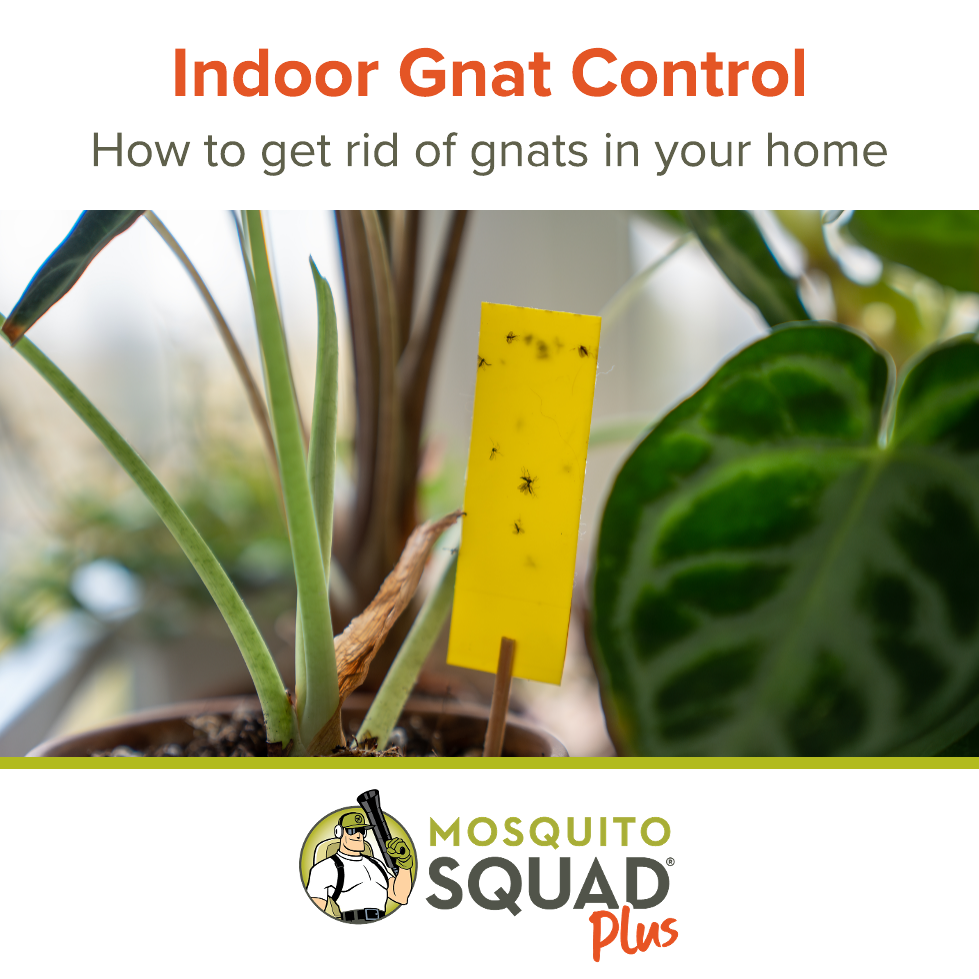
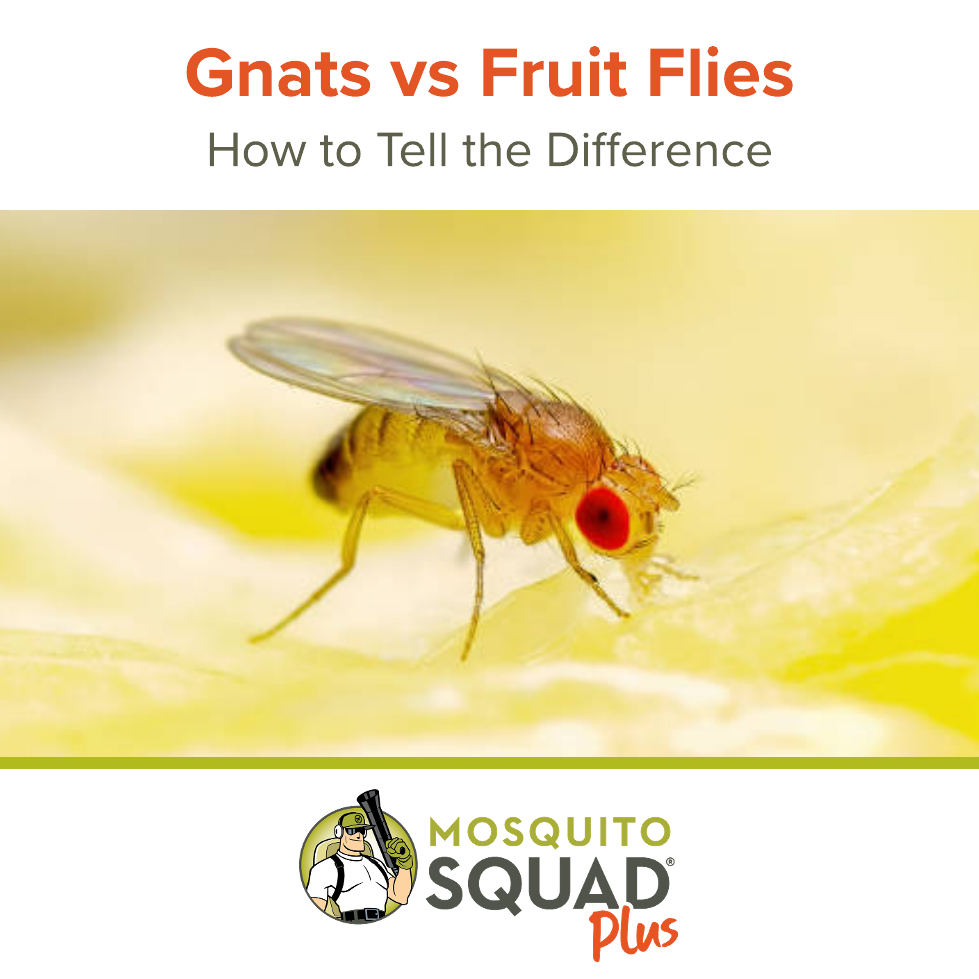
For the yard-by-yard work you can control, our year-round Home Shield coverage handles the structure and yard on a rolling schedule, and Squad Yard Defender goes after the ground-level pests a barrier alone will not settle. Along a pond edge, gnats and biting midges breed in the same muck as the Culex, so gnat and midge control tends to come up on properties that back a basin. Households that want the whole list handled on one plan usually land on a seasonal package.
The Pond Sets the Calendar, Not the Bite
Most Harvest homeowners wait until the biting gets bad before they do anything, and with a pond-driven problem that is always a step behind.
Culex spends the winter as an adult and gets moving early, laying in the first warm still water of spring. A basin that came through winter silted and full does not wait around for July. It starts producing the minute the water warms up. That is why getting a barrier program going in early spring, ahead of the first generations, beats reacting in the middle of summer every time. The ADPH pushes source reduction going into the season rather than after the mosquitoes are already thick. In practice the neighborhood pond runs the schedule. If it is holding water and greening up in April, your season has already started, whether you have felt a bite yet or not.
What We Do in Harvest
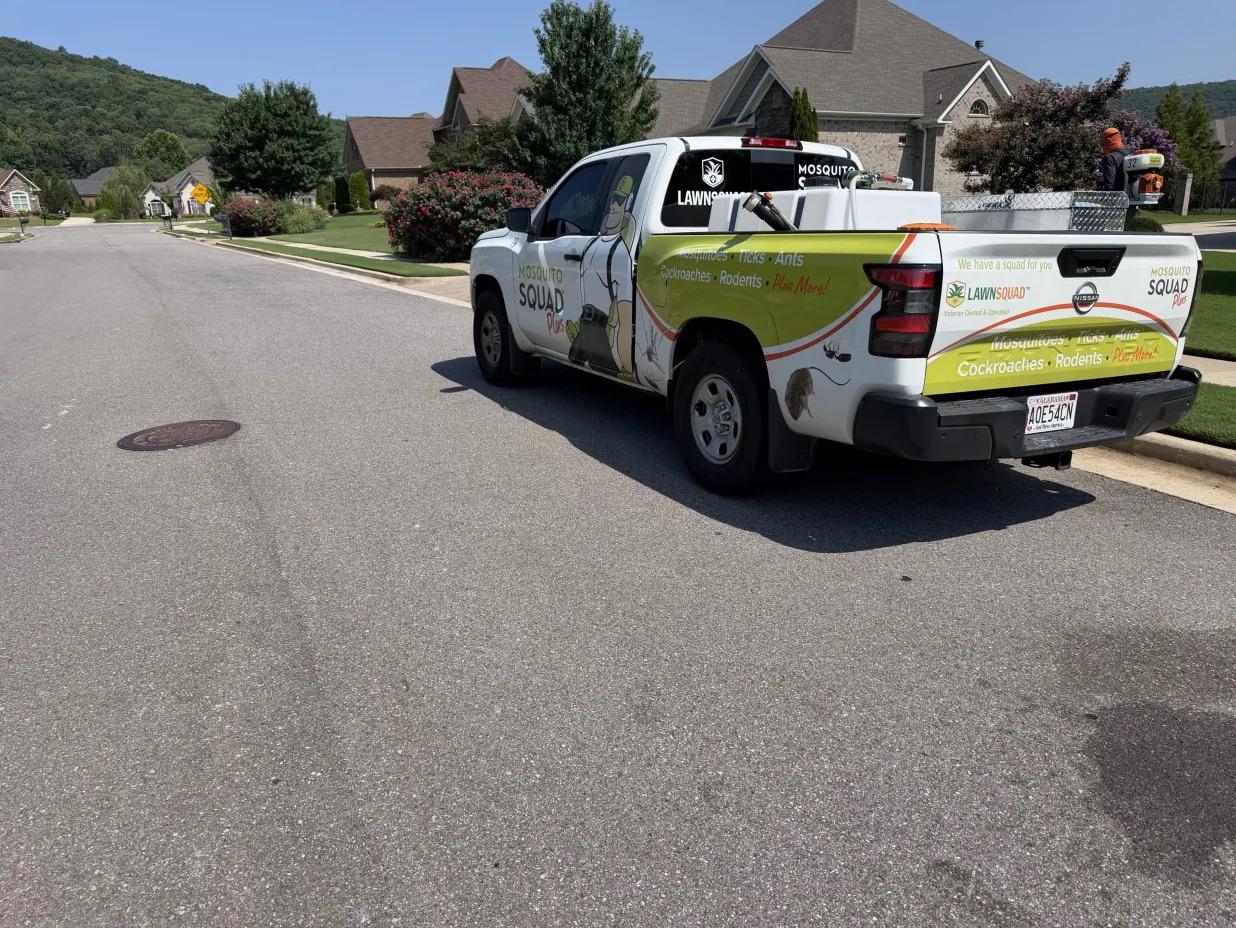
Mosquito Squad Plus is a veteran-owned family business, and we treat Harvest yards right alongside Capshaw, Madison, Toney, and the rest of the northwest Madison County service area. When we walk a Harvest property, the first questions are all about water. Where is the subdivision basin from your lot. Which way does your yard shed water. Where does it pool after a storm, and what around the house is holding it. A plan built off those answers looks nothing like one built for a farm lot in Capshaw or a riverside yard in Madison, and it should not.
You do not have to be home for service. We send a heads up before every visit and let you know when we are on the way, and every treatment is backed by our guarantee. Call (256) 907-8493 or request a free quote. Current special offers are posted, and our reviews will tell you what the neighbors think.