Why a New Hope Yard Doesn’t Dry Out Like a Madison One
Posted by Mosquito Squad Plus
May 19, 2026
Drive south out of Huntsville on Highway 431, cross the Tennessee River, and the landscape changes faster than the address change suggests. The subdivisions thin out. The lots get bigger. The yards start running back toward something that looks like real woods. And the back corner of those yards holds water in a way Madison yards do not.
That is not poor drainage. That is karst.
A New Hope property sits on Cumberland Plateau limestone, which is to say a layer of soft, water-soluble bedrock that has been getting eaten away by groundwater for tens of thousands of years. The result is a landscape full of springs, sinkholes, and disappearing streams. Water that falls on a yard here does not just run off the way it does on a flat Madison subdivision lot. Some of it sinks. Some of it comes up somewhere else as a seep. Some of it sits in a low spot that was probably an active sinkhole pond before the lot was ever graded for a house.
That is the part of New Hope that drives the mosquito control conversation here, and it is also the part that does not show up on a tax map. Mosquito control in New Hope is less about what the homeowner did this week with the gutters and more about what the bedrock has been doing for the last ten thousand years.
What Sits Between Huntsville and the Paint Rock Valley
Most of the mosquito control thinking in the Huntsville market gets shaped north of the Tennessee River. Madison sits in the broad alluvial valley between the river and the Tennessee state line, where Wheeler Lake's surface area and the suburban container-breeding profile drive most of the pressure. Hazel Green and Toney sit in the Limestone County agricultural belt to the north, where creek drainages feed Wheeler National Wildlife Refuge territory.
New Hope is in none of that.
The community sits south of the Tennessee River, at the western mouth of the Paint Rock Valley, with Keel Mountain rising to the north and agricultural floodplain stretching south toward Lake Guntersville. It is closer to Marshall County than to most of Huntsville. The geology, the watershed, and the way the water moves through both are different here, and effective mosquito control in New Hope starts with that.
The 1939 completion of Guntersville Dam by the Tennessee Valley Authority shaped the lower part of this landscape permanently. According to the Encyclopedia of Alabama, the project required the relocation of 1,182 families and 14 cemeteries when 110,145 acres were purchased and the original lower-elevation farmland flooded to form the reservoir. New Hope sat above that flood line and stayed put, but the community's relationship to the water table changed when the lake came up. Spring discharge patterns shifted. Drainage that used to run downhill to the lower valley now hits the elevated water table sooner. None of that shows up on a tax map. All of it shows up in the yard.
The Paint Rock River Drains Through Here
A USGS gauging station sits on the Paint Rock River near New Hope with a 415 square mile drainage area. The river rises in the limestone springs and hardwood forests of southern Tennessee, riffles into Alabama, and runs through the valley behind New Hope before joining the Tennessee River at the Wheeler Reservoir tailwaters. It is not a large river by Tennessee Valley standards. It is, by U.S. Fish and Wildlife Service classification, one of the most biologically diverse rivers in the country.
The Nature Conservancy and U.S. Fish and Wildlife Service have spent more than two decades documenting the watershed, with over 100 fish species and 50-plus freshwater mussel species, several found nowhere else in the world. Active conversations are underway about designating the upper watershed as a National Wildlife Refuge. The Nature Conservancy operates two preserves along the river, including the 1.5-mile river-frontage Whitaker Preserve on the North Alabama Birding Trail.
That biological richness is not just background color. It is what tells you what kind of ecological system New Hope properties are sitting on the edge of. The Paint Rock is not a buffered drinking water reservoir or a managed flood-control lake. It is an active, mostly unprotected watershed with high wildlife use, spring-fed tributaries, and a floodplain that still does what floodplains do. The mosquito habitat profile on a property near the corridor is wider than what container-breeding Aedes albopictus alone would produce in a master-planned subdivision.
What Karst Geology Does to a Mosquito Yard
The U.S. Geological Survey describes karst terrain as a landscape created when soluble limestone bedrock dissolves under circulating groundwater. The visible result is caves, sinkholes, disappearing streams, and springs. The invisible result is a hydrology where surface water and groundwater are essentially the same thing depending on the day, and where water sources on a property can disappear and reappear as the seasons turn.
Three pieces of that hydrology matter for mosquito control on a New Hope lot.
A shallow sinkhole on the property may look like a normal low spot in October and turn into a small pond from February through May before drying out in the heat of summer. Those seasonal sinkhole ponds are the kind of habitat the Missouri Department of Conservation documents as breeding ground for amphibians and water-dependent insects in karst country. Floodwater mosquitoes in the Aedes vexans group lay eggs in damp soil around those pools and hatch in pulses when the water returns.
Karst springs also discharge at constant temperature. In central Alabama, the groundwater coming out of limestone springs sits in the high 50s and low 60s year-round. A spring-margin habitat does not cycle through the dormancy that an exposed suburban gutter does. The water never freezes and never gets dramatically warm. That microclimate around a spring is, in effect, a permanent mild season, and the larval mosquito habitat there is more stable than the rest of the property through every month of the year.
And the water table itself sits closer to the surface than most homeowners assume. Walking the back of a New Hope lot in March, a technician will sometimes find soil that gives slightly underfoot, a sign the column is saturated from below rather than from above. Mosquito-producing habitat does not require a visible pond. It requires consistent moisture in shaded, organic-rich substrate, which a saturated karst lot produces continuously.
The Species on a Karst Lot Are Not the Suburban Species
The dominant mosquito control story across the Huntsville market is the Asian Tiger mosquito, Aedes albopictus, which the Alabama Cooperative Extension System identifies as the dominant pest mosquito species in suburban Alabama. It is a container breeder. It thrives on gutters, birdbaths, plant saucers, and the inch of water under a tarp. It drives the pressure on a typical Madison subdivision yard.
That species is here too. On a New Hope property with mature plantings, ornamental containers, and any gutter that occasionally clogs, Aedes albopictus produces as well as anywhere in the metro. It is just not the only species in play on a karst lot.
Anopheles species, which the CDC documents as breeding preferentially in clean, slow-moving or standing water with emergent vegetation, find ideal habitat in the margins of karst springs and spring-fed creek edges. Culex erraticus, identified in central Alabama mosquito surveillance research as common in hardwood swamp and shaded standing water with high organic content, finds it in the leaf-shaded edge of a seasonal sinkhole pond. Aedes vexans, the floodwater mosquito, hatches in pulses after the wet-season pulses that move through a karst valley with every significant rain event.
The mosquito control problem on a karst lot is not necessarily more mosquitoes than a suburban lot in raw count. It is a wider variety of species, producing through a longer window, including species the typical homeowner is not watching for because they do not breed in the obvious places. A barrier treatment program designed only for suburban Aedes albopictus pressure is still useful here. It just is not the whole picture of what mosquito control on a New Hope lot has to address.
Why Standard Yard Advice Misses on a Karst Property
The standard mosquito prevention checklist works well in most suburban contexts. Eliminate standing water. Drain anything wet for more than 48 hours. Empty containers. Unclog gutters. Grade out low spots. Do all of that and you will reduce mosquito production from your property.
That checklist is still worth following on a New Hope lot. It is also incomplete, because the water sources on a karst property are not all sources the homeowner controls.
A sinkhole that has been holding water seasonally for a thousand years is not going to be drained. A karst spring is not going to be graded out. The groundwater table that keeps the back acre of a lot consistently moist through April is not going to be redirected. Those water sources are partly your property and partly the geology underneath it, and the geology is doing what it has been doing since the limestone was first exposed to weathering.
The homeowner's job on a karst lot is not to eliminate the water sources. It is to manage what those sources produce. That is a different mental model than the suburban-container model most online mosquito advice assumes, and it is the model effective mosquito control in New Hope runs on. The recurring mosquito barrier treatment carries the load that source elimination cannot.
Treatment Placement on a Spring-Fed Property
A mosquito barrier treatment on a karst lot follows the same general principle as on any property: target the resting and harborage zones where adult mosquitoes spend their daytime hours, intercept them on the surfaces they actually use, and treat on a recurring schedule that does not let the population reestablish between visits.
What changes is where those surfaces are.
On a typical suburban Madison lot, the highest-value treatment surfaces are foundation plantings, shrub borders against the house, and fence-line vegetation where mowed lawn meets anything less maintained. Those surfaces still get treated on a New Hope lot. They are usually not where the pressure is coming from.
The high-pressure zones on a karst property sit at the lower elevations of the lot where the water table approaches the surface, around any visible spring or seep, along the margins of seasonal sinkhole depressions, and through the shaded floodplain edge if the property abuts the Paint Rock corridor. Those zones drive the resident mosquito population and produce mosquitoes earliest in the season. Mosquito control on a New Hope property has to run from those zones outward, not from the house out.
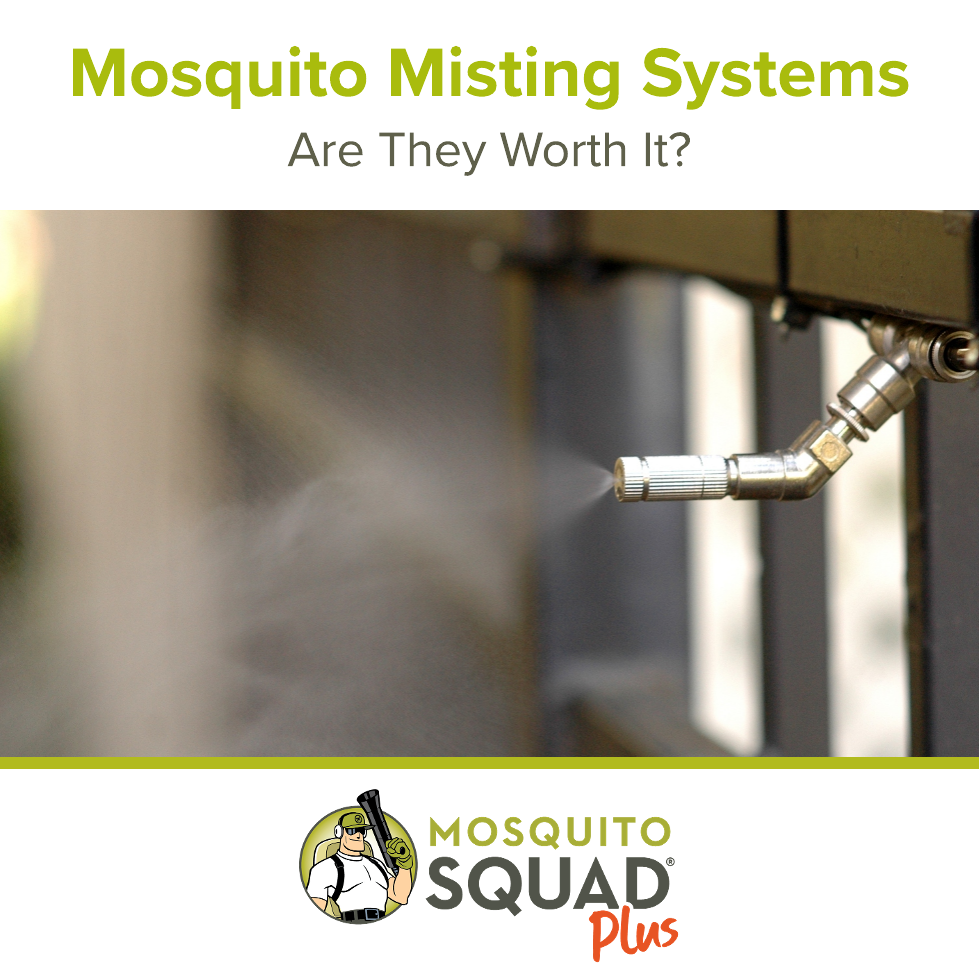
For multi-acre farms and rural residential parcels common in the valley, the Huntsville automatic misting system becomes practical for properties with permanent outdoor living areas. Timed misting during the active hours of Aedes albopictus, the morning and the late afternoon, supplements the recurring mosquito barrier treatment program for households that use the yard heavily.
The natural mosquito treatment option, built on essential oil active ingredients, applies on the same schedule and works the same zone-based mosquito control logic for households that prefer a botanical product. The chemistry changes between programs. The placement does not.
For the wedding, the family reunion, or the graduation party on the back acre, special event treatments applied a day or two before provide a tighter, shorter-duration knockdown on top of the recurring barrier treatment. New Hope properties tend to host outdoor events that use the full acreage rather than just a patio, which makes pre-event placement worth getting right.
Tick control is worth a parallel conversation on most karst lots because the same wooded edges and damp shaded zones that produce mosquito habitat also produce the lone star tick and the American dog tick that drive most tick pressure in this part of north Alabama. A combined mosquito control and tick control program on a recurring schedule is usually how New Hope homeowners get the season under control.
Timing on a Spring-Fed Valley
The mosquito control window in New Hope follows the general central Alabama pattern: late February through mid-March for the first application, recurring every 21 days through the active season into October. What changes on a spring-fed karst property is that the active mosquito control window stretches at both ends compared to a typical suburban Madison lot.
Karst springs do not freeze. The discharge water sits in the high 50s and low 60s year-round, which means the immediate microclimate around a spring or spring-fed creek edge can support larval mosquito development through a wider range of ambient temperatures than open container habitat does. On a New Hope lot with a visible spring or seep, the first generation of the season can establish in late February even when nighttime air temperatures are still dropping below freezing.
The signs that conditions have arrived on a karst property are the same general signs that work elsewhere, with one addition. The first mild evenings where you want to be outside. The first daytime bites in early March, which means Aedes albopictus has emerged. Standing water in seasonal sinkhole depressions, which signals the karst is in wet-season behavior. Soft soil at the back of the lot, which signals high water table conditions. Those last two signs mean the springs are running and so is the spring-margin habitat, no matter what the calendar says.
For New Hope homeowners, getting on a recurring mosquito control schedule in late February or early March consistently produces a better season than waiting until April when the first generation is already cycling. The fall window often runs deeper into October and occasionally into early November on lots with significant spring or floodplain margin, because the karst microclimate does not cool down as quickly as the rest of the metro.
The Bottom Line for New Hope Properties
Mosquito control in New Hope is a karst-country problem. The geology under the valley produces habitat that does not look like anything the suburban Huntsville lot a few miles north is dealing with, and the standard yard advice that works in most of the metro is not the whole answer here. Springs, sinkhole ponds, the Paint Rock corridor, the elevated water table, and the floodplain edge produce mosquitoes through a longer active season than the calendar implies.
That does not mean a New Hope yard cannot be a comfortable outdoor space. It means the mosquito control strategy has to account for what the geology is doing rather than what a generic suburban advice column assumes. A recurring barrier treatment placed where the karst is producing, not just where the foundation plantings sit, is the difference between a yard that works against you and a yard you actually use.
The Mosquito Squad of Huntsville team handles mosquito control across the Paint Rock Valley, including New Hope, Owens Cross Roads, Gurley, and Woodville. If the yard has been working against you and the standard advice has not been getting you there, reach out and we will walk it with you. Mosquito control in karst country gets walked, not guessed.