Why Roach Calls Pick Up in Southwest Huntsville Once the Nights Cool Off
Posted by Mosquito Squad Plus
October 30, 2026
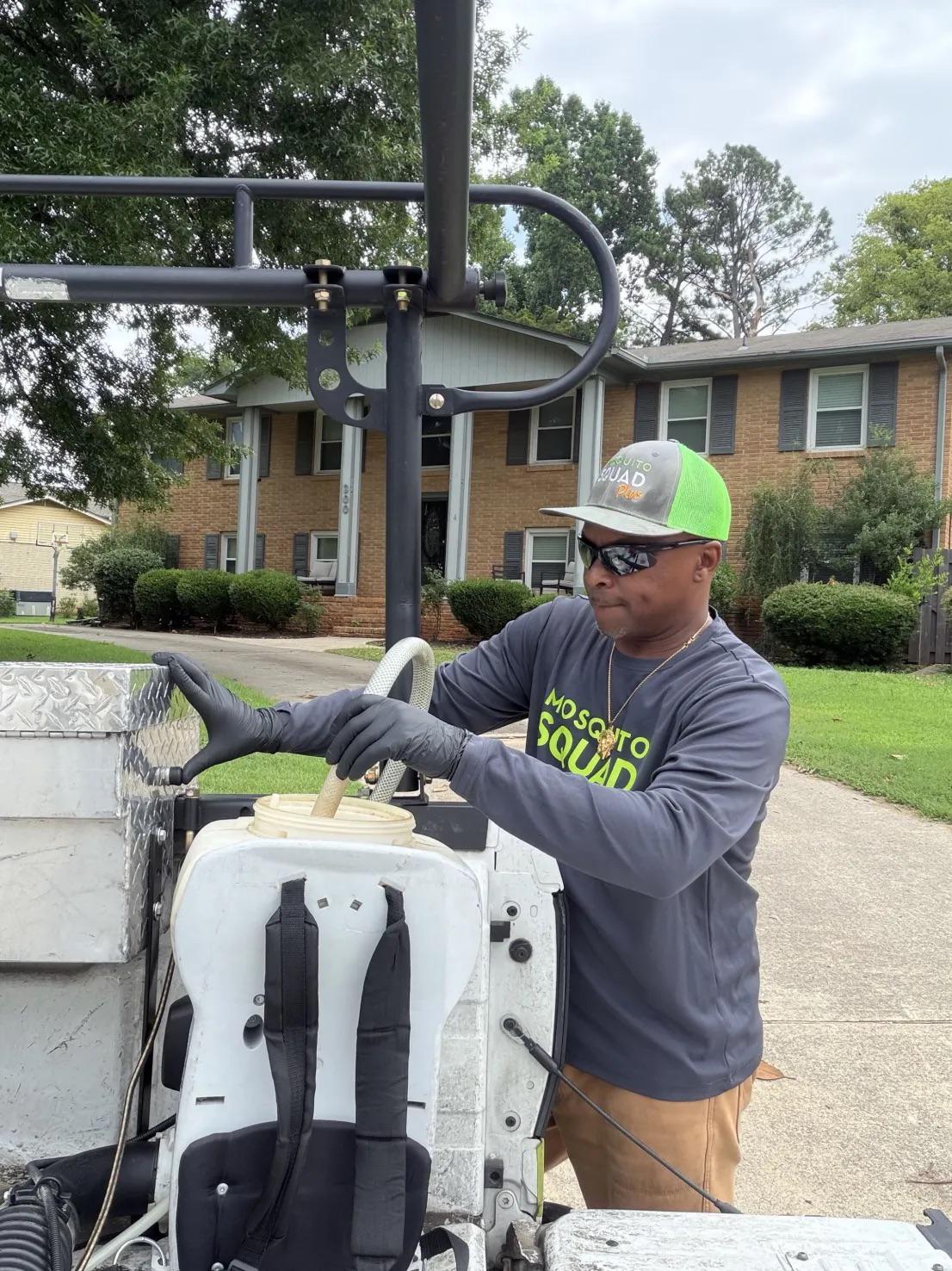
Somewhere around the middle of October, the calls change. All summer, most of what our Huntsville techs hear about is mosquitoes. Then the afternoons still feel like September, the mornings start showing up in the 40s and 50s, and the phone starts ringing about roaches. Our lead tech in Huntsville put it simply: once it cools off, roaches become the main call.
Southwest Huntsville, the side of town between downtown and Redstone Arsenal, sits right in the path of that shift. Here’s why it happens, what homeowners tend to try first, what actually works for roach control in Huntsville, and how to get ahead of it before the first freeze.
Fall Is the Second Push, Not the First
Anyone who has spent a summer in North Alabama knows humidity sends roaches looking for a way in. July is the first push, and that hasn’t changed. What our techs are seeing now is the second one. It catches people off guard because they assume roach season ended with the heat.
It comes down to two kinds of roaches. Alabama Cooperative Extension splits them into domestic and peridomestic species. Domestic roaches, like the German cockroach, depend on people for food and shelter and live indoors. Peridomestic roaches, like American, smokybrown, and oriental cockroaches, can live outside without us. They move into buildings when outdoor conditions turn bad, and Extension names drought and winter as the big triggers.
That outdoor group spends the warm months in pine straw and mulch beds, around tree bases, in gutters, under woodpiles, and in the strip between the foundation and the shrubs. University of Georgia Extension entomologist Dan Suiter describes the fall trigger plainly: cold snaps at night tell insects it’s time to find somewhere inside for the winter. They aren’t being clever. They’re reacting to the weather, and your kitchen is the closest warm, damp place with food in it.
The Huntsville Calendar Behind It
The timing here is predictable. According to the National Weather Service in Huntsville, the city’s average first freeze lands around November 2, and the first hard freeze doesn’t usually arrive until about November 12. That leaves a long stretch, roughly mid-October into mid-November, when nights are cold enough to push roaches toward shelter but nothing has frozen them out yet.
Some years stack both of Extension’s triggers on top of each other. In 2026, September highs in Huntsville averaged around 95 for much of the month, well above the normal of about 86, and dry conditions followed into fall. A hot, dry stretch that turns into suddenly cool nights is close to a perfect recipe for sending outdoor roaches indoors.
What Southwest Huntsville Homes Have in Common
A good share of the housing on this side of town, closer in toward downtown, dates back to Huntsville’s post-war growth. When Redstone Arsenal became a rocket center, it brought tens of thousands of new residents, and the city built ranches and split-levels quickly to keep up.
Those houses have real character. They also have decades of settling: worn door thresholds, window frames that have shifted a little, utility lines added through the walls over the years, and foundation plantings that have grown in tight against the brick. Alabama Extension makes the same point about older homes. Once a house has enough cracks and crevices, sanitation alone stops being a practical way to keep roaches out.
None of that makes a house dirty, and none of it is a knock on older homes. Roaches don’t care whether a kitchen is spotless. They care about access. If they can reach food, they’ll eat it, and if they can fit through a gap, they’ll use it.
A Ten-Minute Check After Dark
Roaches are mostly nocturnal, so the best time to look is after dark with a flashlight. Walk the outside of the house and check:
- Back door and garage door corners. If you can see light under the door from inside, a roach can get through.
- Where the AC line, hose bib, and dryer vent pass through the wall. These gaps get sealed once, if ever, and rarely get checked again.
- Pine straw and mulch against the foundation. Alabama Extension’s fall pest-proofing guide calls these a double-edged sword: they add curb appeal, but they also draw in and shelter insect pests. Pulling them back a few inches from the brick helps.
- Trash cans lined up by the garage or back door.
- Anything holding water. Buckets, plant saucers, a clogged downspout, or an outdoor faucet that drips.
If you catch roaches moving along the foundation or around the door at night, they’re living outside and working their way in. That’s useful to know before anyone treats anything.
What You’re Seeing Tells Us Where They’re Coming From
You don’t have to identify a roach yourself, but a few clues help:
- Large roaches near doors, in the garage, or along baseboards at night usually came in from outside.
- Small, tan roaches with two dark stripes behind the head, in the kitchen or bathroom, are German cockroaches, and they breed indoors. Virginia Tech Extension notes that seeing more roaches in daylight can mean a population is large and growing.
- Something that flew in through the patio door one evening may be the Asian cockroach, which our post on what late fall sends into Huntsville homes covers in detail.
Even if you’re not sure, tell us what it looked like, where you saw it, and what time of day. That’s enough to point treatment in the right direction.
What Southwest Huntsville Homeowners Usually Try First
Most people start in the same place: a can of spray from the hardware store, a few sticky traps under the sink, and a deep clean of the kitchen.
Cleaning helps, but it rarely closes every gap. Crumbs in the toaster, a pet bowl left down overnight, an open bag of chips in the pantry, and a bathroom trash can nobody thinks about all count as food.
Vacuuming comes up a lot once someone finds egg cases. It can help, but only if you know exactly where the eggs are. Our lead tech’s experience is that there’s almost never just one spot. You vacuum the cluster behind the refrigerator, and the one tucked into a gap near the back door keeps hatching.
Store-bought sprays tend to scatter roaches more than eliminate them. There’s also a bigger limit. Alabama Extension points out that pesticide applied inside a home may knock out the infestation indoors, but it does nothing to the roaches living outside or next door. That’s why indoor-only fixes tend to fall apart every fall. The supply outside never stopped.
The Trash Can Rule
This is one of the simplest things our lead tech recommends, and it gets overlooked more than almost anything else. Keep trash cans to a minimum, ideally one in the kitchen, and do the same outside.
Every extra can is another feeding station. A can in the home office full of snack wrappers, one in a kid’s bedroom, one in every bathroom: each one gives roaches a reason to stay. Outside, a row of cans against the garage wall right next to the door becomes a staging area. Alabama Extension’s fall checklist says the same thing in its own words: get rid of outside garbage and keep what you have in sealed containers. Fewer cans, closed lids, and a little distance from the entry door cost nothing and make a real difference.
What Actually Works for Roach Control in Huntsville
The right treatment depends on how much activity you already have, and you don’t need to know the species to get it right.
Light activity. If you’re seeing the occasional roach, an exterior base treatment around the foundation usually handles it, along with treatment at the window and door frames. Those are the routes outdoor roaches use to get in, so the goal is to stop them before they settle. Extension describes the same principle for American cockroaches: a treated barrier around the outside of a building keeps numbers low and keeps them out. This is where most fall roach prevention happens.
Heavier activity. Once roaches are established, spray alone won’t finish the job. That’s when our techs bring in gel bait. Our lead tech describes it as roach food, which is about right. It goes in corners and along window and door frames, then a spray treatment follows. Roaches feed on the bait, carry it back to wherever they’re hiding, and it takes out the ones you never see.
The research backs that up. A Purdue University study found that the droppings from a single bait-fed roach killed 38 of 50 young roaches within 72 hours. It kept going another step: most of the adults that then fed on those dead nymphs died too. A 2023 North Carolina State University study tested several gel baits and saw high secondary kill across all of them within 48 hours.
Both studies were run in the lab on German cockroaches, the species that breeds indoors and hides where spray can’t reach. That’s exactly the job bait is built for. The exterior treatment handles what’s coming in, and the bait handles whatever has already moved in.
The Yard Still Matters
Outdoor roaches need moisture, and the yard decides how many are waiting at the door. On a recent southwest Huntsville property, our lead tech found water-filled buckets scattered across the yard. He flipped them and put down granules before he left.
In a dry fall, any reliable water source near the house matters even more: buckets, saucers, a leaky hose connection, or a mulch bed that stays damp because the sprinkler hits it every morning. Clearing those out makes every other part of treatment work better.
Mention What You’re Seeing Inside
Our lead tech has noticed that most customers never ask for an inside look. That doesn’t mean every visit needs to come indoors.
If you’re seeing roaches in the house, text or call our office before your next visit and let us know where and when. It goes right into your appointment notes, so your tech knows where to focus before he pulls up. A roach in the garage after a cold night tells a very different story than one on the kitchen counter at noon.
When to Treat
The best time for fall roach control is when you see the first one or two, not after you’ve seen a dozen. In southwest Huntsville, that usually means late September through mid-November, from the first cool fronts until the hard freezes settle in.
Treat the exterior before roaches move in, and prevention is easy. Wait until they’ve settled behind the cabinets, and you’re dealing with an infestation. An indoor population in a heated house doesn’t need warm weather to keep breeding, so winter won’t solve it for you.
Pest Control in Huntsville That Follows the Season
Our approach to pest control in Huntsville shifts with the calendar, because the pests do. Summer is mosquito season. Fall is when roaches start looking for a way inside. Our Home Shield plan covers the foundation, windows, vents, and entry points on a recurring schedule, indoors and outdoors, so the barrier is in place before the cold sends them looking.
If you’re in southwest Huntsville and starting to see roaches, or you want to get ahead of them before the first freeze, reach out to our Huntsville team or call (256) 907-8493.