Why Fort Wright Homeowners Are Finding Mice in the Halloween Bins This Fall
Posted by Mosquito Squad Plus
September 30, 2026
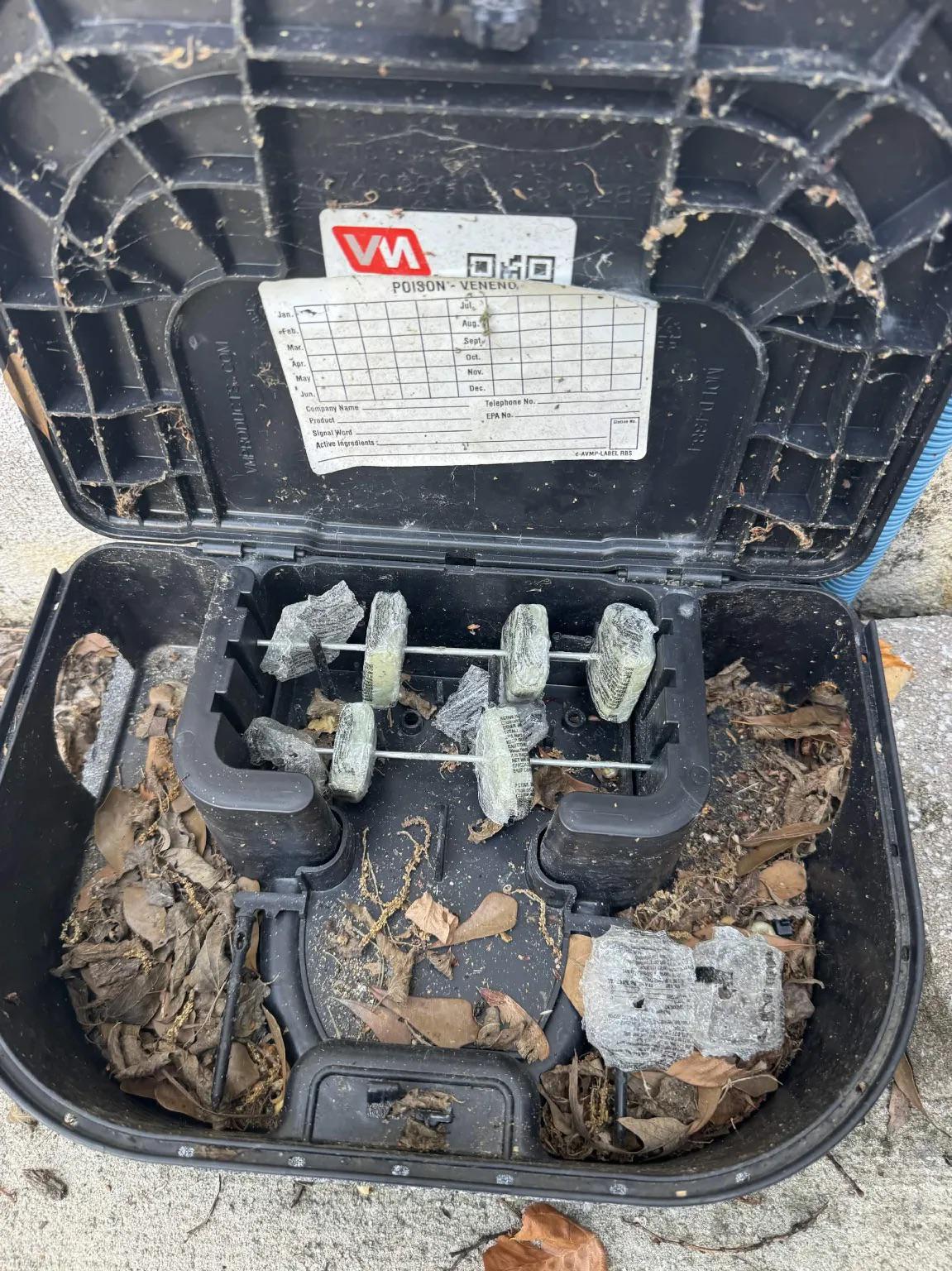
The call usually starts the same way. Somebody in Fort Wright heads down to the basement or out to the garage to pull the Halloween bins, pops a lid, and finds mouse droppings scattered through the fake cobwebs. Nothing looked wrong last October. Nobody in the house has seen a mouse. The kitchen seems fine. And yet there it is, proof that something has been living in a box that was packed away eleven months ago.
That is the most common way mice are introducing themselves in Fort Wright right now. Not a mouse darting across the kitchen floor, but a discovery. Joey, one of the technicians who runs our northern routes, says rodent calls across Fort Wright, Fort Mitchell, and down into Union are running ahead of last year, and a lot of them start exactly like that: someone moving stored things around for the first time in months.
Here is why it is happening earlier this season, what droppings in a storage tote actually tell you, and what mice control in Fort Wright looks like when the goal is keeping mice out rather than catching them one at a time.
Why Mice Are Showing Up Early in Fort Wright This Year
Most years the Northern Kentucky rodent push follows the calendar. Nights cool, the outdoor pantry shrinks, and mice start testing the house around late October. We wrote about that pattern in our look at fall invaders and rodents, and it still holds. This year the calls started weeks earlier, and the crews point to the weather.
It has been a wet year around the river. The National Weather Service May 2026 summary had the Cincinnati airport out in Hebron at 6.35 inches of rain for the month, 1.68 inches above normal, and our crews will tell you the whole season has felt wetter than usual. Then the warmth hung around. The August 2026 summary had the airport finishing the month slightly above normal on temperature, with heavy rain across Greater Cincinnati to open the month.
For a house mouse, that combination is close to ideal. Wet ground and a long growing season mean more seed, more insects, and more plant cover to feed and hide in. More food means more litters survive, and a population that got an extended breeding season goes into fall bigger than one that got cut short by an early cold snap. None of that is dramatic on its own. Stacked together over a whole season, it shows up in the phone log.
Then there is the rain itself, and Fort Wright takes it two ways. Much of the city sits on hills above Covington, but it also drops down to Banklick Creek along KY 17, where the city owns wooded land along the water and Kenton County's Pioneer Park follows the same creek. Creek bottoms like that hold water after a hard storm, and a wet season keeps the ground along them soaked for weeks. Mice nesting in brush, landscape timbers, and soil along those low spots get flooded out and move uphill toward the first dry structure they find.
Up on the hilltop streets off Highland Pike and Kyles Lane, it shows up differently. Rain runs downhill against retaining walls and foundations, the nests outside stay damp, and mice do not tolerate a wet nest for long. A dry corner of a walkout basement or a cardboard box in the garage starts looking a lot better, and they do not wait for cold weather to make that trade.
So when a Fort Wright homeowner tells us they never had mice before, that is often true. It just was not true this year.
Why the First Sign Is Usually in a Storage Tote
When people describe where they first noticed activity, two rooms come up again and again: the kitchen and the garage. The kitchen makes sense, since that is where the food is. The garage and the basement storage area are where most of the surprises happen, because those are the spaces nobody disturbs for months at a time.
A mouse is looking for three things: food nearby, a place to hide, and soft material to build a nest. A plastic tote without a lid, stuffed with paper, tissue, old costumes, or seasonal decorations, delivers two of the three in one spot. The way Joey puts it, an open bin full of paper is the Ritz Carlton for a mouse. Warm, quiet, full of nesting material, and parked in a corner nobody checks until the next holiday.
That is why the fall decoration pull is such a reliable trigger for calls. People dig into the stored bins in late September for Halloween, and again in November for Christmas. Recently Joey headed out to a home where the owner had totes stacked everywhere, most of them full of paper and none of them with lids. That house did not have a mouse problem so much as a mouse hotel with plenty of vacancies.
If you are finding droppings in stored boxes, they are telling you a few useful things. The mice have been there a while, since droppings build up over weeks, not days. They are nesting inside the structure, not just passing through the yard. And there is almost certainly an entry point you have not found yet, because the mice in your garage did not come in through the tote.
Old Houses, New Builds, and Clean Houses All Get Mice
There is a common assumption that mice are an old-house problem. Fort Wright has plenty of older homes on its hillside streets, and older construction does tend to carry more gaps: settled foundations, worn door sweeps, utility lines that were patched with whatever was on hand decades ago. But the calls are not splitting cleanly by age. We are also getting calls from newer builds, some of them from homeowners who have not seen a thing yet and simply want prevention in place before winter.
Housekeeping is the same story. Clutter absolutely helps mice. More stored stuff, more boxes against walls, and more piles in the garage mean more places to nest and fewer places you will notice them. Our techs will tell you that people have gotten more comfortable with cluttered garages and cluttered yards, and the mice have noticed. But a spotless house is not immune either. Our crews have walked into very clean homes with rodent activity, and right now they are running several flea calls a day across the northern routes, many of them from tidy households. Clean helps. It does not replace closing the house.
For regional context, Fort Wright sits on higher ground than the river cities, outside the combined sewer system that drives rat surges in Covington and Newport after a storm. We covered that dynamic in our piece on why rats turn up after a hard rain down along the river. Up here, the pressure is mostly mice, and it is driven by food and shelter rather than flooded pipes. That is good news, because food and shelter are things you can actually control.
The Food You Are Leaving Out Without Thinking About It
Ask a tech where the mice in a house are eating and the answer is rarely the pantry. More often it is pet food.
Bags of dog and cat food get stored in the garage, the basement, or the laundry room, usually folded over or clipped but not sealed. To a mouse, that bag is an endless supply of calorie-dense food right next to a warm place to nest. We have written about how pet waste attracts rodents and other pests, but the food is usually the bigger draw.
There is another version of this that surprises people. Anywhere ducks and geese gather, whether it is a subdivision retention pond or a stretch of creek, people feed them through the fall, and what they toss out is usually bread, dog food, or cat food. Whatever the birds leave in the grass and along the bank gets cleaned up overnight by something else. Seed under a bird feeder works the same way. If you are feeding wildlife and wondering how the mice found your house, part of the answer may be a few steps off the back patio.
The fix is simple, and it helps your pets as well. Keep pet food in a sealable tote or bin with a tight lid. It keeps the kibble from going dry and stale, and it takes the easiest meal on the property off the table.
Does Pet Food Cancel Out Rodent Bait?
You will hear this one in the pest business. The idea is that pet food contains vitamin K, the antidote to common rodent baits, so a mouse that eats bait and then eats dog food undoes the poison. The advice behind it is right, but the mechanism does not hold up.
Most rodent baits are anticoagulants. As the Cornell Wildlife Health Lab explains, they work by interfering with how the body activates vitamin K, which it needs to make blood clotting factors. Veterinarians do treat poisoned pets with vitamin K1, as Cornell's College of Veterinary Medicine describes. But a USDA laboratory trial that fed house mice and rats vitamin K-rich greens before offering anticoagulant bait found that 94 percent still died, and the researchers concluded the vitamin K in the diet did not reduce the bait's effectiveness (study record).
The real problem with open pet food is competition. A mouse with a bag of kibble nearby has little reason to eat much bait. It will choose the familiar, abundant food every time. So sealing up the dog food absolutely matters. It matters because it makes everything else work, not because of the vitamin.
Bait also carries risk beyond the mouse. The Oregon Department of Fish and Wildlife notes that children and pet dogs can be poisoned by anticoagulant baits, and that hawks, foxes, and other predators are exposed when they eat affected rodents. That is one more reason bait belongs in tamper-resistant stations, placed by someone who knows where it should and should not go.
What Fort Wright Homeowners Try First
Most people start with store-bought traps, and the one our techs see most often is the sticky trap. It is cheap, easy to put down, and sometimes it catches a mouse.
The trouble is what it does not do. A glue board catches the mouse that happens to wander across it. It does nothing about the mice nesting in the wall behind it or the gap under the garage door they used to get in. Homeowners catch one or two, the droppings keep turning up, and a few weeks later they call anyway. Snap traps set flush against walls along the routes mice actually travel do a better job of removing the animals already inside, but no trap closes the house.
The second instinct is hardware store bait, which runs into the competition problem above, plus the chance of a mouse dying inside a wall where you cannot reach it.
Neither approach is wrong in the moment. Both treat what you can see and skip what you cannot.
What Actually Works: Start Outside the House
When our techs walk a new property for mice, they do not start where the homeowner found the droppings. They start outside, walking the exterior of the house and looking for entry points. Only then do they deal with the activity inside or in the yard.
Every mouse you remove from a house with open entry points gets replaced by the next one. The CDC describes a mouse fitting through a hole about the size of a nickel, and the National Park Service treats anything past a quarter inch as a gap worth closing. On a typical Fort Wright home, the usual suspects are the corners of the garage door where the bottom seal has cracked or pulled away, the spots where gas, water, and electrical lines enter the foundation, dryer vents and bath fan exhausts with a missing flap, basement window wells, and door sweeps on basement and side doors that have worn thin. On a hillside lot with a walkout basement, the downhill side deserves a slow second look, because that is where a lot of the foundation is exposed.
Small gaps get packed with copper mesh or coarse steel wool and locked in with sealant, since mice chew through foam and caulk on their own. Larger openings get hardware cloth or sheet metal. Our Rodent Proofing 101 guide walks through the materials, and our guide to the signs of a rodent infestation covers what to look for indoors once the outside is buttoned up.
After exclusion comes the inside work: removing the mice already in the structure with traps placed along their runways, and cleaning out nesting areas. Then come the habits that keep the house unattractive: lidded bins for storage and pet food, boxes up off the floor and away from walls where you can manage it, and nothing edible left out overnight.
That sequence is the backbone of our rodent control service in Northern Kentucky. We inspect for entry points and conducive conditions, build a plan around the specific house, close the openings, and use EPA registered products where they belong. For homeowners who want the structure protected on a recurring schedule instead of a one-time fix, our Home Shield program covers rodents along with spiders, ants, and the fall invaders that use the same gaps. If you have been fighting the boxelder bugs coming off the trees in Fort Wright this month, you are already looking at the same weak spots a mouse would use.
Cleaning Up the Tote You Just Opened
If you have already found droppings in a bin, skip the shop vac. The CDC guidance on cleaning up after rodents is direct on this: do not sweep or vacuum droppings, urine, or nesting material, because it can put tiny particles carrying viruses into the air. Put on rubber or plastic gloves, spray the droppings with an EPA-registered disinfectant or a bleach solution until they are very wet, let it sit about five minutes, then wipe it up with paper towels and toss them in a covered trash can. Disinfect the tote and the floor around it afterward.
Heavily nested paper and fabric usually are not worth saving. Plastic and glass can be disinfected and repacked in lidded bins, ideally up off the floor.
When to Get Ahead of Mice in Fort Wright
The best time for mice control in Fort Wright is before the bins come out, not after. Realistically, that window is right now, late September into early October.
The weather is still mild enough to work on the outside of a house, and sealants cure properly. The main fall push is still ahead of us, since the colder nights of late October and November will send even more mice looking for a way in. A house sealed now spends that stretch as a place mice try and fail to enter. A house sealed in December has already let the winter population move in.
If you pull the Christmas decorations out in November and find the same thing you found in October, that is a sign the entry point is still open.
This is also the year to check even if you have never had a problem. After a wet, warm season, the houses that stayed clear last year are the ones getting the surprise.
Getting Mice Control in Fort Wright Started
Mice in a storage bin are not an emergency. They are information. They tell you the house has an opening and the mice have found it, and the sooner that opening is closed, the smaller the problem stays.
We are a veteran-owned, family-run team that has been working Northern Kentucky homes since 2013, and Fort Wright sits right in the middle of the ground we cover, between Crestview Hills, Edgewood, Fort Mitchell, and the river cities below. If you want a set of eyes on the outside of your house before the rest of the fall push arrives, schedule a free inspection or call Mosquito Squad of Northern Kentucky at (859) 222-7345. You can read what our customers say first, and our programs are backed by our satisfaction guarantee.