Fort Wright's Boxelder Bugs Are Coming From a Tree You Can Point At
Posted by Mosquito Squad Plus
September 2, 2026
A boxelder bug cannot start a family without a seed-bearing boxelder tree. Not a maple in general, not a shade tree, not whatever is growing along the fence. University of Kentucky entomology is specific that the insects stay on female fruit-producing trees and are rarely found on the male ones, because the seeds are the food supply. That single requirement is the reason your neighbor two streets over gets covered every October and you do not, or the reason it is suddenly you after years of nothing.
The U.S. Forest Service puts the species' best growth in the bottomland stands of the lower Ohio and Mississippi valleys. Fort Wright sits at about eight hundred feet of elevation, roughly three hundred above the river bottoms it looks down on, which is exactly that kind of ground.
The Tree Decides, Not the House
Boxelder, Acer negundo, is unusual among maples in that individual trees are either male or female. Only the females carry seed. A homeowner standing under one in November has no idea which they own, which is why the same street can have four of these trees and one boxelder bug problem.
It is also a disturbance species. In floodplains it colonizes raw ground, and in the humid eastern part of its range it turns up in upland spots mainly where the light is open and the soil has been torn up recently. Fast growing, short lived, and treated as a weed tree by foresters, it arrives where something has been cut, scraped, slipped, or left alone after being disturbed.
Why This Particular Hillside Grows Them
The city's own description of itself starts with the hillside and the view toward Cincinnati. The ground under that view is doing something. Roughly a quarter of Kenton County is underlain by the Kope formation, a clay-shale unit that can run over two hundred feet thick and comes apart when air and water reach it. A hillside study prepared for the Northern Kentucky Area Planning Commission notes that the county zoning ordinance treats land at twenty percent slope or steeper as physically restrictive for development, and puts roughly eleven percent of the county in that band or above.
The practical effect on a built-out city is a set of slopes that never became anything. They are too steep and too unstable to build on and too steep to mow, and the vegetation is what holds them in place, so the vegetation stays. Kenton County's hillside belt runs along the Ohio River at the county's northern edge and bends south up the Licking valley, and Fort Wright sits in the middle of that belt with Covington and Ludlow below it.
So you get permanent unmaintained ground threaded through a finished suburb, with slippage and erosion opening it up over and over. That is the disturbed, high-light, damp-footed condition boxelder wants, sitting directly above bottomland where the species does its best growing anyway. Nobody planted these. The hillside grew them.
This is the part that separates a Fort Wright yard from a subdivision out in Boone County. Out there a boxelder problem usually traces to one specimen somebody put in the yard in 1994. Here the source is often on a slope that belongs to no one you can call.
Why They Pick Your Wall Specifically
The bugs feed and breed in the tree all summer, and the population climbs hard from the middle of July into early September. NC State Extension documents two generations a year and puts the move toward overwintering shelter in September and October.
What triggers the actual flight is a temperature swing. Ohio State's extension entomologists describe boxelder bugs clustering on the sunny side of trunks during an early fall cold snap, then dispersing on their wings when a warm spell follows, looking for somewhere to spend the winter. October in this valley does that on repeat. The National Weather Service office covering this area puts the normal first thirty-two degree reading at Cincinnati around October 25, and the weeks in front of that date are a run of cold fronts and warm rebounds.
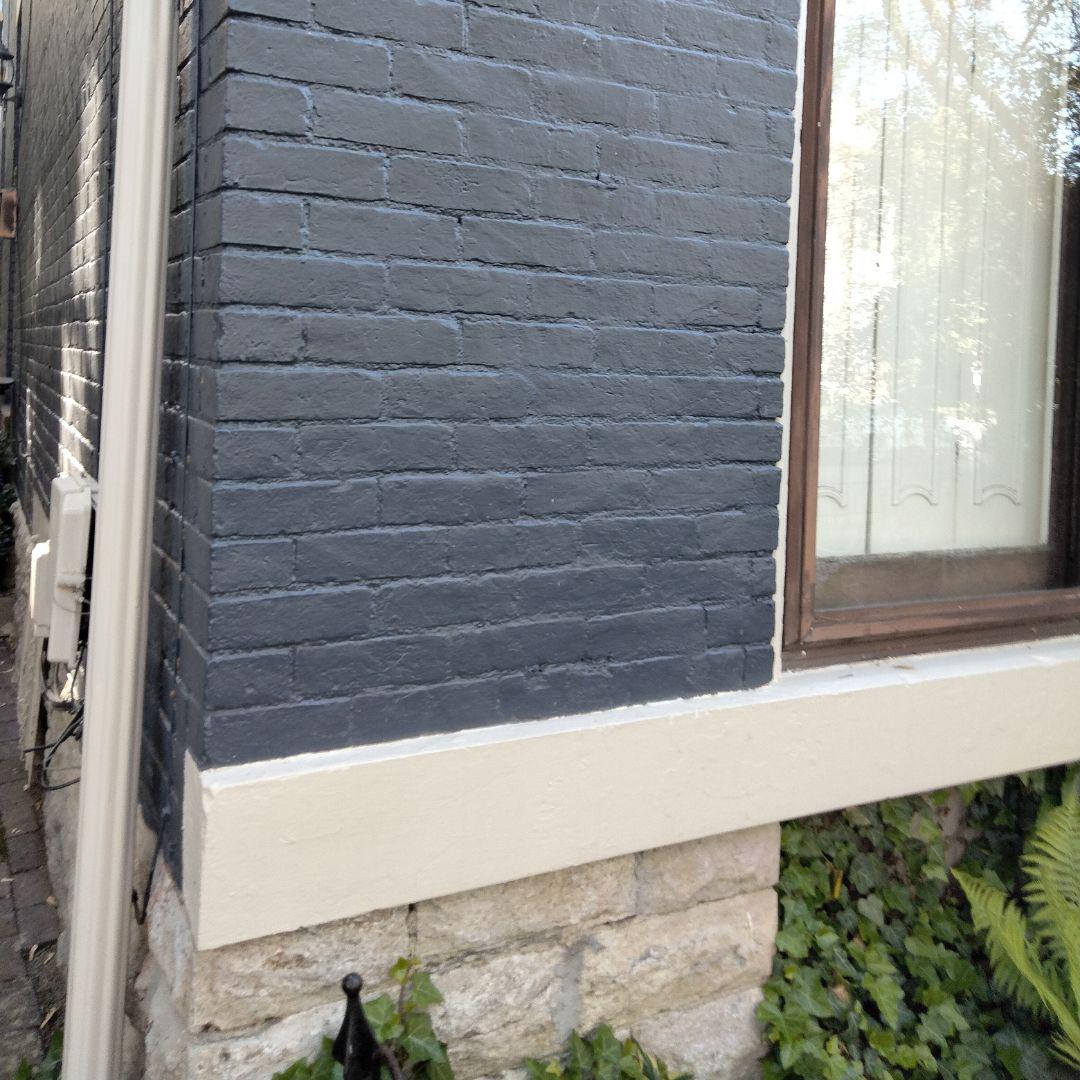
Where they land is not random. They are looking for solar heat, so they take south and west-facing walls that hold afternoon sun. Minnesota Extension adds the detail that matters most here: the effect is strongest when the building is the tallest thing around. A house on a Fort Wright ridge or on the outside edge of a hillside street, with a west-facing wall aimed at open air over the valley, is the most thermally obvious object for a long way in the direction those bugs are already drifting.
Same species, same October, and two houses four blocks apart get completely different results. Aspect and prominence do most of that.
What Fort Wright Homeowners Try First
Cutting the tree down is the honest long-term answer, and both University of Kentucky and NC State say so plainly. It only helps if the tree is yours. When the source is standing on a restricted slope below the property, or on a neighbor's bank, or in a right-of-way, that option is off the table before it starts.
Spraying the tree is the second instinct and a poor one. These are large trees, the application would have to be repeated, and putting insecticide into a flowering tree does real damage to pollinators for very little return.
Sealing the house is genuinely useful and usually happens six weeks late.
The version of this we hear most often runs the same way every year. Nobody notices anything in September. Then there is a warm Saturday in the middle of October, somebody walks around the west side of the house to put the hose away, and the wall is moving. Caulk gets bought that afternoon. By then the bugs on the outside are the ones that did not find a way in, and the ones that did are already behind the siding, waiting to turn up on a sunny windowsill in February.
The last thing worth saying out loud is what University of Kentucky says about severity, because we would rather you hear it from us. Boxelder bugs do not bite, do not sting, carry nothing, and cannot reproduce indoors, so they will never establish the way a rodent or a roach will. The waste stains fabric and light-colored surfaces and they smell bad when crushed, and a thousand of them on a sunroom wall in February is a real quality-of-life problem. It is not a structural threat and we are not going to sell it as one.
What Actually Moves the Number
The work is exterior and it is a timing exercise. Treating the wall surfaces and the entry architecture on the sun-facing elevations before the dispersal flight is what separates a handful of bugs from a covered wall. Once bugs are indoors the work has already missed. That means the seams on the south and west sides where the aggregations actually sit: under the siding laps, around the weep holes, along soffit and fascia joints, at window and door framing, and wherever a utility line passes through the wall.
That work has to hold for weeks, because the flight arrives in pulses. Each cold snap and each warm rebound through October sends another wave.
Home Shield is the year-round structural program, treating the entry points around the house so pests are deterred from the outside, and it is where most of this work lives. The same sun-facing gaps also serve spiders on a similar schedule. If your fall list runs longer, Complete Home and Yard is the package that adds rodent and stink bug coverage on top of the full yard program. Our boxelder bug control work sits inside those programs, not as a one-off call in October, for the same reason: by October the timing argument is already lost.
We cannot treat the slope. Nobody can, and anyone who tells you otherwise has not walked one. What we can do is make the ninety feet of wall those bugs are aiming at a bad place to land.
The Window You Are In Right Now
Late August is early, and early is the entire point. The population is finishing its build in the trees, the first cold front is several weeks out, and the wall work still has time to matter.
If you want a marker instead of a date, watch the first genuine cold snap of the fall and then watch what happens two or three days later when it warms back up. That rebound is the flight. Homeowners who call the week after it are describing a problem that was preventable the week before.
The broader pattern of fall pests moving into Northern Kentucky homes runs on the same gaps and the same calendar, and boxelder is usually the first one homeowners actually notice because there are so many of them and they are so easy to see.
If your west wall lit up last October, the work that changes this year happens before the first front arrives. Our pest control crews have covered these hillside cities since 2013, Fort Wright along with Covington, Fort Mitchell, and the other communities we cover across the region. Reach out and we will look at your sun-facing elevations while there is still runway on the calendar. Call (859) 412-4811.