Why Older Knoxville Neighborhoods Get Daytime Mosquitoes and Big Roaches
Posted by Mosquito Squad Plus
August 17, 2026
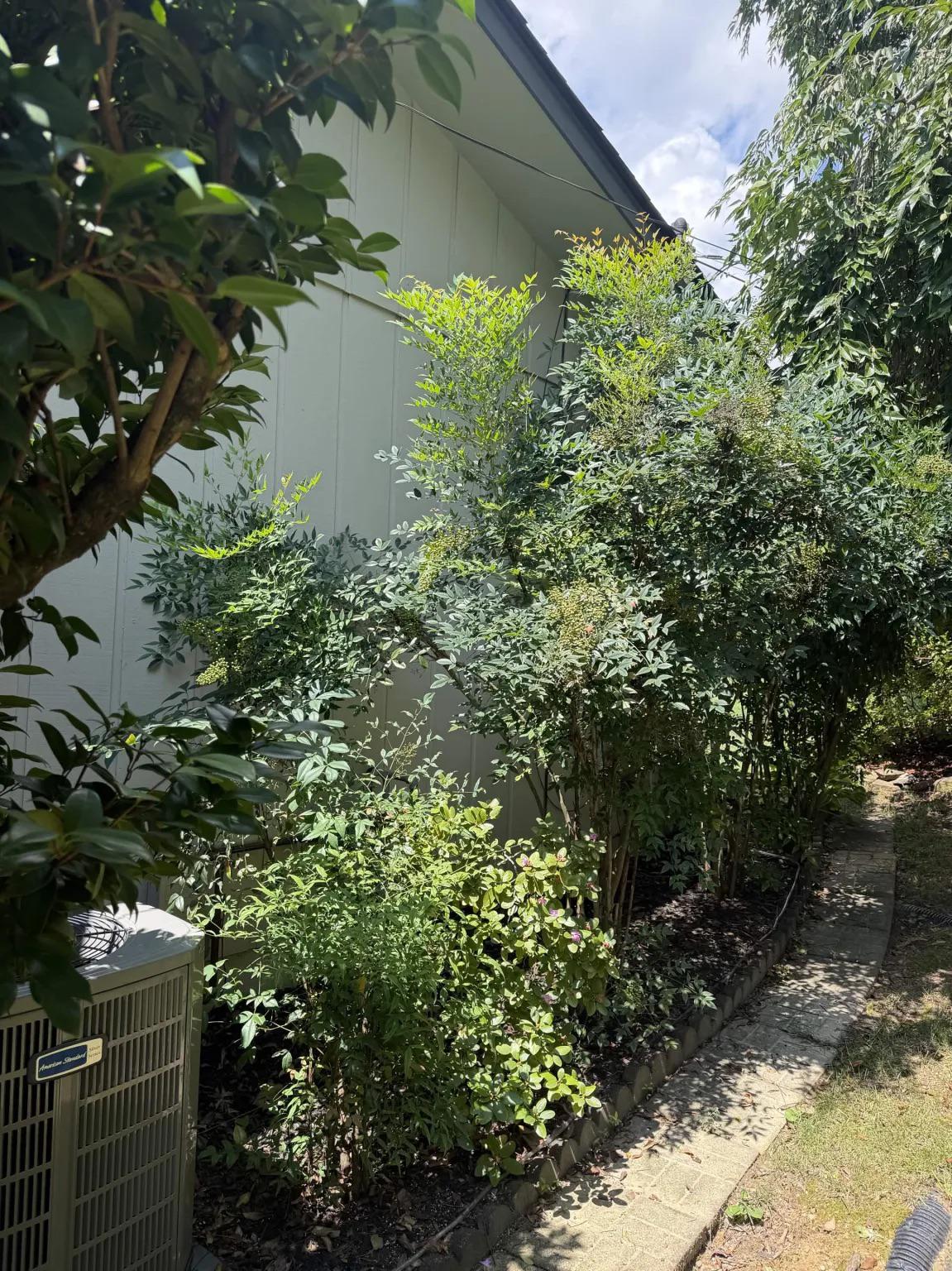
Mosquitoes in the older parts of Knoxville bite in the middle of the morning. Not at dusk, not over the patio while you are trying to eat, but at ten in the morning while you are pulling weeds along the side of the house with a cup of coffee going cold on the step. People move here from flatter parts of the country and assume they are doing something wrong. They dump the birdbath and flip the kid pool, and they get bitten again on Saturday at eleven.
Then in August the roaches show up. Large ones, dark, sometimes flying, usually in the garage or the bathroom or halfway up a wall at night. Nobody wants to talk about that part out loud, so most people quietly buy something at the hardware store and hope it holds through September.
Those two problems look unrelated. On a city lot in Knoxville they usually come from the same place, and that place is almost never the thing you are staring at in the yard.
We are a veteran-owned family business working out of Oak Ridge, and Knoxville has been our territory since 2019. What follows is specific to the older neighborhoods inside the city. If you live on the water it does not describe your property, and we have written separately about how the lake corridor behaves.
Three Kinds of Water on One City Lot
Most of what has been written about mosquitoes in this metro, including by us, is about the lake. Fort Loudoun holds warmth, the drainage corridors stay damp, and neighborhoods along the shoreline in Concord and Farragut run an earlier calendar than the rest of the county. That is real. If you live out that way it is the thing that matters most.
Inside the city it is a different story, because the city sits on top of three separate water systems and none of them is the reservoir.
The first is the creeks. First Creek, Second Creek, and Third Creek run through the older heart of Knoxville, and the City of Knoxville lists all three under a bacteriological advisory, along with Goose Creek and Sinking Creek. The state gives the reason in its own posted streams list: Knoxville urban runoff and collection system issues. These are not remote creeks. They run behind houses, under streets, and through parks people walk their dogs in.
The second is the storm system that feeds those creeks. Grates, curb inlets, and the concrete boxes under the pavement that you drive over daily without thinking about them.
The third is your trees. That one surprises people, so it gets the most time here.
Those three do not peak together, they do not respond to the same weather, and they do not respond to the same treatment. A homeowner who solves one of them and keeps getting bitten usually concludes that pest control does not work. What happened is that they solved one third of the property.
Tree Holes Do Not Look Like Standing Water
Walk a lot in Sequoyah Hills or Bearden and look up. Oaks and maples left standing eighty years ago, limbs pruned and storm-broken and pruned again, and in the crotch of a big limb, a hollow. Rot pocket, old wound, broken stub that healed badly around a cavity. Rain fills it. It holds maybe a cup.
That cup is a mosquito nursery, and it is the reason the bites arrive at the wrong time of day.
The CDC describes the eastern treehole mosquito as an aggressive daytime biter that lays eggs in water standing in tree holes and in containers, particularly old tires. It stays close to where it hatched. It does not wait for sundown, and it does not care that you emptied the birdbath, because the water it used is fifteen feet above your head in a limb you cannot see from the ground.
The Asian tiger mosquito works the same neighborhoods on the same schedule. We have written before that daytime bites in Knox County are usually the Asian tiger mosquito, and that holds. What changes in the older parts of town is that the native treehole mosquito joins it, because the older parts of town are where the old trees are. Tennessee's Department of Health lists both species as carriers of La Crosse encephalitis virus.
That carries more weight here than in most of the country. La Crosse is uncommon nationally, concentrated in the southern Appalachians, and it mostly affects children. Nobody needs to panic about their backyard over it. The practical version is smaller than that. When you get bitten at ten in the morning in your own side yard, treat it as information about your property rather than bad luck with the weeding.
What the Trap Data Says About Knox County
Knox County has been trapped and sampled directly, which is not true of most metros this size.
Researchers trapped mosquitoes across Knox County and published the results in a peer-reviewed study now hosted at the National Institutes of Health. They found La Crosse vectors clustered in south-central Knox County more heavily than in the rest of the county, and those clusters lined up geographically with previously diagnosed human cases. South-central Knox County means South Knoxville and the hardwood ridges behind it.
They also found the species run on different clocks. Asian tiger turned up in clusters across the entire study period. The native treehole mosquito and a third introduced species clustered only in May and June.
That difference changes what a treatment schedule has to accomplish. A yard that gets its first attention in July has already missed the stretch where the native species peaks, which is the same stretch when kids are first back outside for the summer. If you are only budgeting for mosquito control once the bites get annoying, you are starting after the part that matters most on a wooded in-town lot. Your neighbors two streets over on a newer cul-de-sac may not have the same problem at all, which is why comparing notes across the neighborhood can send you in the wrong direction.
The Storm Drain Half of It
The other half happens under the street, and it runs backward from what most people expect.
Purdue's extension entomology program describes catch basins as prime habitat for Culex, the mosquito group responsible for West Nile virus. They hold water for days or weeks after rain. They collect leaves and grass clippings, which feed the larvae. They support almost none of the fish or predatory insects that keep populations down in a pond.
Entomologists at Texas A&M summarized research finding that heavy rain scours catch basins and flushes larvae out, so the biggest Culex production follows the dry stretches rather than the storms.
None of that argues with what we have said about rain in this market. Knoxville's rainfall is what keeps the season long, and a storm still loads your gutters and your low spots, which drives the surge we described after a wet week. The gaps between storms are doing something different, in a different container, to a different mosquito. Ten dry days in July feels like relief. It is a hatch.
The county health department has been working this pattern for years. It runs a West Nile program with weekly trapping and testing through summer and fall, and it sprays a neighborhood only after mosquitoes collected there come back positive. Recent seasons put those sprays in North Knoxville around Central Avenue and in Rocky Hill. The Milligan Street area of East Knoxville has been treated more than once. Farther north, crews worked the West Emory Road side of Powell. Every one of those is a street grid with curbs and grates rather than a lakefront cove.
The Big Roaches Come Out of the Same Trees
Back to August, and the thing crawling up the bathroom wall.
The large dark roach most people find in Knoxville is a smokybrown, and University of Tennessee Extension published a Tennessee-specific factsheet on it that reads like a survey of an older city lot. It is an outdoor insect first. It lives in damp mulch, ground cover, woodpiles, landscape timbers, under bark, in debris-filled gutters, and in tree holes.
Tree holes turn up on that list too, the same cavity that runs the mosquito side of this. One rot pocket in a limb can be feeding the daytime biters and producing the roach you find in the garage in the same season.
The Extension publication explains why they end up in the structure at all. Block walls, soffits, and attic eaves away from airflow get used because they mimic the damp, protected conditions of a tree cavity. Your soffit is not a compromise for them. It is an upgrade. Properties with heavy tree cover, junk piles, planters, and pets get flagged as higher risk.
An older house under a mature canopy, with gutters that pack with leaves twice a year and a shaded mulch bed against the foundation, is running a smokybrown operation whether anyone intended it or not. This is why cockroach control that starts and stops at the kitchen baseboard does very little on these properties. The population lives in your yard. Your kitchen is just where you happen to notice it.
If you want to know whether that is what you have, go out after dark with a flashlight and check the porch ceiling, the corners where your soffit meets the fascia, and the mulch line along your foundation. You will either see nothing or you will see several at once, and several at once tells you the harborage is on your property rather than a neighbor's. Check your woodpile too, and the underside of anything wooden that sits flat on the ground. A year-round program matters on properties like this because the outdoor population rebuilds every season from habitat you cannot fully remove.
The moisture point cuts both ways, and it is the one piece of good news in this section. Smokybrowns need humidity to survive, which is why homeowners often find them dead indoors. A house that is dry inside is a house they cannot hold.
Why Older Houses Give Them a Way In
The construction in these neighborhoods finishes the job.
A house built in 1948 in West Hills or West Springbrook tends to have a crawl space rather than a slab, block piers, a vented foundation, and settled joints where materials meet. Each of those is a damp, dark, protected void. Each is on the list of conditions this roach prefers.
Newer construction toward Hardin Valley has its own problems, and we have covered what happens when subdivisions meet older ground. Sealed sheathing and a poured slab still do not hand a moisture-dependent outdoor roach the same easy entry a 1940s crawl space does.
Those same gaps take in everything else when the weather turns. Rodents look for a warm void in October. Lady beetles and stink bugs find the seams on the sunny side of the house. Spiders follow whatever is already moving through, because that is what they are eating.
Older neighborhoods in Halls and along the north side of town run the same pattern with a slightly later fall arrival, since the first hard cold tends to reach the ridges before it reaches the valley floor.
The Calendar an In-Town Lot Runs On
Three sources of water on one property means three peaks, not one season.
May and June belong to the trees. That is when the trap data shows the native treehole species clustering, and it lines up with the point in spring when cavities have filled from spring rain but nothing has dried out yet. It is also when most people have not thought about pest control at all.
July and August belong to the drains, and they run hottest during the dry stretches rather than the wet ones. This is the West Nile window, the one the county is trapping for, and the one where a run of clear hot days should tell you the opposite of what it feels like it is telling you.
Late August through October belongs to the structure. Smokybrowns push toward the house as outdoor conditions swing, rodents start testing the crawl space, and the overwintering insects find the sunny wall. Ticks stay in the picture through fall in the wooded pockets, and mosquitoes do not quit in September either, which we have written about separately.
A single spray in June covers roughly one third of that. It is the third most people buy.
None of this means you need every service on the list. It means the timing of what you do buy should match which of your three water sources is producing at the time. If your lot has big trees and no curb, your priority sits in spring. If you are on a street with grates and less canopy, your exposure is heavier in midsummer. Most in-town properties have some of both, which is why we would rather walk your yard than quote you off a map. Our seasonal packages are built around that spread rather than a single visit.
What Works on a City Lot
Treating a city lot is not the same job as treating a lakefront yard, and pretending otherwise is how people spray the same perimeter four times and wonder why nothing changed.
The Extension research puts numbers on it. A perimeter spray by itself held about thirty days. An integrated approach, pairing that perimeter treatment with a granular application and gel bait placed at porch corners, window ledges, and vent grates, held about sixty. Twice the duration, and it lowered roach numbers indoors as well as outside.
On the mosquito side the work is vertical and it is in the drainage, not only across the turf. Gutters get cleared and stay cleared. Tree cavities get found and addressed rather than sprayed past. Anything holding a cup of water in shade counts, including the old tires the CDC calls out by name. Our barrier treatment targets the resting surfaces where adults sit out the day, which on these lots means shaded undersides of foliage, fence lines, and the north face of the house.
For a property that needs the structure covered too, Home Shield handles the foundation, vents, and entry points along with the yard. Complete Home & Yard adds rodent work for houses where fall means something is already scratching inside a wall. If you would rather start with a plant-based product, our natural treatment option is available across the market.
The honest version is this. An older Knoxville lot carries more producing habitat than a newer one, spread across more places, most of them above eye level or under the street. You are not losing to it because you have been careless. You are losing to it because you have been treating the wrong containers, on the wrong schedule, at the wrong height.
Call Mosquito Squad of Knoxville at (865) 413-7732 or request a quote and we will walk the property and show you where yours are.
We work out of Oak Ridge and cover Knoxville proper along with the rest of Knox and Anderson Counties. If you want to hear it from people on your side of town first, read what our customers say.