What a Week of Rain Does to Mosquito Season in Knoxville
Posted by Mosquito Squad Plus
May 28, 2026

The deck furniture is still wet. The dog does not want to go past the back steps. And sometime around dusk, right when the temperature drops a few degrees and the air goes still, you walk outside and immediately walk back in. The mosquitoes made that decision for you.
That is not a bad week. That is Knoxville after a storm, and if you have lived here long enough you already know what comes next.
The French Broad came up fast. Beaver Creek did what Beaver Creek does. The low corner of the fence line that you keep meaning to regrade is sitting underwater and will be until at least Thursday. None of it feels connected to the cloud of mosquitoes hovering between you and your patio furniture right now. But it is. That is exactly how this works.
Knoxville sits where three river systems converge, and after a significant rain event all of them move water into this valley at once. When it recedes it leaves behind saturated soil, wet creek margins, and standing water in the low spots of residential yards all over Knox County. In Tennessee's spring temperatures, that standing water starts producing biting adults in about a week. Which means the worst evening of your summer is not the night it rains. It is the clear, beautiful evening about eight days later when you think it is finally safe to go back outside.
It is not. Not without mosquito control.
Where the Water Goes When It Rains in Knoxville
Most cities have a river. Knoxville has three, plus two major reservoirs within the metro area and a creek system that drains every ridge and hollow between the Great Smoky Mountains foothills and the Tennessee Valley. That is not a brag. It is a pest control problem.
The French Broad drains a watershed that covers a significant portion of western North Carolina before it enters Tennessee near Newport. By the time it reaches Knoxville it is carrying rainfall from multiple mountain counties upstream. The Holston drains the Valley and Ridge province of northeast Tennessee and southwest Virginia. Both rivers are large, both rise quickly after significant rainfall events, and both drain slowly through the wide valley floor where Knoxville sits. Slowly is the operative word here.
The USGS streamflow data for the French Broad River at Knoxville shows what residents who have lived here through a few wet springs already know: the river rises fast and the recession is slow. Days after the rain stops, the river is still running elevated, the floodplain margins are still saturated, and the tributary creeks that feed into the main stem are still pushing water into low spots in residential yards that homeowners stopped thinking about two days ago.
That is the setup. Every neighborhood in this market sits downstream of something. Farragut drains toward Fort Loudoun Lake. Karns drains through Beaver Creek toward the Clinch arm of the reservoir. Powell sits in the drainage corridor between Beaver Creek and the Clinch River. Concord backs up to Fort Loudoun Lake on one side and Northshore Drive creek drainages on the other. Every one of those neighborhoods has the same problem after a heavy rain week, just expressed differently depending on which creek system is sitting in their backyard.
The University of Tennessee Extension has documented how the ridge and valley terrain of East Tennessee concentrates drainage on the valley floor in ways that keep soil saturated longer than rainfall totals alone would predict. That concentrated drainage is the reason mosquito season in Knoxville responds to storm events harder and faster than homeowners who are new to the area tend to expect. People who grew up here know to watch the creeks. People who just moved here learn it the first wet spring when the yard does not bounce back the way they thought it would and nobody can explain why the mosquitoes are so much worse than last year.
Mosquito control in Knoxville has to be built around that hydrology. A treatment calendar designed for average conditions will underperform every time a real storm system moves through. The question is not whether a week of rain accelerates mosquito season here. It always does. The question is whether your yard is covered when it happens.
What the Rain Actually Resets in Your Yard
There is a version of this conversation that stays at the big picture level, the rivers, the reservoirs, the watershed. It is interesting up to a point. But the mosquito problem in your yard after a rain week is not happening at the watershed scale. It is happening in the gutter that sags above the garage door. The plant saucer on the back porch that nobody emptied before the storm. The low corner of the fence line where the grade drops two inches and water sits for four days before it finally soaks in.
Those are the breeding sites. Not the lake. Not the river. The half inch of water in a container that was dry last Tuesday and has been a mosquito nursery ever since.
The CDC's mosquito prevention guidance is consistent on this point: the most productive mosquito breeding happens in small, shallow, warm water sources close to where people live and spend time outdoors. After a week of rain in Knoxville, every one of those sources fills simultaneously. The birdbath that was getting borderline dry is now full. The tarp over the woodpile has a depression in the center holding two inches of standing water. The gutters on the back of the house have not been cleaned since fall and they are running slow. Nobody notices any of this from inside the house. The mosquitoes notice all of it.
West Knoxville and the Northshore corridor have a version of this that is specific to the neighborhood build pattern. The lots back up to creek drainages, the terrain rolls, and the low spots in yards along those drainages hold water in ways that the homeowner cannot address with a shovel. The drainage is moving toward the creek, just slowly. Slowly enough that the standing water lasts three or four days post-storm, which is more than enough time for a mosquito egg to hatch and larvae to begin developing. By the time the yard looks normal again, the damage is already done.
Farragut has a different version of the same story. The established neighborhoods closest to Fort Loudoun Lake sit on terrain that drains toward the lake, and after significant rain events the lake margin itself expands and contracts, leaving wet soil in the transition zones between maintained lawn and shoreline vegetation. That wet margin does not dry out quickly. It sits, it warms in the afternoon sun, and it produces mosquitoes that are flying range from the back patios where families spend their evenings from May through September.
Maryville and the communities in Blount County sit at the foot of the Smoky Mountains foothills, where the terrain pushes drainage off the ridges and into the valley floor in concentrated bursts after heavy rain. The creek systems here, Little River and its tributaries, rise fast and leave wet margins that persist. Properties along those creek edges see mosquito pressure that builds quickly after storm events and stays elevated longer than properties on drier, better-drained ground. If you have ever noticed that your neighbor two streets up seems to have fewer mosquitoes than you do, there is a reasonable chance the answer is a creek you cannot see from your back door.
Why the Week After the Storm Is Worse Than the Storm Itself
This is the part that surprises people every single time. The rain week feels miserable because you are stuck inside watching the yard flood. Fair enough. But the week after, when the sky finally clears and everyone wants to get back outside, is almost always when the mosquito pressure peaks. The timing feels personal. It is not. It is just biology running on schedule.
Mosquito eggs laid before and during the storm hatch 24 to 48 hours after they are deposited at the waterline of a standing water source. In Knoxville's spring and early summer temperatures, the full cycle from egg to biting adult completes in seven to ten days. So the eggs laid in the first days of a multi-day rain event are hatching and maturing into adults right around the time the weather clears and people step back outside expecting to enjoy it. The yard looks fine. The mosquito population says otherwise.
And the adults that were grounded by heavy rain during the storm itself are already back out. They rested in protected spots under dense vegetation and leaf litter while it rained, and the moment the air stilled and the temperature came back up, they started feeding again. They have fresh breeding habitat everywhere they look and they are not wasting any time.
The American Mosquito Control Association describes mosquito population dynamics as overlapping generational cycles. At any point during active season, multiple generations are cycling simultaneously. A rain event does not start a new cycle from zero. It accelerates the existing cycles and layers new ones on top. The result is a population that builds faster after a storm than it was building before it, which is the opposite of what most people assume is happening when they walk back outside into a perfectly clear evening and get eaten alive within thirty seconds.
Properties in Karns that were manageable in early May can feel genuinely unmanageable by mid-May after a significant rain week. The Beaver Creek drainage that runs through that part of the county keeps soil saturated longer than the surrounding upland neighborhoods, and the post-storm population surge hits harder because the breeding habitat is more persistent. Same yard. Different week. Completely different experience on the patio.
Mosquito control in Knoxville has to account for this dynamic. A program that treats reactively, waiting until pressure is already high, is always playing catch-up against a population that moves faster than the treatment schedule.
Fort Loudoun Lake Is Beautiful and It Does Not Help You
This is worth saying directly. Fort Loudoun Lake is one of the things that makes Lenoir City, Farragut, and the Concord area genuinely desirable places to live. The waterfront lots, the views, the recreational access, the way the light hits the water in the evening. All of it is real. None of it changes the mosquito math, and the mosquito math on a lakefront lot after a heavy rain week is not in your favor.
TVA manages Fort Loudoun Lake as part of the broader Tennessee River system, holding winter pool levels lower and allowing the lake to rise in spring and summer for flood control and recreation. That seasonal fluctuation means the lake margin, the zone between the managed water level and the surrounding terrain, expands and contracts across the calendar year. After a heavy rain event that margin is at its widest and wettest. The vegetation at the water's edge holds moisture. The low areas on waterfront lots that drain toward the lake stay saturated for days. And the mosquito species that prefer still or slow-moving water breed in the shallow margins right at the edge of where maintained lawn meets the lake. You cannot drain it. You cannot grade it away. It is the lake.
The Tennessee Valley Authority's water resources documentation explains how lake level management works across the system. The practical result for homeowners on Fort Loudoun Lake is that spring, when lake levels are rising toward summer pool, is also when mosquito pressure from the lake margin is building fastest. A week of heavy rain during that window accelerates both processes simultaneously and there is exactly one thing a homeowner can do about it.
Properties in Concord that back up to the lake or to the creek drainages feeding into it see this play out every wet spring without fail. The yards look beautiful. The evenings are a different story entirely without mosquito control.
Ticks Are Running the Same Calendar
The same conditions that drive the post-storm mosquito surge do something parallel for ticks, and in Knox County that is not a footnote worth skipping over on your way to the barrier treatment section.
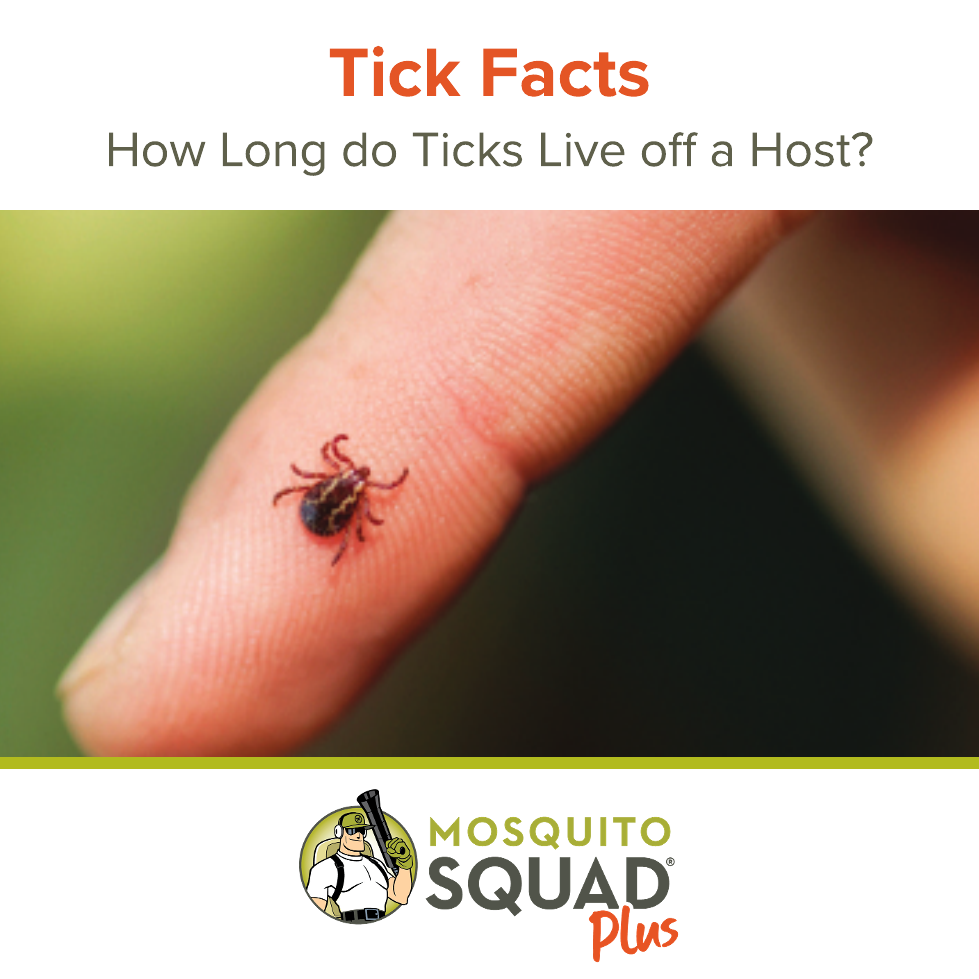
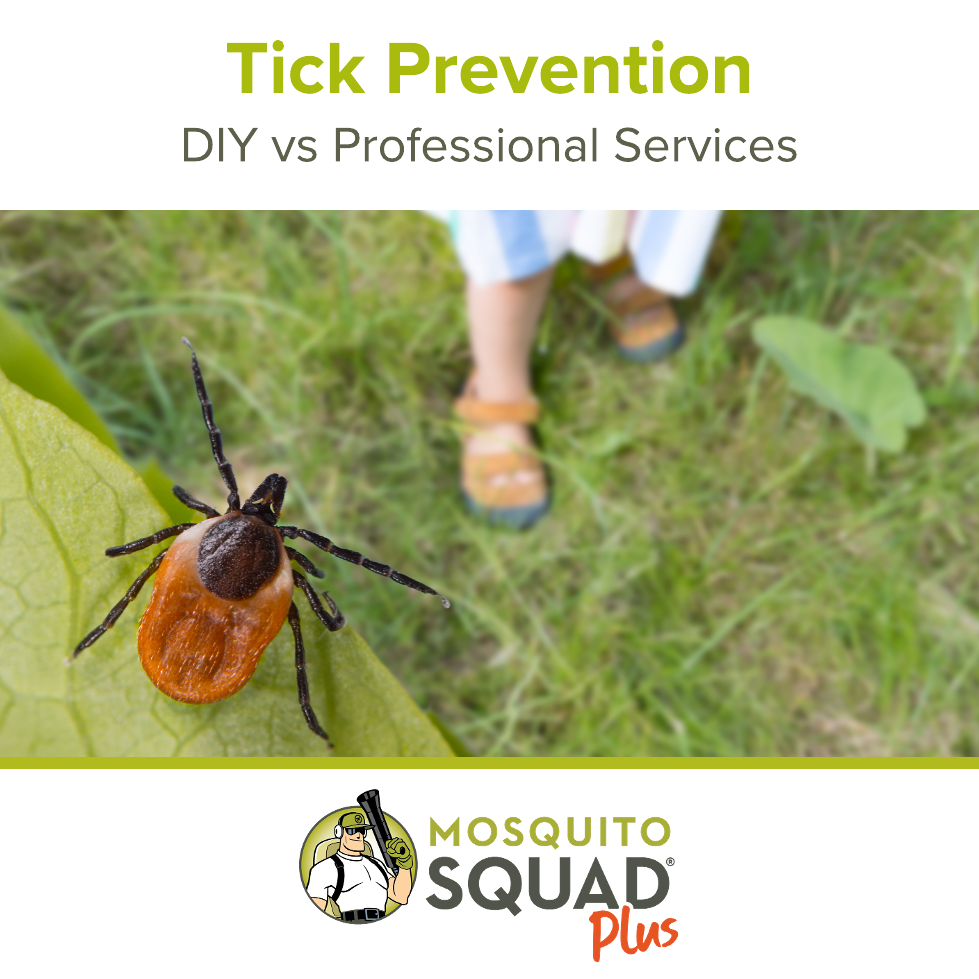
Ticks do not breed in standing water. But the saturated leaf litter, the dense wet vegetation, and the shaded soil margins that a heavy rain week creates are exactly where ticks wait for a host to walk through. They are patient. They are very good at their one job. The Tennessee Department of Health consistently identifies Knox County as a higher-burden area for tick-borne illness, and the terrain explains why. The wooded lot edges in Farragut. The trail-adjacent properties in Heiskell. The creek margin properties in Karns and Powell. After a wet week, those habitats are damp and shaded and exactly what American dog ticks and lone star ticks are looking for.
If you are treating for mosquitoes and not accounting for ticks on a property with wooded edges or creek access, you are solving half the problem and leaving the other half entirely to chance. That is a reasonable gamble until someone pulls a tick off the dog for the third time in a week and it stops feeling reasonable.
Tick control in Knoxville targets the resting habitat. The shaded fence line. The mulch bed. The transition zone between the maintained lawn and the brush where the property ends and the wooded edge begins. Those are the same zones that hold moisture longest after rain. Same geography, same timing, same treatment window. Handling both at once makes more sense than treating them as separate problems, because in this market they are not separate problems. They are the same problem wearing different legs.
What a Barrier Treatment Does After Rain in Knoxville
Source reduction still matters. The 7 T's of mosquito control are worth doing every time. Tip the birdbath. Clear the gutters. Check every container that could be holding water. But in a market where the drainage patterns create standing water in spots no homeowner can reasonably find or eliminate, source reduction alone is not going to get you there and anyone who tells you otherwise has not spent much time in these yards after a storm.
A barrier treatment targets the vegetation where mosquitoes spend most of their time. Not the open yard. Not the middle of the lawn where they are not anyway. The shrub lines. The dense ground cover along the fence. The lower canopy at the wood edge. The shaded mulch beds where the humidity sits even on dry days. Mosquitoes are not flying around at noon. They are resting in cool, humid vegetation waiting for evening, and the barrier treatment finds them there before the evening finds you.
Done on a 21-day cycle it interrupts the breeding population before the next generation reaches biting age. After a storm event that timing matters more than usual. A treatment applied in the week following significant rain, when the post-storm hatch is just starting to emerge from all that fresh standing water, catches the population at the most vulnerable point in its cycle. That is the window that makes the difference between a yard that recovers quickly and one that stays miserable through the rest of the month.
Mosquito Squad's barrier treatment runs on a 21-day schedule because that is how long the residual protection holds under normal conditions and because that interval stays ahead of the overlapping hatches that storm events trigger. It is not a round number chosen for convenience. It is the actual biology of the population cycle mapped onto a service calendar.
Properties in Maryville and Seymour along the Little River corridor, and properties in Lenoir City and Loudon near Tellico Lake and the Tennessee River, deal with sustained pressure that goes well beyond what average conditions produce. Waterfront terrain, persistent creek drainage, and proximity to TVA-managed water levels that fluctuate seasonally all add up to a longer, harder season than most people budgeted for when they bought the house. The Complete Home and Yard package was built for that level of coverage.
When to Start and Why Waiting Costs You
The most common question in spring is whether it is too early to call. In Knoxville, the answer is almost always no, and waiting typically means starting behind a population that already has a meaningful head start on you.
Mosquito activity in East Tennessee begins when daytime temperatures consistently reach the mid-60s. In Knoxville's valley floor, which runs warmer than the surrounding ridges because of the terrain that closes it in on multiple sides, that threshold arrives earlier than a statewide average would suggest. Properties near the river corridors and lake margins warm up even faster because of the thermal mass of the water itself. The lake does not cool off as quickly as the air does overnight, and the microclimate along its shores reflects that all the way into early spring. It is a beautiful feature of lakefront living right up until mosquito season starts two weeks earlier than your neighbor on the hill.
The University of Tennessee Extension documents how Tennessee's climate creates conditions where mosquito breeding can begin earlier than most homeowners anticipate, particularly in valley locations with persistent moisture. In Knoxville that means late March is not an aggressive start date for creek-adjacent and lake-adjacent properties. By the time a homeowner notices the first real biting pressure of the season and picks up the phone, the population on their property has typically been building for several weeks already.
Starting mosquito control in Knoxville before the first significant rain event of the season means the barrier treatment is already working when that storm moves through. The properties that had coverage going into a major rain week recover faster and stay manageable longer than properties starting from zero after the storm has already reset everything. That gap is noticeable. Ask anyone who switched from reactive to preventative treatment after one bad spring.
The Home Shield package extends that protection to year-round perimeter pest control, which matters in Knoxville because the mild Tennessee winters mean pest pressure does not fully stop. It pauses. The same yard dealing with mosquitoes in May is dealing with spiders and rodents in November. Year-round protection built around the actual seasonal rhythm of this valley makes more sense than starting the conversation over every spring and wondering why you are always a step behind.
Three Rivers, One Mosquito Season
Everything about mosquito control in Knoxville comes back to the water. The French Broad coming in from the east carrying a North Carolina mountain watershed behind it. The Holston coming down from the northeast through the Valley and Ridge. The Tennessee River they form together, backed up into Fort Loudoun Lake and held at managed levels all spring while the neighborhoods along its shores try to enjoy the evenings.
Beaver Creek running through Karns and meeting the Clinch arm of the reservoir. Little River draining off the Smokies foothills through Maryville and Alcoa before it hits the Tennessee. Every creek system in this county draining toward something bigger, and every one of those drainages leaving wet margins in residential yards for days after a storm passes through. It is a lot of water moving through a lot of neighborhoods, and mosquitoes have had a long time to figure out the routing.
That is the Knoxville mosquito story. Not a single creek or a single lake or a single bad week. A convergence of water systems that keeps this valley wet, warm, and productive for mosquito breeding from late March through October, with every significant rain event resetting the calendar and adding a new layer of pressure on top of what was already running.
If you are in Knoxville, Farragut, Maryville, Lenoir City, Powell, or anywhere across Knox, Blount, or Loudon County, call Mosquito Squad at (865) 413-7732 or get a free quote online. First treatment is scheduled within 48 hours.