What Fort Loudoun Lake Means for Mosquito Season in Lenoir City
Posted by Mosquito Squad Plus
April 16, 2026
The Tennessee Valley Authority completed Fort Loudoun Dam in 1943 at the northern edge of what is now Lenoir City, impounding 14,600 acres of the Tennessee River into the lake that defines this community's character more than anything else. The reservoir stretches 55 miles upstream toward Knoxville with 379 miles of shoreline across Loudon, Knox, and Blount counties. It connects by canal to Tellico Reservoir to the south. The TVA maintains a minimum water elevation of 807 feet in winter and holds the typical summer pool between 812 and 813 feet, meaning the annual drawdown is only six vertical feet.
That six-foot drawdown detail matters more than most Lenoir City homeowners realize when they are planning their outdoor season. It means the coves, the shoreline margins, the creek inflows along the lake's 379 miles of shoreline never fully drain. The shallow warm water that persists in those margins from March through October, organically enriched by decades of shoreline vegetation and aquatic debris, is not incidental mosquito habitat. It is the primary production zone for the Culex mosquito species that the Knox County Health Department confirmed carrying West Nile virus in active surveillance pools twice in 2025 alone.
Buying a waterfront property on Fort Loudoun Lake means buying into one of the finest outdoor living environments in East Tennessee. It also means living adjacent to a 14,600-acre mosquito production system that operates on a schedule no homeowner's outdoor calendar fully accounts for on its own.
What Fort Loudoun Lake's Shoreline Actually Produces
The Tennessee Valley Authority's Fort Loudoun Reservoir Land Management Plan manages 1,513 acres of TVA public land along the reservoir with documented shoreline management zones where vegetation clearing is restricted. Those intact wooded riparian corridors along the lake's residential edges are not just scenic. They are exactly the shaded, organically rich resting habitat that the dominant mosquito species along this corridor requires between breeding cycles and feeding activity.
The Culex mosquito species that carry West Nile virus in Tennessee breed in organically enriched standing water with high organic matter content. The CDC's mosquito habitat documentation is specific about this: catch basins, stagnant water in drainage ditches, and containers of water with high organic content are the preferred breeding environment. Fort Loudoun Lake's cove margins and creek inflows deliver those conditions at a scale no residential yard management program can address. The lake is there year-round and the mosquito population it supports reflects that.
The TVA also manages the Fort Loudoun Wildlife Management Area along the reservoir between Tennessee River miles 638.5 and 649.5, actively maintained by TWRA as wildlife habitat. The birds, deer, and wildlife that use that corridor move through the wooded riparian edges connecting TVA-managed shoreline to residential properties throughout the Lenoir City corridor. Those wildlife movements carry mosquito populations from the lake's most productive shoreline zones into residential yards with every dawn and dusk feeding cycle.
What the Knox County Health Department Data Says
This is not a theoretical concern for Lenoir City homeowners. The Knox County Health Department confirmed West Nile virus in mosquito surveillance pools in Knox County in June 2025, triggering adulticide spraying, and again in August 2025, triggering a second round of spraying. The department conducts active routine mosquito surveillance and responds to positive pools with organized mosquito control operations. Lenoir City sits at the Knox and Loudon county border, directly in the Fort Loudoun Lake corridor that these surveillance operations monitor.
The Tennessee Department of Health documents Knox County as one of only three Tennessee counties where active mosquito trapping and West Nile surveillance was conducted in 2023, with positive pools confirmed. West Nile illness onset in Tennessee peaks in late summer, August through September, with risk building from late spring through mid-summer, mapping exactly onto the window when Fort Loudoun Lake waterfront properties see the highest outdoor living activity.
In June 2025, the CDC reported Knox County as having one of only ten confirmed human West Nile cases in the entire United States at that point in the season, and Tennessee as the state with the most confirmed cases among all states reporting. That is not a distant concern. It is the disease picture for the lake corridor that Lenoir City waterfront properties sit on.
Beyond West Nile, the Knox County Health Department confirmed two pediatric La Crosse virus cases requiring hospitalization in Knox County in July 2025. The Tennessee Department of Health reported that Tennessee had more La Crosse cases in 2025 than any other state in the country. La Crosse virus is transmitted by Aedes triseriatus, the eastern tree hole mosquito. The CDC's La Crosse transmission documentation is specific: this species is found in deciduous forest habitats and lays eggs in standing water collected in tree holes in wooded areas. A peer-reviewed study published in the Journal of the American Mosquito Control Association and indexed on PubMed confirmed La Crosse virus infection in field-collected Aedes triseriatus mosquitoes in Tennessee specifically, identifying this species as an important vector in the state. UNC researchers further document that La Crosse virus is isolated to densely wooded areas of eastern Tennessee specifically, making the intact forested riparian corridors along Fort Loudoun Lake's TVA-protected shoreline a documented part of the habitat picture for this disease. The connection between wooded canopy and La Crosse risk in this corridor is not inferential. The research places it here directly.
The Waterfront Property Mosquito Pattern
Lenoir City waterfront properties experience a mosquito season that most homeowners significantly underestimate on their first year on the lake. The pattern is consistent and it follows the water.
March and April bring the first warm evenings and the first outdoor time on the dock or the waterfront deck. That is also when the overwintered Culex mosquito egg masses in the lake's cove margins begin hatching with the warming water temperatures. The first bites of the season happen before the yard feels like mosquito season. They happen at dusk on the dock, in the early spring evening when the air is still cool enough that nobody reaches for repellant.
By May the population is established and by June it is what it is going to be for the summer. The properties that invested in barrier treatment in March are managing a contained population. The properties that waited until the first uncomfortable evening on the deck in late May are reacting to a season that has been building for eight weeks.
The shallow cove adjacent to the dock, the creek inflow at the property corner, the organically rich water under the dock structure itself where debris accumulates out of direct sunlight, those are the production zones. They are not zones a homeowner can drain or manage away. They are the lake.
Farragut homeowners along the Fort Loudoun Lake corridor to the northeast deal with comparable early season mosquito pressure from the same lake system for similar shoreline terrain reasons. The mosquito calendar along Fort Loudoun's 379 miles of shoreline runs consistently from March through October regardless of which county the property sits in.
What Changes With a Permanent Solution
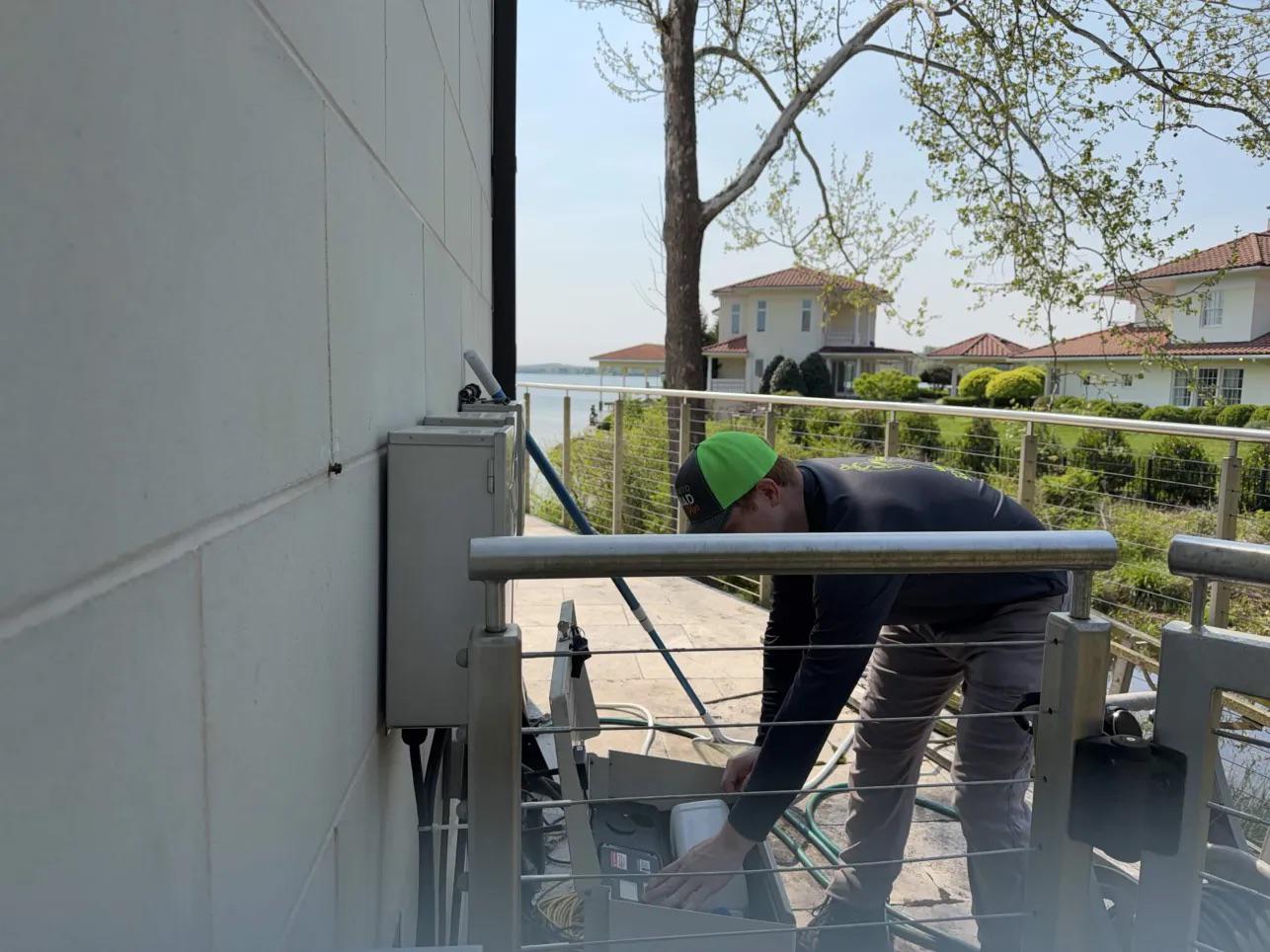
A mosquito barrier treatment program reduces the active population around the property by 85 to 90 percent per treatment cycle and is the right starting point for most properties. For waterfront properties the conversation is a little different. The outdoor living investment on a Fort Loudoun Lake property, the dock, the waterfront deck, the lake-facing landscape, does not deliver its full value when the dusk hours are uncomfortable from late March through October. A permanent automatic misting system runs on a timed schedule without requiring appointment coordination, provides consistent population reduction without gaps between service visits, and was designed specifically for properties where the outdoor season is continuous and the investment in that season is significant. It is not a premium add-on for a waterfront property. It is the appropriate solution for the terrain and the way the property is actually used.
Knoxville properties along the Tennessee River corridor deal with the same lake-driven mosquito calendar for similar water system reasons. The specific terrain along Fort Loudoun's Lenoir City shoreline, the stable six-foot annual drawdown maintaining productive cove margins year-round, the TVA-protected riparian corridors preserving intact resting habitat immediately bordering the residential edge, makes the Lenoir City waterfront mosquito story specific to this community and this reservoir system.
The Knoxville area mosquito control team serves Lenoir City and communities throughout the region. Fort Loudoun Lake does not wait for May to feel like mosquito season. The season starts when the water warms and the cove margins wake up, which in this corridor happens in March. Your treatment program should start then too.