How Damp Ground Keeps Ticks Alive in Homewood Yards All Summer
Posted by Mosquito Squad Plus
August 17, 2026
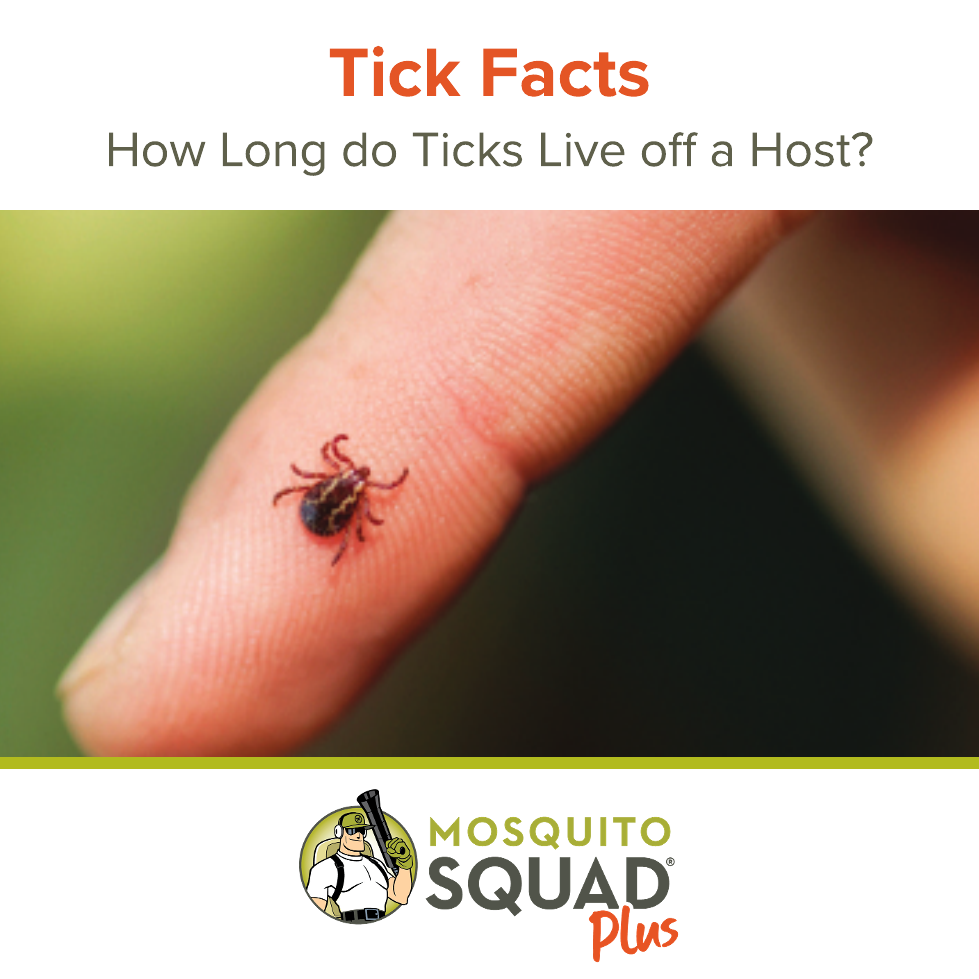
A tick sitting in the leaf litter behind a Homewood house spends most of its short life doing one unglamorous thing, which is managing water. It can't drink from a puddle the way your dog does. It pulls moisture straight out of the air through its mouthparts, and when the air around it dries out, it loses water faster than it can take it back in. Give it enough dry hours in a row and it dies right there in the leaves, without ever finding you.
That single fact explains more about the ticks in your yard than anything you've been told about woods, deer, or tall grass. Ticks thrive where the ground stays wet, and trees matter mostly because of what they do to the ground underneath them. Your ground, down here on the valley floor, stays wet longer than almost anywhere else in the metro.
We've been treating Homewood yards since 2018, and this is the part homeowners here find hardest to believe. You can have a modest lot, a tidy lawn, and forty feet of shade at your back fence and still carry more tick pressure than a much bigger wooded property somewhere drier. The ground underneath your yard is simply doing what a tick needs it to do, and no amount of tidy edging changes that.
A Tick's Whole Day Happens in Three Inches of Leaf Litter
Picture the layer you never think about. Under your mulch, under the ivy, under the leaves that blew into the fence corner last November and stayed there, there's a band of air two or three inches deep that behaves almost nothing like the air at your head height. It's cooler, it's darker, and it holds moisture long after your lawn has dried off in the sun.
A tick lives in that band. It climbs up into your vegetation to wait for something to walk past, which is called questing, and the whole time it's up there it's exposed and losing water. So it goes back down to recover. Up to hunt, down to rehydrate, up again. That rhythm runs all summer in your yard, and every trip up is a gamble against drying out.
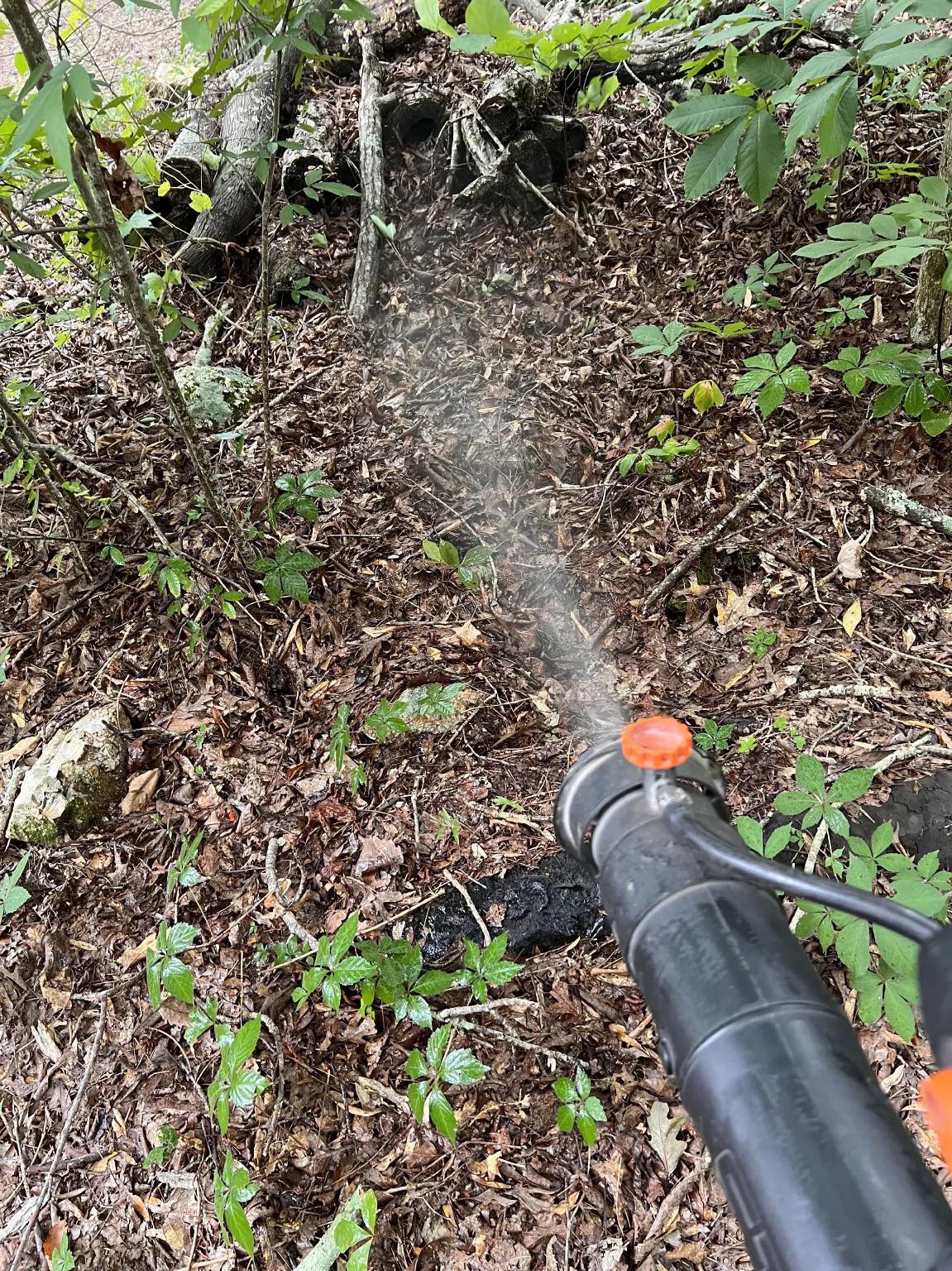
Which is why the standard advice to treat your lawn falls flat here. You walk on the lawn, but the tick lives down in the litter, and that layer is the only place a treatment changes the math. Our tick control work goes low into ground cover and the bottom branches of your shrubs for that reason, and it's the same thinking behind the 6 C's of tick control we've used for years.
The Humidity Number That Keeps Homewood Ticks Alive
Species matters more than most tick coverage lets on, and Alabama has a different one than the headlines describe.
Nearly everything in the press is about the blacklegged tick, the northern one tied to Lyme disease. Research on that species pinned survival to a relative humidity threshold right around 82 percent down in the leaf litter, and found that stretches of eight hours below threshold predict how many ticks make it to the following season. A separate field study showed cumulative hours below threshold tracking nymph activity better than temperature did.
The tick in your yard is a different animal, and it's thirstier. The lone star tick is what we pull off dogs and off people here. Studies of lone star nymphs put water vapor absorption in a band from 75 to 84 percent relative humidity and describe the species as hydrophilic, with low tolerance for dehydration and fast water loss rates. For adults, published work found vapor uptake happening between 85 and 93 percent relative humidity, accounting for as much as 77 percent of all the water the tick takes in. Later work in Scientific Reports found lone star adults will drink standing water directly when they can reach it, stretching their survival further still.
So the tick behind your house needs the air in the leaves sitting north of 85 percent humidity to stay alive. Not the air on your deck. The air two inches off the dirt.
Ninety percent humidity down at that level isn't unusual on your street. In plenty of these yards it's most mornings, and it holds well into the afternoon.
Why Ground in the Shades Creek Valley Stays Damp
You're on the valley floor. Shades Creek runs through Homewood, and the USGS has gauged it here since 1943, with a second station downstream at Samford. The creek does more than carry water past you. The whole corridor around it, the floodplain soil, the low ground, the drainage feeding in off both slopes, stays damper between rains than higher ground does.
Then there's your canopy. The older streets here grew up under hardwoods that are eighty years along now, and those trees pull double duty. They block the sun that would otherwise burn moisture off your ground by mid morning, and they drop a fresh load of leaf litter every fall that packs down and holds water like a sponge.
Anyone who's walked out at nine to move a sprinkler knows how it plays out. Your grass is still soaked. Same hour, on a treeless lot with no creek near it, the dew burned off an hour ago. We make the same point on our Homewood service page, and it's the first thing we point at on a walkthrough.
Put those together and your ground spends far more hours above the lone star tick's survival threshold than a sunny, well drained lot ever will. Same city, same forecast, completely different conditions where it counts. You'll see the same mechanism drive mosquito timing in Homewood, and it's part of why a century-old Homewood lot is the hard job rather than the easy one.
Reading Your Own Yard for Tick Habitat
Walk your property some morning before the sun gets over the trees and you can read the moisture yourself. We do this on every visit, and the same handful of features come up again and again.
Your ivy and pachysandra beds are the first thing we look at. Ground cover that dense builds a permanently humid layer underneath, and it tends to be planted precisely where nobody walks, so nothing ever disturbs it. Ticks do very well in there.
Leaf litter you never clear is the second. Your open lawn gets raked or blown, but the strip along your fence, the bed behind your garage, and the low corner where everything collects don't. Push your hand into one of those and you'll feel the difference immediately.
If your lot is terraced, and plenty here are, check the ground at the base of your retaining walls. Shaded soil at the bottom of a wall holds water for days after a rain, and the gap where the wall meets the bed above it rarely sees direct sun at all.
Look at where your downspouts empty. One that dumps into a bed instead of running out toward the street keeps that patch saturated all season, and so does an irrigation zone you set in April and haven't touched since.
Then walk your back fence line, where your mowed grass meets whatever's behind it. That transition strip concentrates everything above it, and on most properties it's the highest value target you'll find. It's why our Yard Defender work goes after ground level harborage instead of broadcasting across your open turf.
One more thing we notice on these lots. The same damp ground that suits ticks suits chiggers and fleas too, so when somebody calls about bites nobody can identify, we're usually looking at the same three feet of ground for all of it.
Tick Control That Goes Where the Moisture Is
If humidity is the variable, your treatment has to go where the humidity sits, and it has to keep going back.
Our Mosquito Barrier Treatment runs a 21 day cycle through the season and does real work on ticks while it's there. That interval matters more than it sounds. A company running your property monthly leaves a gap at the end of every cycle, and in ground this wet the population doesn't pause politely to wait for them.
For year round coverage that takes in your house as well as your yard, Home Shield picks up the pests working your perimeter, and Complete Home and Yard stacks full yard management on top of that. If you've got small kids in the grass or a dog out all summer, ask about our natural treatment option, which kills on contact and runs on a tighter schedule through the peak weeks. We wrote up how that option performs if you want the unvarnished version.
The other half of this job is yours, and in a yard like yours it works. Anything that lets light and air into the litter layer pushes the humidity number down and makes your ground less survivable, so clear your fence line, thin your ground cover, pull the leaves out of your corners, and move that downspout. The University of Kentucky extension service publishes guidance for homeowners on lone star tick control that lines up with what we tell people standing in these yards.
None of that replaces treatment on ground this damp. What it does is make your treatment work harder, and on a small Homewood lot the two together can move you from a yard you check your kids after to a yard you stop thinking about.
Larvae, Nymphs, and the Stage That Bites You Unnoticed
Ticks come at you in three sizes, and moisture doesn't treat them equally.
Larvae are the smallest and the most fragile. They hatch with a tiny water reserve and almost no margin, so a dry stretch kills them faster than anything else in the life cycle. Across most of the country a hot dry summer wipes out a large share of that year's larvae before they ever reach a host. In your yard, with a canopy overhead and a creek corridor holding the floor damp, more of them survive to the next stage.
Nymphs are the ones that matter to you personally. They're roughly the size of a poppy seed, they're the stage most likely to attach without you noticing, and the research on lone star nymph water balance puts their vapor absorption in the same demanding humidity range that governs everything else here. Nymphs are why a tick check after yard work earns its time even when you saw nothing on your clothes.
Adults are the toughest of the three and the easiest to spot. They're the ones you find crawling up a pant leg on the way inside, and they're the ones people bring us in a jar with the lid screwed on tight. Adults hold water better than either younger stage, so they ride out a dry week that would kill a larva outright. By the time you're seeing them regularly, your litter layer has been doing its job for a good while.
The practical upshot is that a wet yard holds more ticks at every stage, which compounds across a season rather than sitting still as a number you can spray once and forget.
Inside a Tick Treatment on a Homewood Lot
People ask what we're doing back there, so here's how a visit runs.
The first pass is reading your ground rather than treating it. Where does water collect, where does the sun never reach, where does the litter pile up, where does the mowed grass stop. That walk sets the whole plan, and on a Homewood lot it usually takes longer than the treatment does.
Then the work goes low and to the edges. The barrier treatment covers the vegetation where questing happens, and the ground level harborage work targets the litter layer itself. Your open lawn gets far less attention than your fence line, by design.
If your problems run past ticks and into the house, which they often do on older lots here, Home Shield handles the perimeter side. You can see how that pattern plays out in the fall pest wave across Birmingham homes.
You don't need to be home for any of it, and you'll get a notice before we come.
Why Ticks Vanish in a Dry August and Come Back After Rain
Birmingham gets a hot dry stretch most Julys. Two weeks, no real rain. Your tick complaints fall off, and it's easy to conclude the season broke early.
What happened is that your litter layer dropped below the survival threshold long enough that part of the population died and the survivors quit questing to conserve water. The ticks left in your yard went down and stayed down.
Then the pattern breaks. You get three days of rain, your ground comes back above 85 percent, and the survivors resume host seeking all at once. The calls arrive in a wave, and it reads like a fresh infestation when it's the same population you already had becoming visible again.
We field that wave every year and can usually call it within a day or two. In your yard the dry spell does less for you than it would somewhere else, because your canopy and the creek corridor hold the floor of your property closer to the threshold even through a drought. A wet spring stacks the deck further, which is what we watched happen across Birmingham after a soaked spring. Your relief in a dry August is smaller here and your rebound after rain is faster, which is the argument for starting treatment early instead of waiting for a first bite to prove something.
Why Your Neighbor Two Miles Away Has a Different Problem
The moisture rule travels, and once you know it you can predict a lot of Birmingham without leaving your driveway.
Drier, sunnier, better drained ground gives you fire ants where you'd otherwise have ticks. That's the trade out in the newer subdivisions, where open graded lawns bake all afternoon and the fire ant problem in Hoover is the defining complaint rather than anything living in leaf litter.
Water sitting somewhere you don't control gives you a third pattern again, which is the situation around Lake Purdy, where the pressure on a property starts past the property line and no amount of yard work reaches it.
Yours is the damp shaded version, and it's the one people misdiagnose most, because the yard looks manicured and the trees read as an amenity rather than a variable.
Mosquito Squad of Greater Birmingham is a veteran owned family business, and we work the whole Greater Birmingham service area. If ticks keep turning up at your place and you want somebody to walk your ground and show you where the moisture is sitting, call (205) 900-3528. Every job we do is backed by our guarantee.