Why Homewood's Worst Mosquito Weeks Come After the July Heat Breaks
Posted by Mosquito Squad Plus
August 3, 2026
The mosquitoes in a Homewood backyard get noticeably quieter in the last stretch of July, and every year that quiet talks somebody out of their mosquito service. The yard dries out. The afternoon bites drop off. You sit on the porch on Broadway or off Saulter Road, you do not get chewed up the way you did in June, and you start doing the math on whether you still need us.
We take that call every August. It is one of the most predictable phone calls in this market, and it comes almost entirely from established neighborhoods like Homewood where people spend real time outside and notice small changes in their own yards. Your instinct behind that call is reasonable. Your timing is backwards.
If you take one thing from this, take the shape of the curve. Your discomfort peaks in June and July. Your exposure peaks later, and it peaks quietly.
What drops off in a hot, rainless late July is the mosquito that bites your ankles at a cookout. What does not drop off, and in central Alabama tends to build through August and into September, is the mosquito that carries West Nile virus. Those are two different insects with two different summers, and understanding the split is most of what good mosquito control in this city comes down to.
The Two Mosquitoes in Your Yard Are Having Opposite Summers
Your Homewood property supports both of the mosquito groups that matter in Jefferson County, and they want completely different things.
The first is the Asian tiger mosquito, an Aedes species. It bites in daylight, it is aggressive, it is the one ruining your kid's birthday party at three in the afternoon, and it breeds in tiny containers of clean water. Rain fills those containers. When rain stops, a lot of them dry out, and the population sags. That sag is the quiet you are noticing right now.
The second is Culex, the southern house mosquito group. It bites at dusk and after dark, it is quieter and less obvious about it, and it wants water that has been sitting long enough to go foul. The Alabama Department of Public Health identifies the Culex group as the primary vector moving West Nile virus to people and horses in this state. Culex does not need a storm. It needs stagnation, warmth, and time, and a rainless stretch in a dense residential neighborhood supplies all three.
We covered the flooded version of this story in our post on Birmingham after heavy rain, and the Cahaba Heights mosquito post walks through what floodplain proximity does over in Vestavia Hills. This is the other half of the year. The half where the sky is clear, the ground is dry, and the risk is going up anyway.
You will never notice the handoff between the two, and that gap does most of the damage. An Asian tiger mosquito announces itself, lands on your calf in daylight, and gets swatted. A Culex comes in low and quiet after sundown, and you find the welt in the morning without having registered the bite. So when your daytime bites drop off, you file the mosquito question as solved, and nothing about your evenings is loud enough to correct it. We hear the same phrasing on property after property in the fall. They are not as bad as they were. They are not as bad in the way you are measuring.
This split is not a matter of opinion about which bug is worse. A scoping review in Parasites and Vectors gathered the laboratory temperature data for the main North American Culex species and found that development rate climbs steadily with heat while adult lifespan falls off at the same time. A hotter yard grows mosquitoes faster and kills them sooner. What that produces at the height of an Alabama August is a fast, churning, short-lived population, and what it produces as the nights cool is something more dangerous: mosquitoes that live long enough for a virus to finish developing inside them.
Why the Risk Curve Peaks When the Misery Curve Drops
The temperature research is what reorders the calendar for a Homewood homeowner.
Researchers at Stanford and UCLA modeled temperature-dependent transmission for West Nile and five related viruses in eLife. Transmission optimizes between 23 and 26 degrees Celsius. Checked against human neuroinvasive case counts across US counties, incidence peaked at an average summer temperature of 24 degrees, right where the models said it would.
Twenty-four degrees Celsius is about 75 degrees Fahrenheit as a daily average. Birmingham in late July runs considerably hotter than that. The National Weather Service office in Birmingham has been calling highs in the middle 90s to near 100 with overnight lows in the lower to middle 70s, which averages out well above the band where transmission is most efficient.
Read that the way a service calendar reads it. The deep heat of late July is not the peak of your West Nile exposure in central Alabama. It is a plateau you pass through on the way there. As August gives back a few degrees and September gives back more, daily averages slide down toward that 24 degree mark, and the transmission math improves for the mosquito exactly as your yard starts feeling pleasant again.
Alabama public health officials describe the same shape from the case side. Mobile County's health officer has put the state's typical case peak around August, which is well after the hottest and most miserable stretch of the summer has already passed. The Alabama Department of Public Health reports its counts weekly and feeds them into the national system.
This is why the CDC's current-year West Nile surveillance fills in through late summer and early fall rather than in midsummer, and why NOAA's climate service has documented that precipitation drives Culex risk in opposite directions in the eastern and western halves of the country. In the East, more rain often flushes larval habitat out rather than creating it.
The 7 T's of mosquito control framework we run on every property assessment accounts for this. So does the way we schedule. A Homewood program built around June misery and cut off after the Labor Day cookout is a program that quits during the most consequential six weeks of the year.
If you want the underlying biology, our post on how mosquitoes reproduce on a property covers the cycle in detail, and the national rundown of mosquito-borne diseases covers what else is being tracked this year. The same seasonal shape shows up in the 280 corridor and Meadowbrook and up in Mountain Brook.
Where the Water Comes From When It Stops Raining
The obvious objection is that a Culex mosquito still needs standing water, and a dry August in Homewood should mean less of it.
It does not work out that way, and the reason is that in an established, heavily landscaped neighborhood, most of the water that matters in a dry stretch is water people put there.
First, the shape of the place matters here more than it does in most of the market. Homewood sits in Shades Valley, pinned between Red Mountain on the north side and Shades Mountain on the south, and the elevation change across eight square miles is steep enough that two houses a mile apart can have opposite water problems. Down on the valley floor around Edgewood and Oxmoor, lots run tight, many of them well under a quarter acre, houses close together with short runs of fence between them. Up toward Shades Crest the lots open to three and four times that size. Water leaves the ridge lots. Water arrives at the valley lots and then has nowhere else to go.
Start with irrigation. Homewood lots are older, planted hard, and when the rain stops the sprinklers come on. Zone boxes hold water. Low spots at the end of a run stay damp for days. A leaking head keeps one patch of mulch bed permanently wet through a stretch when everything around it has baked dry. That single wet patch is now the only game in the neighborhood, and every gravid female within flying range knows it.
Then the things nobody counts as water features. Birdbaths topped off and never dumped. Air conditioning condensate dripping into the same shaded corner all day through the hottest month of the year. Pool and hot tub covers with an inch pooled in the middle. Saucers under the porch pots. Downspout extensions with a low belly in them. Kids' wading pools, pet bowls, and whatever tarp is covering the woodpile.
Walk your property with that list and you will usually find three or four. We find more, because we know which ones hide. The condensate line is the one homeowners miss most, and it runs eight or nine hours a day in an Alabama August into the same spot, on a schedule no rainfall matches.
Culex prefers water with organic content in it, which is to say the older and dirtier the sit, the better it works. Extension researchers at the University of Georgia have made this point about West Nile risk during dry conditions specifically: without regular flushing rain, the water that remains sits, stagnates, and concentrates into exactly the habitat the southern house mosquito is looking for. Research collected in the National Library of Medicine has gone further and linked dry-weather conditions to elevated human West Nile risk, partly because drying reduces the predators and competitors that would otherwise keep larval numbers down.
We want to be clear that this is about mechanism rather than crisis. Central Alabama is not in serious drought. The US Drought Monitor's Alabama page has kept most of the state clear, with what dryness exists sitting well south of Jefferson County. You do not need a declared drought for any of this to matter. You need a normal Alabama stretch of hot days without rain, which Homewood gets every year, and our yards supply the rest.
Properties across the Greater Birmingham service area show the same pattern. The Red Mountain divide post explains why drainage on the south side behaves differently than it does in Jones Valley, and newer subdivisions in Hoover hold their dry-season water in different places than a ninety-year-old Edgewood lot does.
What Homewood Homeowners Try in August
By the time the second half of summer arrives, most people we talk to have already tried a few things, and each one does something different.
Citronella candles, tabletop torches, and clip-on devices move mosquitoes a few feet and do nothing to a population. They are comfort products. Use one on the deck if you like, but nobody should mistake it for control.
Standing water patrol works, right up to its limit, and we will tell you so. Dumping the birdbath twice a week, pulling the saucers, and fixing the irrigation leak cuts what your own property produces, and that matters more in a dry August than at any other point in the season, because your yard is a larger share of the total supply. What it cannot reach is the water on the other side of the fence or in the drainage structures under the street.
Foggers and hardware store yard sprays put down a knockdown with almost no residual. You get an evening out of one, which is a fair reason to run it before a party. As a program, they leave the population untouched a day later.
Then there is the pause. Somebody calls in mid-August, says the mosquitoes have thinned out, and asks to pick back up in March. That is close to a direct quote, and we hear it more than any other sentence in this business.
Our answer is that the mosquitoes leaving does not mean the pests leave. It means the roster changes. The same weeks when mosquito pressure finally drops in Birmingham are the weeks rodents start looking for a way inside and spiders move off the shrub line into the garage, the eaves, and the corners of rooms nobody uses. Cooler nights push both of them toward your foundation. A March restart leaves the house uncovered through the exact stretch when the problem stops being a yard problem and becomes an indoor one. Our post on when to start treatment covers the front end of the season. The back end deserves the same attention and almost never gets it.
For households that want a softer chemistry through the second half of summer, our natural treatment option built on essential oils is a reasonable answer, with a shorter interval between visits. We wrote up the honest version of that tradeoff in do natural mosquito treatments really work, and the national piece on misting systems covers the permanent-installation route for properties that want it.
What Coverage Through September Looks Like
A barrier program does something the candles and the foggers cannot, which is find the adults where they spend the daylight hours.
Mosquitoes are not cruising your open lawn at two in the afternoon in an Alabama August. They are tucked into shaded, humid vegetation waiting for the temperature to break. The undersides of leaves in the shrub border. The ivy on the retaining wall. The dense foundation planting on the north side of the house. The fence line where the neighbor's hedge meets yours. Those zones hold humidity through the hottest part of the day, and on an older Homewood lot with a mature canopy there are more of them per acre than on a newly graded subdivision lot.
That is the part a hose-end sprayer cannot replicate, and the equipment has nothing to do with it. You would have to know which twelve square feet of your yard hold humidity at two in the afternoon in late August, and those twelve feet move as the sun angle drops through the fall. Learning that about a property is most of our job.
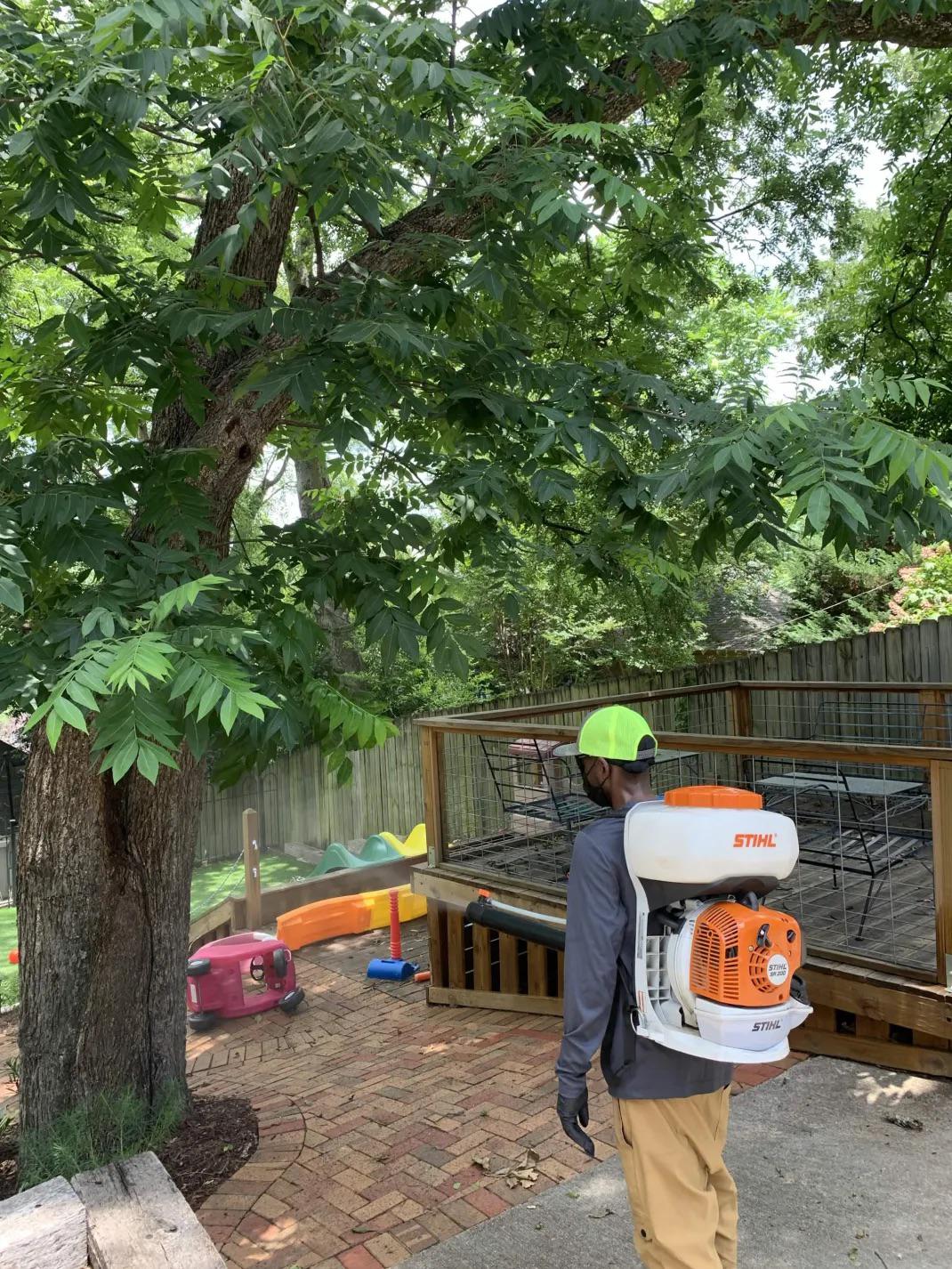
Our mosquito barrier treatment targets that resting habitat on a 21-day cycle. The interval is set to the population cycle rather than to the calendar, and holding it through September is what keeps the late-season Culex build from getting ahead of you. Squad Yard Defender extends the same logic to the rest of what a yard produces in late summer.
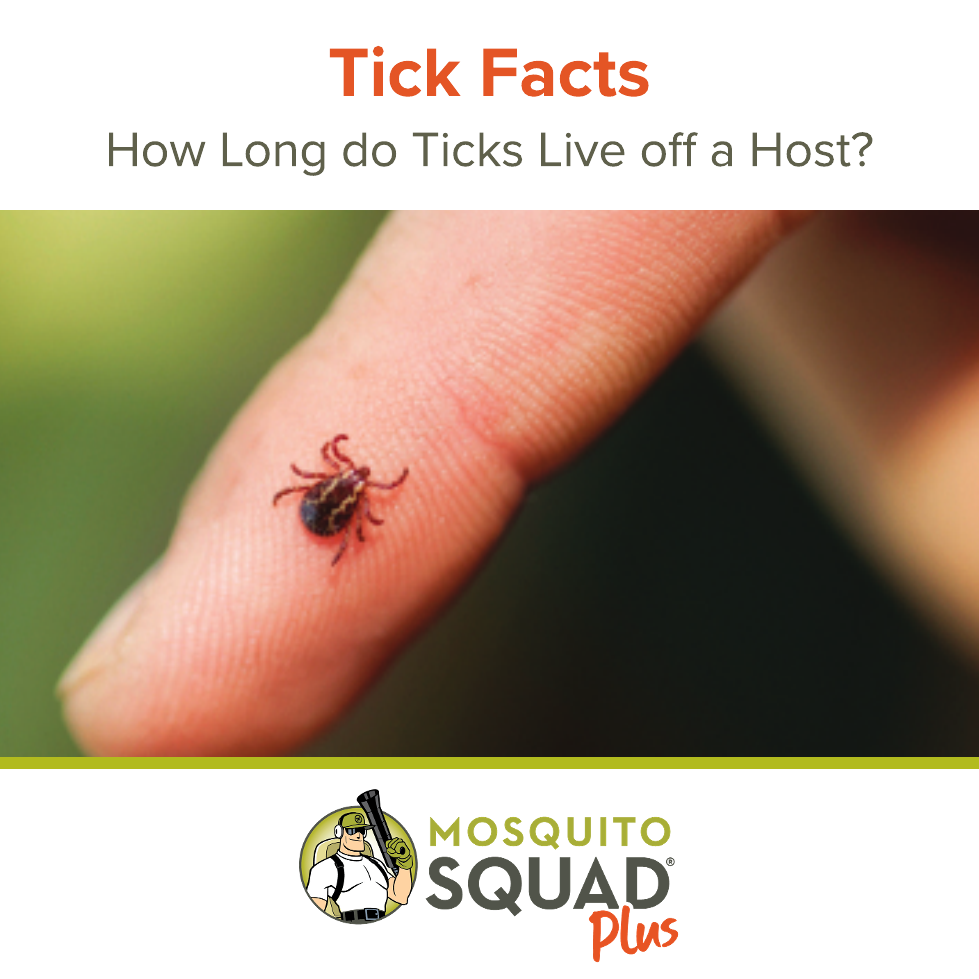
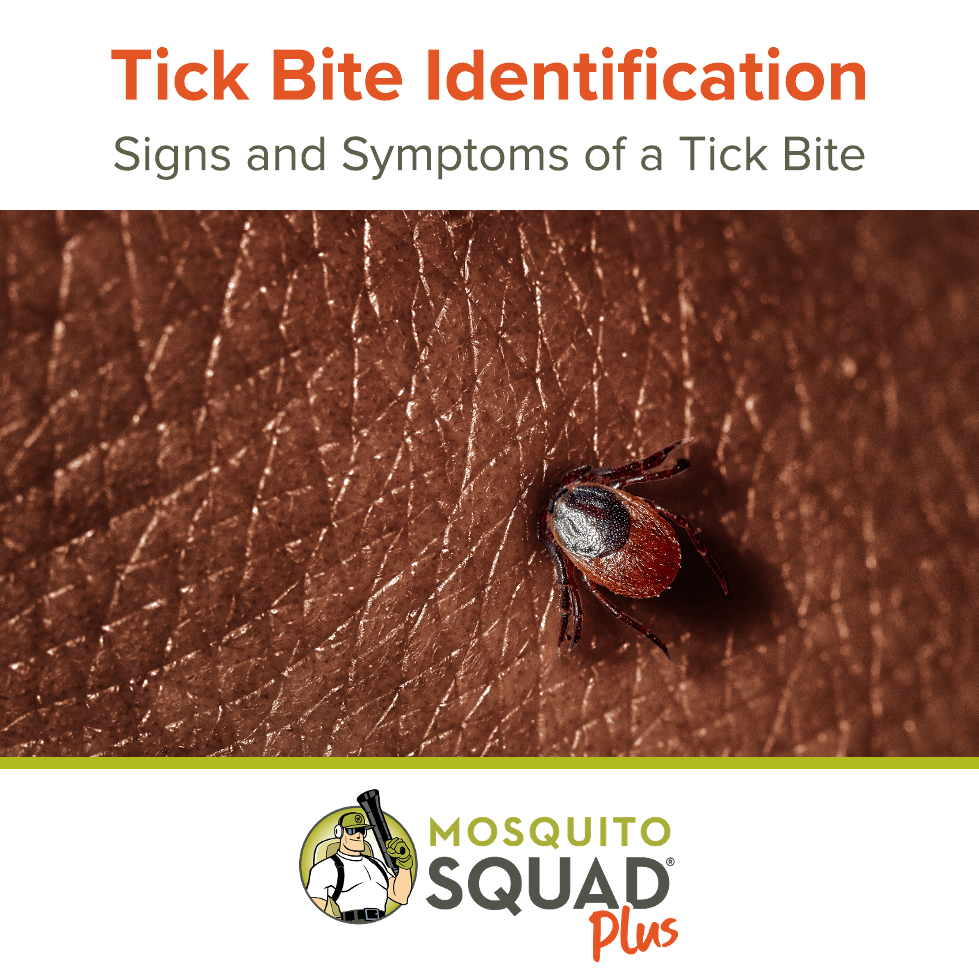
Ticks belong in the same breath, because the resting zones overlap almost exactly. If your Homewood property runs toward Shades Creek or backs onto anything naturalized, tick control belongs in the same visit. Our Vestavia Hills tick post covers the south-of-the-mountain picture Homewood shares.
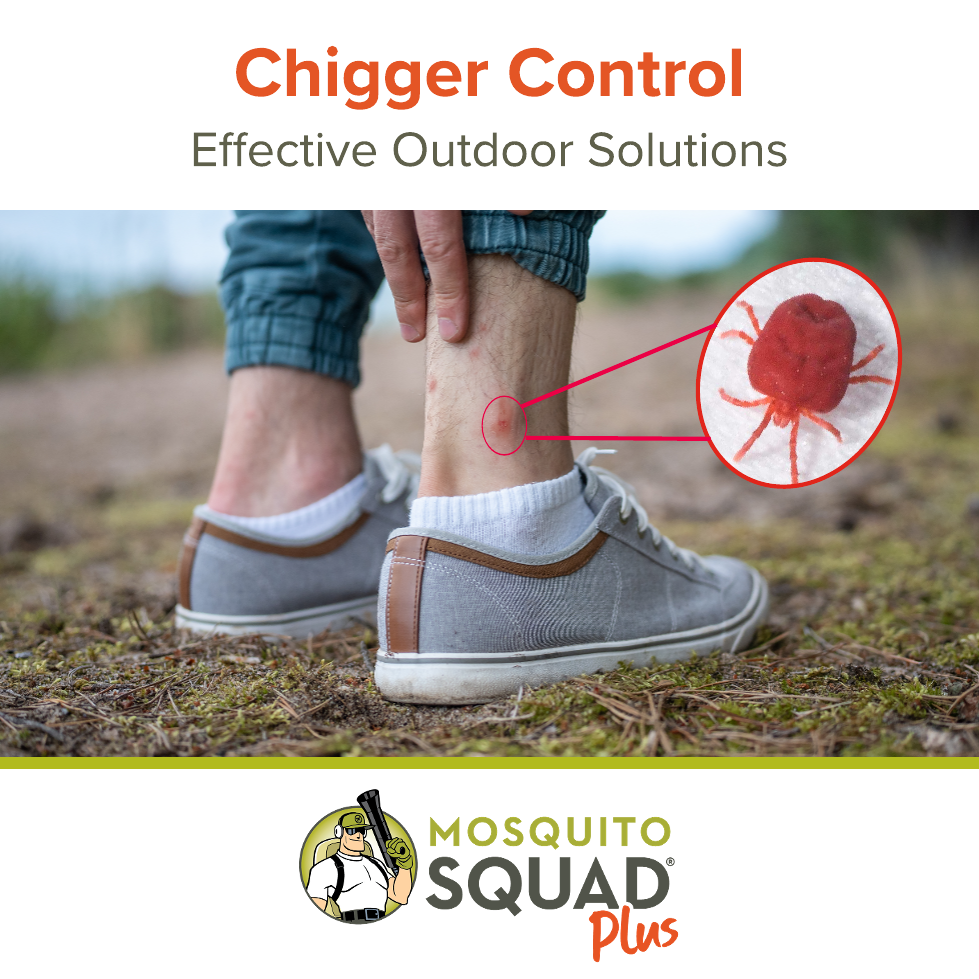
For households that would rather stop managing this by season, our Home Shield program folds perimeter and interior pests into one schedule, and Complete Home and Yard adds fire ants, fleas, and chiggers on top. Mild Birmingham winters mean pressure never fully stops here. It just changes species.
Reading Your Own Yard Before September
Give yourself forty minutes some evening this week and walk the property the way we would with this specific question in mind: where does water sit for more than three days without anyone noticing?
Put your hand in the irrigation zone boxes. Check whether the last few feet of each run stay dark after the system shuts off. Find the condensate drip from the air handler and look at what sits under it. Pull the saucers off the porch pots. Look into the bottom of the downspout extensions rather than the top. If you have a pool cover or a tarp over anything, look at the middle of it.
Write down what you find, because you will be back in the same spots in three weeks and you want to know whether they dried or held. If your yard is on a slope, and most of Homewood is, pay closest attention to the bottom of it.
Then go out again after dark, stand still in the darkest, dampest part of the yard, and wait two minutes. Daytime biting and evening biting are telling you about two different insects, and the evening walk is the one that tells you about the mosquito that matters most in September.
If that walk turns up more than you want to handle, schedule a free property inspection and our team will read the yard with you. We work Homewood alongside the rest of the market, first service is scheduled within 48 hours, and our current special offers include discounts for veterans, first responders, and teachers.
The quiet you are hearing in the yard right now is real. It is also temporary, it is only telling you about one of the two mosquitoes on your property, and the one it is not telling you about has six good weeks in front of it. Call (205) 900-3528.