Why Yellowjackets Get Aggressive in Kettering in September and Not in June
Posted by Mosquito Squad Plus
August 28, 2026
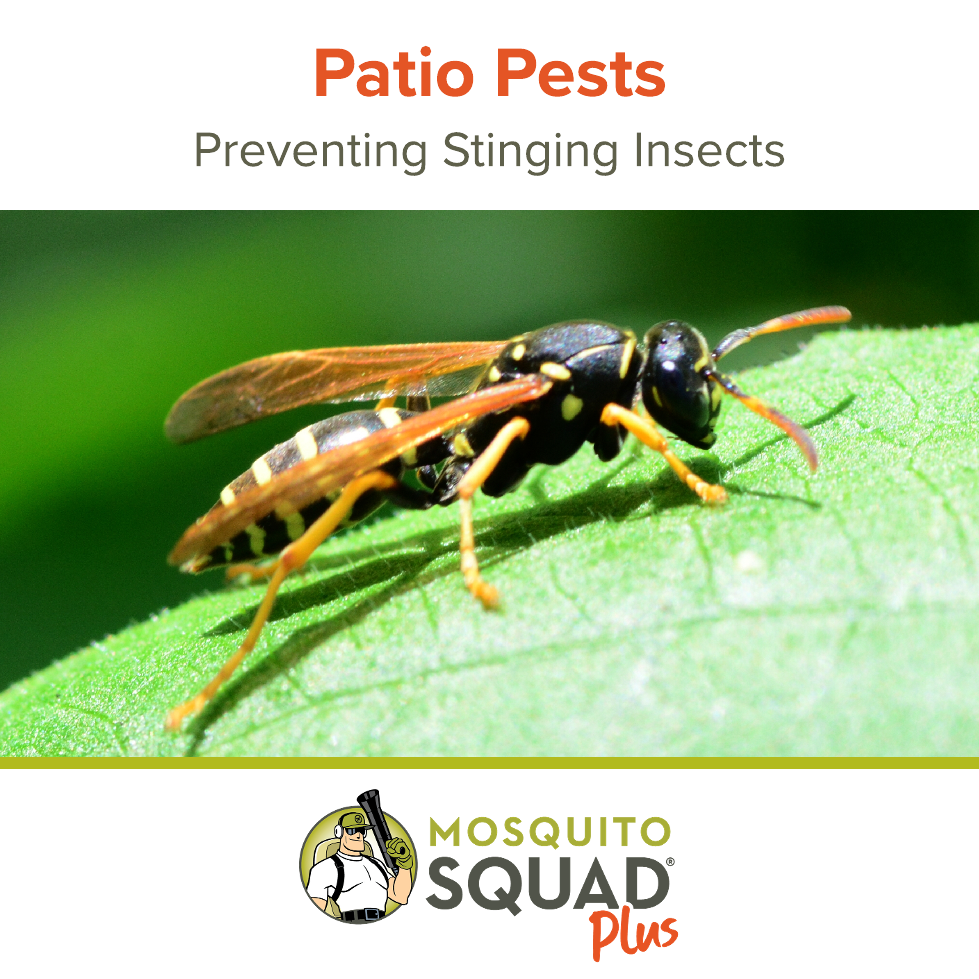
Yellowjackets work the trash cans around Lincoln Park by the second week of September. They were in that same park in June and almost nobody noticed them, because in June they were hunting caterpillars out of the shrub beds and had no interest whatsoever in anybody's lunch.
What changes between those two months happens inside the nest, and it comes down to what the colony can no longer feed itself.
We start taking the Kettering version of this call around the third week of August. Nobody leads with a nest. They lead with the recycling bin that can't be opened without three of them coming out. Or the pop can on the deck rail that somebody nearly drank from. Or the grandkids who won't sit at the patio table anymore. Where the colony actually lives comes up later. The answer is usually a spot the homeowner has walked past two hundred times since May.
There's a decent joke buried in that, because the amphitheater at the center of this town is named for the man who made the open drink possible. Ermal Fraze ran Dayton Reliable Tool, forgot his church key at a 1959 picnic, opened the beer on his car bumper, and went home irritated enough to fix it permanently. The Lemelson Center has the rest of that story. Four thousand yellowjackets working the lawn seats in September would like to thank him.
Four Thousand Workers in a Mouse Hole
The colony currently ruining your patio started in April as one queen and a paper nest the size of a walnut.
She didn't build it in a tree. Ohio State University Extension documents that a founding yellowjacket queen typically picks an abandoned mouse or rabbit burrow, though any secluded cavity works. From there OSU puts the colony at roughly 4,000 to 5,000 workers and 10,000 to 15,000 cells by August and late September.
Read that curve again, because it explains the whole complaint. One insect in April. Several thousand by Labor Day. Nothing about the nest announced itself along the way, because there was nothing above ground to announce.
This is the part that separates yellowjacket control in Kettering from the hornet work we do a few miles south. A bald-faced hornet builds the gray paper football that everybody recognizes, and we wrote about what happens when one of those hangs too low in a Centerville yard. You can see that nest. You can point at it. A yellowjacket colony is a hole in the ground with traffic, and most homeowners never find it at all. They find the wasps.
The rodent burrow detail matters more here than it sounds. A property that produced mice last fall produced the holes that this spring's queens went shopping in, which is why our rodent control work and our stinging insect work keep turning up on the same addresses. OSU also notes that yellowjackets will nest in attic and wall voids, which puts older Oakwood and Kettering construction in play for a version of this problem you can't mow around.
Why Yellowjackets Want Your Drink in September
Here is the actual answer to the question in the title, and it's a supply problem rather than a personality problem.
Through spring and summer, yellowjacket workers hunt protein. Caterpillars, sawfly larvae, whatever soft-bodied insect is chewing on your landscaping. That protein goes to the larvae, not to the workers. In exchange, Clemson Cooperative Extension describes how the larvae secrete a sugary substance that the adults eat, an exchange called trophallaxis. The workers have a carbohydrate supply at home. They have no reason to visit your cookout.
Then late summer arrives in the Miami Valley and the queen switches production. Ohio State's BYGL documents what happens next: once the drones and new queens finish developing, the colony's focus shifts from gathering protein for growing larvae to gathering carbohydrates for adults. The new queens and drones don't need protein. They need energy, and they sit in the nest demanding it from workers who no longer have a larval sugar supply to draw on.
So a few thousand workers go outside looking for sugar. OSU Extension puts that window at August through October and lists exactly what they find: garbage cans, sweet beverages, fruit, and flowery clothing. That window opens right as the Fraze season runs out its last shows and Kettering yards fill up with football Saturdays and back-to-school cookouts.
That's your September. The wasps didn't get mean. Their pantry closed and yours didn't.
It also explains the thing Kettering homeowners describe as the wasps getting bolder. A June yellowjacket that lands on your plate is confused. A September yellowjacket that lands on your plate is at work, and it will come back, and it will bring the ones that followed it.
Mowing Season Runs Straight Into Scavenging Season
The second Kettering-specific problem is a scheduling collision, and this city has more of it than most.
Kettering runs on maintained turf. The public green space around Lincoln Park is mowed on a schedule, the residential lots here are established and have real lawns rather than new-build sod, and September is still an active cutting month in this part of the Miami Valley. All of that grass sits on top of wherever the queens went in April.
A ground colony answers vibration. You standing in the yard registers as nothing. A mower deck shaking the soil above the entrance registers as an attack. The same pass drew no reaction in June because June had three hundred workers in that hole. September has several thousand, plus a brood of next year's queens to defend.
This is the sting scenario we actually see in this market, and it's worth saying plainly that it is not a one-sting event. A ground colony defends in numbers, and the person on the mower is standing on top of the nest when it starts.
The same thing happens with a string trimmer along a foundation line, a shovel in a landscape bed, or a kid running the same path across the yard forty times. We covered the general shape of yard pressure moving toward the house in our post on where tick season actually starts along a Springboro fence line, and the park edge dynamic in Oakwood runs a version of it for chiggers. Yellowjackets skip the edge entirely. They're already in the lawn.
Why Spraying a Ground Nest Yourself Backfires
Kettering homeowners work through the same four options in the same order, and we'd rather you skip to the end.
Aerosol down the hole. This is the common one and the dangerous one. A jet of spray into a ground entrance reaches the tunnel, not the comb, and the comb can sit well back from the opening. What it reliably does is bring several hundred workers out of a hole you are standing directly over, at whatever distance a can throws. Somebody in the Dayton area gets hurt doing this every September.
Gasoline or boiling water. Both circulate around older Dayton-area neighborhoods as folk fixes, and both are worse than they sound. Gasoline poured into soil is a groundwater and fire problem, it isn't labeled for pest use, and it doesn't reliably kill the colony. Boiling water cools before it reaches comb that may sit a foot or more down.
Traps. Traps catch foragers, and in September there are thousands of foragers. Removing some of them changes nothing about the colony producing them. A trap can take the edge off a specific patio for a specific afternoon. It is not wasp nest removal.
Waiting for frost. This one is reasonable sometimes, and we say so more often than you'd expect. Yellowjacket colonies in Ohio are annual, and nothing survives a hard freeze except the mated queens. On a deep Kettering lot with the nest out past everything anybody uses, October will handle it for free. If it's in the lawn you cut weekly or beside the door you use daily, October is six weeks of exposure away, and the colony gets larger and touchier every one of those weeks.
We laid out the wider case for this in our post on what to do when bug spray isn't enough.
How Yellowjacket Nest Removal Actually Works
Describing this takes a paragraph. Attempting it in shorts on a Saturday afternoon is how people end up at Kettering Health.
Locating the opening is most of the job, and it's the part homeowners almost never manage. Nobody finds a ground colony by searching for a hole. You find it by standing still at the right hour and letting the returning foragers show you. On a Kettering lot that usually ends at a gap under a landscape stone, a soft depression in the turf, a splash block, or rotted ground beside an old fence post. Half the time the customer has been mowing straight over it.
Timing decides the rest. Foragers need to be home, which means we work at an hour when the population is inside and slow, and the material goes down into the cavity instead of at the mouth of it. The suit is what makes that a routine appointment for a technician and a hospital visit for a homeowner with a can.
Before leaving we check whether you have a second one, because whatever made your property attractive to a queen in April is still true today. That means the shed base, the retaining wall joints, the gap under the front stoop, and the soffit line for the void-nesting version of this. We're reading spider harborage and ant pressure on the same pass, since properties around here tend to stack those together, a pattern we went through in our post on pest control after sixty years of settling. Sometimes the answer is that your wasps live on the next Kettering lot over and there's nothing on your property worth treating, and we'll say so.
Short notice is its own category. A wedding in the backyard or a Labor Day cookout with wasps already working the table is what our special event sprays are for, and September keeps us busy with it across Centerville, West Carrollton, and Beavercreek.
Treating This Late Still Changes Next Spring
The case against paying for a September treatment is that October handles it free. Fair enough as far as it goes, and it stops one step short.
A colony this size spends its final weeks in production. Mated queens leave before the freeze and tuck into bark, mulch, and the loose corners of the property that raised them. Come April, each one is inspecting cavities within a short flight of where she was born. Your lot already proved it has what she wants. It housed her mother.
Closing a colony down before it finishes that run is the part of this that shows up on next year's calendar instead of this year's. Perimeter work afterward is what keeps the location from drawing the next round of scouts back.
Because a September wasp complaint rarely arrives alone, most of these end on a program. Squad Yard Defender is the piece that matters most for ground colonies, since it works the turf and the bed lines where the nests are. Home Shield picks up the wall-void version, along with everything else looking for a way inside before the weather turns. The full pest packages list shows how those fit together. Everything we do is backed by our guarantee, and why Mosquito Squad Plus covers how we operate.
If wasps own your patio right now, call (937) 226-9709 or reach us online. Tell us where you're seeing them and at what hour. That detail alone usually settles whether we're hunting a hole in your lawn or a gap in your siding before anyone gets in the truck. We cover Kettering and the rest of the Dayton area out through Springboro, Huber Heights, and Xenia.