Why Chigger Season in Oakwood Starts at the Park Edge
Posted by Mosquito Squad Plus
April 15, 2026
There is a reason the entrance to Hills and Dales MetroPark sits on Deep Hollow Road in Oakwood rather than anywhere else. The park was shaped by John Patterson, who commissioned the Olmsted Brothers in 1903 to develop his private estate into something that blended naturally with the rolling wooded terrain of this specific corner of Montgomery County. The result is 63 acres of mature hardwood forest, wooded ravines, spring seeps, small wetlands, Dogwood Pond, and dense woodland floor that has been building organic depth since 1907.
That is a genuinely beautiful piece of landscape to have in your neighborhood. It is also, from a chigger mite perspective, one of the most productive habitat systems in the Dayton metro sitting directly against the residential lots along Patterson Boulevard, Far Hills Avenue, and the streets that run off them into the heart of Oakwood.
Chigger season in Oakwood does not start in the open lawn. It starts at the park edge, and it works its way inward from there.
What Hills and Dales Actually Produces
Five Rivers MetroParks describes Hills and Dales as containing hills and ravines covered in mature and young hardwood forest, along with spring seeps and associated small wetlands visible from the Adirondack Trail boardwalk. The long-term vegetation restoration effort in the park has focused on removing invasive ground cover species like Chinese honeysuckle and tree of heaven to allow the woodland floor to recover naturally. That recovery is ecologically valuable and visually striking.
It also produces exactly the conditions that chigger mites need to thrive. OSU Extension's chigger factsheet is direct about this: chiggers thrive in humid, overgrown, grassy habitats, especially those frequented by small mammals and birds, and are found in transitional zones from fields to paths and scrubby growth to manicured landscapes. A 63-acre park with wooded ravines, spring seeps maintaining consistent ground moisture, a dense understory in active restoration, and a boardwalk running through a forested wetland is not peripheral chigger habitat. It is the center of it.
Peer-reviewed clinical documentation published in StatPearls via the National Institutes of Health confirms that chigger larvae mature to their parasitic stage between June and September in the Northern Hemisphere, and that even working in a suburban yard or taking a casual walk in a park may expose a person to trombiculid mites. For Oakwood homeowners whose properties border Hills and Dales, that means the park itself is a documented exposure source, not just a scenic backdrop.
The wildlife that moves through the park, deer, rabbits, raccoons, birds, and the small mammals that use the woodland floor year-round, carries chigger larvae from the deep park interior into the residential edges along the park boundary with every pass through the vegetation. Those animals do not stop at the fence line. Neither do the mites.
The Transition Zone Is Where It Actually Happens
Here is the part that surprises most Oakwood homeowners. Chiggers do not wait for you to walk into the park. They concentrate at the transition zone between the park's naturalized edge and the maintained residential lawn on the other side of it.
OSU Extension documents that chigger mites are found specifically in transitional zones from scrubby growth to manicured landscapes. University of Maryland Extension confirms that chiggers are most often found in vegetation transition zones such as along the junction of forest and grass, along margins of swamps, and brush thickets. The larval mite climbs to the tip of a grass blade or low plant and waits for a host to brush past. That concentration happens in the zone where the mowed Oakwood backyard meets the unmowed park buffer, the shrub bed along the back fence, the low vegetation at the corner of the lot that stays shaded and damp because the Hills and Dales canopy never quite lets the sun reach it.
The open lawn in the middle of your yard is not where the pressure lives. The edge is. That strip between maintained grass and something less managed, whether it is the park boundary directly or the neighbor's unmowed buffer along the shared fence line, is where chigger larvae concentrate season after season in Oakwood properties that sit near the park corridor.
The same character that makes Kettering properties near the Hills and Dales border deal with chigger pressure from the north side of the park applies to Oakwood properties on the south and west sides. Different street addresses, same ecological source.
What Peak Chigger Season Actually Looks Like Here
OSU Extension documents that the greatest numbers of chiggers in Ohio are present from June through August, with females laying eggs in humid soils and scrubby areas once temperatures rise above 60 degrees Fahrenheit in spring. Females can produce several generations per year, which means the population does not peak once and decline. It builds through early summer and sustains itself through August before tapering in September.
That means the weeks when Oakwood families are most likely to be outside, summer evenings in the backyard, kids running the perimeter of the yard, the dog working the fence line, are precisely when chigger pressure in properties near Hills and Dales is at its highest point.
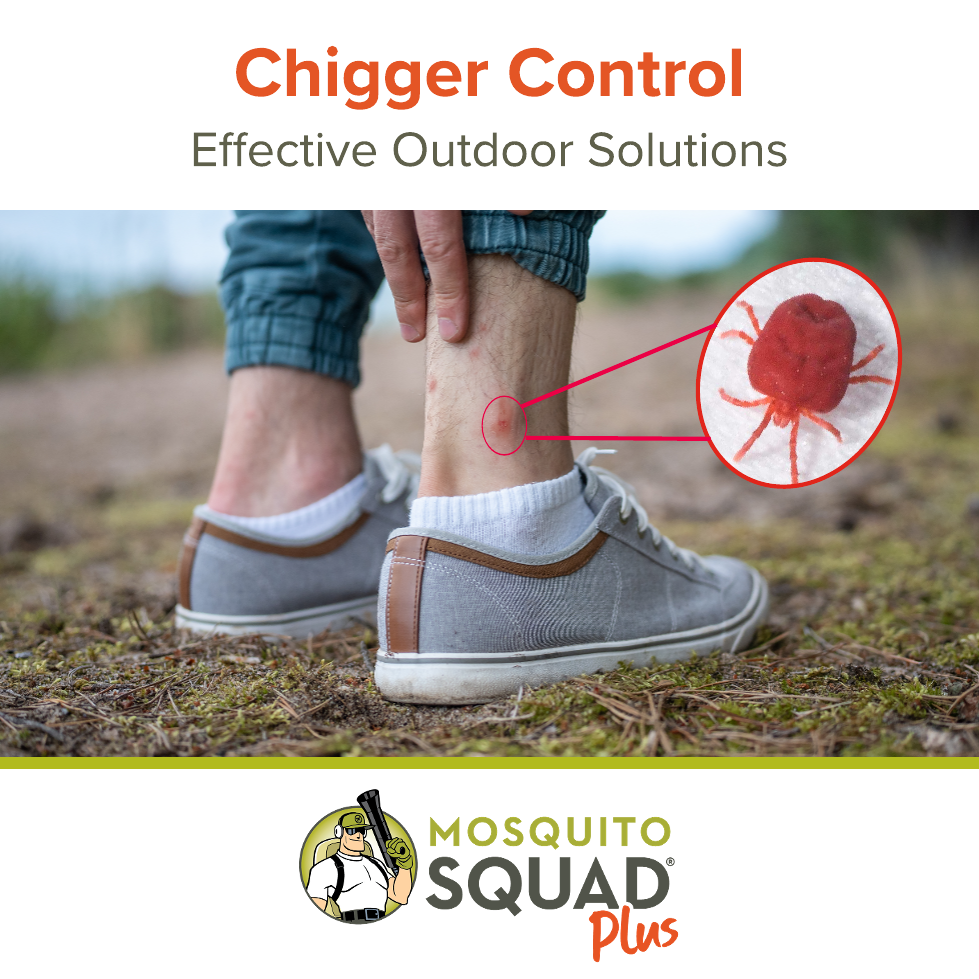
The bites do not announce themselves during exposure. That is the part that makes chiggers particularly maddening. The larval mite attaches, injects salivary enzymes that break down skin cells, and feeds from a stylostome, a tube-like channel formed from the mite's saliva and the digested skin tissue, that OSU Extension describes as essentially a straw the mite uses to draw up liquefied skin cells. According to University of Maryland Extension, itching is usually not felt for 3 to 6 hours after attachment and may persist for up to two weeks. Most people connect the bites to specific outdoor activity only in retrospect, if at all, because by the time anything itches the exposure moment is long past. The welts cluster around areas where clothing fits tightly, ankles, waistband, behind the knees, and that clustering pattern is itself diagnostic.
What Homeowners Usually Try First
The first move is usually clearing obvious debris. Raking the leaf litter along the fence line, mowing more frequently, trimming back the shrub border. All of that is genuinely helpful because it reduces the shaded humid microhabitat that chigger mites prefer. OSU Extension recommends exactly these habitat modifications as part of an integrated management approach, noting that increasing sun exposure and airflow makes yards less inviting to mites. University of Maryland Extension echoes that approach, recommending that lawns be kept mowed and shrubbery trimmed to promote air circulation that dries the area and makes it less favorable for chigger development.
The limitation is terrain. An Oakwood property that sits adjacent to Hills and Dales has a continuous source of chigger pressure that habitat modification on your side of the fence cannot eliminate. You can reduce the edge habitat on your property. You cannot address what the park produces and moves into that edge every season through wildlife activity.
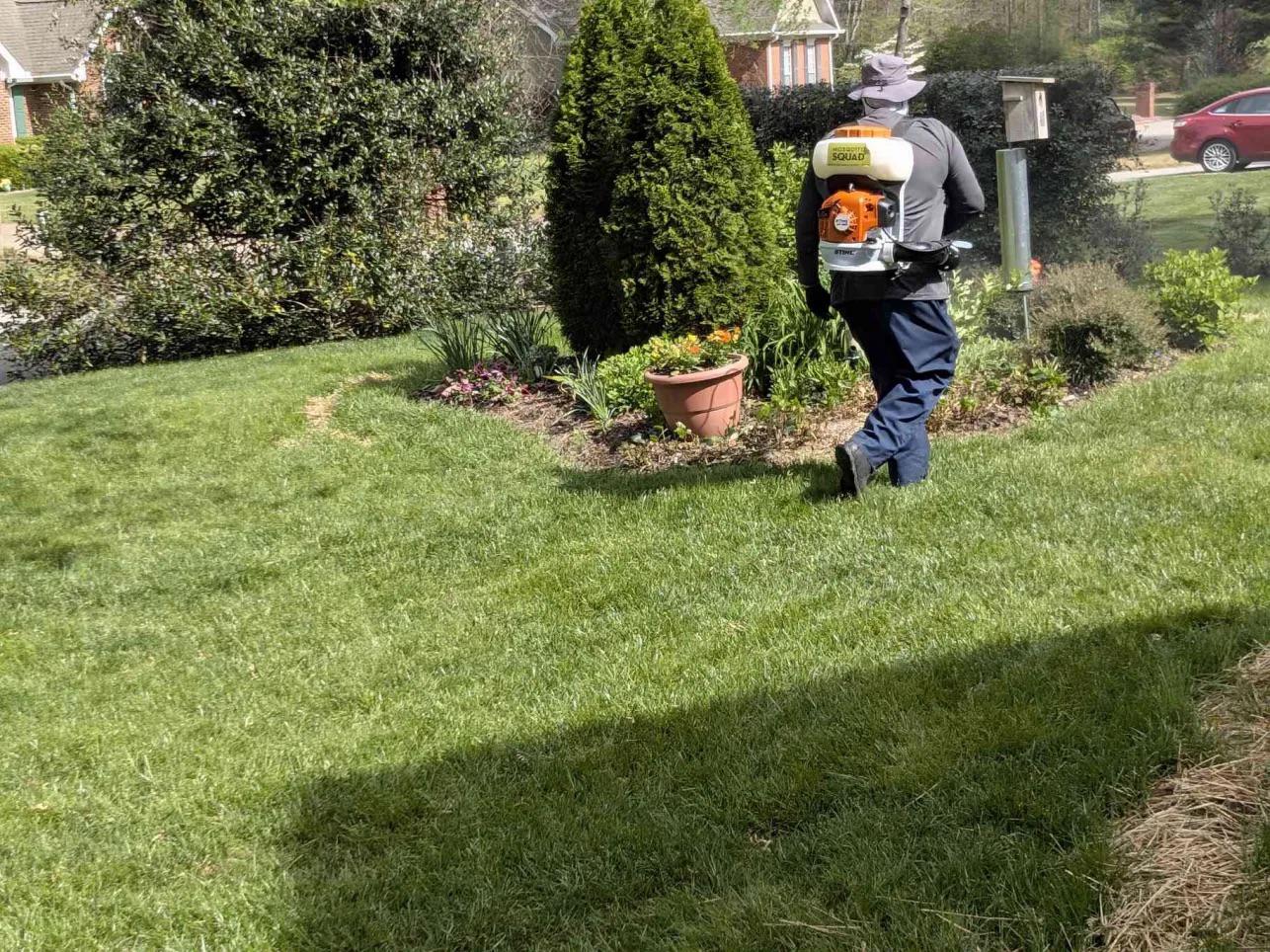
Consumer sprays applied to the open lawn address the least problematic zone on the property and miss the edge zones where the population actually concentrates. A professional chigger control treatment that targets the specific transition zones where chigger larvae concentrate, the shrub borders, the back fence line, the shaded corners adjacent to the park buffer, applied on a recurring schedule through peak season, is what actually changes the summer experience in a yard with this kind of terrain exposure.
The Oakwood Yard in Context
Not every Oakwood property deals with this equally. Lots on the streets immediately adjacent to the park boundary, particularly those along the Deep Hollow Road corridor and the residential edges closest to Patterson Boulevard where the park meets the neighborhood, carry the highest proximity to the source. Properties further from the park edge deal with lower but still present pressure as chigger larvae disperse through wildlife movement across the broader neighborhood.
The consistent thread is summer. June, July, and August in Oakwood are when the combination of Hills and Dales terrain and the warm humid conditions that sustain chigger populations produce the most noticeable backyard experience. Getting a treatment program in place before June is the window that changes what that summer actually feels like.
Mosquito Squad serves Oakwood, Kettering, Centerville, and communities throughout the Dayton area. If you want to understand what the mosquito season looks like in Kettering and how the older canopy neighborhoods deal with their own pest calendar, that blog covers the adjacent terrain story from the other side of the park. The Dayton pest control team is available now. Hills and Dales does not slow down for July to arrive on the calendar, and neither should your treatment program.