Yellow Jackets in Your Wall in Independence? Don't Plug the Hole Yet
Posted by Mosquito Squad Plus
October 8, 2026
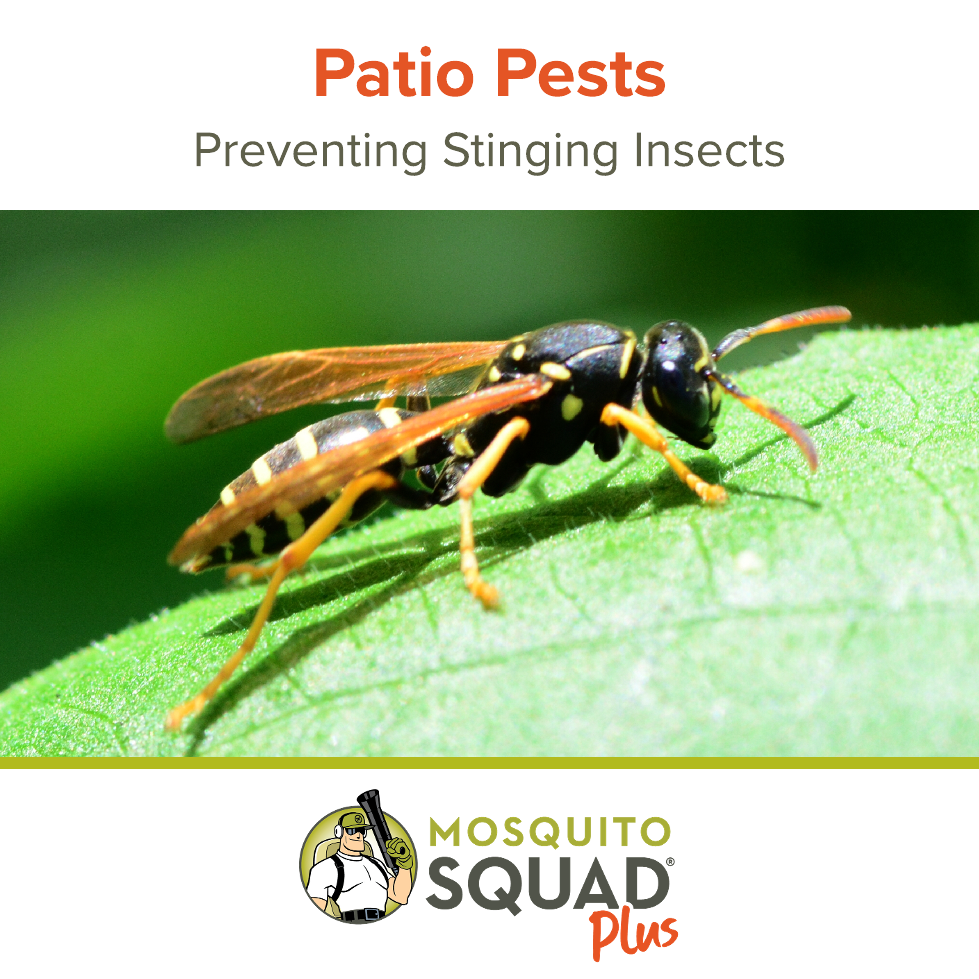
It usually starts with someone noticing a line. Not a swarm, just a steady line of yellow jackets running in and out of one small spot on the side of the house. Maybe it's the gap where the cable line comes through the siding. Maybe it's a corner of trim by the back door, or a seam up near the soffit you never had a reason to look at before. They go in, they come out, all day long, and they don't seem interested in anything else.
That's a yellow jacket nest inside your wall, and this is the time of year Independence homeowners find them. The calls pick up every fall across Northern Kentucky, and this season has been a busy one. Our techs are still running into plenty of yellow jackets, paper wasps, and hornets as we head into October, and the wall nests are the ones that make people the most nervous.
The first instinct is almost always the same. Grab a tube of caulk, a can of expanding foam, or a wad of steel wool and shut that hole before things get worse. It feels like the responsible move. It's also the one thing extension entomologists consistently tell you not to do first. Here's why, and what actually works for yellow jacket control in Independence when the nest is inside the house.
That Nest Isn't New. It's Been There Since Spring.
The most common thing we hear on these calls is "they just showed up." They didn't.
Yellow jackets in our part of Kentucky run on a one-year cycle. A single queen that spent the winter tucked under bark or in some other protected spot comes out in spring, finds a cavity she likes, and starts a small paper nest by herself. The Washington State University PestSense fact sheet lays out the pattern: fertilized queens overwinter, each one starts a new colony in spring, the colony declines after it produces new queens and males in late summer or fall, and the old nest never gets reused.
For the first couple of months that colony is small and easy to miss. A few workers slipping in and out of a gap in the siding doesn't register when you're mowing, unloading groceries, or backing out of the garage. The colony grows all summer, and by late summer and early fall it's at full size. That is the only reason the traffic finally catches your eye. Iowa State University Extension describes it well: a nest in a house wall has usually been there since spring, with the wasps using one front door to the yard the entire season.
So the nest you found this week has most likely been sitting in that wall since April or May. What changed is the volume. You may also hear that big colonies split off and start new nests in the fall. That's how honey bees swarm, not how yellow jackets work. The new queens a fall colony raises leave to mate and find a place to spend the winter. They don't set up shop in a new wall in October. The nest you're looking at is the same colony that has been quietly building all season.
Why This Fall Has Felt Heavier
Our crews have been saying the same thing all September: the colonies are big this year. Some of that comes down to the summer we had. The National Weather Service office in Wilmington, which covers Northern Kentucky, recorded a significant heat wave at the start of July with Extreme Heat headlines across the Ohio Valley, and Cincinnati finished the month warmer than normal. In our experience, a hot stretch during the growing months shows up later as fuller nests and heavier traffic in September and October, and that's how this season has played out on routes from Independence down to Walton.
The other piece is behavior. University of Kentucky entomologists explain in their fact sheet on foraging yellow jackets that in late summer and fall the colonies are nearing maturity, with huge numbers of workers out gathering food for the developing queens. With insect prey getting scarce, they turn to sweets. That's why the same yellow jackets running in and out of your siding are also working over the trash cans, the hummingbird feeder, and whatever you're drinking on the deck.
So you have two things stacked on top of each other. The nest is at its largest, and the workers are at their most restless. That combination is what turns a hole in the wall from a curiosity into a real problem.
Where Yellow Jackets Get Into a House in Independence
A lot of people assume yellow jackets only nest in the ground. Plenty do, and we've written about the ground nests that turn up in foundation beds in our post on why wasp nests in Union cluster the way they do. But a ground-nesting species doesn't need dirt. It needs a protected cavity, and a wall void is a protected cavity. WSU notes that ground nesters frequently build in wall voids or attics, and that those nests are especially troublesome because they sometimes chew their way into rooms.
On houses around Independence, the entry points we see over and over are the small penetrations every home has. The hole where the cable or satellite line comes through. The gap around a dryer vent, a hose bib, an exterior outlet, or the refrigerant lines running to the AC unit. Seams where siding meets the trim around a window or door. Gaps at the soffit and fascia. A loose corner post. Each one is a small break in the outside of the house, and even a good seal around a cable line or vent shrinks and cracks after a few seasons of Kentucky weather.
That's the setup across a lot of Independence subdivisions, where many homes share the same mix of siding, brick fronts, attached garages, and a dozen small utility runs. Plenty of those neighborhoods also back up to open fields and undeveloped land, and that edge tends to concentrate wasp pressure. None of this is a flaw in any particular house. To a queen looking for a dry, sheltered cavity in spring, each of those small gaps is simply an open door.
One more thing worth knowing. The nest isn't always right behind the hole. It can sit a few feet away inside the void, following the open space between studs or up toward the top plate. The entry point is the part you can see, and it's the part that matters most for treatment, which is exactly why what you do with it comes first.
What Independence Homeowners Usually Try, and Why It Backfires
The first move is usually to plug the hole. This is the one we push back on hardest, because the colony doesn't give up when its front door disappears. It looks for another way out. Penn State Extension puts it bluntly: never try to control yellow jackets in a wall by plugging the opening, because it can result in them chewing through the interior drywall and coming into the home. The University of Kentucky's pesticide education guidance says the same thing: don't seal openings used by wasps or hornets nesting in attics or wall voids. Sealing a live nest doesn't trap the problem. It points it at your living room.
The second move is spraying the hole with a can from the hardware store. That knocks down the workers guarding the entrance and gets the rest of the colony fired up, but the spray rarely reaches a nest that may be sitting feet away inside the wall. Penn State also warns that standing back and treating only the outside of the entrance will anger the colony and raise the risk of stings for the next several days. Plenty of how-to articles online suggest emptying a whole can into the hole and then sealing it to "trap them." That's the plugging problem and the spraying problem combined.
The third move, and the most expensive one, is cutting into the wall from inside to pull the nest out. Some companies do work this way. We don't, and in most cases there's no reason to. Opening drywall to an active colony means opening a door straight into the room for every yellow jacket in that void, and then paying to patch, mud, and paint afterward.
The last move is waiting it out. Sometimes that's reasonable, and we'll get to when. For a nest in the wall next to your back door, it usually isn't.
What Actually Works: Dust, Wait, Then Plug
Our approach to yellow jacket control in a wall is built around that entry hole instead of fighting it. The technician injects an insecticide dust through the entrance and into the wall cavity. The dust spreads through the void and onto the nest, and every yellow jacket that walks through the entrance picks it up and carries it inside.
Timing matters. The University of Kentucky's guide to controlling wasps, hornets, and yellow jackets calls yellow jackets arguably the most dangerous stinging insects in the country and recommends treating when most of the colony is in the nest and less active. Early morning or dusk is ideal because nearly everyone is home. When a visit can't land at those hours, the hole stays open on purpose. The foragers who were out during the treatment come back, climb into the dusted entrance, and die. Seal the hole too early and you cut that off, leaving live yellow jackets stranded outside and live ones stuck inside looking for a new exit.
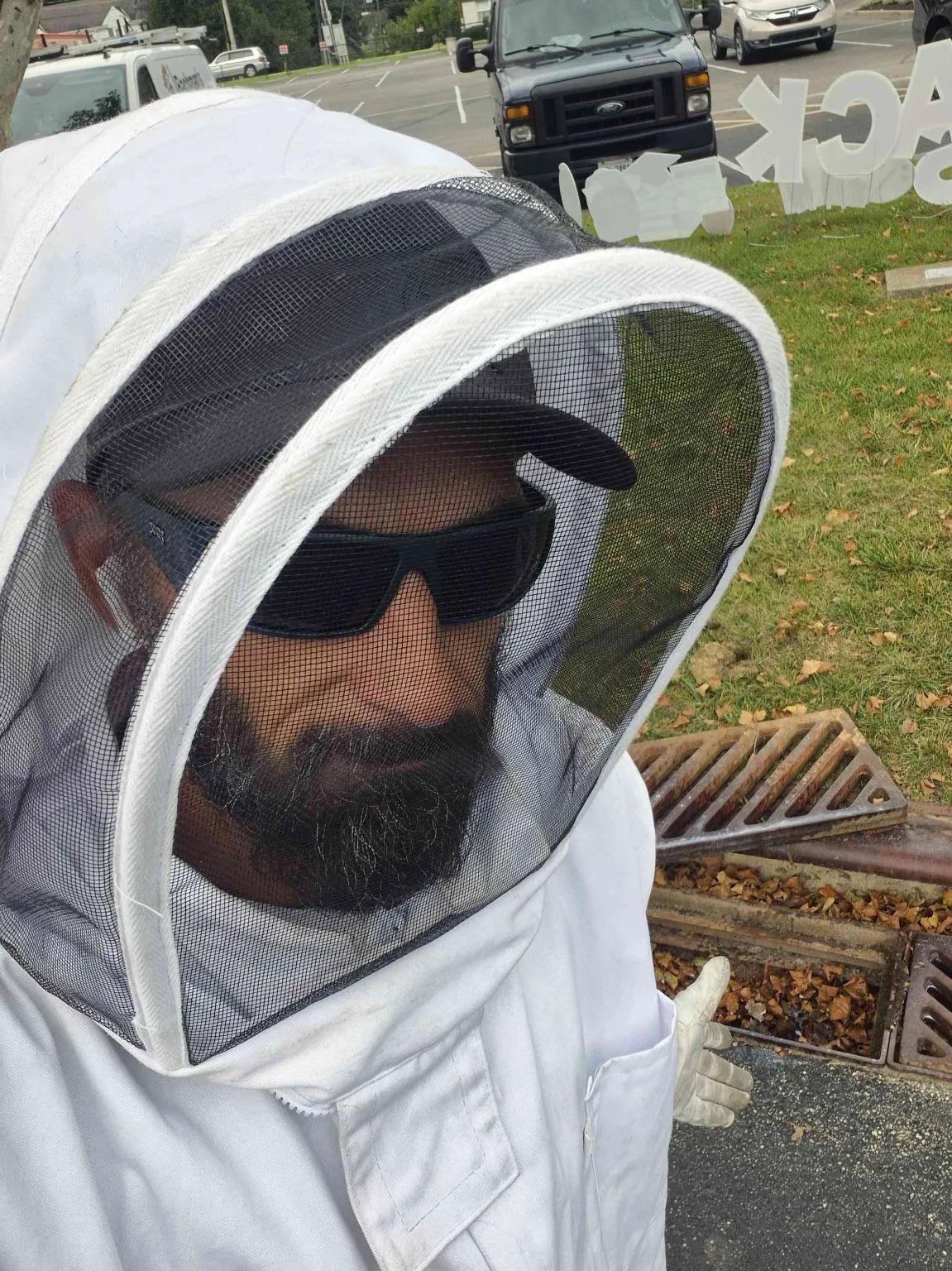
Here's how that played out on a recent job near Florence and Union. The homeowner had yellow jackets nesting in a wall cavity, the same kind of situation a lot of Independence families are dealing with right now. Our tech dusted the void through the existing opening. No drywall came out and nothing was cut. The homeowner reported no activity at the hole afterward, and two days after the treatment our tech went back and sealed the cavity for good. That's the whole sequence, and that's what it should look like.
The wait between treatment and sealing is the part people want to skip, so here's the guidance we give. Watch the hole for a day or two. Clemson Cooperative Extension recommends checking the entrance the next day for activity and treating again if needed. If it's quiet, go ahead and plug it. A wooden cork works well for a round utility hole, and exterior sealant is fine for a narrow seam. If you're still seeing yellow jackets going in and out, don't seal it. Call us, and we'll come back and re-treat before it gets closed. For yellow jackets and hornets, that follow-up comes with the service at no extra charge, and it's backed by our satisfaction guarantee.
Sealing last isn't just about this year. Once the colony is dead, closing that gap keeps next spring's queens from finding the same sheltered cavity. A spot that worked once tends to get scouted again, which is why the plug matters as much as the dust. It just has to come in the right order.
For homes that see stinging insects season after season, it can make sense to pair the nest treatment with ongoing perimeter protection. Our Home Shield program covers wasps and hornets year-round, treating the foundation, windows, vents, and entry points where pests look for a way in. For homes backing up to open ground, the Complete Home and Yard package adds full yard coverage on top of that. Our wasp, hornet, and yellow jacket service page walks through how we handle the different kinds of nests.
When It Ends, and When Not to Wait
Yellow jacket colonies don't survive the winter. As the weather turns cold the workers and the original queen die off, and only the newly mated queens make it through, sheltering somewhere else until spring. In Northern Kentucky, that means yellow jackets are likely to stay active for roughly another three weeks to a month, into November.
Wall nests can hang on longer than the ones out in the yard. Iowa State notes that yellow jackets showing up inside a house after the first freeze are almost certainly coming from a nest in one of its walls. If you're counting on the first cold snap to end it, a wall nest may outlast your patience.
Waiting is a reasonable choice when the nest is somewhere nobody goes, like the far side of a shed, the edge of a tree line, or a part of the house you don't use. It's not a good choice when the entrance is beside a door, under a deck you're still using, near the trash cans, or close to a kid's bedroom window. It's also not a good choice if you're hearing faint rustling or crackling inside a wall, or if a few yellow jackets have already turned up indoors around windows or light fixtures. Those are signs the colony is closer to the living space than you want it.
And it's never a good choice if someone in the house has a history of strong reactions to stings. The CDC's NIOSH stinging insect fact sheet, published right across the river in Cincinnati, notes that while most stings cause only mild discomfort, some lead to severe allergic reactions that need immediate medical care. Late in the season, with colonies at full size and workers on edge, isn't the time to find out how someone reacts.
If you do have activity inside, keep people and pets out of that room, close the door, and don't swat at the wall. Then give us a call.
Yellow Jacket Control From a Team Just Down the Road
Mosquito Squad Plus of Northern Kentucky is veteran-owned and based in Walton, a short drive south of Independence. We see the same houses, the same weather, and the same pest calendar you do. We wrote about how Walton sits where two very different pest pressures meet in our post on pest control in Walton, and the same overlap shapes what Independence homes deal with from spring through fall.
The yellow jacket season is only one piece of it. The creek corridor that winds through town drives its own pattern, which we covered in what Banklick Creek means for mosquito season in Independence. Ticks turn up in places people don't expect, too, which is why we wrote about why Independence homeowners find ticks in yards with no trees. And once the yellow jackets wind down, the same gaps around cable lines and vents become the way in for the next group. Our post on fall invaders and rodents pushing into Northern Kentucky homes covers that shift, and our rodent control page explains how we handle it. Older homes closer to the river have their own version of a wall problem, mostly ants, roaches, and mice, which we covered in pest control in Covington and Newport starts in the walls.
If what you're dealing with is a big gray nest in a tree or a large reddish-brown hornet working a hole high on the house, that's a different job. Our guide to hornet removal in Northern Kentucky covers those. For yellow jackets in the wall, the plan is simple: leave the hole open, let us treat it, wait, then plug it.
We handle wall nests in Independence and across the surrounding communities, including Florence, Union, Edgewood, and the rest of the towns listed on our areas we service page. If you've got a steady line of yellow jackets going into your siding, call us at (859) 222-7345 or request a free quote online, and leave that hole alone until we've had a look.