Why Independence Homeowners Find Ticks in Yards With No Trees
Posted by Mosquito Squad Plus
August 17, 2026
American dog ticks spend most of their lives holding onto the tip of a grass blade with their back legs and waving their front legs at anything warm that walks past. That is the whole strategy. They do not drop out of trees, they do not fly, and they do not need a forest to make a living. They need a stem tall enough to climb and an animal path close enough to matter.
Which is why the call we get from Independence so often starts the same way. You pulled a tick off your kid or off the dog, you looked around your yard, and nothing about it matched what you had been told to look for. No woods. No leaf litter. No creek at the back of the property. Just lawn, a fence, and a field on the other side of it.
That field is the answer. Once you know what to look at, tick control on your property stops being a mystery and turns into a problem with a fairly specific shape.
Independence Sits On a Line Most People Never Notice
Kenton County is two counties wearing one name, and the seam runs right under your town.
The Kenton County Planning Commission draws the county's urban service boundary along the alignment of KY 16, with everything north of it toward the river treated as the area that can economically carry full urban services. South of that line is the rural sub area. That rural half is roughly half of the county's entire land area, and the planning commission is direct about what is out there: larger lots, rolling hills and fields, barns and outbuildings, and most of the county's remaining farmland.
Independence grew north to south into that seam. The northern edge of town behaves like the rest of urbanized Kenton County, closer in character to Erlanger or Fort Mitchell. Move south of that alignment and the lots get bigger, the road shoulders get grassier, and the ground behind the newest subdivisions stops being somebody else's back yard and starts being somebody else's hay.
You will not find this line on a real estate listing. Ticks find it every year.
The Cattle Left. The Grass Did Not.
The county's own agricultural data explains what is growing in that field and why it matters to you.
Traditional farming in Kenton County has been shrinking for thirty years. Tobacco is largely gone and cattle herds have declined, which the county attributes partly to productive pasture being lost to development and partly to drought years that forced farmers to cut herd size. Harvested farmland and hay production went the other direction. They went up. Some of that is better practice on smaller farms, and some of it is former tobacco ground converted straight to hay.
Read that as a habitat statement instead of an economic one. Fewer animals eating the grass down. More acreage growing grass on purpose and cutting it a few times a season. In between those cuttings, that ground is exactly what it looks like: tall, dense, humid at the base, and full of the mice and voles that ticks feed on in their early stages.
Cattle pasture that gets grazed hard is mediocre tick habitat. Hay ground is excellent tick habitat. Independence has been building houses against the second kind for twenty years, and the same pattern shows up further south around Walton and out toward Union.
So the pressure on these lots usually originates past the property line rather than inside it, which changes where treatment has to go.
The Tick Built For That Field
Most of what you have read about ticks was written about the deer tick or, more recently, the Lone Star tick. Both are here, both matter, and we covered the Northern Kentucky tick picture in detail last season.
None of what follows replaces that. Wooded edges, leaf litter, and deer corridors drive serious tick pressure across this market, including on the Independence properties that have them. What we want to add is the second source, the one that gets missed on the lots with no woods to blame. Some Independence yards have both. Plenty have only the grass, and those are the homeowners who assume they are in the clear.
The American dog tick, Dermacentor variabilis, is a grass specialist. Purdue Extension puts its habitat as woods, uncut grassy fields, parks, and other areas of wild vegetation, and notes that in spring and early summer the adults are especially numerous along paths used by animals. Research published in Trends in Parasitology describes all three life stages turning up in grasslands, young growth forests, and along roads or trails.
A surveillance study out of Ontario describes the same thing in habitat terms you could apply to south Kenton County without changing a word: fields, forest edges, trails, roadsides, and brushy margins along waterways, in rural, suburban, and urban landscapes alike.
Not one habitat in that list requires a tree, and every one of them describes ground that exists in quantity on the south side of Independence.
They are also patient in a way that is hard to appreciate. University of Kentucky entomology documents that an adult American dog tick can survive up to two years without feeding. A population does not need a good year to persist. It needs to not be interrupted, which is the whole argument for a recurring program over a single spray in June.
And it is common here. A county-level surveillance study published this year collected 2,023 American dog ticks across 114 Kentucky counties between 2019 and 2024, which covers nearly every county in the Commonwealth.
How To Tell What You Just Pulled Off
This one is worth learning, because the two species you are most likely to find in an Independence yard look nothing alike and mean different things.
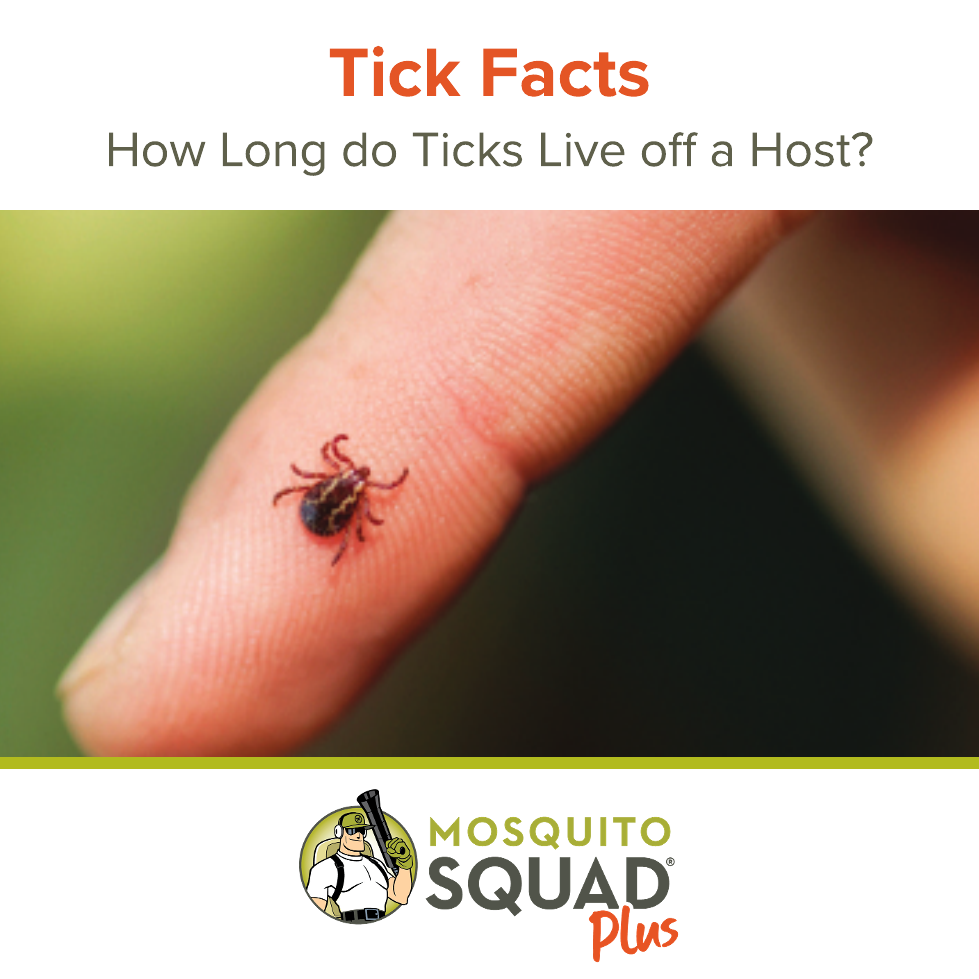
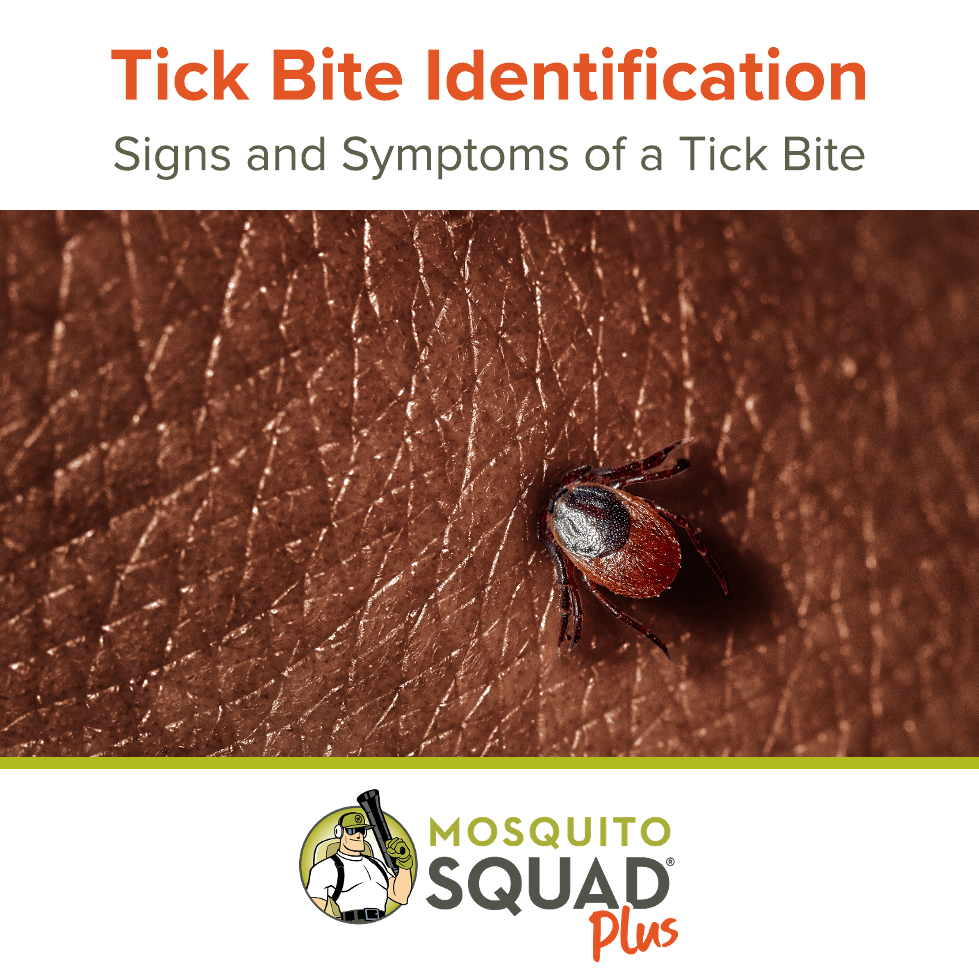
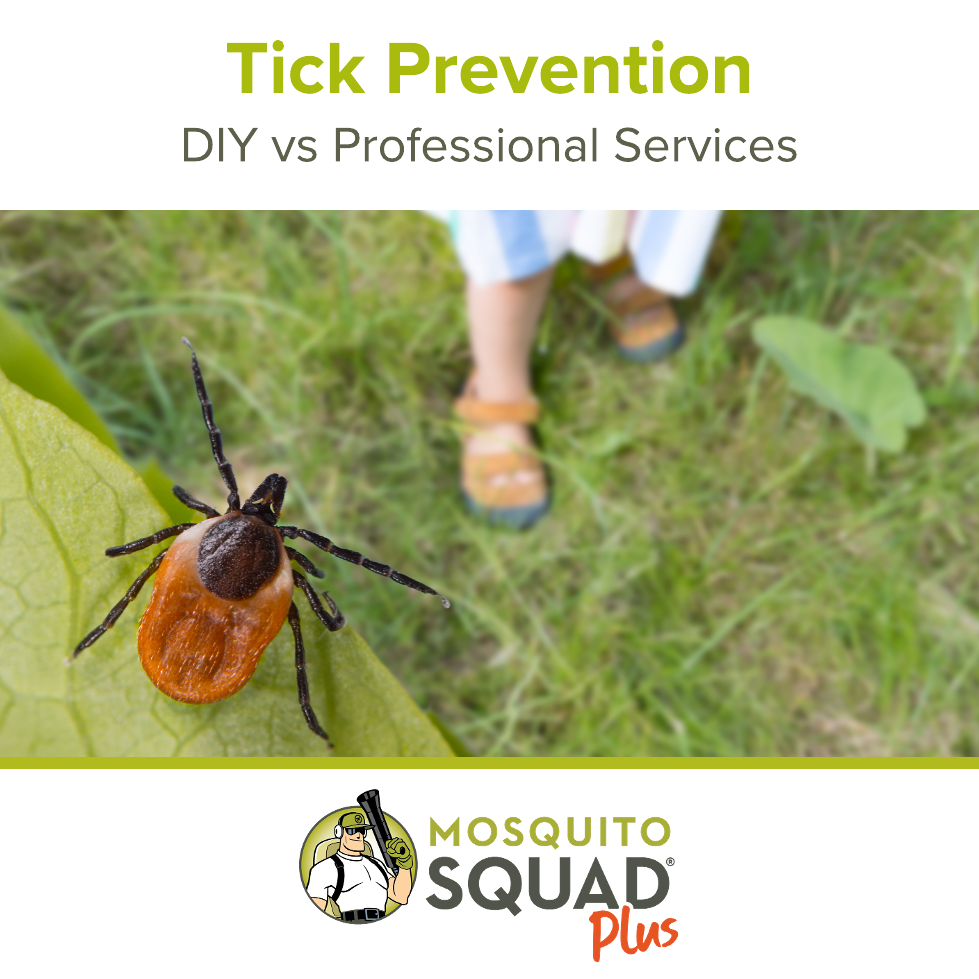
An adult American dog tick is big enough to see without squinting, with a brown body and ornate white or cream markings on the shield behind its head. Females carry a large pale patch there. They are slow feeders and they are not subtle. Most people find them.
The Lone Star tick you might also encounter runs smaller and rounder, and the female carries the single white dot the name comes from. Its nymphs are the size of a poppy seed and are the ones that get missed at the sock line.
If you pull one off and you are not sure what you are looking at, save it in a sealed bag with a little alcohol rather than flushing it. The University of Kentucky entomology department runs a tick submission program and takes mailed specimens. Knowing which species is on your property tells you where it came from, and where it came from tells you where we need to treat.
That distinction has practical weight. A yard turning up adult dog ticks is telling you the pressure is coming off open ground, the fencerow, and the animal paths crossing it. A yard turning up Lone Star nymphs is usually telling you something is moving through a shaded corridor instead. The national tick map gives you the wide view, and our pest identification pages cover what each species does once it gets to your property. Same treatment visit either way, different zones on the property getting the attention.
What It Carries, Without the Scare Version
The American dog tick is the primary eastern vector for Rocky Mountain spotted fever. Kentucky's Cabinet for Health and Family Services puts the practical risk in clear numbers: only about one to three percent of the tick population carries the bacterium, and the tick generally needs four to six hours of attachment and feeding before it is released from the salivary glands. University of Kentucky notes CDC figures putting Kentucky somewhere in the range of one to six cases a year. This species also transmits tularemia.
So the odds on any single bite are low. That is true and you should hear it.
The four-to-six-hour window is still the entire ballgame, and it is a window most families lose by accident. A tick that attaches at the ankle during Saturday yard work and gets found Sunday morning had all night. The point of keeping the population down along your fence line is not that one bite will hurt you. It is that a hundred fewer chances at that window over a season is how you change your household's exposure.
That is also why we push back a little when someone tells us they only worry about ticks on hiking trips. The Independence version of this is a mowing problem, a dog problem, and a kids-cutting-through-the-back-corner problem, and most of it happens within sight of the house.
Your Dog Is Doing the Commuting
The species is named for a reason.
Adult American dog ticks want a medium to large mammal, and a Labrador that patrols the back fence twice a day is a better host than anything else in the neighborhood. Dogs walk the exact line where the mowed grass ends and the tall stuff begins, at the exact height where questing adults are waiting, several times a day, every day, from March through the fall.
Then they come inside and lie down where the kids are.
This is where the pattern gets frustrating for homeowners who are doing everything right. You can keep an immaculate lawn, mow on schedule, and never once walk into the field, and still have your dog carrying ticks across the property line for you daily. Preventatives on the animal help enormously and every dog in south Kenton County should be on something. A preventative works on the tick after it has reached your dog, though, and usually after it has already attached.
Reducing what is waiting at the fence is the only step that happens before that. It is also why a property that runs flea and tick pressure together often needs the perimeter handled rather than just the pet.
There is a version of this that catches people with no dog at all. Deer, raccoons, opossums, and barn cats all use the same fencerow, and the mice and voles that carry the early life stages live in it full time. A household without pets still has traffic crossing that line every night. You just do not get the daily reminder walking through your kitchen. Our package options come down to how much of that traffic reaches the part of the yard you use.
Where They Sit On Your Lot
When we walk an Independence property, the middle of the yard is not where we spend our time. Maintained turf in full sun is the least hospitable ground on the lot for a questing tick.
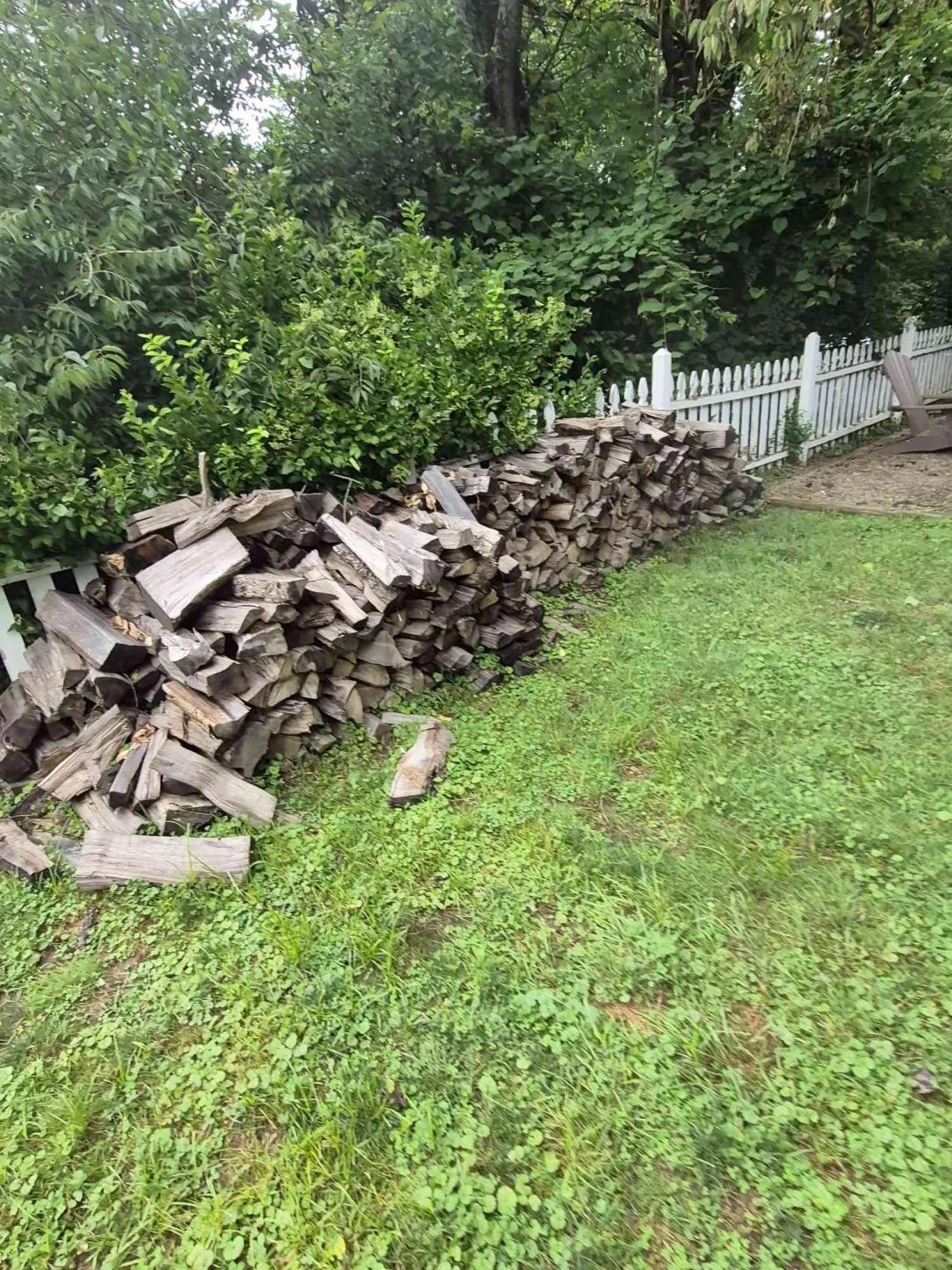
We look at the last three feet before the fence, where the mower deck stops and the grass gets away from you. We look at the fencerow itself, especially old wire fence with honeysuckle and brush grown into it, which is the single most productive tick strip on most of these properties. We look at the mowed path your dog has worn along the back line. We look at the gap where two subdivisions meet and nobody is entirely sure whose twelve feet that is.
We look at brush piles, the back of the shed, the shady side of any outbuilding, and the strip behind a detached garage that never gets trimmed because there is no reason to walk back there. Those same corners tend to hold spider activity, which is often the first thing a homeowner notices back there.
Pressure on these lots is rarely spread evenly. One side of the property tends to carry most of the load, usually whichever side has the tallest neighboring ground and the heaviest animal movement across it. That works in your favor, because it means the treatment is targeted to a boundary rather than blanketed across the whole yard.
Then we look at the field, which we cannot treat, and we plan the perimeter accordingly.
That last part matters and we would rather say it out loud than let you discover it in July. We are not treating your neighbor's hay ground. Nobody is. What a barrier does is make the last stretch of your property hostile enough that ticks arriving at that edge do not establish in the zone where your family spends time. On a property with a permanent source next door, that boundary is the work. Our 6 C's of Tick Control walks through the habitat changes on your side of the fence that make a boundary hold.
The Timing Is Earlier Than People Expect
Spring and early summer is when Purdue flags adults as especially numerous along animal paths, and that lines up with what we see across Northern Kentucky. By the time you find the first one on the dog, the population has usually been active for weeks.
There is a second thing about hay ground worth putting on your calendar. Cutting does not kill the tick population, it evicts it. When the field behind you gets cut, the cover those ticks were using disappears in an afternoon, and the nearest tall humid vegetation is whatever is growing along your fence line.
If you have a hay field, an unmowed lot, or an old fencerow on any side of your property, watching for that cutting is a better trigger than any date on a calendar. Getting the perimeter treated ahead of it beats reacting to it.
The rest of the season stacks on top of that. Mosquito pressure here has its own driver, mostly the creek and stormwater story that runs through this part of Kenton County, and mosquito control runs on the same visits as the tick work.
How We Handle These Properties
For most Independence homes with a field, fencerow, or unmowed lot on a boundary, the practical setup is a recurring perimeter program through the active season rather than a one-time spray.
Mosquito Barrier Treatment runs on a 21-day cycle and covers the tick habitat zones on the same visit. If you want the structure handled too, which is worth considering on a rural-edge lot where mice are moving in from the same field, Home Shield adds the foundation and entry points and runs year round.
Complete Home and Yard is the full version for properties dealing with everything the field sends over, including rodents in the fall. Households that want botanical chemistry can run the natural treatment option on the same schedule.
On these lots the highest-value thing you can do yourself is the buffer. Three feet of wood chips or gravel between your maintained lawn and whatever is growing at the fence changes the humidity ticks depend on, and it costs a weekend.
We have been treating yards on this side of the river since 2013, across Independence and the rest of our Northern Kentucky service area.
If your yard backs to a field and you have been assuming ticks were somebody else's problem, get in touch and we will walk the boundary with you. Call (859) 222-7345.