ER Visits for Tick Bites Are at a Nine-Year High. Here Is What That Means for Your Northern Kentucky Yard.
Posted by Mosquito Squad Plus
June 4, 2026
Most of the national coverage about the Lone Star tick reads like a warning about something arriving from somewhere else. A southern species moving north. A problem that used to belong to Arkansas and Tennessee now pushing into Ohio and Pennsylvania. The framing is almost always about range expansion, about a threat on the move, about somewhere new getting hit with something it did not have before.
Northern Kentucky is not that story.
Kentucky has been Lone Star tick country for decades. University of Kentucky extension entomologist Jonathan Larson confirmed on the record that the Lone Star tick is the most common medically relevant tick species in the Commonwealth. Not one of the common species. The most common. The alpha-gal syndrome that is generating national headlines right now was documented first and most heavily in Arkansas, Kentucky, and Virginia, the states where the Lone Star tick has been most established for the longest time. Northern Kentucky is not watching this story arrive. It has been living inside it for years without most homeowners knowing what to call it.
What changed is the national awareness level. The CDC confirmed in April 2026 that weekly emergency department visits for tick bites are at their highest level since at least 2017. Louisville Public Media reported in May 2026 that tick season has returned to Kentucky with the CDC reporting the highest hospital visit rates for tick bites in a decade. A professor of immunology at Johns Hopkins Bloomberg School of Public Health told a national media briefing that unfortunately it seems we are in for a very bad year for ticks in 2026. The national story finally caught up to what Boone County, Kenton County, and Campbell County homeowners have been dealing with in their back yards for a long time.
That is the frame for tick control in Northern Kentucky. Not a new threat. A familiar one that just got a national audience.
What Kentucky's Own Numbers Actually Show
The Kentucky Department for Public Health data is specific and it is not subtle. Tick-borne diseases in Kentucky increased 128 percent between 2020 and 2023. Lyme disease alone increased 275 percent in the same period, from 32 cases in 2020 to 120 cases in 2023. University of Kentucky researchers confirmed in early 2026 that blacklegged ticks are now established throughout the Commonwealth, with established populations confirmed in at least 19 Kentucky counties as of 2024. In a recent field survey of 160 blacklegged ticks collected across the state, 40 tested positive for the bacteria that causes Lyme disease. That is a 25 percent infection rate among collected ticks.
One of the UK researchers described Lyme disease as a homegrown problem in Kentucky now, not something imported from elsewhere.
The Kentucky Department of Fish and Wildlife documents the Lone Star tick as transmitting human ehrlichiosis, tularemia, tick paralysis, rickettsiosis, alpha-gal syndrome, STARI, and possibly Heartland virus. Heartland virus has no vaccine and no known cure. That is the species University of Kentucky's own entomologist calls the most common medically relevant tick in the state.
For Northern Kentucky homeowners in Florence, Union, Burlington, Independence, and Walton, this is not background information about a distant state-level trend. It is the specific tick pressure operating in their county right now during the highest-risk window of the year.
Northern Kentucky Has One of the Highest Alpha-Gal Syndrome Rates in the Country. Here Is Why.
This is the piece of the national story that most Northern Kentucky homeowners have not connected to their own yard yet.
Alpha-gal syndrome was not discovered in the Northeast. It was not discovered in the Midwest. The condition was first documented and most heavily studied in the South and mid-South, in exactly the states where the Lone Star tick has been most established for the longest time. WBUR's Here and Now reported that for more than a decade alpha-gal syndrome was most common in Arkansas, Kentucky, and Virginia. Kentucky is named specifically. Not Ohio. Not Indiana. Kentucky.
University of Kentucky's entomology department documented that the alpha-gal antibody has been found in up to 20 percent of people tested who live where the Lone Star tick is common. Twenty percent. One in five people tested in high-exposure areas. That is not a rare reaction to a rare encounter. That is what happens in a state that has been living with the most common medically relevant tick being the Lone Star for years.
The CDC's MMWR geographic distribution report places Kentucky among the highest-prevalence states in the country for positive alpha-gal antibody test results. A 2025 study presented at the American College of Gastroenterology's annual meeting found a 100-fold increase in positive alpha-gal antibody test results between 2013 and 2024 across 69 US health systems. Researchers attributed the rise to two things running simultaneously: expanding Lone Star tick range and growing white-tailed deer populations. Both of those conditions are present in every county in Northern Kentucky.
The reason most homeowners have not connected this to their own yard is the same reason the national media is just now covering it. Alpha-gal syndrome is not a notifiable disease. It does not appear in surveillance dashboards the way Lyme disease does. Reactions arrive three to six hours after eating red meat, not at the table, making the connection to a tick bite that happened weeks or months earlier nearly impossible without specific testing. A 2022 survey found 42 percent of primary care providers had never heard of it. The condition has been quietly building in Kentucky communities for years while most of the medical system missed it.
The Big Bone Lick Wildlife Corridor and What It Does to Boone County
The national coverage of the Lone Star tick expansion focuses on deer as the primary host. That is accurate. It also applies to Northern Kentucky with a specificity most of the national coverage cannot provide.
The 813-acre Big Bone Lick State Historic Site sits inside the Union zip code with mixed hardwood forest, wetland, and creek habitat that supports a robust white-tailed deer population and functions as a continuous wildlife corridor feeding into every subdivision built around it. The deer move through drainage easements, wooded lot lines, and the green-space buffers connecting the park to the residential corridors throughout Union, Burlington, and Hebron on a schedule no homeowner controls. Adult Lone Star ticks ride those deer. White-footed mice and other small mammals serving as larval and nymphal hosts move through the same corridors. The tick pressure on a Triple Crown back fence line is not coming from a distant wilderness. It is coming from the wildlife that moved through that fence line last night.
A University of Kentucky doctoral dissertation on statewide tick surveillance reinforced that grassland-forest transition zones consistently produced the highest Lone Star tick densities across all 99 Kentucky counties surveyed. That description fits the back property line of nearly every Boone County subdivision built in the last 25 years, where a maintained suburban lot transitions directly to a wooded buffer, a drainage easement, or the naturalized corridor connecting the subdivision to Big Bone Lick or the creek systems draining toward the Ohio River.
For Kenton County properties along the Banklick Creek corridor, the wildlife movement pattern is different in source but identical in outcome. Deer and small mammals using the creek corridor and the wooded edges along it deposit ticks along every residential property line that backs up to that drainage. The Independence and Fort Mitchell homeowner dealing with ticks in the back yard in May is dealing with the same wildlife corridor pressure that the Union homeowner is dealing with, just delivered through different terrain.
Nobody Is Spraying for You in Northern Kentucky
This is the piece of the Northern Kentucky tick picture that matters most and gets said the least.
Lexington-Fayette County runs a routine neighborhood-level mosquito fogging program every summer. Louisville Metro does the same. Both programs do background work on the overall pest population even when individual homeowners are doing nothing. The Northern Kentucky Health Department monitors mosquito populations and West Nile virus surveillance in Boone, Campbell, Grant, and Kenton Counties and responds to complaints. What it does not run is a proactive neighborhood spraying program for mosquitoes. There is no county tick management program. There is no regional response to the Big Bone Lick wildlife corridor.
Tick pressure that builds in a Northern Kentucky yard from March through October builds without any external population reduction working against it. Whatever happens in that back fence line is entirely the homeowner's responsibility to address.
That regulatory gap matters more in Northern Kentucky than it does in most comparable Midwest markets because of the combination of factors already in place. The Lone Star tick is the most common medically relevant species in the state. The Big Bone Lick wildlife corridor delivers that species into residential back yards consistently. The Ohio River Valley microclimate warms the tri-county area earlier than the latitude suggests it should, activating tick season before most homeowners are thinking about it. And nobody is doing background work on the population except the homeowner who decides to act.
What the Lone Star Tick Is and Why It Behaves Differently
Most Northern Kentucky homeowners have grown up hearing about deer ticks and Lyme disease. The Lone Star tick operates on a completely different logic and most people have not been told how.
The CDC documents the Lone Star tick as a very aggressive tick that bites humans and actively pursues hosts rather than waiting passively on vegetation. It detects carbon dioxide, heat, and movement and moves toward them. At the Johns Hopkins May 2026 tick briefing a researcher described the Lone Star as aggressively moving north and really taking over at collection sites, with field teams seeing it more and more as the dominant species at established locations. Homeowners regularly report finding multiple Lone Star ticks attached after spending only a short time near wooded edges or brushy fence lines. One pass along the back property line is not one tick encounter. It can be several.
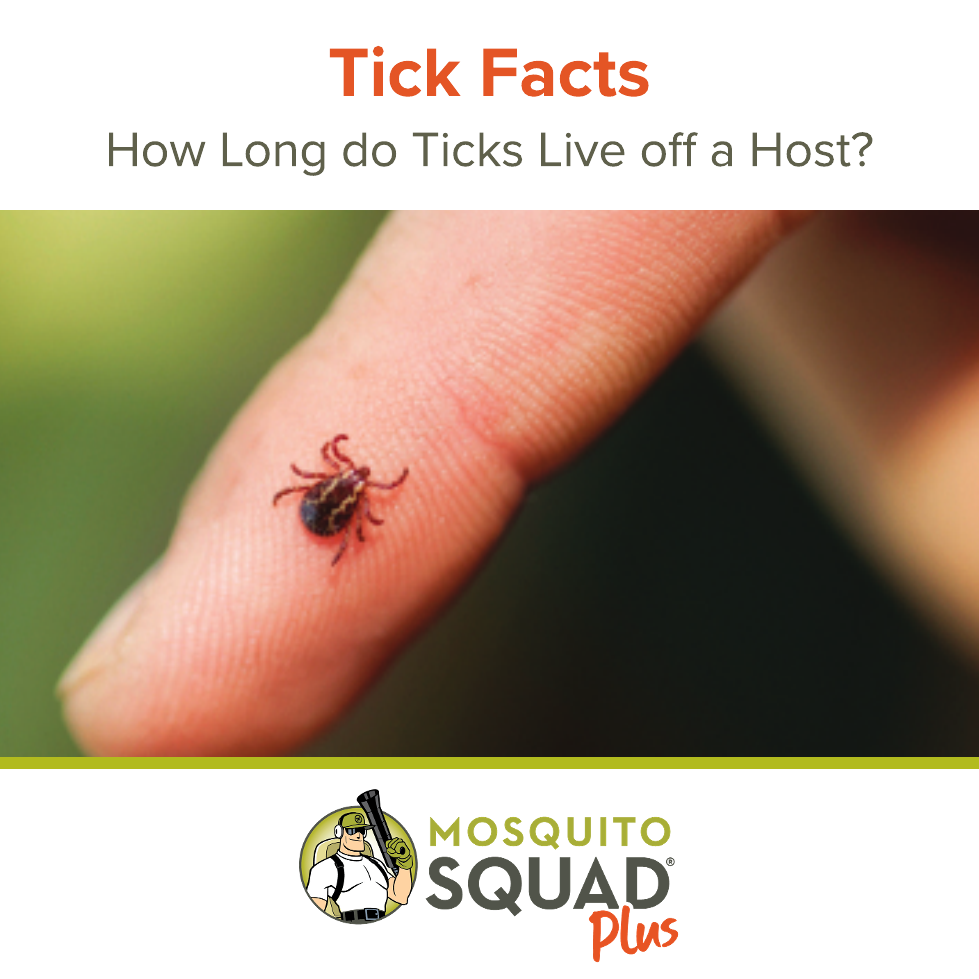
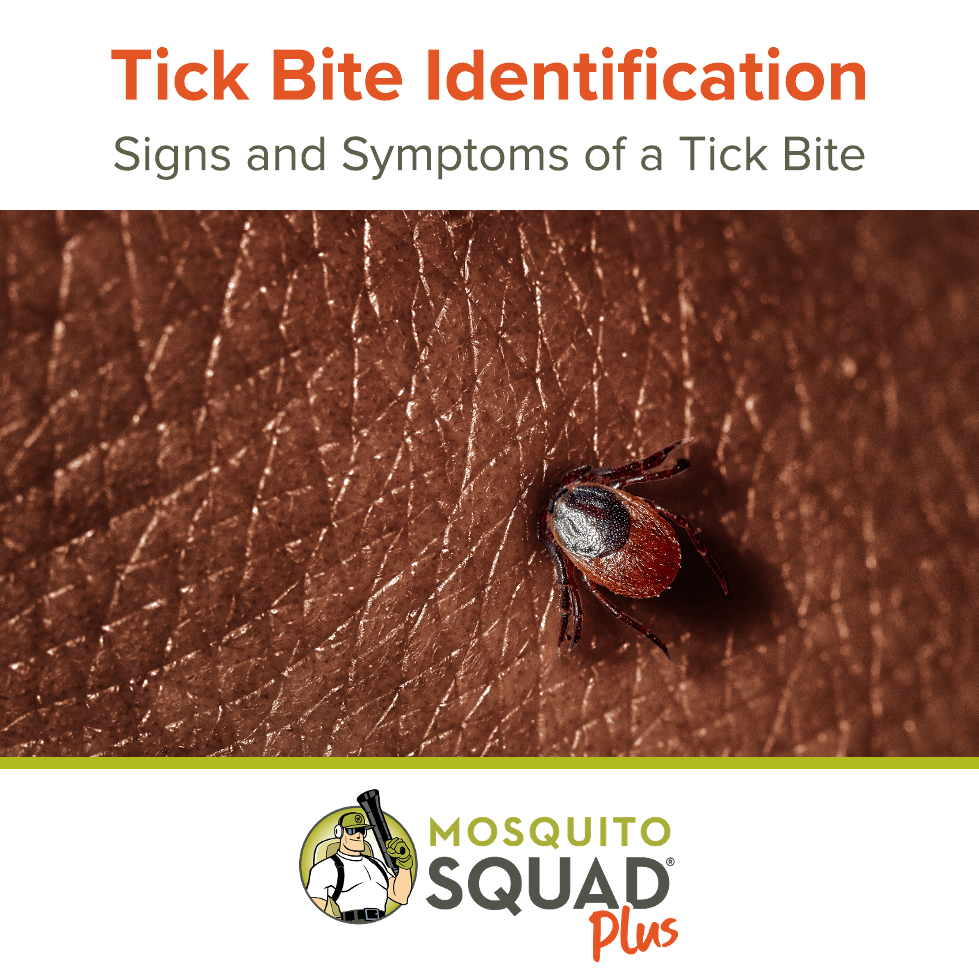
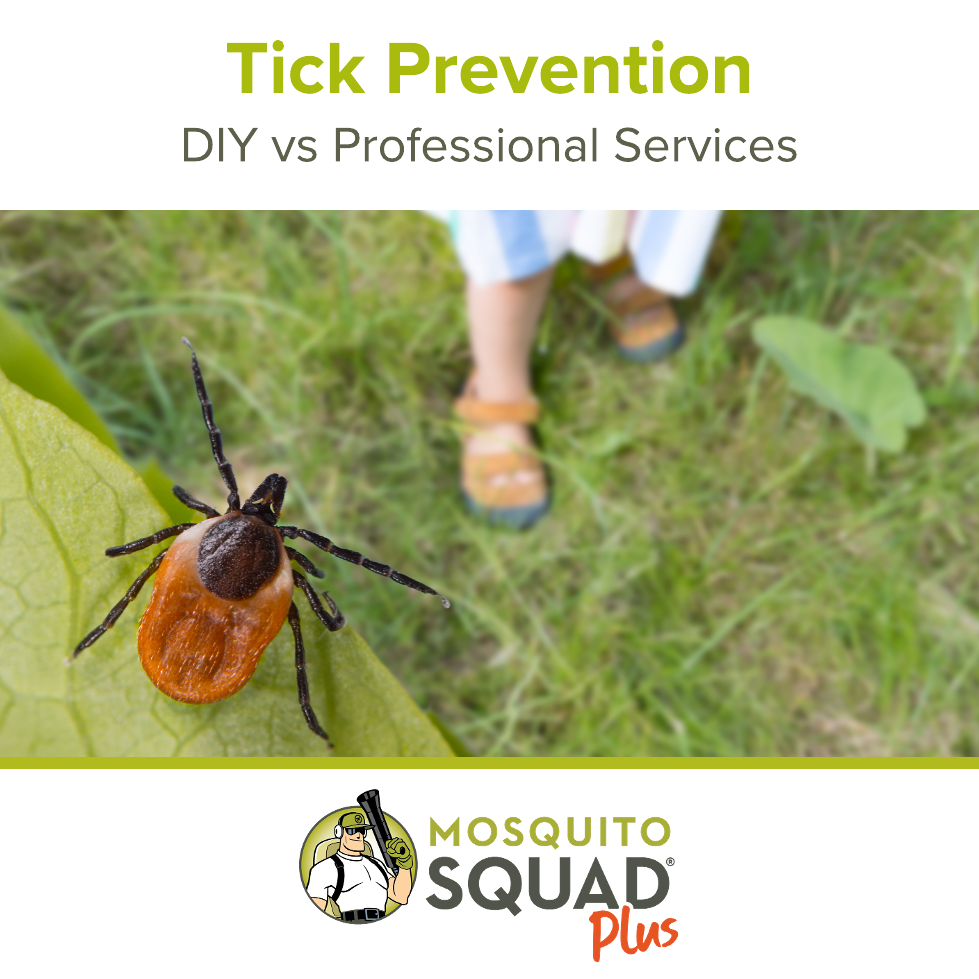
The nymph stage is the highest-risk stage for human exposure. Lone Star nymphs peak May through July. They are roughly the size of a poppy seed. They do not have the distinctive white dot that identifies adult females. They are functionally invisible at the ankle and sock line until they have been feeding for hours. The bite itself is painless. The connection between that bite and what shows up three to six hours after dinner weeks later is the connection most people never make without specific testing.
University of Kentucky extension professor Jonathan Larson put the high-season window plainly: in Kentucky, the high tick season tends to be April through June, though exposure is possible on any day above freezing. That window is fully open right now.
Where the Pressure Actually Lives in a Northern Kentucky Yard
The open lawn is not where the ticks are. Research published in Entomology Today found that nymphal tick density is highest at the wooded edge of the lawn-forest transition zone, where leaf litter and undergrowth create the humid microclimate ticks need to survive. Maintained turf was among the lowest-density zones on the same properties. The population concentrates at the edge, and in a Northern Kentucky yard the edge is almost always the back fence line, the shaded strip under mature foundation shrubs, the unmowed margin between the maintained lawn and the wooded buffer, or any property line that backs up to a creek corridor, a drainage easement, or a park boundary.
The 6 C's of Tick Control framework covers the full systematic approach to identifying and treating those zones. Clearing leaf litter along the back fence, creating a three-foot buffer of wood chips or gravel between the maintained lawn and naturalized vegetation, keeping wood piles away from the structure, and treating the edge zones on a recurring schedule are the steps that work together. None of them alone is sufficient. All of them together is what changes the exposure baseline across a full season.
Blacklegged Ticks Are Running the Same Season Simultaneously
The Lone Star tick is the species in the news. It is not the only species Northern Kentucky homeowners need to be thinking about right now.
University of Kentucky researchers confirmed in 2026 that blacklegged ticks are now established throughout the Commonwealth, with established populations in at least 19 Kentucky counties as of 2024. In their field survey, 25 percent of collected ticks tested positive for the bacteria that causes Lyme disease. The blacklegged tick is the Lyme disease vector and its nymphs, which are even smaller than Lone Star nymphs, peak in May and June during the same window that Lone Star nymph pressure is at its highest.
Kentucky's Cabinet for Health and Family Services tracks tick-borne disease surveillance across the state. The 128 percent increase in tick-borne diseases between 2020 and 2023 documented by KDPH covers both species. Two species, two disease profiles, both peaking in the same shoulder season, both concentrated in the same edge habitat zones on the same residential back property lines throughout Boone, Kenton, and Campbell Counties.
A tick control program that treats the edge zones on a recurring schedule addresses both species in the same treatment because both live in the same habitat. Treating for one and ignoring the other on a property with wooded edges and wildlife corridor adjacency is not a complete program.
What Homeowners Try and Where It Falls Short
The instinct is right and the steps are worth doing. Tick checks after outdoor time. Long pants and permethrin-treated clothing during yard work. Hot dryer cycle after coming inside. Leaf litter cleared from the back fence. These reduce individual exposure and anyone spending time near wooded edges in Northern Kentucky should be doing all of them.
Here is what does not work. Assuming the bites are just part of being outside in Kentucky. That normalization is exactly what lets the population keep building unchallenged through every active season. The Lone Star tick that made you itch last June was not an isolated event. It was a population that had been in that fence line for months and nobody interrupted it.
One missed nymph is all it takes. At the size of a poppy seed on a sock at the ankle line, functionally invisible, feeding painlessly, depositing a sugar molecule that your immune system may spend years reacting to before anyone figures out what is causing it.
OSU Extension across the river runs the Buckeye Tick Test laboratory for $50 per tick with results in 72 hours. Right tool after a bite. The recurring tick control program that treats the actual source zones on a scheduled basis is the tool that prevents it.
Running Both Programs Through the Full Active Season
The tick season and the mosquito season in Northern Kentucky run together from mid-March through October. The Ohio River Valley microclimate activates both earlier than the calendar suggests, and neither program should wait until the problem is obvious in the yard to get started.
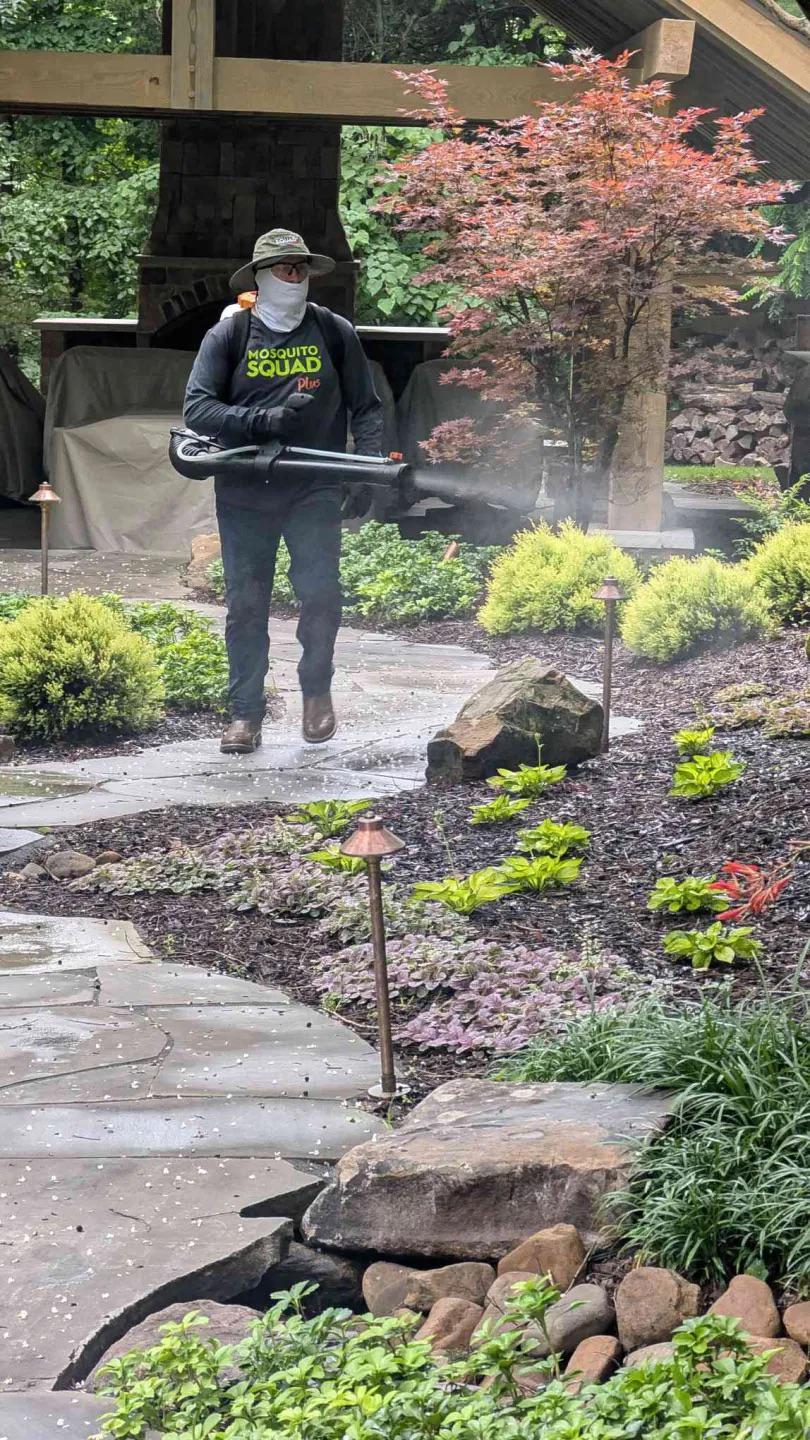
A mosquito barrier treatment running on a 21-day recurring cycle through the outdoor season, combined with tick control targeting the edge zones on the same schedule, handles both pressures without two separate service visits. For properties that prefer botanical-based chemistry, the natural mosquito treatment runs on the same 21-day schedule with essential oil active ingredients. The 7 T's of Mosquito Control framework covers the systematic property assessment for the mosquito side. The 6 C's of Tick Control covers the tick side.
For outdoor events this summer, a special event treatment applied 24 to 48 hours before provides tighter knockdown on top of the recurring program. For properties with significant outdoor living space along any creek corridor, park boundary, or wooded lot edge, an automatic misting system can supplement the recurring barrier treatment during the morning and late afternoon activity windows when both mosquitoes and questing ticks are most active near the deck or patio.
When to Act
University of Kentucky extension professor Jonathan Larson said it directly: in Kentucky, the high tick season tends to be April through June. That window is open right now. The Lone Star tick nymphal peak, the highest-risk stage for human exposure, runs May through July. The national story about ER visits at a nine-year high is not a future warning. It is the current condition in a state that has been living with this species as its most common medically relevant tick for decades.
The Lone Star tick has been the most common medically relevant tick in Kentucky for years. The national news is just now catching up to what Northern Kentucky back yards have been dealing with all along. Nobody in Boone, Kenton, or Campbell County is spraying for you. The Mosquito Squad of Northern Kentucky covers Florence, Union, Burlington, Hebron, Independence, Erlanger, Fort Mitchell, Fort Thomas, Taylor Mill, Covington, and Newport. Reach out and we will walk the property with you. Call us at (859) 222-7345.