The Wasps on Your Farragut Garage Door Aren't Building a Nest. They're Picking a Place to Spend the Winter.
Posted by Mosquito Squad Plus
October 16, 2026
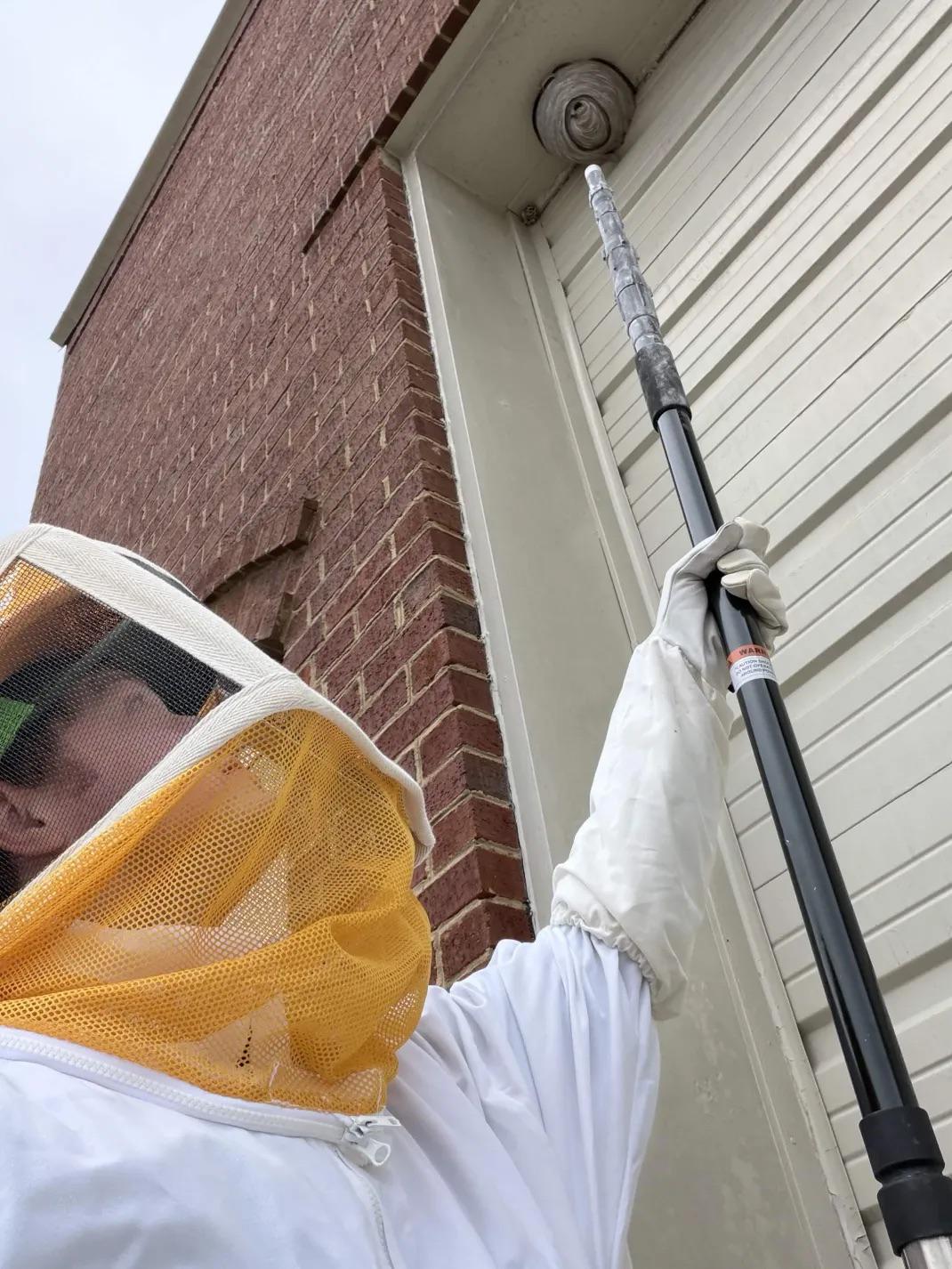
In early October, Craig, one of our Knoxville technicians, was working a stretch of Farragut jobs when he noticed something he hadn't paid much attention to before. On garage after garage, there'd be a clump of wasps packed right onto the garage door motor. No nest. No paper comb. Just wasps, crowded together on a piece of equipment that hums to life a few times a day. On the job he'd just finished, it was a security camera with a pile of wasps sitting on it.
"Almost like they're trying to get warm," he said.
That's what a wasp problem looks like in Farragut in October, and it throws people because it doesn't look anything like July. In summer you get a gray paper nest over the back door and you know exactly what you're dealing with. In fall you get wasps hanging around places that don't make sense, big nests that are suddenly empty, and a nagging feeling that something's going on up at the roofline.
Something is. The colonies that built all summer are winding down, and the wasps that'll start next year's nests are deciding where to spend the winter. Some of them are going to choose your house. Most of the work this time of year is making sure they choose somewhere else.
What Our Tech Is Seeing on Farragut Jobs
Craig split his week between Farragut, Maryville, and Knoxville, and he's had a handful of wasp jobs in the mix.
"Right now is usually around the time where they stop really making nests and start wintering," he told us. "So I haven't seen a lot of nests, but what I've seen is like a clump of wasps crowding around a spot where a nest might be, but no actual nest being made."
What caught his eye is that this is new to him. In past seasons, he said, a spot either had a nest with wasps on it or it didn't. This fall it's wasps bunched up on openers and camera housings, with nothing built around them. His read is that the wasps are drawn to the heat the devices give off and are "trying to get away from the elements in preparation for the winter."
The other thing he keeps finding goes the opposite direction. "There's a lot of wasp nests I've seen that were pretty big that are currently completely empty," he said. "And then spots with no nests where there's just clumps of wasps."
Empty nests in one spot, nestless clumps in another. Both make sense once you know what wasps are doing in October.
The Nest Is Finished. The Wasps Aren't.
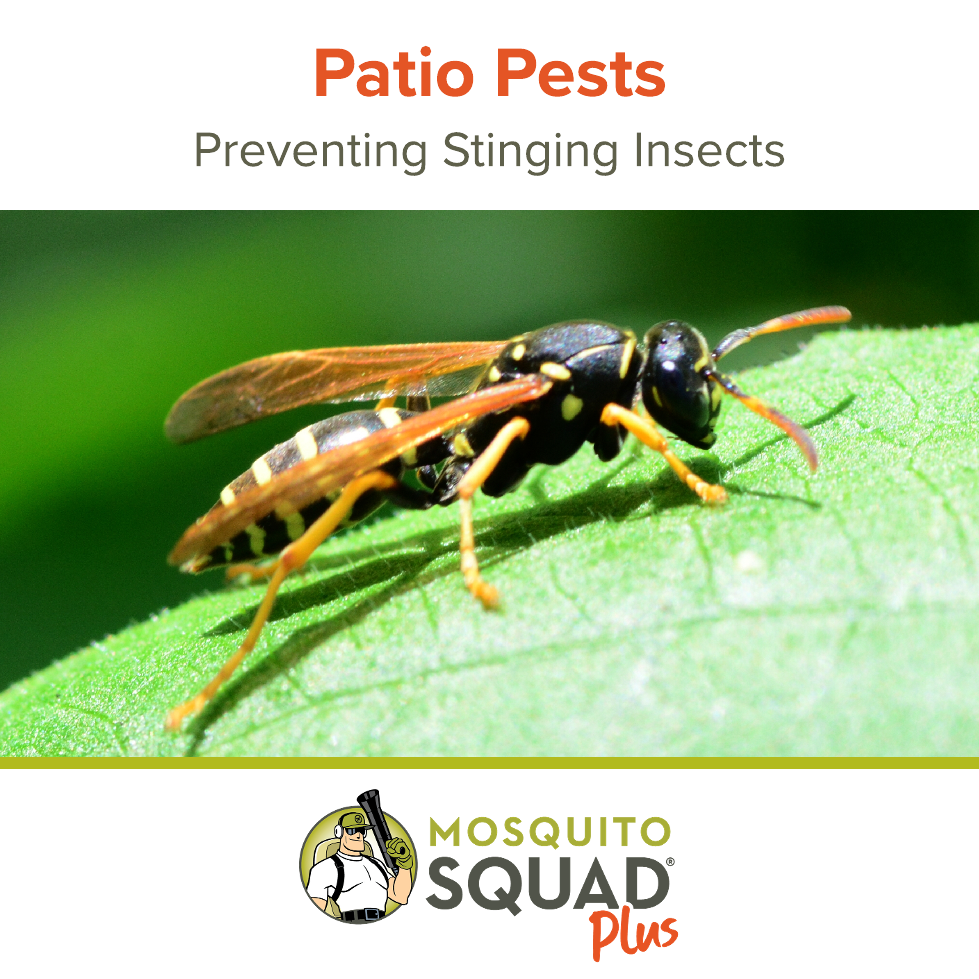
Paper wasps, yellow jackets, and hornets all run on a one-year clock. A single queen starts a nest in spring, workers take over through the summer, and the colony grows until late in the season. Then it falls apart.
UT Extension's yellow jacket fact sheet lays out the Tennessee version. New males and queens are produced from late summer into early fall, the mated queens go off to spend the winter under bark and in other sheltered spots, and the colony dies off on its own in late autumn, usually after the second hard frost. Paper wasps follow the same basic arc. According to NC State Extension, the new reproductive females mate and leave the nest to find protected places to overwinter, including hollow trees, wood piles, attics, chimneys, and the space behind siding.
That's why our crew keeps finding big, empty nests. The colony's done its job. And those nests aren't coming back into use. UT's fact sheet says abandoned yellow jacket nests aren't reused and soon fall apart, Iowa State University Extension says the same, and UGA Extension confirms hornets don't go back to an old nest either. Every spring starts from scratch.
So an empty nest under your Farragut eave doesn't mean the problem left. It means the problem relocated. The queens that nest produced are somewhere nearby, and over the next few weeks they'll either settle into a dead tree at the back of the lot or into the attic over your garage.
There's a piece of good news in here too. With no nest left to defend, fall paper wasps lose most of their edge. NC State notes the wasps gathering around buildings this time of year aren't particularly defensive and are unlikely to attack, and the males, which make up a big share of fall swarms, can't sting at all. That doesn't make a cluster something to swat at with your bare hand. It just means a fall cluster is a different kind of risk than a summer nest, and it calls for a different plan.
Why the Camera and the Garage Door Motor
NC State has a separate bulletin on paper wasps swarming around structures, and it reads like it was written about our week. In fall, male paper wasps pick a high, prominent perch, park on it, and give off scent to draw in females. On warm fall days the future queens fly around those perches, and dozens or even hundreds can collect around the upper part of a building. The bulletin says they're often seen bumping around TV news cameras mounted on top of buildings. Swap the news camera for a doorbell cam or a floodlight camera under a Farragut eave and you've got the same scene.
The same bulletin points out that a house standing taller than the ones around it can have wasps swarming around it while the neighbors have none, and that nobody fully understands why wasps favor one structure over another. That's worth knowing before you assume your house is the only one on the street with a problem, or that it's somehow your fault.
Then there's the warmth our tech kept pointing to. A garage door motor or a camera housing gives a wasp a perch with some height, a bit of cover from rain, and a surface that runs a little warmer than the siding next to it. These insects are clearly comfortable around household equipment. University of Nebraska Extension notes that the European paper wasp will nest in small cavities like appliances and light fixtures. We're not going to claim heat is the whole explanation, because the research doesn't say that. But it lines up with what he keeps finding, and a cluster on a device should be read the same way either way: wasps are checking out your house as a winter address.
Where the Winter Plans End Up: Your Attic
After mating, those queens need somewhere to sit out the cold, and a house offers better real estate than a dead tree. Mississippi State University Extension calls overwintering paper wasps in attics one of the more distressing wasp problems a homeowner can run into, because one building can end up holding hundreds or even thousands of them. They aren't nesting. They're just waiting, packed into clusters in attics and wall voids, sometimes with more than one species mixed in.
Most winter days, nobody notices. The trouble shows up when it warms. NC State says that on any day around 70 degrees in winter or early spring, these wasps can wake up and head toward light, and if they're tucked into a wall void, a chimney, or a vent, the light can lead them indoors instead of out. That's how somebody ends up finding sluggish wasps on a windowsill in February, or steps on one on the bathroom floor in March.
East Tennessee doesn't help. We get plenty of mild afternoons between cold snaps, and every one of them is a chance for whatever moved into the attic to stir.
Farragut's housing makes this worth thinking about. A lot of the town was built out in the 1980s and 1990s, in neighborhoods like Belleaire, Fox Den, and Whittington Creek, and those homes are now thirty or forty years into their roofline hardware. Gable vent screens tear or pull loose. Soffit panels sag at the corners. Caulk around cable and HVAC penetrations dries out and cracks. None of that is unusual for a house that age, but every one of those gaps is an opening a queen can use. Newer builds on the edges of town aren't immune either, because a roofline is only as tight as its last bit of trim.
The same openings let in the other fall invaders. If you've read our post on keeping lady beetles and stink bugs out of your Knoxville home this fall, the list will look familiar, and the boxelder bugs piling up on Seymour trees are working from the same playbook. A roofline with open gaps in October is basically a vacancy sign for anything looking to overwinter.
What Farragut Homeowners Usually Try
Most of what people grab in the fall is built for a summer problem, so it tends to miss.
The first instinct is usually to knock down the empty nest. It feels like progress, and it's harmless enough since nobody's home. But it doesn't touch the queens that nest already sent out, and it can leave you thinking the job's done when the real activity has moved up to the roofline.
The next move is a can of wasp spray aimed at the cluster on the camera. That'll kill whatever it hits, but it won't reach the wasps already in the attic or the ones that land on the same warm spot tomorrow afternoon. It also means soaking a camera or a garage door opener in something that was never meant for electronics, usually from the top of a ladder.
The one that really backfires is sealing the gap right away. If the queens are already settled in the attic or a wall void, closing the outside opening can trap them inside the structure, and a trapped wasp looks for another way out, which is often into the house. Mississippi State is specific about this: once overwintering wasps are inside, don't seal the exterior cracks until they've left in spring. Sealing is for before they move in, not after.
And then there's waiting for cold weather to handle it. For a yellow jacket nest in the yard, that's sometimes a fair call, since the workers die off after a couple of hard frosts. For the queens, it doesn't work. They're built to survive the winter, and they'll spend it in whatever shelter they found in October.
What Actually Works for Wasp Control in Farragut in the Fall
Effective wasp control in Farragut this time of year has less to do with the wasps you can see and more to do with the house they're trying to get into.
It starts with reading the clusters. A clump on the camera tells you which side of the house the wasps are working, and the roofline right above it is where to look for the opening they're after. We treat active clusters where they sit, and if wasps have already moved into a void, they get dealt with before anyone closes an opening. Treat first, then seal. It's the same order we follow on summer cavity nests, which we wrote about in our post on hornet removal across the Knoxville area.
From there, the goal is keeping new queens off the structure. A perimeter treatment around the outside of the house puts a layer between the wasps and the gaps they're looking for. Our Home Shield program is built around exactly that zone, and it covers wasps and hornets along with spiders, ants, and the other pests that come looking for a warm place to spend the winter. If spiders are already building in the same eaves, our spider control work rides along on the same visit, and the stink bug control side covers the fall invader that uses the same cracks. You can see how the programs fit together on our pest packages page, and the full range of stinging insects we handle is on our wasp, hornet, and yellow jacket page.
The physical fixes are the homeowner's half of the job, and they're the part that keeps paying off year after year. NC State recommends properly screened attic vents to keep overwintering queens out, along with caulking or screening around window sills, exhaust vents, and gable vents. A handyman or roofer can usually knock out a torn vent screen or a gapped soffit corner in an afternoon. If you're not sure where your openings are, the clusters will tell you, and our tech will point out what they see while they're there.
The last piece is consistency. A single October treatment helps. A house that gets looked at on a regular schedule is a house where a new gap gets noticed before a few hundred queens find it. That same habit of catching small structural problems early is what we push in our termite guide for Farragut homes, where the risk is down at the foundation instead of up at the soffit.
When to Act in Farragut
The calendar here is tighter than it feels in a warm October.
The National Weather Service in Morristown puts Knoxville's median first frost on October 24 and its median first freeze on November 2. UT's fact sheet says yellow jacket colonies usually die out after the second hard frost. That's roughly when the last colonies collapse and the queens finish settling into their winter spots. Once they're in the attic, your options mostly come down to waiting them out and keeping a fly swatter handy until spring.
So if you're seeing clusters on fixtures, wasps working the eaves on warm afternoons, or big empty nests under the overhangs, that's the scouting happening now. Getting clusters treated and gaps closed before the freeze is how you keep scouting from turning into a winter lease.
If the freeze has already come and gone, the next chance is late winter and early spring. On warm days you may see wasps gathering around outside cracks or showing up indoors. Pay attention to where they come from, because that's the gap to fix once they've cleared out and before next fall's queens find it.
Farragut has plenty else going on outside this time of year. The same wooded edges that give wasps somewhere to scout also hold the ticks covered in our post on Blackoak Ridge and Fort Loudoun Lake, and the small containers behind the water you walk past every day keep mosquitoes going until the cold finally shuts them down.
The Empty Nest Is Just a Forwarding Address
The empty nest under your eave is the most obvious wasp sign on a Farragut property right now, and it's the one that matters least. The clump on the garage door motor matters more, because it shows you where next year's colony is deciding to wait out the winter.
Fall isn't about winning a fight with a nest. It's about getting the door shut before the tenants show up. Craig and the rest of our Knoxville crew are on Farragut properties every week through the fall, and October is when the roofline work pays off most.
Seeing clusters on your fixtures, or wasps working the eaves on a warm afternoon? Call Mosquito Squad of Knoxville at (865) 413-7732, or request a free quote and we'll get someone out before the freeze. If you want to know what neighbors think first, our Knoxville customer reviews are a good place to start, this season's special offers are posted, and if a visit ever falls short, our guarantee means we come back and make it right.