Farragut Mosquito Control: The Water You Walk Past Every Day
Posted by Mosquito Squad Plus
August 3, 2026
Mosquitoes in a Farragut backyard rarely travel far to reach you. The ones finding you while you pull weeds by the front walk hatched somewhere close, often on the same lot, sometimes within sight of where you are standing. That runs against the usual mental image, which is a cloud drifting up off the lake or seeping out of the woods behind the neighbor's fence. That version puts the problem somewhere else and out of your hands.
Every pest control company with a Farragut page runs some version of the lake line. Fort Loudoun Lake, the wooded shoreline, the greenways off Kingston Pike. It sounds right. It is also close to useless as an explanation for why you got bitten four times carrying groceries in from the driveway on a Saturday afternoon.
The water producing those bites is smaller than a coffee cup, and it is probably yours.
The Mosquito Doing the Biting Is Not Built to Travel
Two species handle most of the daytime biting in Farragut yards, and both are container breeders. The Tennessee Department of Health lists the Asian tiger mosquito and the eastern treehole mosquito among the species established across the state, along with the Asian bush mosquito, which has been moving through the same suburban habitat.
None of the three is a strong flier. These are not the floodwater species that ride wind for miles. They emerge, feed, lay, and stay put, generally within a few hundred feet of the water they came out of. The research on exactly how far is mixed, and we are not going to pretend it is settled. The practical version is not in dispute. If a container mosquito is biting you on your patio, its nursery is close enough to walk to.
That changes what you do about it. A mosquito that flew in from a mile away is somebody else's problem and you are stuck reacting. A mosquito that emerged forty feet from your grill is a problem with an address.
Try it on your own property this week. Pick the spot where you get bitten most, your back steps, the corner of the patio, the mulch bed by the hose bib, and stand there. Turn a slow circle and count every object within a hundred feet that could hold a swallow of rainwater. The count usually runs past fifteen. If your lot is typical of the streets off Campbell Station Road or the older sections around Aldenwood Park, you will find more than you expect, and you will find that you walk past all of them daily without registering a single one.
We have been running mosquito control in Knoxville and across Knox County since 2019, and the properties that turn around fastest are the ones where somebody found the source instead of adding another spray. Everything below is where to look.
The Water That Does Not Look Like Water
Standing water, in the usual sense, means a birdbath, a pond, or a low spot in the lawn that holds after a storm. Those get found. Homeowners in Farragut and West Knoxville keep well maintained properties, and the obvious water is usually handled before we ever get a call.
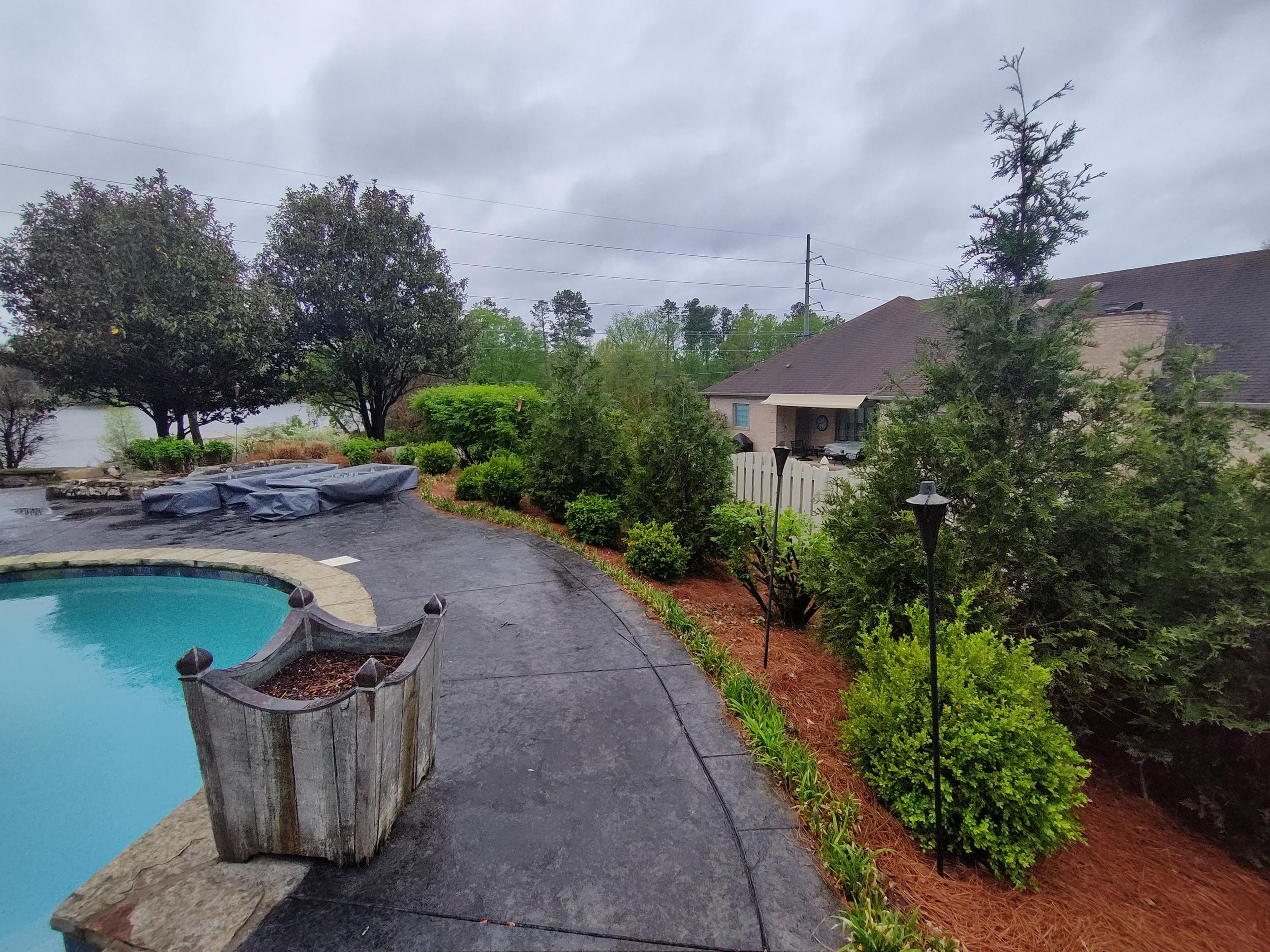
Container mosquitoes are not using the obvious water. They use volumes measured in tablespoons, in places that do not read as water at all. On the hardscape and equipment side, the repeat offenders are:
- Corrugated black downspout extensions, where the ridges hold water in every low bend for weeks
- Irrigation valve boxes, which are lidded, shaded, and half full more often than not
- Saucers under potted plants on the deck, and the rim channel of the pot itself
- Boat covers, trailer tarps, grill covers, and the sagging pocket in the middle of any of them
- The housing of a rolled-up hose reel, and the fold at the bottom of the hose itself
In the yard proper, the list runs differently:
- Gutter corners on the shaded north side, still holding a slug of water and leaf pack after everything else drained
- Wagon beds, sandbox lids, the weighted base of a portable basketball hoop
- Tire swings, wheelbarrows left sitting upright, buckets tucked behind the AC unit
- The gap under a landscape timber where mulch has built a small basin
- Tarps over firewood, and the pleat where a tarp is bungeed to a rack
Irrigation makes this worse in a community like this one. A yard on a timer gets water three mornings a week regardless of rainfall, which means the low spots and the valve boxes and the saucers never get the dry stretch that would break a breeding cycle. A Concord or Farragut lawn that looks immaculate in August is often being irrigated into productivity.
None of that looks like a mosquito problem. All of it produces mosquitoes.
Your eye works against you here. You see your yard as a set of things you own and maintain, so the boat cover reads as a boat cover and the valve box reads as part of the irrigation system. You have to switch modes and look at the property the way water would, asking of every surface whether it drains, holds, or hides. There is a reason this gets missed year after year. Nobody walks their own property looking for defects in things they bought on purpose.
The Basin Behind Your Subdivision
Farragut carries roughly thirty stream miles inside the town limits, including Turkey Creek, the North Fork of Turkey Creek, and Little Turkey Creek, and the Town's own stormwater program notes all three sit on the state's list of impaired streams. Moving water is not the problem. Mosquitoes need still water, and a creek that is running is one of the few wet features on your street breeding nothing at all.
What sits between those creeks and the houses is the part worth your attention. The Town notes that many residential neighborhoods have a detention or retention basin collecting stormwater and slowing its release after a rain, and that maintenance of those basins typically falls to the HOA. A functioning basin drains down within a couple of days. One with a silted outlet, a clogged riser, or a fringe of cattails holding pockets of water behind them does not, and it can run as a nursery within easy flight range of forty houses.
The Town is also direct that stormwater and drainage features on private property are the owner's responsibility, not the municipality's. That covers your swales, your yard drains, and the culvert under the driveway. If it holds water on your side of the line, it is yours to deal with, and it is one of the first things we look at across our Farragut service area.
This is the single most useful question to raise at your next HOA meeting, and almost nobody does. Ask when the basin was last inspected. Ask whether the outlet structure is clear.
Tree Holes, and Why Farragut's Older Streets Have More of Them
The eastern treehole mosquito is named for where it breeds, and the name is accurate. A tree hole is a cavity where a limb tore out or a crotch rotted, and it holds rainwater and leaf tannins for months at a time. Squirrels and chipmunks move through them. So do the mosquitoes, generation after generation.
Residential build-out here has run across several decades, which means the older sections along Concord Road and around Founders Park carry hardwood canopy that newer developments have not grown into yet. That canopy is a large part of what people like about living here. It also means oaks and maples holding fifty years of storm damage, and every healed-over wound is a potential cavity.
Nobody looks up. Yard inspections happen at waist height, because waist height is where the buckets and the flowerpots are. A cavity fifteen feet up in a red oak can produce mosquitoes all season while the homeowner below changes the birdbath twice a week and wonders why nothing improves.
This runs opposite to the terrain story we told about ticks in the same community. Tick pressure gets pushed into your yard from the wooded edges, which is why we covered the ridge and lake terrain separately and why tick control is a perimeter problem. The mosquito version starts inside the property line and works outward.
Neighboring communities see their own versions. Streets in Bearden and Sequoyah Hills carry similar canopy age and similar cavity counts. In Hardin Valley, where the housing stock is newer and the trees are younger, containers do far more of the work than tree holes do.
Why This Matters More in East Tennessee Than Most Places
There is a health reason to take container mosquitoes seriously here, and it belongs to this region rather than to a national fact sheet.
La Crosse virus is the most common cause of mosquito-borne encephalitis in American children, according to CDC surveillance reporting. It is carried primarily by the eastern treehole mosquito, with the Asian tiger mosquito acting as a secondary vector. Both are the container breeders described above. Roughly three quarters of cases occur in children, per the clinical literature summarized by NIH.
The geography is what matters for a Farragut homeowner. UT Extension has published on La Crosse neuroinvasive disease as a concern concentrated in the Appalachian region, primarily affecting children sixteen and under. A separate UT bulletin on rising cases addressed eastern Tennessee directly.
Knox County is on that map for a reason. A CDC and University of Tennessee study sampled container-breeding mosquitoes at the homes of confirmed La Crosse patients, and two of the Tennessee collection sites sat in Knox County. UT entomologists have been tracking both species in this state for the better part of three decades.
That corridor is wider than Farragut. Families in Karns and Powell sit in it, and so do households in Maryville and Oak Ridge, where the canopy and the container habit look much the same.
Read that as a reason to prioritize, not to panic. The odds that any individual child gets sick are low, and most infections are mild enough to pass unnoticed. If you have been treating the container inventory as yard housekeeping you will get to eventually, this is the argument for moving it up, particularly if your kids play in a shaded back yard under mature trees.
One more piece. The virus overwinters inside the eggs and passes to the next generation, which the Alabama Department of Public Health describes plainly in its guidance on the treehole mosquito. A productive container is not a one-summer nuisance. It is a fixture.
Why the County Spray Truck Is Not Coming for This
People assume mosquito control is partly a public service, and that if things get bad enough somebody from the county handles it. That assumption is reasonable and it fits your yard poorly.
The Knox County Health Department program is a West Nile virus surveillance and response operation. Traps get set, pools get tested, and when a sample comes back positive the county sprays that neighborhood after dark. It is good public health work, and it is aimed at Culex mosquitoes, the evening and overnight biters that carry West Nile.
Your daytime container mosquitoes are a different genus on a different schedule in a different part of the yard. Night spraying triggered by a positive Culex pool is not designed to reach them, and a street off Grigsby Chapel Road is unlikely to trigger a response at all unless a nearby trap tests positive first.
This matters for how you set expectations. If your neighborhood has never been sprayed, your mosquito pressure is not therefore low. It means no trap near you has returned a positive West Nile sample, which tells you something about virus circulation in Culex and nothing about how many tiger mosquitoes came out of your downspout last week. Homeowners in West Hills and Louisville ask us about this every year, usually after reading a spray notice for a different part of Knoxville and wondering whether they got skipped.
The county does investigate breeding complaints and will treat standing water when technicians find larvae. That is useful and homeowners under-use it. It is also not a plan for making a yard usable in August, which is the gap ongoing mosquito control is built to fill.
What a Yard Walk Turns Up
When we walk a Farragut property, treatment is the smaller half of the visit. The larger half is the inventory.
We work the perimeter first, then the unwatched zones, which in practice means behind the shed, under the deck, the side yard between the house and the fence, and the strip along the property line where the mower does not quite reach. Then gutters and downspout outlets. Then the equipment: hoses, covers, containers, anything with a lip or a fold.
Some of what turns up gets dumped, drilled, or stored differently, and that is a permanent fix at no cost to you. Some of it cannot be eliminated because it is a working part of the property, and those get handled as ongoing larval sites on a schedule.
Our barrier treatment addresses the resting adults, applied to shaded undersides of foliage, shrub interiors, and structure edges where these species sit out the heat of the day. That is what drops the bite count inside forty-eight hours. The source work is what holds it down. Skip either one and you get a yard that improves and then slides back three weeks later.
Where pressure is heavy and part of the source sits off the lot, an automatic misting system is sometimes the honest answer. Households that prefer a plant-based product can run our natural treatment option on a shorter cycle. If the back edge has tick pressure too, Yard Defender and Complete Home and Yard cover both without stacking two vendors on one property.
What You Can Do Without Hiring Anyone
A meaningful amount of this you can handle yourself, and we would rather say so than pretend the only path runs through us.
Walk the property with a bucket after the next rain. Tip everything holding water. Drill the bottom of anything decorative that will keep collecting. Pull the corrugated downspout extensions and replace them with smooth rigid pipe, or at minimum shake them out weekly. Clear the gutters, including the shaded runs that never seem to need it. Fill tree cavities you can safely reach with soil or expanding foam. Change birdbath water every few days rather than every couple of weeks, because development runs fast enough in a Knox County July that a weekly rhythm still lets a generation through.
That work moves the number. What it will not reach is the two neighbors on either side of you who skipped it, the cavity thirty feet up, or the subdivision basin nobody has inspected since the builder left. Which is where a program earns its keep, and why the seven T's of mosquito control we work from pair source reduction with treatment instead of picking one. Our guarantee covers the treatment side of that.
Starting in the Middle of the Season
Plenty of Farragut homeowners reach late summer having done nothing, look at the calendar, and write the year off. That instinct is wrong here, for two reasons.
Container species keep producing as long as it stays warm and it rains, and a mild East Tennessee fall stretches that well past the point where the season feels over. Late summer and early fall are also when yards get the most use, with football starting and evening temperatures finally reasonable.
The longer-run reason carries more weight. Eggs laid in your containers this August hatch next spring, and the virus inside them carries over with them. Cutting production now lowers what you start with in March. We have written before about how much early season timing drives the year across the Knoxville market, and about how Beaver Creek sets the calendar in the corridor north of you. Late-season source work is how you make that early window easier to win.
Farragut mosquito control comes down to specifics, and the specifics are sitting in your side yard.
Read what your neighbors say about the work, check current offers, or request a free quote and we will walk the property with you. Call (865) 413-7732 and we will tell you what we find, including the parts you can fix yourself for nothing.