Pest Control in Oak Ridge, TN: What the Greenbelt Behind Your House Sends Into It
Posted by Mosquito Squad Plus
August 10, 2026
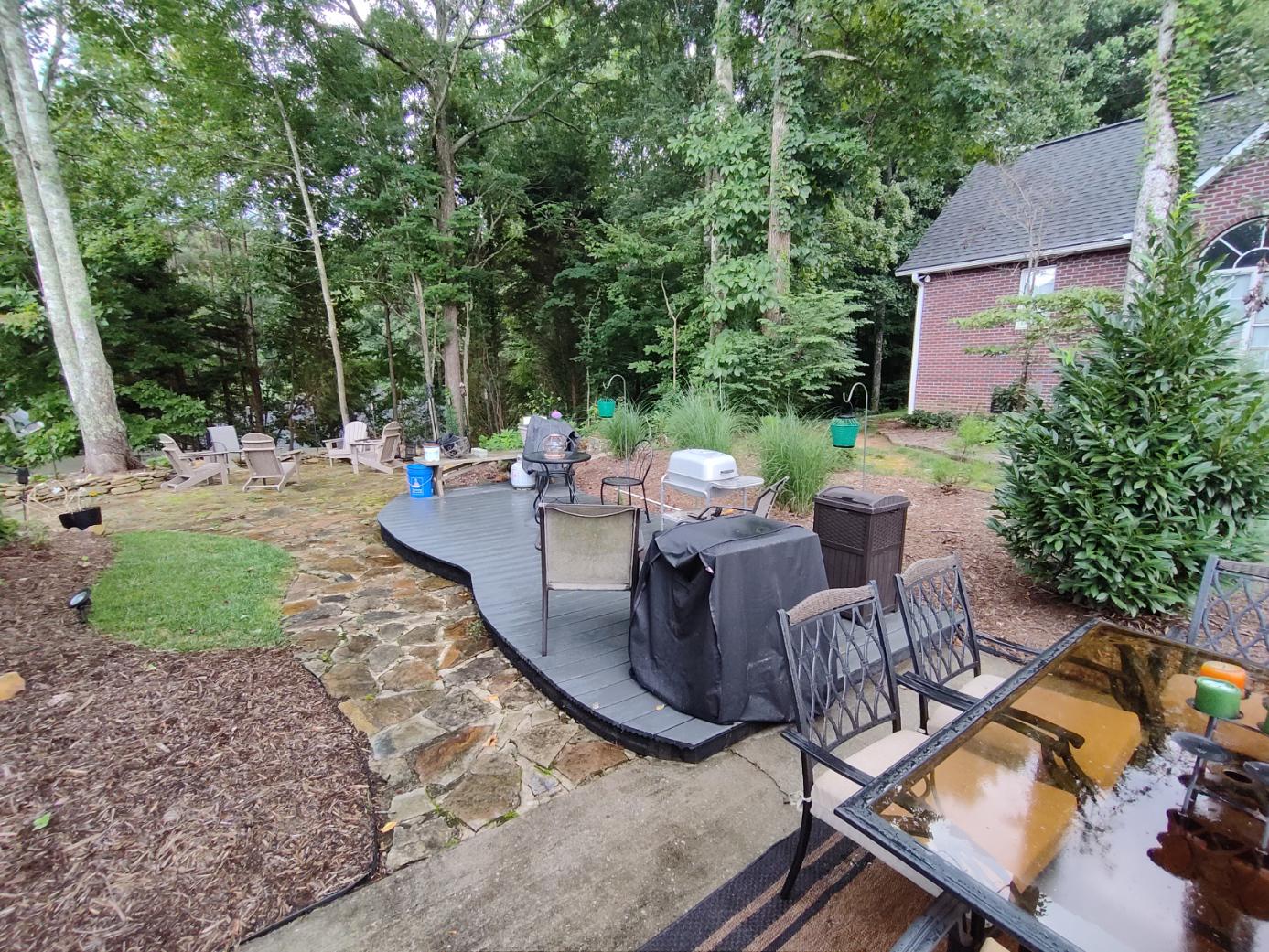
Ticks cross the property line in Oak Ridge from land the city owns and nobody mows. So do ants, mice, wasps, and most of what we get called about between March and Thanksgiving. If your back fence in Woodland or Emory Valley or off Outer Drive butts up against trees, that tree line is doing more to set your pest pressure than anything you plant, spray, or store in the garage.
You cannot cut it back, either. That land belongs to the city, and the ordinance protecting it is older than most of the houses on your street.
Which is why a plan that works fine for a friend of yours over in West Knoxville comes up short at your house. Your yard shares a permanent border with a forest, and that is a different problem than having a wooded corner.
The Tree Line Behind Your House Is Permanent
The City of Oak Ridge documents 48 greenbelt districts covering roughly 1,566 acres of forested land that sits between neighborhoods rather than around them. These are city-owned, kept in their natural state, and protected by ordinance from encroachment by adjacent property owners. That last clause is the one that matters to you. The brush behind your fence is not a neglected lot waiting on somebody to clean it up. It is a protected buffer, and it will look the same in twenty years.
Most towns in East Tennessee put their woods at the edge of the subdivision. Oak Ridge threaded the woods through the middle of town when the city was laid out, and the result is that ordinary interior lots have forest against the fence. You do not have to live on the outskirts to have this problem. You can be four blocks from a grocery store and still back up to sixty acres of hardwood.
It also means the pressure does not drop just because you get serious about your own yard. Your neighbor two doors down shares the same tree line, and so does the house behind them. On a normal suburban street a homeowner who clears brush and stays on top of the leaf litter buys real relief for themselves. Here you are one of forty houses on the same edge, and the edge is not going anywhere no matter how conscientious any of you are.
We treat plenty of yards in Farragut and Concord where a homeowner cleared thirty feet of scrub and cut their tick calls in half. That option is not on the table for you. When we walk an Oak Ridge property, we are working against a permanent forest edge, and the whole approach shifts because of it. We push the treated perimeter wider. We spend more time on the structure. We do not assume your season ends when the mosquitoes quit.
Ants Show Up First, and They Come From the Wood Line
Spring calls run ants. Not fire ants, mostly, and not the mound out by your driveway. Small dark ones on the counter by the sink, trailing along your baseboards, showing up two days after a warm rain.
The one you almost certainly have is the odorous house ant. University of Tennessee Extension calls it the most common house-invading ant in the state, and the reason it beats homeowners so consistently is structural. Colonies run multiple queens and split into subcolonies that stay friendly with each other. Kill the trail on your counter and you have killed a fraction of one satellite. The rest of it is outside, in leaf litter and under landscape timber, which on your lot means it is sitting in ground you do not control and cannot treat.
This is why the spray under your sink keeps failing you. Those twenty dead ants on the counter are a rounding error against what is living in the leaf litter forty feet away.
Carpenter ants are the other spring call and the more expensive one. UT Extension notes the parent colony typically sits outdoors in decayed wood with satellites moving into the structure. On a lot backing greenbelt, that parent colony has a standing supply of dead and downed hardwood forty feet from your kitchen. You are never going to find it. You are not supposed to. Our work is intercepting the satellites and treating the ground they cross to reach you.
Watch for coarse sawdust near a window frame, or a faint rustle in a wall on a quiet night. Both mean the satellites are already inside and the clock has started.
We handle both species under ant control, and on greenbelt lots we run the perimeter wider than we would on an open lot over in Powell or Halls.
The Standard Tick Advice Assumes You Can Cut the Brush
Pull up the CDC page on tick prevention and the landscaping section gets specific. Clear tall grass and brush at the edge of your lawn. Put down a three-foot barrier of wood chips or gravel between your lawn and wooded areas. Keep your deck and play equipment away from the yard edge. Remove leaf litter.
Read that list again with a greenbelt behind you. Half of it was written for somebody who owns the woods.
You can still do the parts on your side of the line, and you should. Build the three-foot barrier, because it sits entirely on your property and it works by being hot and dry, which ticks will not cross willingly. Move your swing set toward the middle of the yard where the sun hits it. Rake the leaves that blow in off the greenbelt in place of pushing them back toward the trees, which only rebuilds the habitat at your boundary. Stack your firewood away from the house.
What you cannot do is thin the brush on the other side. That is where the deer move, and deer are what keep the tick population fed and traveling. Oak Ridge homeowners usually find this out through their dog, in June, at the vet.
Timing matters more here than in an open yard. Ticks are moving in leaf litter by late March, weeks before anybody is thinking about pest control, and on your property that leaf litter starts at the fence and runs uninterrupted into a few hundred acres of woods. Waiting until you see one on a pants leg in May means you have already given up the early part of the season.
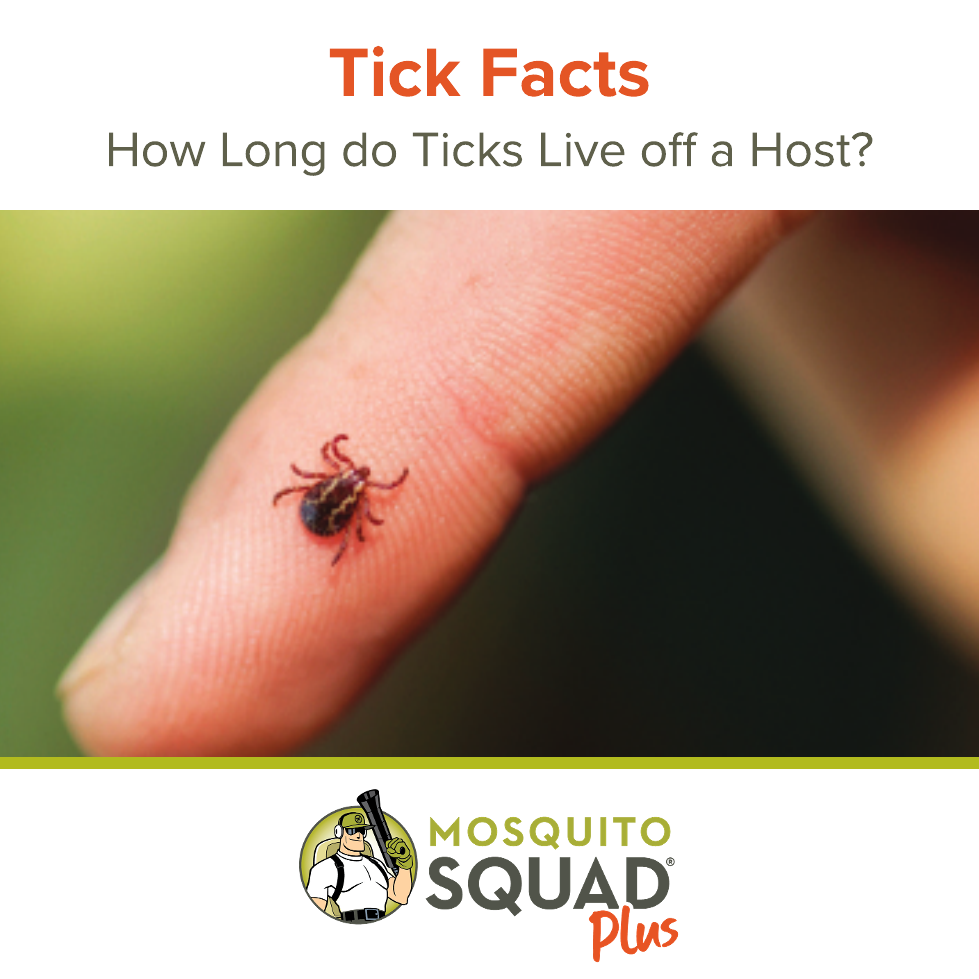
The lone star tick drives most of our tick control calls across this market now, and it hunts in a way blacklegged ticks do not. It will cross open ground toward you. We wrote about what that species is doing to people over in Lenoir City, and the same tick is thick through Anderson County and up toward Clinton. Our framework for the transition zone is in the 6 C's of tick control. On your property, that transition zone is the entire job.
Wasps Build Where Your Yard Meets Your House
Late summer is when your calls start being about stinging insects, and the timing is not luck. Iowa State Extension puts yellowjacket colonies at roughly 5,000 wasps at their August peak, having started from a single queen back in May. The colony was in your yard the whole time. It just got big enough for you to notice.
Ground nests are the Oak Ridge version of this. A yellowjacket queen wants an existing cavity in soil, and greenbelt edge is full of them. Old root channels, abandoned rodent burrows, the hollow under a landscape timber. You run a mower over one in August and you find out how many were in there.
The other version is in your walls, and this is where Oak Ridge housing gets its own answer. The National Park Service notes that the original alphabet houses built here during the Manhattan Project are still plentiful and lived in across the northern neighborhoods. Our Oak Ridge termite piece covers what that construction means on the wood side. For wasps the point is simpler. Eighty years of settling opens gaps at soffit returns, around window trim, and where an addition meets original wall. Gaps lead to voids. Paper wasps and yellowjackets both take them.
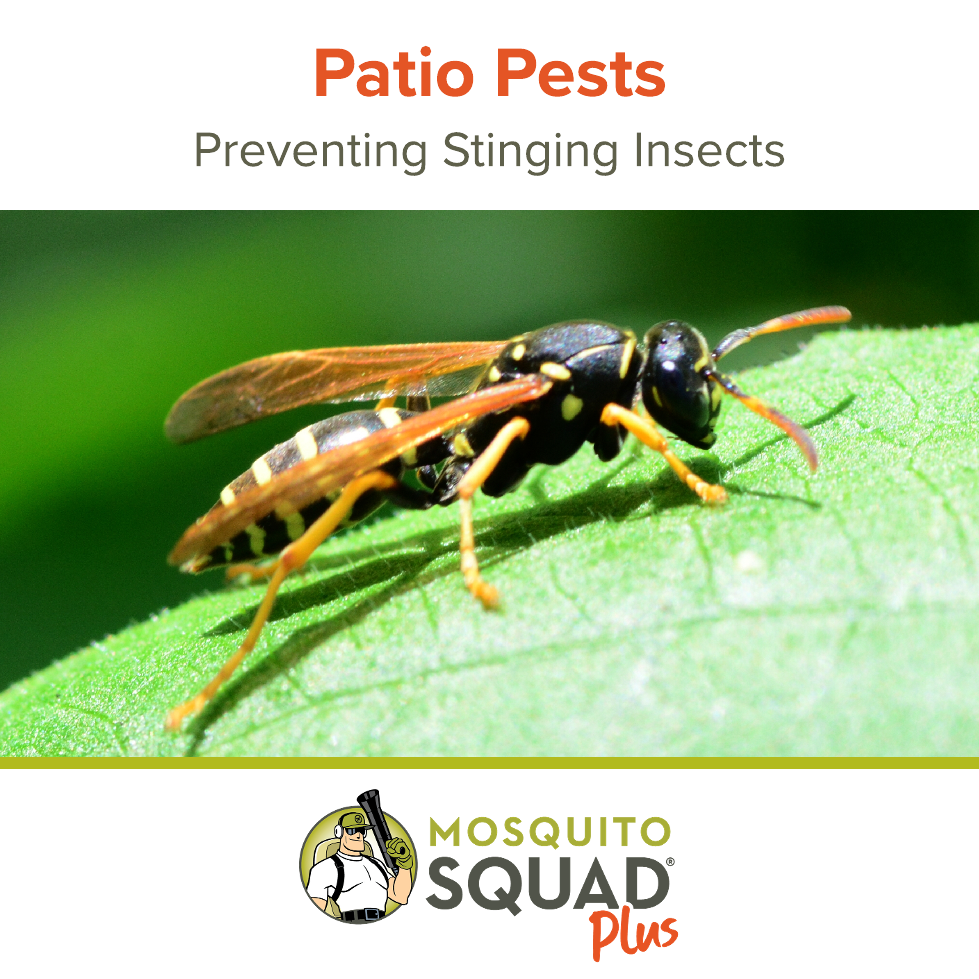
We cover this under wasps and hornets, and on a wall colony we treat the nest, not the yard, because a barrier spray does nothing to something living inside your siding. For the fuller picture on how these colonies go unnoticed until somebody happens to look up, read our hornet removal post.
Mice Move on the First Real Cold Snap
Everything above is a yard problem. Rodents are the point in your year where the greenbelt stops being a yard problem and becomes a house problem.
The number to know is a quarter inch. Cooperative extension guidance on rodent exclusion is blunt about it. Mice get through any opening larger than a quarter inch, rats through anything over a half inch. A quarter inch is the width of a pencil. You can walk your whole foundation looking for holes and miss every gap that is letting mice in, because those gaps do not look like holes to you. They look like the space under a door sweep, or the ring around a hose bib, or the corner where your siding meets brick.
Now add eighty-year-old construction to that standard. Older homes across Oak Ridge have settled, and settling opens quarter-inch gaps in places you would never think to check, particularly where an addition was tied into the original structure decades after the fact.
Then put a forested greenbelt forty feet off your back door. That is your population source, and it does not run out. White-footed mice live in leaf litter and downed wood year-round, and when nighttime temperatures drop into the forties they start testing structures. By the time the first hard cold snap hits in October, they have usually finished a search they started weeks earlier. October is when most people find out, and by then the decision got made outside, in the dark, sometime in September.
The fix is exclusion first and rodent control second. Seal with material they cannot chew, which rules out expanding foam and rules in steel wool, hardware cloth, and sheet metal. Then treat. Do it the other way around and you are pulling mice out of a house that is still open, and more will replace them before Christmas.
The work is tedious and it rewards being thorough. Pipes, cable penetrations, crawl space vents, the place where a downspout strap pulled the siding loose. Miss six of them and the house is still open.
Mice are also not the only thing arriving on that schedule. The same drop in nighttime temperature that starts them testing your foundation sends lady beetles and stink bugs to your sunlit walls looking for a way behind the siding, which is why our fall invader post and this one describe the same two weeks in October from opposite ends of the house. Sealing work does double duty. A gap closed against a mouse in September is a gap a stink bug cannot use in November, and the Home Shield visits that matter most are the ones that happen before either of them starts looking.
Spiders Are the One That Runs All Year
Nobody calls us in March about spiders. You call in September when the webs go up on your porch, and again in January when somebody in your house finds one in a boot.
Most of what you see outside is nuisance work and beneficial besides. The one you get asked about is the brown recluse, and UT Extension has a full publication on it. Their habitat list reads like a description of an older Oak Ridge house: darkened storage, closets, garages, basements, crawl spaces, cardboard boxes, stacked firewood.
That last item connects straight back to your greenbelt. Firewood stacked against the house is the most reliable way to move recluse spiders and rodents from the wood line to your foundation in a single step. Stack it off the ground and away from the wall, and you have closed one of the few doors you fully control.
One thing we tell people every fall: the spider count on your porch is a reading, not a problem. Spiders build where there is something to catch. A porch light throwing webs by late September usually means the light is pulling in enough small flying insects to support them, and that is information about your yard rather than your house. Fix the food supply and the webs thin out on their own.
Crawl spaces are the other piece, and Oak Ridge has a lot of them. A crawl space that stays damp is a spider habitat, a roach habitat, and a termite risk all at once. We take the spider side under spider control and the roach side under cockroach control. If you have standing moisture down there, read our Knoxville termite coverage as well, since termites are one of the few pests in this market that can cost you structural money before you ever lay eyes on them.
What Works on a Lot You Cannot Clear
Yards backing greenbelt need a wider treated perimeter, more attention to the structure, and a schedule that does not quit in October. Everything below buys one of those three.
For yard pressure through the season, our barrier treatment runs every 21 days and starts as low as $74 per treatment. It knocks down mosquitoes and hits your tick transition zone on the same visit, which on your lot is the part doing the real work. How we handle standing water is in the 7 T's of mosquito control, and if you keep a garden or bees, we run a natural treatment option.
For your structure, Home Shield starts at $99 a month and covers the foundation, vents, windows, and the entry points where ants, spiders, wasps, and rodents get in. On a greenbelt lot this is the program that earns its keep, because your pressure comes from a source that never empties out.
If you want both halves, Complete Home and Yard starts as low as $119 a month and runs twelve months a year. Hosting a graduation or a wedding in the backyard? A special event spray clears things 48 to 72 hours ahead of your guests.
We are veteran-owned and we have run this market since 2019. Our office sits in Oak Ridge, which means we treat the same greenbelt lots our techs drive past going home, and we work Oliver Springs, Kingston, and Karns out of the same shop.
Every job carries our satisfaction guarantee. Call (865) 413-7732 or request a free quote, and read what your neighbors say before you decide.