Our Owners Keep Honey Bees. Here’s How That Changes Pest Control in Karns
Posted by Mosquito Squad Plus
October 30, 2026
Reviewed by Brandon Robertson
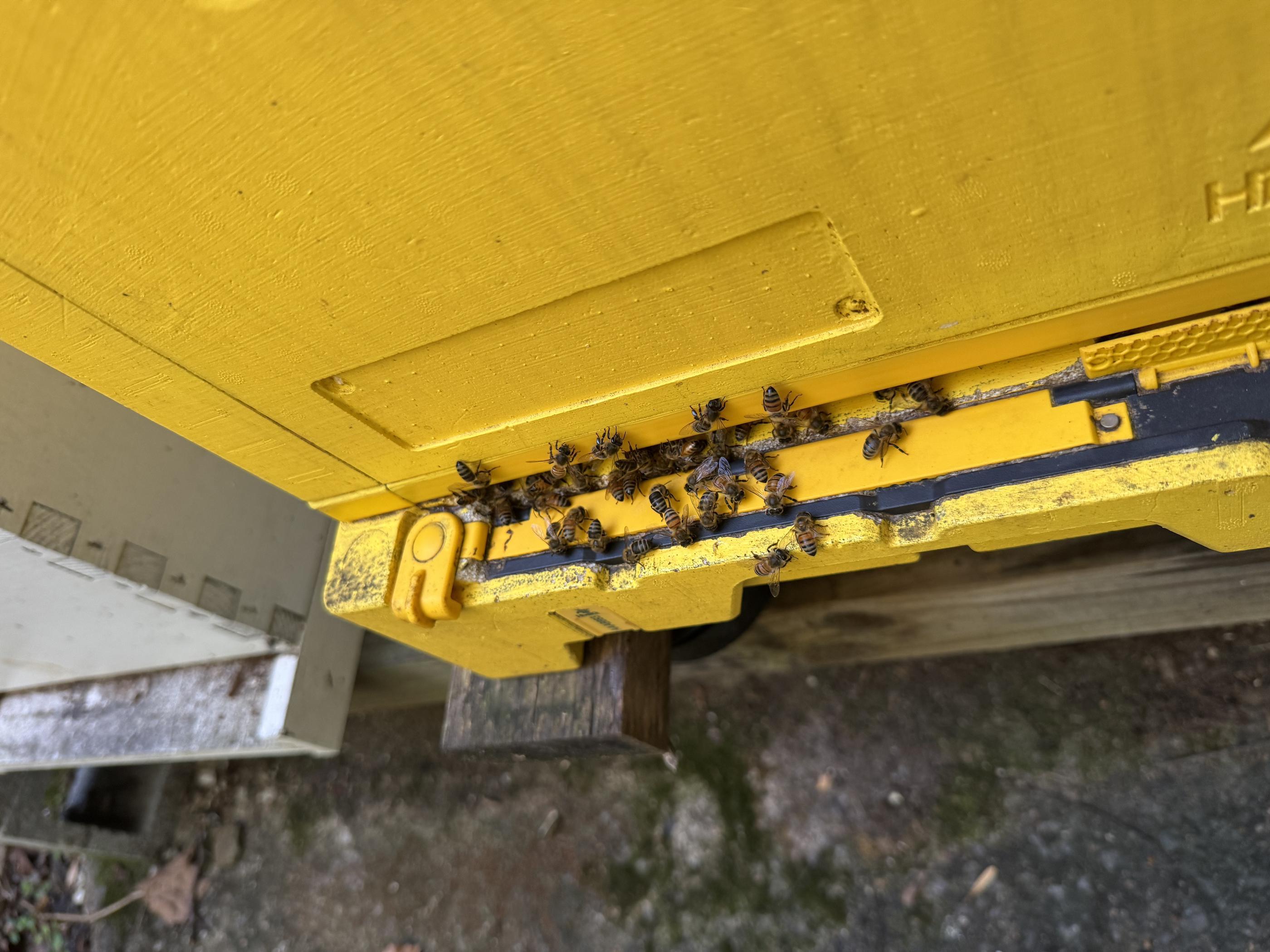
There are honey bees living on the property at our office. They belong to Bailey and Brandon Robertson, who own Mosquito Squad of Knoxville, and they’re not there for a photo. They’re there because the people who run this company keep bees, and when the owners of a pest control company walk past their own hives every morning, it changes how the whole crew thinks about what goes into a sprayer and where it lands.
That came up again this month on a job in Karns. The homeowner had found holes along the fascia board under the gutters and more of them in the back deck. Round, clean openings, the kind carpenter bees leave. They wanted the bees gone. They didn’t want them killed.
Our tech on that route will tell you that request is uncommon, but it’s not rare. And it gets at a bigger question we hear in one form or another on a lot of Karns properties: can you take care of the mosquitoes and ticks without hurting the bees and butterflies we actually want here?
Short version: yes. It takes some attention to where the product goes, which product it is, and what the homeowner told us at the door. Here’s how that plays out on a real yard.
Why the Bee Question Comes Up So Often in Karns
Karns properties give people room to grow things. A lot of the yards we treat out here have a real vegetable garden instead of a couple of tomato pots, flower beds that run the length of the fence, butterfly plantings, and every so often a few hives set back toward the tree line. Families who invest that much in a yard tend to think hard about what gets sprayed on it.
That concern isn’t just a Karns thing, either. Knoxville takes its pollinators seriously. UT’s main campus across town has been a certified Bee Campus since 2020, with planted pollinator habitat and a requirement for a least-toxic pest management plan. When the university is planting bee habitat on campus, homeowners notice, and they start asking the same questions about their own yards.
The same ground that makes those gardens grow is what makes Karns busy for pests. Our post on how Beaver Creek sets the mosquito calendar in Karns gets into the drainage side of it, and the wooded edges that carry ticks into yards along the Hardin Valley side are covered in our piece on where Knox County’s fastest-growing neighborhood meets its oldest tick problem. The yards that need outdoor pest control Knoxville homeowners can count on are very often the same yards with the most going on for pollinators.
That overlap is why this takes some thought. Treat a yard like it’s empty and bees pay for it. Refuse to treat it at all and the family that planted the garden can’t sit beside it in July.
Carpenter bees are pollinators that happen to nest in wood
Carpenter bees sit right in the middle of this. University of Missouri Extension describes them as normally beneficial pollinators that only become a problem when they tunnel into structures. They don’t eat the wood. Ohio State’s fact sheet points out that they feed on pollen and nectar and simply excavate the wood to raise their young.
What they want is soft, bare, weathered lumber: pine, fir, cedar, and other softwoods, usually in pieces a couple of inches thick. The back side of a fascia board tucked behind a gutter is a perfect fit. So are deck boards that have gone gray and haven’t seen stain or paint in a few seasons. That’s exactly where the bees were on the Karns job.
Bigger lots give them more to choose from, too. A typical Karns property carries more exposed wood than a tight subdivision lot in town: a longer deck, a shed or an older outbuilding out back, a woodpile along the tree line. Every one of those is a candidate, and a lot of them haven’t been painted since they went up. When the house itself has a dozen unpainted options plus a shed with a dozen more, the bees don’t have to go far to find a good spot.
The homeowner was right that the bees are worth keeping around. They were also right that a fascia board full of tunnels is a problem worth solving. Females prefer to reuse an old gallery rather than dig a new one, and over years those tunnels keep getting extended, sometimes far past the point most people would guess. The North Carolina State note hosted by UT Extension Knox County adds two more reasons not to ignore them: woodpeckers will tear into infested trim to get at the larvae, and open holes give moisture and wood rot a way in.
So the goal isn’t “kill the bees” and it’s not “leave them alone forever.” It’s to move them off the house and keep the rest of the yard livable.
What Homeowners Usually Try
Most people dealing with this land in one of a few places before they ever call us.
They spray everything, flowers included. A hose-end yard spray from the hardware store goes on the whole property, beds and blooms and all. Texas A&M AgriLife is blunt about this: many mosquito products are harmful to bees, butterflies, and other beneficial insects, and longer-lasting products like pyrethroids should stay off plants that are in bloom. Broadcasting across the flower bed is the single fastest way to hurt the insects a gardener is trying to protect.
They skip pest control entirely to protect the bees. That’s an understandable call, and on a tight lot in town it might even work. On a Karns property that backs up to woods and drains toward a creek, it usually means a summer of mosquito bites on the patio and ticks on the dog. Skipping treatment doesn’t make the tick pressure along the wood line go away. It just means nobody is managing it.
They buy something labeled natural and assume it’s harmless. Plant-based products really are gentler in a lot of ways. They’re not automatically safe for every insect that touches them. The same Texas A&M guidance notes that even products marketed as natural can still harm beneficial insects if they’re sprayed carelessly. Natural is a better starting point. It’s not a free pass.
For carpenter bees, they plug the holes in the fall. This one comes from a good place, and it’s the one we’d most like to talk people out of. October is when homeowners notice the holes, because the bees have gone quiet and the sawdust is sitting right there on the deck. What’s actually happening inside is that the new generation has moved back into those tunnels to spend the winter. Missouri Extension explains that young adults come out briefly in late summer, feed, and then return to the galleries to overwinter. Fill the hole now and one of two things happens. The bees die sealed inside, or they chew a fresh exit through the trim in April. Neither one is what a “gone, not dead” homeowner had in mind.
What Actually Works
None of this is complicated. It’s mostly a matter of putting the right product in the right place and listening to the homeowner before the sprayer comes off the truck.
Treat where pests rest, not where pollinators feed
Mosquitoes spend the daylight hours tucked into shade: the undersides of leaves, the inside of dense shrubs, the cool strip along a wood line. Ticks live low, in leaf litter and the brushy transition between lawn and woods. Bees and butterflies are mostly working open blooms in the sun.
That gap is the whole idea behind our Mosquito Barrier Treatment. The application targets resting and breeding areas, which is laid out in the 7 T’s of Mosquito Control, not the whole yard wall to wall. The overlap between where mosquitoes hide and where pollinators forage is smaller than most people expect, and keeping product in the right zone does most of the work.
That isn’t something we made up for this post. Company-wide, Mosquito Squad techs are trained to recognize the plants that draw pollinators and to avoid treating blooming flowers, which is spelled out in our environmental commitment. The homeowner requests below go on top of that baseline.
Tell us what to leave alone, and we leave it alone
People ask us all the time to stay away from their vegetable garden, their flower beds, or their hives. We do exactly that. The vegetable garden is an easy call anyway, since even our botanical product isn’t meant to go on food-bearing plants. The tech skips those areas and treats the rest of the property: the wood line, the shrubs along the foundation, the shaded corners where mosquitoes and ticks actually sit.
If you keep bees, tell us where the hives are before the first visit. University of Florida researchers make the case that beekeepers do best when they speak up and work directly with whoever is applying mosquito control near their colonies, and they note that backyard hives sit closer to treated areas than rural ones. We’d much rather have that conversation on day one than guess. Our owners keep bees themselves. Nobody on the crew is going to roll their eyes at it.
What we did on the Karns carpenter bee job
On the job that started this post, the plan split two ways.
Along the gutter line, where the carpenter bees were working the fascia, the tech used our botanical product, a plant-based blend of cedar, clove, cinnamon, thyme, and sesame oils. We chose it there for its repellent effect. The scent and the oils make that strip of wood a place the bees would rather not be, and it runs on a shorter cycle than our traditional barrier treatment. It’s still an insecticide, and we won’t pretend otherwise, but it’s the gentler tool for a spot where bees are the whole point of the visit.
Everywhere else on the property, including inside the deck, the tech used traditional products the way they’re meant to be used for other pests: dust and crack-and-crevice work for the insects that hide in those gaps, not for the bees. That kind of targeted work is aimed into the gaps where those pests hide, not broadcast across a flower bed.
People searching for carpenter bee treatment in Karns are usually expecting one of two answers: kill them or live with them. A split plan like this is the middle path, and it’s the one most homeowners didn’t know was on the table.
Natural or traditional, in one paragraph
We offer both, and plenty of Karns families use each. Our natural treatment option uses that same essential-oil blend and holds for roughly 14 to 21 days, so it runs on a tighter schedule. Traditional barrier work lasts about 21 days per visit. For yards with heavy pollinator activity near the areas we treat, the natural option is often the easier fit. For yards with serious tick pressure and no gardens nearby, traditional usually makes more sense. Placement matters more than the label on the jug either way.
Fix the wood, and the bees will move on their own
The longest-lasting carpenter bee answer has nothing to do with spraying. Clemson’s Home and Garden Information Center found that oil-based or polyurethane paint is the most effective deterrent, while stain offers little protection and pressure-treated lumber discourages nesting. Filling old nail holes and saw cuts and then painting over them makes the wood far less inviting. A painted fascia board is a board the bees will mostly pass by on their way to a dead tree at the back of the property, which is exactly where everyone would rather they be.
That part is a weekend project or a call to a handyman, not us. But it belongs in this conversation, because it’s the only fix that keeps working without anyone coming back.
Questions worth asking any company before they treat
If pollinators matter to you, it’s fair to put a few questions to whoever you hire, us included. Ask what gets sprayed near flowering plants and what stays off them. Ask whether the tech will skip a garden or a hive if you point it out, and whether that note follows your property from visit to visit. Ask if a plant-based option is available and how long it lasts compared to the standard treatment. A company that treats wooded lots for a living should be able to answer every one of those on the spot. If “can you skip my garden” gets a shrug, picture how carefully the rest of the yard is going to get treated.
When to Treat in Karns
Timing is where most of the mistakes happen, so here’s how the calendar actually plays out.
Right now, late October. The holes are easy to spot and the bees seem gone. They aren’t. The new adults are tucked inside those tunnels for the winter. If you want them unharmed, don’t plug or caulk anything yet. Make a note of where the holes are, take a picture, and plan for spring. Fall is also stink bug season on Knox County siding, and our post on keeping lady beetles and stink bugs out of your Knoxville home covers that side of the season.
Late March into April. Overwintered carpenter bees come out in April and May, with the males usually showing up first and hovering around the eaves. They’re the ones that buzz at your head, and they have no stinger at all. Females are the ones choosing whether to reuse the old tunnels. This is the window when a repellent on that wood and a fresh coat of paint matter most. Once the bees have come out and moved off a hole, that’s the time to fill it.
First week of April for the rest of the yard. That’s when outdoor pest control Knoxville-wide usually kicks off, Karns included, which our Karns service page explains in more detail. It also lines up with the first big push of spring blooms, which makes it the best time to walk the yard together and mark what stays untouched.
Through the summer. Blooms change month to month. If you plant something new or move a hive, tell your tech. A garden bed that wasn’t there in April shouldn’t get treated in July just because nobody mentioned it.
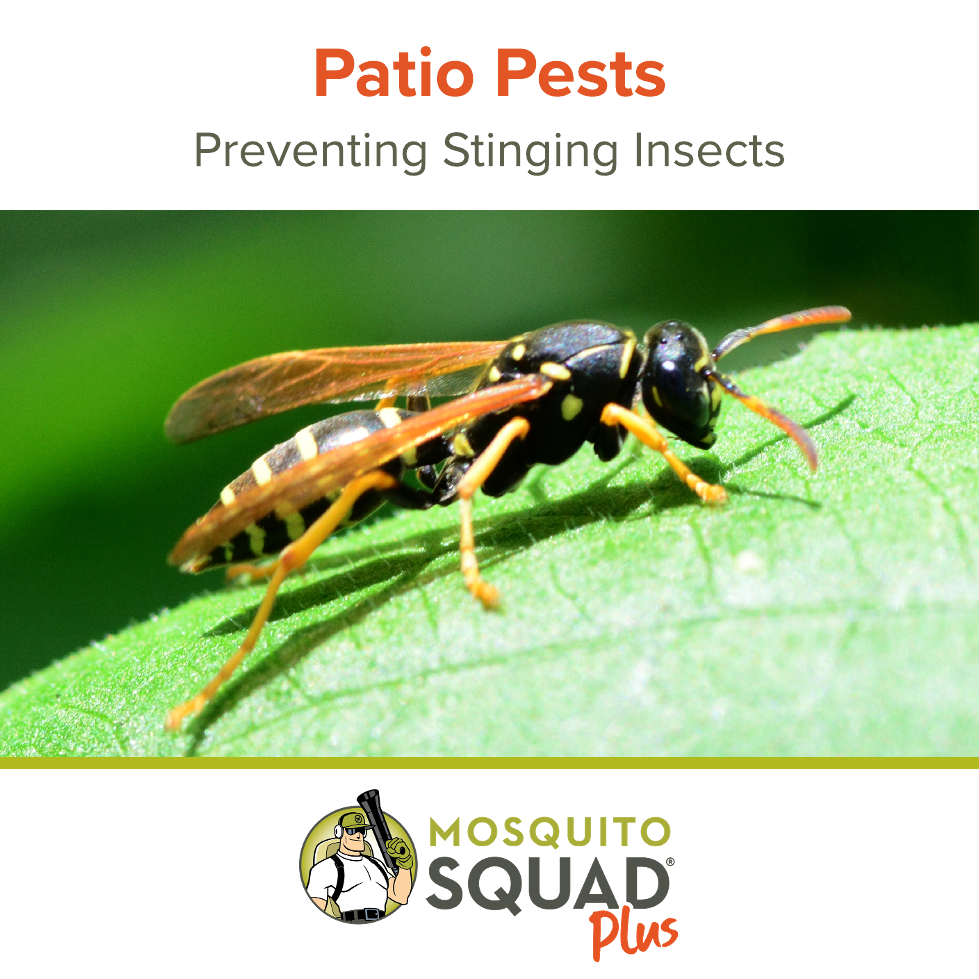
Late summer and early fall. This is when wasp and hornet nests peak around eaves and deck rails in Karns, and those are a different story from bees. Our wasps, hornets, and yellow jacket control page covers the stinging pests that build near doors and walkways, and our recent post on wasps picking a spot on Farragut garage doors to spend the winter shows what that looks like this time of year.
Pest Control That Works Around What You’ve Planted
We aren’t going to tell you every pest control visit is risk-free for every insect in your yard. No honest company can. What we can tell you is that the people who own this business keep honey bees, that our techs skip the gardens, flower beds, and hives homeowners point out, and that we pick the gentler product for the spots where pollinators are part of the picture.
For homes that want year-round coverage on the house itself, Home Shield covers the shell of the house, from the foundation line to the vents and the gaps around doors, and the Complete Home and Yard package adds full yard coverage on top of it. Neighbors in Oak Ridge deal with a lot of the same wooded-lot patterns, and our post on what the Oak Ridge greenbelt sends into backyards is worth a read if your property backs up to similar ground. Every visit is backed by our satisfaction guarantee, so if something doesn’t sit right after a treatment, we come back and make it right.
If you’re in Karns and want outdoor pest control Knoxville gardeners can live with, call us at (865) 413-7732 or request a free quote online. Tell us what’s blooming and where the hives are. We’ll take it from there.