Oakwood Puts Its Leaves in the Street. Here Is What Moves Toward the House Instead.
Posted by Mosquito Squad Plus
October 16, 2026
Reviewed by Brandon Robertson
Drive through Oakwood in late October and the streets tell you what week it is. One block has a long, low ridge of leaves sitting in the roadway gutter, raked out the night before. The next block is bare pavement because the city crew already came through. Up the driveways, the trash cans are not at the curb at all. They are around back, next to the house, right where they sit the rest of the year.
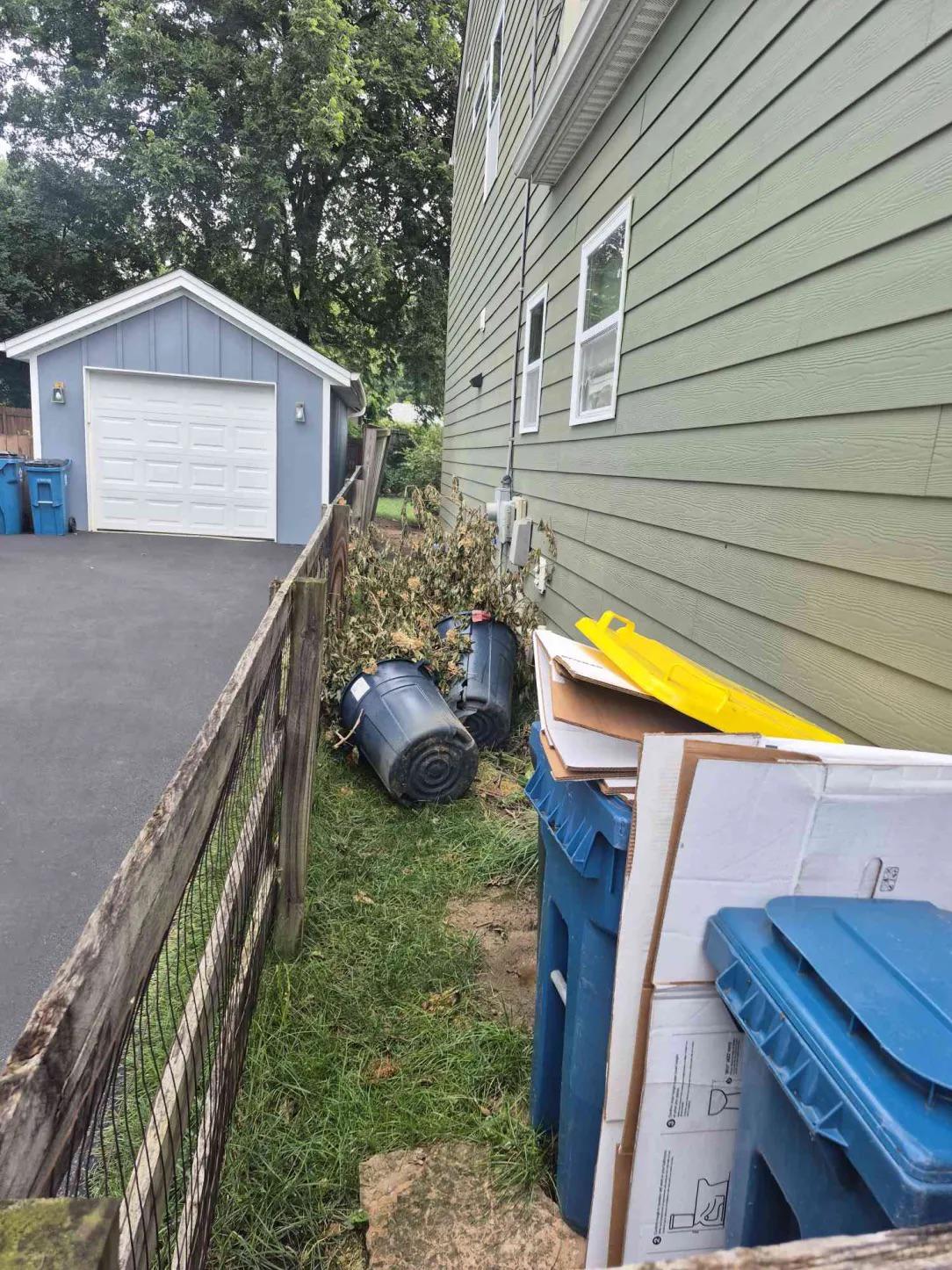
Most people don’t think twice about it. From a pest standpoint, it’s one of the more interesting setups in the Dayton area. The leaves go out on a set two-week rotation. The things that stay behind, the brush pile waiting for the monthly pickup, the leaves packed into window wells and the corner by the downspout, the cans parked against the foundation, are exactly where the last mosquitoes and the first mice of the season go looking for a place to spend the winter.
This is a post about pest control in Oakwood during the few weeks when the season flips: the stretch from the first leaf pickup to the first hard freeze, when activity that was spread across the whole yard pulls in tight against the house.
Why Pests Pull Toward the House in Oakwood This Time of Year
The first freeze lands in late October
Dayton’s normal first fall freeze is October 25, according to freeze climatology from the NWS forecast office in Wilmington, Ohio, which uses 1991 to 2020 data. It has come as early as October 13 in about one year in ten, and in nine years out of ten it is here by November 7. The same page notes that official readings come from a thermometer about five feet up, so on a typical frost night the grass can sit at 32 degrees while the official number still says 36.
That gap matters. It’s the ground-level chill that pushes insects and small rodents out of open lawn and leaf litter and toward anything that holds heat. In a yard, the warmest, most sheltered spots are almost always along the foundation, under decks and steps, around the garage door, and inside anything stacked or piled.
The leaves go to the street, but not everything goes with them
This year’s leaf collection started Monday, October 5, with the city split into 10 sections and each one picked up every two weeks. Residents put leaves directly into the roadway gutter no more than a day or two before their collection day, and the program is scheduled to run through Friday, December 18. The collected leaves become mulch the city makes available to residents again in spring.
The same rules ask people not to mix sticks, branches, grass clippings, or other yard debris in with the leaves. That’s a sensible rule for the collection equipment. It also means the limbs that come down in October storms, the shrub trimmings, and the cleanup from the back beds have to go somewhere else. Oakwood handles that with a monthly yard debris pickup and a drop-off at the Public Works Center on Shafor Boulevard that stays open around the clock. In practice, a lot of that material sits out back in a pile for a few weeks first.
A brush pile changes jobs as the season turns. In September it shades the soil and holds moisture, which is mosquito territory. By late October the top has dried out while the ground underneath stays damp and a few degrees warmer than the open lawn. That’s a dry roof over soft ground with gaps to crawl into, and it’s close to ideal shelter for a mouse.
Then there are the leaves that never make it to the gutter at all. The ones that blow into window wells. The drift that builds up behind the air conditioner, in the corner where the porch meets the house, and around the bottom of the downspout. Those pockets get missed because nobody walks there.
The trash cans live at the back door
Oakwood is a backdoor-pickup town. The city’s refuse and recycling program includes backdoor pickup of weekly household trash and recycling, so crews come to the cans instead of the cans going to the curb. That also means the cans sit close to the house all year. Food scent, a split bag, a lid that won’t quite close, all of it sits a few feet from a basement window or garage door. In summer that mostly draws flies. In fall it draws mice.
Utah State University Extension notes that house mice prefer to nest in protected areas near a food supply and heat, and its guidance for schools recommends keeping dumpsters at least 50 feet from the structure. Nobody’s moving a household trash can 50 feet from an Oakwood house, and with backdoor collection there’s no reason to. The logic still holds. Food and shelter close together are what a mouse is looking for, and the back corner of an Oakwood house often provides both within a few steps of each other.
Mice move indoors on the same calendar
University of Kentucky entomologist Mike Potter writes in his fact sheet on controlling mice that homeowners mostly notice mice in winter, after their fall migration indoors in search of warmth, food, and shelter. The same fact sheet notes that mice usually forage no more than 10 to 25 feet from their nest, and they prefer to travel along walls and edges.
Put those numbers next to an Oakwood back step. A brush pile, a can corner, and a basement window can all fall inside a 25-foot circle. A mouse that’s been living in the pile since September doesn’t have far to go when the ground gets cold, and it will follow the foundation line to find the way in.
Getting in isn’t hard. UC Agriculture and Natural Resources notes that house mice can squeeze through an opening the size of a dime, and once they settle into a building they reproduce year-round, with one female producing as many as 60 young in a year.
Mosquitoes do not all die at the freeze
The other surprise this time of year is mosquitoes. Most people assume the first frost ends the season, and for a lot of species it does. The northern house mosquito, Culex pipiens, is the exception. It’s the one that bites at dusk around houses, and Rutgers’ Center for Vector Biology describes it as a common pest mosquito in urban and suburban neighborhoods.
Rutgers explains that the last generation of females mate, fatten up on plant sugars, and shelter in culverts, basements, and other protected places that stay above freezing until spring.
An Ohio State team spent three winters collecting Culex from parks and roadside culverts around Columbus, and their published study shows how long this species hangs on. By the first week of October nearly all of the house mosquitoes they found in culverts had already shut down for the season. A small share stayed active into December and January, and the dormant ones started waking up in March. What matters for an Oakwood house is the kind of place they waited it out: sheltered, out of the wind, and above freezing. A mosquito resting on the basement wall in November is most likely one of them, and a basement with a few gaps around the window frames is just the sort of place they pick. It isn’t the only thing still moving outside, either. Adult spotted lanternflies hang on until a hard freeze, and Dayton is already inside the spotted lanternfly quarantine area.
What Oakwood Homeowners Usually Try
Most of what people do this time of year is reasonable. It just tends to stop one step short.
Raking everything to the gutter. This is the right instinct, and Oakwood makes it easy. The open lawn usually ends up clean. The window wells, the downspout corner, and the strip behind the shrubs are where the leaves stay, and those are the spots closest to the house.
Stacking limbs behind the garage until pickup day. It keeps the yard tidy from the street. It also builds a damp, sheltered pile right next to a structure for two to four weeks during the exact window when mice are choosing where to spend the winter.
Waiting for the freeze to take care of the bugs. For some pests it helps. For overwintering mosquitoes and mice, a freeze is the signal to move inside, not the end of the problem. Fall is also when stink bugs, Asian lady beetles, and boxelder bugs show up on sunny walls looking for gaps. Our posts on stink bugs versus lady beetles in Kettering and why boxelder bugs cover Dayton houses cover those two in detail.
Setting a couple of traps in the kitchen. Traps work, and the University of Kentucky fact sheet actually prefers traps over baits when only a few mice are present. The catch is placement. Because mice stay so close to their nest and run along edges, a trap in the middle of the kitchen floor often misses the route entirely. And a trap inside doesn’t do anything about how they got in.
Moving the trash cans into the garage for the season. It can make things worse, because now the food source is inside an attached structure with a door into the house.
What Actually Works
Keeping pests out of an Oakwood house this time of year comes down to two jobs done at the same time: take away the shelter close to the house, and close the gaps that lead inside. A treatment program supports both. It doesn’t replace either.
Walk the house, not just the yard
Most fall walk-throughs cover the lawn, because that’s where the leaves were. This weekend, walk the foundation instead. Start at the back door where the cans sit and work all the way around. Look for:
- Leaves packed into window wells or stuck behind the AC unit
- Wet ground or pooled water at the bottom of each downspout
- Brush piles, stacked firewood, or bagged debris within about 25 feet of the house
- Gaps around pipes, dryer vents, and utility lines where they enter the wall
- Daylight under the garage door or a side door
- Droppings, gnawed bags, or shredded paper in the garage or basement
Pull the shelter back from the foundation
Clear window wells and downspout corners by hand. If limbs have to wait for the monthly pickup, move the pile to the far side of the yard instead of stacking it against the garage, or haul it to the drop-off. Firewood should sit off the ground and away from the siding. None of it takes long, and it shrinks the area a mouse can use as a staging point.
Make the can corner less interesting
There’s no need to move the cans out of reach of the backdoor crew. Keep lids closed tight, rinse out anything that has leaked, and don’t leave bagged trash on the ground next to a can that is already full. If the cans sit directly against the foundation, sliding them out a foot or two removes the sheltered gap behind them.
The cans change how we work an Oakwood foundation, too. In a curbside town, trash day puts the cans out by the street and away from the treatment line. Here they’re parked right on it, usually next to the planters, the hose reel, and whatever else lives along the back of the house. Kevin, our lead tech, says he was taught early to treat every place like it’s his grandmother’s house. You don’t kick over her flower vase, and you don’t leave product on anything she’s about to put her hands on. On an Oakwood property, that care starts with the cans sitting along the back wall.
Close the gaps
Sealing entry points is the part that keeps working long after any visit. Kentucky’s guidance is to seal foundation cracks a quarter inch and larger, along with gaps under doors and where utility pipes come through the wall. UC ANR calls exclusion the most successful and permanent form of house mouse control.
Our Home Shield program covers this kind of seasonal pressure with recurring treatment focused on the foundation and the places pests use to get inside. If mice are already showing up, our rodent control service is the next step, and the technician will start with where the activity is actually happening. If spiders are moving indoors as it cools, spider control is available as well.
Do not drop mosquito season too early
If your mosquito barrier treatment still has a fall round left, that round matters more than people think. It knocks down adults still resting in shrubs and leaf cover before the survivors head for basements and crawl spaces. Clearing standing water still counts in October too. Rutgers lists clogged rain gutters and untended bird baths among the places Culex pipiens lays eggs, and October leaf drop is when gutters clog fastest. Our mosquito control page covers the rest.
When to Treat in Oakwood
The useful calendar here is shorter than most people expect.
Early to mid October. Leaf collection is already running, and the first freeze can come as early as the middle of the month. This is the best window to clear window wells, move brush piles, seal gaps, and get a perimeter treatment down before the cold pushes anything inside.
Late October into early November. This is the normal first-freeze stretch for Dayton. Expect the first signs of mice in garages and basements, and expect stray mosquitoes indoors. If you’re going to call, this is when a visit does the most good, because you are dealing with a handful of new arrivals instead of a settled population.
Mid November through mid December. Leaf pickups continue through December 18. Keep the foundation line clear between pickups, especially after windy days, and keep brush piles away from the house until yard debris day.
Late winter. The Ohio State study found that roughly half of the overwintering Culex pipiens had come out of dormancy by mid to late March in 2022. That makes early spring the next important moment for mosquito control.
For the summer side of Oakwood, the chigger post on the Hills and Dales park edge covers what that terrain does in June and July.
Fall Pest Control in Oakwood Starts at the Back Door
Oakwood does a lot of things well. The leaves go out on schedule, the trash gets picked up from behind the house, and last fall’s leaves come back as this spring’s mulch. None of that is a problem. It just means that this time of year, the pest pressure on an Oakwood property ends up concentrated in a few predictable places close to the house instead of spread out across the yard.
Our Dayton team services Oakwood, Kettering, Centerville, and the rest of the south Dayton suburbs from our office on East Lytle 5 Points Road, and recurring service is backed by our satisfaction guarantee. If you’re starting to see signs of mice in the garage, mosquitoes in the basement, or anything else trying to move in for the winter, call us at (937) 226-9709 or request a free quote online. More on what we do across the area is on the Mosquito Squad of Dayton homepage.