Creeks, Lakes and Back Decks: The Kettering Backyards Mosquitoes Hit Hardest
Posted by Mosquito Squad Plus
October 30, 2026
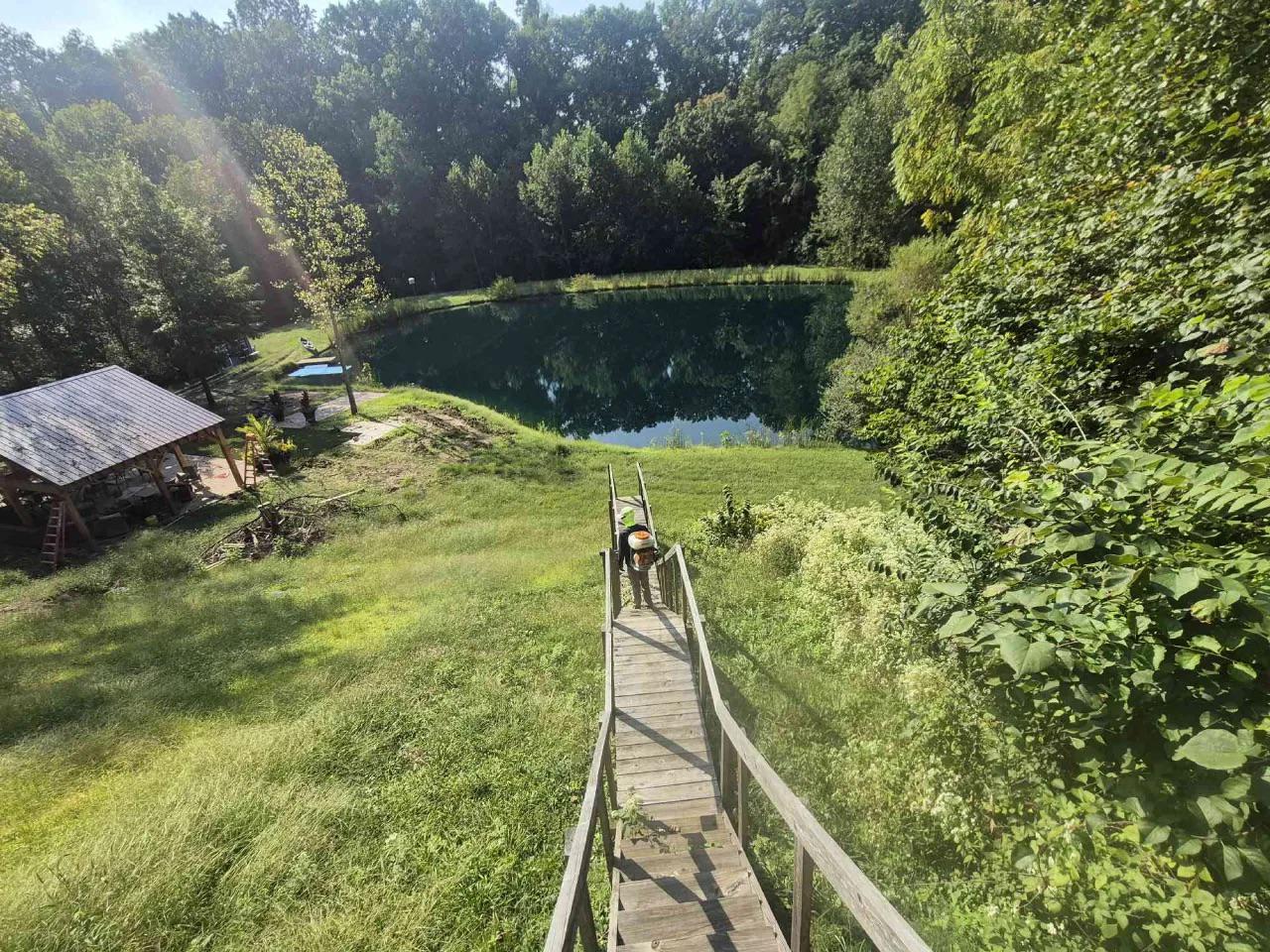
Read back through a season of account notes on one Kettering route and they start to look like a map of where the water sits. A creek runs down the left side of one house. Another house sits on a lake. A third has a back deck the tech is reminded to treat under on every visit. Line those yards up next to everything else on the route and one pattern is hard to miss: across a season of backyard mosquito treatment in Kettering, the back of the lot carried the mosquitoes and the front mostly didn’t.
That held across the Kettering accounts on this route, from 45429 over into 45419. Front yards came through the summer fairly light. Back yards didn’t. The creek yard carries an alert that the back gets hit heavy around the creek. The deck yard has a standing note to treat under the back deck. At the lake house, the waterline gets extra attention every visit. Three houses, three different reasons, and the same end of the yard every time.
Ohio’s mosquitoes are winding down for the year, so this is a look back: why your back yard behaved the way it did, what the tech who runs this Kettering route picked up about each yard over the summer, and what’s worth writing down before spring.
Why the Back of a Kettering Lot Carries the Load
We’ve already covered what Kettering’s trees and old streets do to mosquito pressure across the whole city: the canopy, the postwar drainage, the catch basins no homeowner can empty. That explains why Kettering has mosquitoes in the first place. It doesn’t explain why your back yard was miserable in August while the one over the fence was fine.
That part comes down to where water and shade sit on a single lot, and where they overlap.
Adult mosquitoes spend most of their lives resting rather than biting. Ohio State’s Northern house mosquito fact sheet says the species gets more active in the twilight hours and prefers to rest in shady habitat during the day. Purdue Extension describes tall grass and shrubs as protected resting sites for adult mosquitoes during the day. And the CDC’s guidance on outdoor spraying gets specific about where to look: sheds, children’s playhouses, and the space under decks, furniture and playground equipment, the cool, dark, humid corners of a yard.
Now picture the outside of most Kettering houses. The front is the open side: mowed grass, a driveway, a foundation bed that bakes in the afternoon. The back is where the deck went in, where the shed sits, where the shrubs were allowed to fill in toward the property line, and, on some lots, where a creek or a lake edge happens to run. In other words, the back yard holds most of the resting habitat on the property.
Researchers in Florida who collected resting Asian tiger mosquitoes from residential landscaping found them resting on specific landscape plants, and suggested that targeting that vegetation could be a useful way to control them. It’s a different mosquito in a different state, but it lines up with what the route shows here. Pressure collects in a handful of places on a lot, and in Kettering those places are almost always out back.
The Creek Yard
The clearest case on the route this year was a lot with a creek running beside the house. The tech who runs this Kettering route put it in one line: “She has the creek on the left side of her house with vegetation all the way to the back.”
That’s most of the diagnosis right there. Culex mosquitoes favor still water over a moving current, so the creek channel alone doesn’t explain much. The trouble is everything around it: little pockets that go still after a dry week, growth hanging over the bank, soil that stays damp and shaded from spring into fall. Run a strip of vegetation unbroken from the side of the house to the back fence and the lot now has a long, shady lane of resting cover down one whole side.
The account alert on that property is blunt: the back yard gets hit heavy around the creek. Not the front, and not the whole yard. So that’s where the time goes on every visit: the bank growth, the shaded strip beside the house, the back corner where it all thickens. The rest of the yard still gets treated. It just doesn’t need the same attention.
It fits the bigger Kettering picture, too. This isn’t a river town, and most of what drives mosquito control in Kettering starts inside the neighborhoods rather than in some big watershed. A creek beside one house is the same thing in miniature. The water’s local, the shade’s local, and the mosquitoes coming off that bank are biting the family who lives beside it.
The Lake Yard
Another account on the route sits on a lake. The applicator notes keep it simple: the home is on the water, the mosquitoes are bad, and the waterline gets extra attention every visit.
OSU Extension notes that Northern house mosquitoes lay their eggs in rafts of roughly 150, glued together and floating on the water’s surface. Our own read from the route is that a raft does best where the water sits still and sheltered, which is why the edges of a lake matter more than the middle: the vegetated margin out of the wind, the little coves, the band of taller growth some lake owners leave on purpose to hold the bank. That same edge gives the adults somewhere to rest a short flight from where they hatched.
Nobody’s going to treat a lake, and nobody should want to. The part in your control is the shoreline vegetation and the shaded planting between the water and the house, which is where adults wait out the day before they find the people on the patio. A lake lot will probably always run heavier than a lot a few streets inland. The goal is to make that strip between the water and your back door a much worse place to wait.
The Deck Yard
The third pattern catches people off guard because there’s no creek and no lake anywhere near it. The note on the account just asks the tech to make sure the underside of the back deck gets treated, because that’s where the mosquitoes are bad.
Crouch down and look under your own deck and it makes sense. It’s shaded all day. Air barely moves. The ground holds moisture after a rain long after the open lawn has dried, and leaves blow in and pile up against the lattice and around the footings. It’s the kind of cool, dark, humid resting spot CDC guidance points to for treatment, and it sits a few steps from where your family eats dinner.
That deck yard stayed on the barrier schedule into late October, and the back stayed the focus the whole way. One small moment from July says a lot about how the route runs: the owner had camping gear drying out back one day and asked the tech to do the front and hold off on the back, so the back went on the schedule for later that week instead of getting skipped.
Leaf Litter on the Shed Roof
On one visit, the tech who runs this Kettering route blew the leaves off a back porch. Afterward he noticed something else on the same property: “a bunch of leaves on the roof of her little plastic gray shed in the back, but none on the ground around it.” He’d cleared the ground and forgotten the roof.
He noted it himself, and it’s a small thing. It’s also the kind of thing you only catch when you know a yard. A wet mat of leaves on a shed roof in a back corner is one more patch of cool, damp cover, the same kind of spot as a shaded creek bank or the ground under a deck. Our post on what Oakwood’s fall leaves push toward the house gets into the leaf side of this in detail. Gutters on the house collect debris the same way, and University of Kentucky entomologists call clogged rain gutters one of the most overlooked mosquito breeding sites around a home.
That’s how a yard gets better over a season: a running list of small fixes, kept by someone who has seen the same yard every few weeks since spring.
What Kettering Homeowners Usually Try
Most people with a rough back yard do the sensible things. Dump the bird bath, flip the kiddie pool, clean the gutters, light a citronella candle on the deck. Some grab a hose-end spray at the hardware store and soak the lawn.
The water cleanup is worth every minute, and extension programs consistently put it first. UConn’s integrated pest management guide adds the other half: keep the lawn and shrubbery trimmed short so adults have fewer places to rest. Both help. Neither goes far enough on a creek lot or a lake lot, because the biggest sources there aren’t buckets anyone can tip over, and the cover along a bank isn’t something you can mow flat.
Soaking the open lawn mostly misses, too, because sunny turf is where adults spend the least time. The shaded strip along the creek, the lake edge and the ground under the deck are where they sit. For daytime biters that breed in small containers, our Dayton post on striped mosquitoes and ankle bites is the better guide. For where store-bought products come up short, see what to do when bug spray isn’t enough. And for the general question of why one property draws more mosquitoes than another, our earlier piece on why a yard can attract more mosquitoes than the neighbor’s covers the basics. This post is the Kettering version, told from the route.
What Actually Works in a Kettering Back Yard
Good backyard mosquito treatment in Kettering starts with a walk around the lot before anything gets sprayed. On this route, that comes down to four habits.
- Treat where they rest. Creek bank growth, the lake edge, shrub lines along the back fence, the underside of decks, the shaded side of sheds and playsets. Our Mosquito Barrier Treatment focuses on those zones and comes back on a schedule, so the mosquitoes resting there don’t get a long stretch to build back up.
- Give the water and shade zones extra attention. More time and care where the pressure actually is (the creek side, the waterline, under the deck) instead of the same pass everywhere.
- Keep notes. What the tech learns on the first visit shapes the sixth.
- Clear what can be cleared. Leaves off porches, decks and shed roofs. Gutters cleaned out. Containers emptied. Our post on supporting your mosquito treatment lays out the homeowner side.
Ask the tech who runs this Kettering route how he keeps all of it straight and you get a short answer: “It’s never a different person, it’s always me.”
That continuity is worth more than it sounds. The first visit to any yard is a learning visit. He’s figuring out where the water is, where the shade holds, which corner the family actually uses, where the dog runs. By the fifth or sixth visit he isn’t rediscovering the creek on the left side of the house. He knows how far back the vegetation goes and which corner builds up first, and that shapes every minute he spends on the property.
To be clear, that’s how this particular route runs, and routes and schedules change, so it isn’t a promise that every customer sees the same face at every visit. What carries across every account is the appointment notes. If you want the tech to focus on a creek bank, the underside of a deck, or a garden bed you’d rather we skip, text or call the office and it goes into the notes for your visit. That way what the tech learns lives on your account, not just in one person’s head.
One Dayton-area customer who first had service with us twelve years ago tried other companies along the way and eventually came back. Long relationships like that are a big part of why we keep such close notes on every yard.
Some families would rather go plant-based. One Kettering household with a dog and a toddler asked for exactly that and is on our Natural Treatment Option, which lasts up to 14 days per treatment. And because a wooded back edge or creek bank that holds mosquitoes often holds ticks in the same ground, our Springboro post on the back fence line where tick season starts is worth a read if your lot backs up to the woods.
When to Treat a Kettering Back Yard
Not now. Mosquito activity in Ohio drops off once a hard frost comes through, and Public Health of Dayton and Montgomery County runs its own mosquito trapping from early May until the first frost. November is for taking stock while the summer is still fresh in your mind.
If your back yard was the problem this year, answer three questions while you still remember:
- Where did you stop going? The corner your family quietly gave up on is usually the corner with the most resting cover.
- What out back holds water or shade? A creek bank, a lake edge, a deck, a shed, a leaf pile that never got picked up.
- What changed this year? New landscaping, a new deck, a fence that cut off the breeze, a low spot that started holding water after storms. Our post on what a week of rain does to mosquito season in the Miami Valley explains why those low spots matter after a wet stretch.
Write it down, then text or call it in to the office over the winter. That way it’s already in your account notes when the first backyard mosquito treatment of the spring goes on, and the tech starts in the right corner instead of finding it on visit three. The start date itself depends on how fast Kettering warms up, and our post on Kettering’s trees and old streets walks through that timing.
If you’re in neighboring Oakwood or West Carrollton, the same walk-the-lot approach applies. And when the water is a full river corridor instead of a creek beside one house, our Bellbrook post on the Little Miami shows how much that changes.
The Back of the Lot Is Where the Work Is
Most Kettering yards that struggle with mosquitoes aren’t struggling everywhere. The trouble sits out back, around one creek, one lake edge, one deck, one shady corner, which narrows the work to a few spots you can name.
Every visit runs on the 7 T’s of Mosquito Control and is backed by our satisfaction guarantee. If your back yard is the one that kept you inside this summer, call us at (937) 226-9709 or request a free quote. We’ll go over the lot with you, note where the water and the shade sit, and have a plan ready before next season starts. You can also read what Dayton-area customers say on our reviews page.