The Mosquitoes in West Chester Feed on Voice of America's Birds First
Posted by Mosquito Squad Plus
July 27, 2026
The backyard biting in West Chester rarely starts at the fence line. It starts about a half mile off, in a 435-acre stretch of grassland and open water that most of the township drives past on the way to Union Centre without thinking of it as anything but a park. Voice of America MetroPark sits in the middle of the most populous township in Ohio, ringed by rooftops and retail, and the mosquitoes that find their way onto a Beckett Ridge patio or a Wetherington cul-de-sac in August have usually spent the earlier part of the summer feeding on something with feathers. The order of that matters, and it is the reason mosquito control in West Chester reads differently than it does in the creek-bottom neighborhoods to the south.
We have treated yards on every side of that park for years. The pattern is consistent enough that we plan around it. What follows is the mechanism, sourced where it can be, and what it means for the way a West Chester property should be protected from spring through the first hard cold.
The Island in the Middle of the Township
The history behind that park is unusual, and it shapes the habitat. The land was a federal radio site, the Voice of America Bethany Relay Station, closed off to the public for roughly fifty years and finally decommissioned in the mid-1990s. When the towers came down, the parcels split into the shopping center, the Miami University branch, and the park. MetroParks of Butler County kept the largest northern piece as grassland and open meadow, and Audubon Ohio designated much of that acreage an Important Bird Area.
The Important Bird Area designation is the part that shapes the mosquito season. This is not a mowed neighborhood green space with a walking loop. Between the nine miles of trails, the lake, the Lodge, the athletic complex, and Wiggly Field dog park, the Voice of America Important Bird Area holds a mosaic of cool-season grassland, a small wooded wetland, a thirty-five-acre lake on the north edge, and an enhanced pond and wetland near the south boundary, tucked behind the earthen berm that screens the Target shopping plaza. Grassland breeders that are hard to find anywhere else in the county nest here through the summer: bobolinks, Henslow's sparrows, savannah sparrows, eastern meadowlarks. The place stays thick with birds through the season, a few hundred yards from subdivisions that went up as the township grew past sixty-five thousand people.
MetroParks describes it as one of the busiest parks in the Greater Cincinnati area, an island of habitat surrounded on every side by retail, restaurants, hotels, hospitals, and homes. The mix is the setting to hold in mind. The southwest wetland, the one behind the shopping-center berm, has no trails through it, and the birders who work that corner are warned to expect water, mud, and bugs. When the people who study the place for its birds tell you to prepare for mosquitoes on the way in, they are describing the same edge that the nearest backyards share.
An island of bird habitat wrapped in dense housing is a specific kind of setting. Without anyone intending it, the arrangement sits close to a textbook version of how West Nile virus builds in a community before a single person gets bitten.
Why the Birds Come First
The mosquito doing the work here is Culex, the northern house mosquito, and what it eats in early summer is the reason people get sick in late summer. Culex pipiens is not the aggressive daytime biter people picture. It feeds at dusk and dawn, and through the early and middle stretch of summer it feeds overwhelmingly on birds. Blood-meal studies from the eastern United States have found that the northern house mosquito feeds on birds in the great majority of cases through the early season, with American robins fed on far out of proportion to how common they are.
Robins are not rare grassland specialists. They are the thick, ordinary birds of exactly this park-and-subdivision mosaic, abundant along the wooded edges and lawns that ring Voice of America. When Culex feeds on an infected robin, then on another bird, and another, the virus amplifies quietly inside the bird population. The CDC surveillance guidance describes this as the enzootic cycle, the bird-to-bird loop that runs all summer in the background. No people are involved yet. The virus is only building, and a 435-acre bird sanctuary in the middle of the township is a good place for it to build.
Butler County's public health system is organized around this fact. The Butler County General Health District asks residents to report dead crows and jays specifically, because those birds turning up dead is one of the earliest visible signs that the virus is active in a local bird population. The state says the same thing: the Ohio Department of Health notes that dead birds can signal West Nile circulating between birds and mosquitoes in an area, which is the amplification cycle seen from the surveillance side.
The August Switch
A West Chester summer turns late, when the feeding behavior of these mosquitoes shifts, and the shift is what puts people at risk. Research on West Nile epidemics in the northern United States found that Culex mosquitoes switch from birds to mammals in late summer, a change that lines up with the dispersal of robins and with the annual rise in human infections. That pattern is best documented in the mid-Atlantic and has not replicated everywhere researchers have looked for it, but it remains the leading explanation for why human cases cluster late in the season. The birds move on. The mosquitoes, still carrying whatever they picked up over months of feeding in the bird population, turn to the warm-blooded hosts still standing in the yard, which by then means the people and the dog living next to the park.
Most people budget for this backward. The nuisance biting climbs in June and feels like the entire problem. The disease risk tends to peak later, in the back half of summer and into early fall, right when families assume the worst is behind them and start skipping treatments. The mosquitoes are no thicker on the ground in September than in June. What changes is the odds that any given one is carrying the virus, because by then a share of the population has fed on an amplifying bird population for months and turned its attention to people.
Ohio mosquitoes can carry West Nile, along with Eastern equine encephalitis and St. Louis encephalitis, and most summers the state confirms the virus in trapped mosquito pools across the southwest counties. Positive pools have turned up in Butler County and in neighboring Hamilton and Clermont. Most people bitten by an infected mosquito never feel it, but a small share develop serious neurologic illness, which is what makes the late-season exposure worth taking seriously. The virus is a normal feature of the season here rather than a rare event, and the timing of the risk is the part homeowners near the park should plan around.
What West Chester Homeowners Try First
Most people in the neighborhoods around Voice of America start with the county's help, which is reasonable. The Butler County General Health District hands out free mosquito dunks, the small donut-shaped larvicide tablets you drop into standing water. Each one stays effective for about a month and treats up to a hundred square feet, and the district keeps a longer-lasting 120-day version for its own crews to place on the bigger standing water it treats directly. The dunks do their job in a rain barrel, a clogged gutter, or the low spot that holds water behind the garage. The district also traps mosquitoes and sends them to the Ohio Department of Health to be tested, which is how those positive pools get confirmed in the first place.
What the dunks cannot do is cover the sources you never find. The health district says as much when it goes out to educate residents, because a lot of people have no idea where the standing water on their own property sits. A dunk in the rain barrel does nothing about the catch basins along the street, the corrugated drain extensions half buried in mulch, or the shaded brush line where adult Culex rest during the day. The county surveys, traps, and treats public standing water, but it does not spray or treat private yards, and its whole model is surveillance and source reduction rather than protecting one family's patio through the biting hours.
So people move on to the hardware store. They buy the foggers, the citronella, the clip-on repellents, the yellow bulbs. Some of it helps for an evening. None of it touches the way DIY mosquito control fails over a full season, which is that it treats symptoms on the night you happen to be outside and ignores where the mosquitoes breed and rest the other twenty-nine days of the month.
What Holds a Yard Through the Season
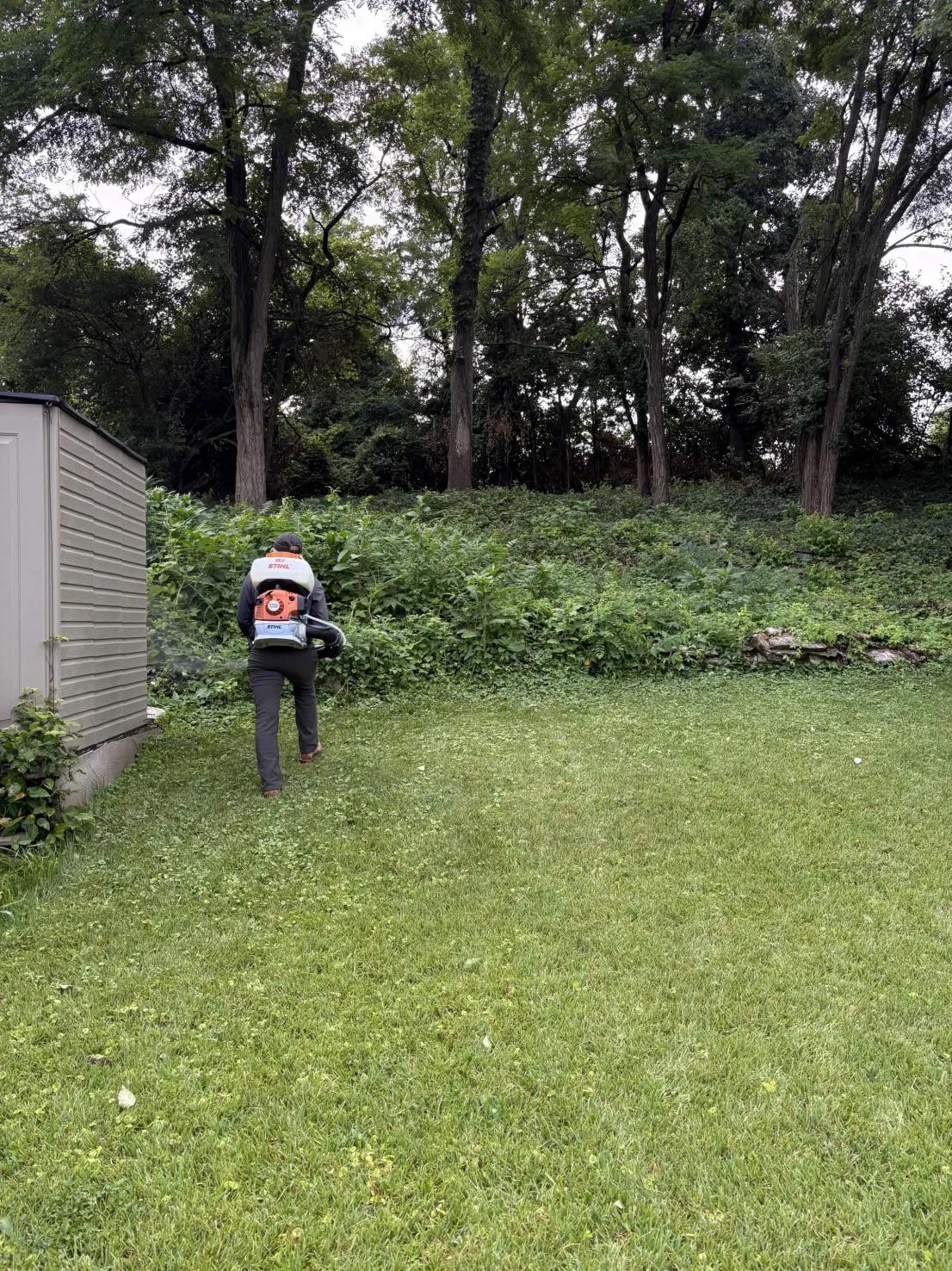
The approach that works around this park is not exotic. The same barrier logic that works anywhere Culex is the problem does the job here too, run on the right schedule. Our mosquito barrier treatment coats the surfaces where adult mosquitoes rest during the day, the undersides of leaves, the shaded shrub lines, the fence bases, and knocks down the population that would otherwise cycle back into the yard every dusk. It runs on a roughly three-week interval through the season, which is not arbitrary. The interval matches how long the treatment stays effective and how quickly a new generation of adults would otherwise refill the space.
Before that, the work is source reduction, and this is where a West Chester property either sets itself up well or fights the whole summer. The method we follow is built around the seven Ts of mosquito control, a plain checklist: tip out standing water, toss the debris that holds it, remove tarps and containers, treat the water that cannot be drained, and so on. On a property near the park, the tarp over the boat, the kids' sandbox cover, and the corrugated downspout extension are worth more attention than most people give them, since Culex will breed in an ounce of stagnant water that a homeowner walks past without a glance.
For families who host through the late summer, when the disease risk is climbing, the timing of a gathering matters. A special event spray before a September graduation party or a fall wedding is a different tool than a standing barrier, aimed at knocking the population down hard for a specific evening.
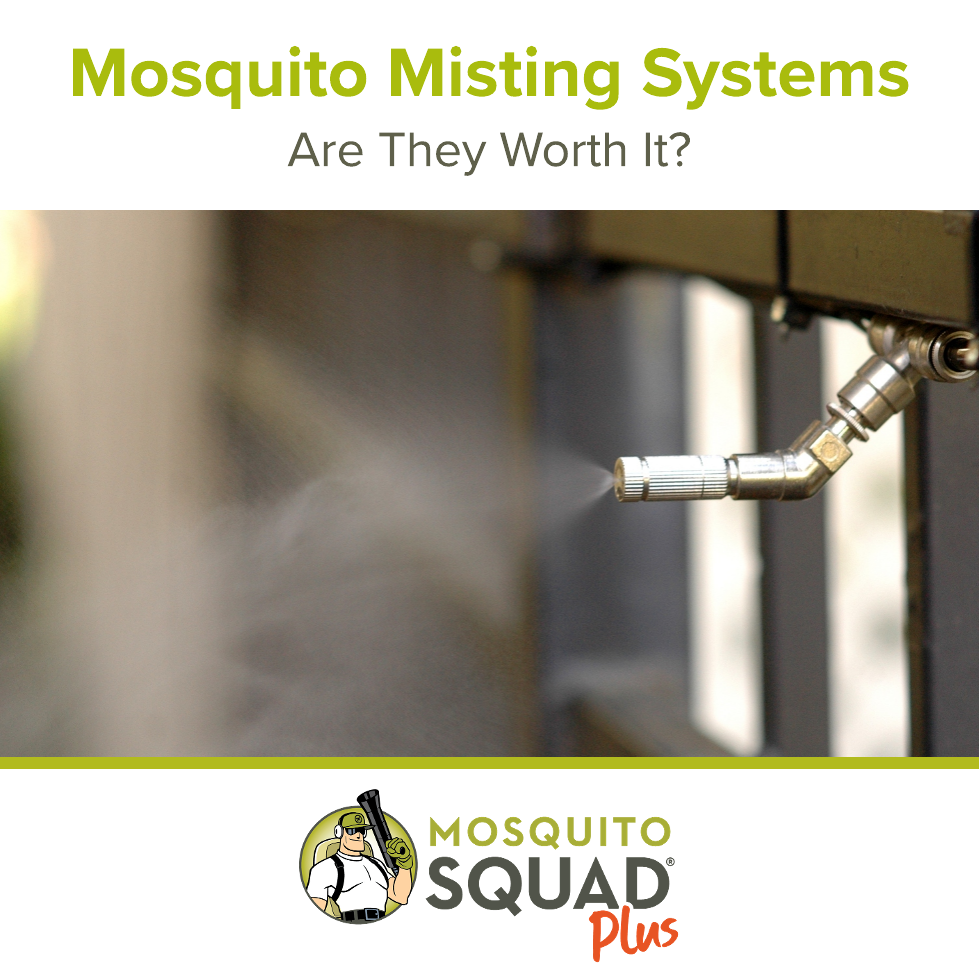
Households that want to lean lighter on the standard product have a natural mosquito treatment option that works on a shorter interval. Properties that back directly onto the wettest edges near the wetland sometimes make the case for an automatic misting system that treats on a set schedule without anyone thinking about it. None of these is a silver bullet alone. What holds a yard is the combination, run consistently, adjusted for the fact that this particular neighborhood sits next to a bird sanctuary.
When to Treat, and Why June Is Not Enough
If there is one habit worth changing near Voice of America, it is the calendar. The instinct is to start when the biting gets annoying and quit when it eases, which usually means running from late spring to the end of August. The schedule leaves the yard exposed during the exact stretch when the switch happens and human West Nile risk runs highest.
Culex overwinters as mated females tucked into sheltered spots, sheds, crawl spaces, storm drains, then gets going as the weather warms, which is why serious protection in this region is a spring-through-fall commitment rather than a July reaction. Neighborhoods elsewhere in the metro make the same point from a different angle. Down in Hyde Park, mosquito control starts before summer because the overwintering females are the seed of the season. Up in Blue Ash, the same logic makes pest control an April conversation rather than a midsummer scramble.
West Chester's version of that lesson runs the other way on the calendar. The early start matters, and so does refusing to stop in August, because the back end of the season is when the birds hand the problem to people. A yard a short walk from an amplifying bird population is carrying a different kind of exposure in September than a yard across town, and the calendar is the cheapest lever a homeowner has on it. The properties that stay comfortable near the park get treated on a schedule that brackets the whole thing, spring through the first reliable cold, rather than chasing the population after it is already thick.
How This Fits the Rest of the Cincinnati Map
West Chester is its own case, and the contrasts with its neighbors sharpen the point. Nearby Fairfield's mosquito season runs on engineered stormwater ponds doing the breeding. Day Heights has no river or creek at all, so every source there is something a homeowner left out. The surge that hits after a week of Cincinnati rain fills every low spot at once and then fades. West Chester's problem is none of those. It is the bird habitat in the middle of the township and the amplification cycle that runs there all summer.
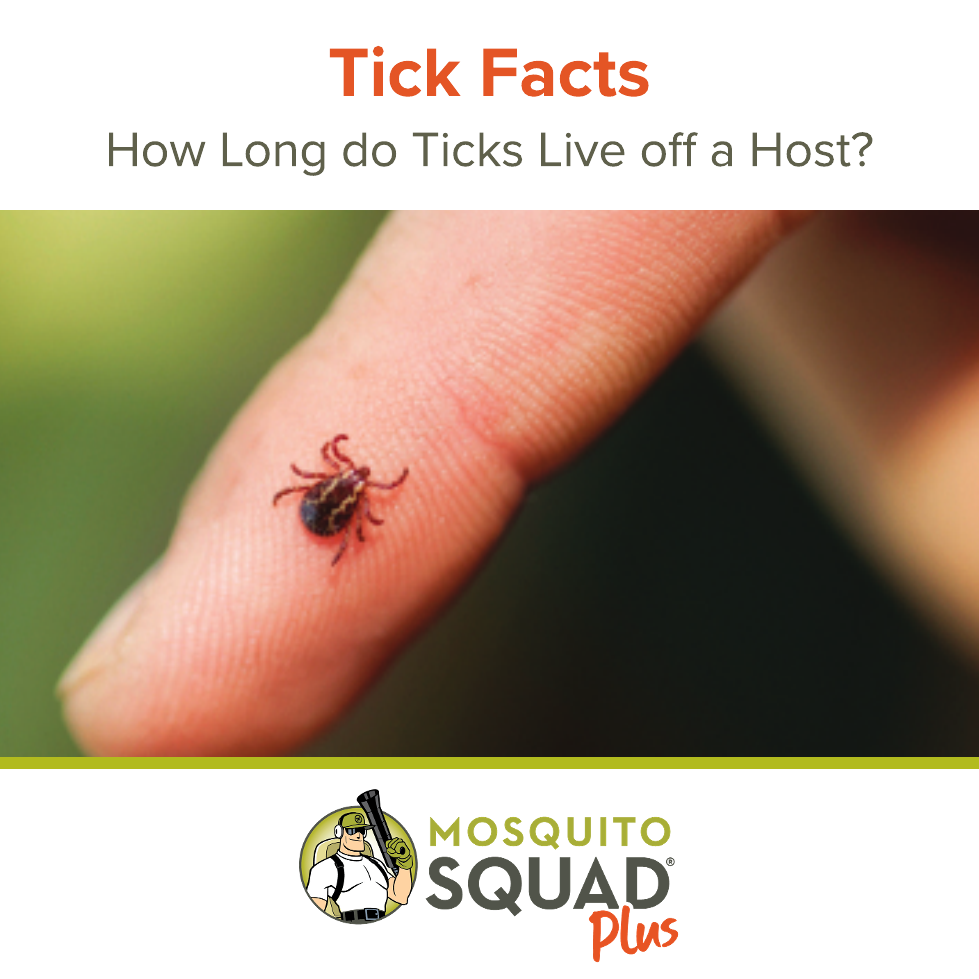
That difference is why the mosquito control plan around the park leans so hard on timing and consistency rather than on chasing breeding volume. The same park mosaic also holds ticks along its wooded and brushy edges, so a property that spends time on the trails has a tick control question sitting right next to the mosquito one, and the chigger pressure that shows up in nearby Wetherington yards is another edge-habitat problem from the same landscape. Homeowners who want the wider view can look at the rundown of mosquito-borne diseases to watch this year, which tracks West Nile and the rest across the country.
The Case for Treating Where the Birds Are
West Chester built a large, thriving bird sanctuary into the center of its most crowded corner, and that decision, good as it is for the township, changed the shape of the mosquito season for the homes around it. The biting you notice in June is the front end. The risk that matters climbs later, once the mosquitoes that spent the summer in the bird population turn toward the people who live next door to it.
That is no reason to fear the park. The takeaway is to treat a yard near it on the right schedule, with the sources reduced, the barrier held through the season, and the late summer taken as seriously as the early one. We have handled pest control across West Chester and the surrounding Cincinnati-area communities long enough to know how the season runs here, and the work is backed by the Mosquito Squad guarantee. If you live near Voice of America and want the yard covered through the whole cycle, you can get a free quote or call our Cincinnati team at (513) 666-5354