What the Week After a Cincinnati Storm Does to Your Mosquito Season.
Posted by Mosquito Squad Plus
May 28, 2026
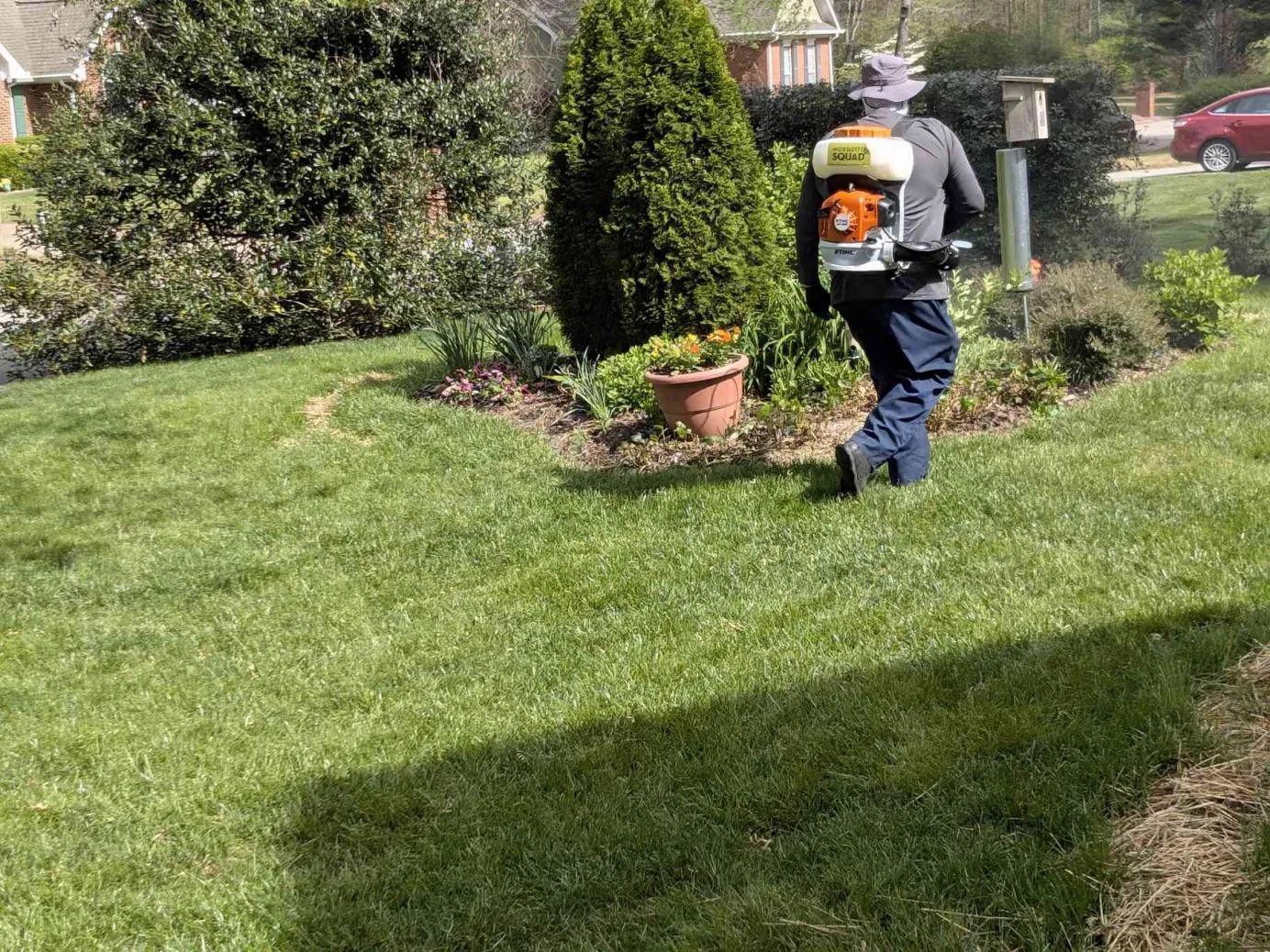
Somebody will bring up the humidity before the week is out. They always do. A neighbor, a coworker, someone in line at Kroger who just needs to say it out loud: can you believe this. And yes. You can believe it. You have lived in the Ohio River Valley long enough to know that summer here is not a season so much as a sustained atmospheric condition, and complaining about the humidity in Cincinnati is a little like complaining that the Ohio River is wet. It just is. It has always been. The glaciers that carved this basin left behind a valley that holds heat and moisture the way a bowl holds water, and every summer since, the air has done exactly what the air does here.
What most people do not think about, in that moment between the storm clearing and the first truly beautiful evening of the week, is what is happening in the low corner of the backyard while they are standing on the porch congratulating themselves on surviving another round of severe weather. But the mosquitoes are thinking about it.
Greater Cincinnati just came through a stretch that put a flood watch over Hamilton County, sent the Mill Creek up through its watershed, pushed the Ohio River toward action stage, and left standing water in residential yards across Butler and Warren and Clermont Counties that is not going anywhere fast. The sky has cleared. The roads are passable. And in the plant saucer, in the gutter above the garage, in the soft low spot along the back fence that you keep meaning to regrade, the water is still there. Quiet. Warm. Exactly the right depth for what comes next.
The storm is over. Mosquito season just reset.
How the Ohio Valley Turns Spring Rain Into a Mosquito Problem
Cincinnati's terrain looks like it should drain well. The city sits in hills. Water runs downhill. That part is true, and if you have watched your street clear out fast after a hard rain, you already know it. What the hills do not tell you is where the water goes when it gets to the bottom.
It goes into the Mill Creek. It goes into the Little Miami. It goes into the low corners of residential lots all over Hamilton County, into the settled depressions in older yards, into the combined sewer system that has served this city since long before the suburbs existed and that begins to overflow when rainfall intensity exceeds what the pipes were built to handle. The Mill Creek drains 166 square miles through 37 jurisdictions before it reaches the Ohio River, and more than 450,000 people live in that watershed. When a significant storm moves through, that creek does not flush clean and move on. The impervious surfaces upstream, all the rooftops and parking lots and roadways that do not absorb anything, accelerate runoff into a corridor that was already working at capacity. The water arrives faster than it can leave. The Army Corps of Engineers built a barrier dam in 1948 specifically to keep the Ohio River from pushing back up into the Mill Creek Valley when both systems are high at the same time.
All of that is what happens at the dramatic end of the scale. What happens in a normal Hamilton County spring storm, the kind that earns a flash flood watch and two inches of localized rain and makes the news for a day and a half, is quieter. The creek recedes. The roads clear. And the yard holds water in the places it always holds water, for longer than it looks like it should, because the ground underneath is already saturated and has nowhere to send it. That residual moisture is where mosquito season gets rebuilt from scratch, every single time it rains.
The Timing That Most Cincinnati Homeowners Miss
The mosquito lifecycle from egg to biting adult runs seven to fourteen days in standing water. In late May in Cincinnati, when daytime temperatures are climbing into the seventies and the humidity is already doing what it does here, the lower end of that range is more accurate. Eight days. Maybe ten. The clock starts when the rain stops and the water settles.
This is the same window when most people are cleaning up storm debris, getting back to their routines, and making plans for the coming weekend. The yard looks fine. The dramatic part is over. Nobody is thinking about mosquito control because nobody has been bitten yet.
That is precisely the problem. By the time the biting starts, the population that caused it has already been through most of its development cycle. The adults you encounter on a Thursday evening came from eggs laid in your yard the previous week. They are not an early warning. They are the result.
Hamilton County Public Health runs formal mosquito surveillance specifically because the county's mosquito pressure is consistent enough and consequential enough to warrant it. In 2025, they confirmed West Nile-positive mosquito pools in Wyoming in early July, in Anderson Township in late July, and in Green Township in early August, before confirming Hamilton County's first human West Nile case of the year in Sycamore Township in September. West Nile has been documented in Ohio since 2001. It’s not a worst-case scenario that requires unusual conditions. It’s a recurring presence in Hamilton County, in ordinary neighborhoods, in the kind of summer that follows the kind of spring Cincinnati just had. The mosquitoes biting you on your back porch in August came from somewhere. They came from May.
What the Water Leaves Behind in Cincinnati's Neighborhoods
The flooding that prompted Hamilton County to declare a state of emergency in April 2025 after multiple rounds of excessive rainfall is the high-profile version of what this valley does during a wet spring. But the version that produces the most mosquitoes is not the one that makes the news. It is the one that happens at the scale of a single yard.
In Indian Hill, where lots run large and wooded and back up against the Little Miami corridor, the ground stays wet for days after a storm because the tree canopy blocks the sun that would otherwise drive evaporation. A low depression in a shaded backyard holds water well into the following week. Nobody notices it. There is no flood report. There is just a spot that is slightly soft when you walk across it, and that spot is producing a generation of mosquitoes.
In Madeira and Deer Park, you are dealing with housing stock from the forties and fifties on lots that have shifted and settled over eighty years. Patios that have tilted slightly away from the house. Downspout extensions that were installed to drain away from the foundation and now direct water toward a low spot that sits in the shade of a large shrub. Gutters that hold a half inch of standing water for a week because the gutter itself is not level and nobody has been up there to check. These are not failing properties. They are just old enough to have quirks, and those quirks become breeding sites after every significant rain.
In Symmes Township and Mason, the newer construction brings its own version of the problem. Retention ponds are a standard feature of large-scale residential development in Hamilton and Warren Counties, and they function as designed under normal conditions. After a storm that pushes them to capacity, the grassy margins where water overtopped and slowly receded become breeding zones, semi-shaded and slow to dry, with the organic content that Culex pipiens, the primary West Nile vector in this region, prefers for egg-laying.
West Chester, Loveland, Blue Ash, Sharonville: all of these communities sit inside or immediately adjacent to the Mill Creek watershed. When that corridor is saturated and draining slowly, the residential lots on either side of it feel the effects for a week or more. The canopy in Blue Ash's older neighborhoods keeps humidity elevated and slows the drying that would otherwise interrupt the breeding cycle. Loveland's trail system along the Little Miami is beautiful and heavily used, and in the week after a major storm it is also a very active mosquito corridor. None of this is unique to any one neighborhood. It is what Hamilton County looks like in May, after rain.
What Homeowners Try and Why It Usually Does Not Solve It
The first move is almost always DEET. Apply it before going outside, tolerate the smell, go back inside when the mosquitoes get bad enough. This prevents individual bites in the moment, and that is genuinely useful. It does nothing about the population producing those mosquitoes, which will be in your yard again tomorrow evening, and the evening after that, on a ten-day breeding cycle that continues uninterrupted regardless of what you spray on your arms.
Citronella is the second move. Candles, torches, tabletop diffusers. There is a narrow set of conditions under which these provide modest relief: no wind, very still air, within about six feet of the flame. In a normal Cincinnati summer evening, with the humidity sitting at sixty-eight percent and the kind of air that feels like it weighs something, the citronella cloud dissipates before it reaches the edge of the patio. The mosquitoes do not notice.
The third move is deciding the yard is just like this and that is that. Some homeowners genuinely believe their property has a mosquito problem that cannot be solved, that they are simply the kind of person who gets bitten and there is nothing to be done about it. This is rarely true. It usually means there are one or two breeding sites on or adjacent to the property that have not been identified or eliminated, and that the adult population rebuilding from those sites every ten days has been accepted as a fixed feature of summer rather than an addressable problem.
Ohio State University Extension documents the relationship between standing water, warm temperatures, and mosquito population development in Ohio specifically. Source reduction, eliminating or treating the water where breeding occurs, is the foundational intervention. The challenge in a yard with settled grade, mature plantings, and old gutters is that the breeding sites are not always obvious, and homeowners systematically underestimate how many there are and how small they need to be. A bottle cap holds enough water to produce mosquitoes. The fold in a tarp. The wheel well of a wheelbarrow that has not moved since last fall. The research is clear that distributed small-volume breeding across a residential lot can sustain a mosquito population just as effectively as a single obvious pond.
How Barrier Treatment Addresses What Source Reduction Alone Cannot
Mosquitoes do not hover in open air waiting to bite you. They rest. During the day they sit in shaded vegetation, in ornamental plantings, under decks, on the shaded sides of hedges, in any spot that stays cool and protected from direct sun. They come out to feed during the crepuscular window, the hour bracketing dusk, and again in the early morning, and then they return to those resting sites. A properly applied mosquito barrier treatment works by reaching those resting zones and eliminating the adults that are present there, while the residual that remains on the treated vegetation knocks down the next wave as it emerges.
The timing relative to a storm matters more than most people realize. If your property is on a regular treatment schedule, the storm hits into an existing treated zone, and the next scheduled application follows before the new population fully matures. If there is no treatment in place, the ideal window is that seven-to-ten-day stretch after the storm when the new breeding generation is still developing and the emerging adults have not yet laid eggs of their own. Getting treatment in place during that window interrupts the cycle at a point where it can actually be interrupted. Waiting until you are already miserable means treating into an established population that is already in its second or third post-storm generation.
The CDC's residential mosquito control guidance emphasizes source reduction as the first step, and that is correct. Drain what you can find. Treat standing water that cannot be drained. Clean the gutters. Right the plant saucers. Flip anything that collects water and has been sitting since before the storm. But source reduction alone does not address the breeding sites you have not found, and it does not address the adult population already resting in your yard and feeding every evening. Professional mosquito control in Cincinnati targets both. Treatment handles the adults. Source reduction interrupts the next cycle. A schedule maintains the protection through a season that runs, in Hamilton County, from late April through October.
When to Start and Why Earlier Is Always Better
Ohio's mosquito season starts when temperatures consistently hold above fifty degrees, which in Cincinnati typically means mid-to-late April. By the time a significant May storm comes through Hamilton County, the season is already underway. Eggs that overwintered in protected spots around residential properties are hatching. Early-season adults are establishing. The storm does not start mosquito season. It amplifies a season that has been building since the weather first turned.
The population that peaks in August and makes late summer genuinely unpleasant to be outside was seeded in May. The generation that will be biting during the Fourth of July weekend is the third or fourth descendant of the adults that emerged after the last major spring storm. Every breeding event that goes unaddressed in May creates downstream pressure that compounds through the rest of the season.
The right time to get mosquito control in place is before the first significant storm of the season. The second best time is in the week immediately following that storm, before the adults from the resulting breeding event are airborne. Either way, the homeowners who are most comfortable outside in July and August are almost always the ones who made a decision about mosquito control in April or May, not the ones who waited until they were already reacting. The humidity, you accept. It comes with the valley. The mosquitoes are a different matter.