Where Vestavia Hills Mosquitoes Come From, and Why Treating the Tree Line Misses Them
Posted by Mosquito Squad Plus
August 10, 2026
A mosquito that lands on your arm in Vestavia Hills at seven in the evening did not travel far to get there. Most of them cannot. The species doing the biting in a Jefferson County backyard in August are poor fliers by the standards of flying insects, and the field research on how far they move puts the answer in hundreds of feet.
That shrinks the search area considerably. It also means the creek you have been blaming is probably innocent.
We get this call every summer from homeowners who have already done the obvious things. They cleared the back edge. They put something down along the tree line. They called somebody who sprayed the wooded slope. The yard still empties out at dusk, and nobody can explain why the treatment does not seem to hold. The explanation is usually that everyone involved was looking at the wrong part of the property. Mosquito control in Vestavia Hills works when you find the right part first.
The Mosquito Biting You Was Born Close By
Start with distance, because distance narrows everything else.
Asian tiger mosquitoes are the daytime biter most Vestavia yards deal with, and their dispersal has been measured directly. A mark-release-recapture study in Switzerland notes that this species has long been treated as a poor flyer, with active dispersal generally limited to a few hundred meters. Work in urban and peri-urban Italy measured dispersal past two hundred meters, with means clustering in that same band rather than out at the edges of it.
Two hundred meters is roughly two football fields. Stand on your deck and draw that circle in your head. For most Vestavia lots it takes in your yard, four to eight neighbors, the street in front, and whatever sits behind you.
It does not usually take in Little Shades Creek. It does not take in Patton Creek or the bottom of Shades Valley. Those are real water features and they matter to the broader Birmingham mosquito picture, but for the insect on your arm right now, they are frequently out of range.
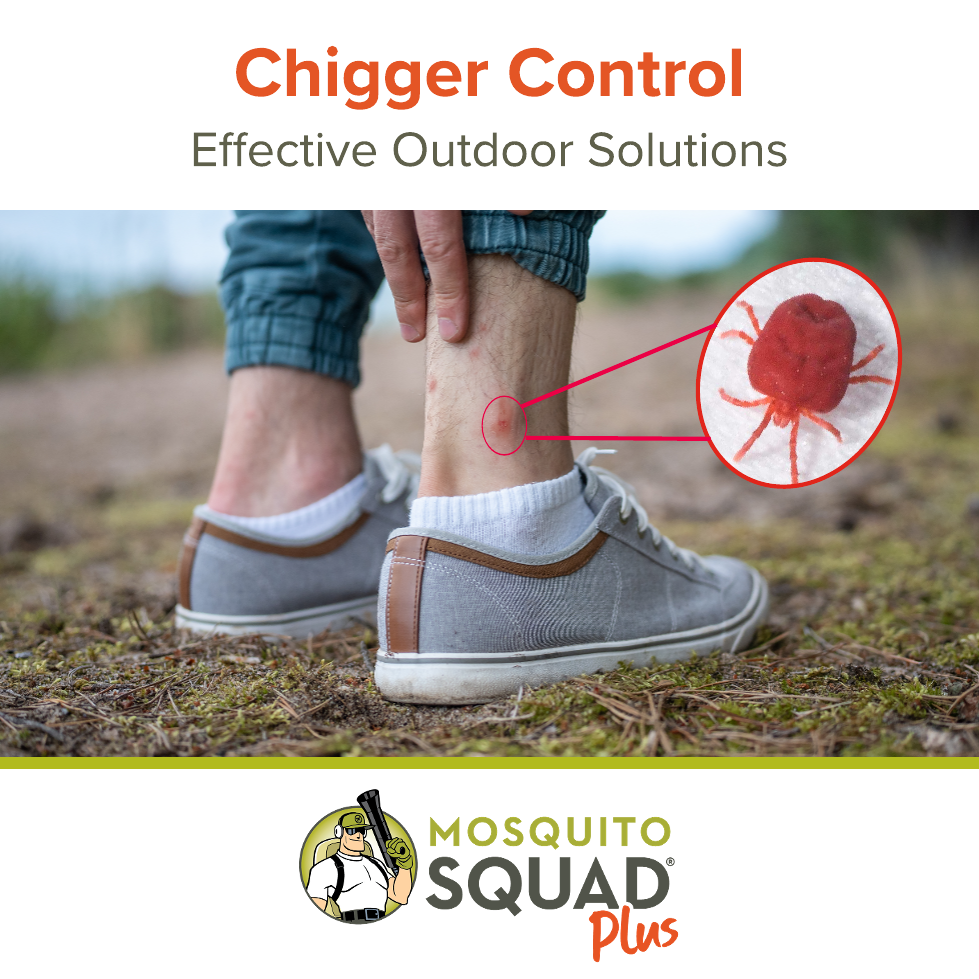
A separate study using stable isotopes to track both Culex and Aedes dispersal found that female Culex seeking a place to lay eggs traveled further than those hunting a host, which tells you something useful. The mosquito looking for you is closer to home than the one looking for water. The same short-range logic is why fleas and chiggers stay concentrated where they hatch.
So the question stops being what is in the valley. It becomes what is holding water inside your circle, and in Vestavia Hills the answer is rarely a creek.
Vestavia Lots Are Built to Hold Small Water
The mosquitoes that matter here need almost nothing. The Alabama Department of Public Health describes these species as container breeders and puts it plainly: one water-filled can or bottle can hatch several thousand mosquitoes. If you want the biology of how that reproduction works, we covered it separately.
Think about what a typical Vestavia property has that a flat lot does not.
These are hillside lots, most of them, which means the yard was engineered rather than simply mowed. Terraced beds with retaining walls. Corrugated downspout extensions running water away from a foundation that sits into a slope. French drains, catch trays, gravel channels, sump discharge. Every one of those is a system for moving water, and every water-moving system has a low point where water stops moving.
Then add what people put on top of it. Mature landscaping means heavy container plantings, and heavy container plantings mean saucers. Those same shaded beds and ivy runs are where chiggers sit out the summer, so we look at them twice. Established properties collect the things that hold rain without anyone deciding to keep them. Tarps over a boat or a woodpile. A wheelbarrow parked upright. Gutters on a house with old canopy overhead, which describes half the ridge.
Alabama Extension's own guidance on reducing mosquito pressure leads with draining that category first: gutters, pet dishes, birdbaths, tree holes, tires, plant pots, discarded containers. That advice is everywhere and it is correct. What gets lost is that on a Vestavia lot the list is longer than average, because the drainage engineering that makes a hillside buildable also creates places for water to sit.
You should also count your neighbors. Your two-hundred-meter circle includes their saucers, their gutters, and their tarps, and you have no say over any of it. This is the piece homeowners find most frustrating, and it is the honest reason a perfectly clean yard can still get bitten. You are not managing your property in isolation. You are managing your share of a shared circle, which is why adult control on your own lot still matters even after you have drained everything you own.
None of that shows up when you treat a wood line.
The Other Half of the Habitat Is Under the Street
The part almost nobody checks is the part the city owns.
Storm drain catch basins are documented mosquito factories. A study of urban catch basins found them serving as major developmental and resting sites for mosquitoes that bite people, with larval abundance varying enormously between individual basins on the same street. Research on southern California's underground storm drain system reached the same place, describing catch basins and manhole chambers as year-round larval habitat underground. Work in Shanghai found Asian tiger mosquitoes were the dominant species in residential-neighborhood catch basins, ahead of the Culex most people would expect to find there.
University of Arizona Extension frames the mechanism cleanly in its guidance on drainage structures that stop draining. A structure holding water past about seventy-two hours becomes habitat. Below that it does not.
Now put that against what Vestavia has. The city has been open about its drainage constraints for years. Residents along Shallowford Circle have described eighteen-inch pipes that cannot keep up with Little Shades Creek, backing up where the line crosses under Rocky Ridge Road. Patton Creek has flooded the Highway 31 corridor for decades. City officials have publicly acknowledged legacy structures sitting in floodplains that current regulations would not permit.
That is a stormwater problem and a flooding problem. It is also, quietly, a mosquito problem, because the same slow-moving and undersized system that backs up in a downpour is the system holding water between rains.
This is worth separating from what we wrote about Chelsea, where the issue is brand new subdivision infrastructure settling into disturbed ground. Vestavia has the opposite problem. The system here is old, built for a smaller city, and fully surrounded by houses that were not there when it went in. Parts of Hoover down the back of the same mountain run into a version of it too. Both produce mosquitoes. They do it for reasons that are close to opposite.
The city takes drainage reports through Vestavia Hills Connect, which is the correct channel for a basin on your street that stands water for a week after rain. We cannot treat public right-of-way. You can report it, and it is one of the few moves available that addresses a source rather than the adults it produces. The frustration of a breeding source you do not own is the same one we wrote about at Lake Purdy, where the water sits past the property line.
Ticks Live at the Edge. Mosquitoes Live in the Water.
The advice most Vestavia homeowners are following is good advice about a different insect. That is what makes it so hard to shake.
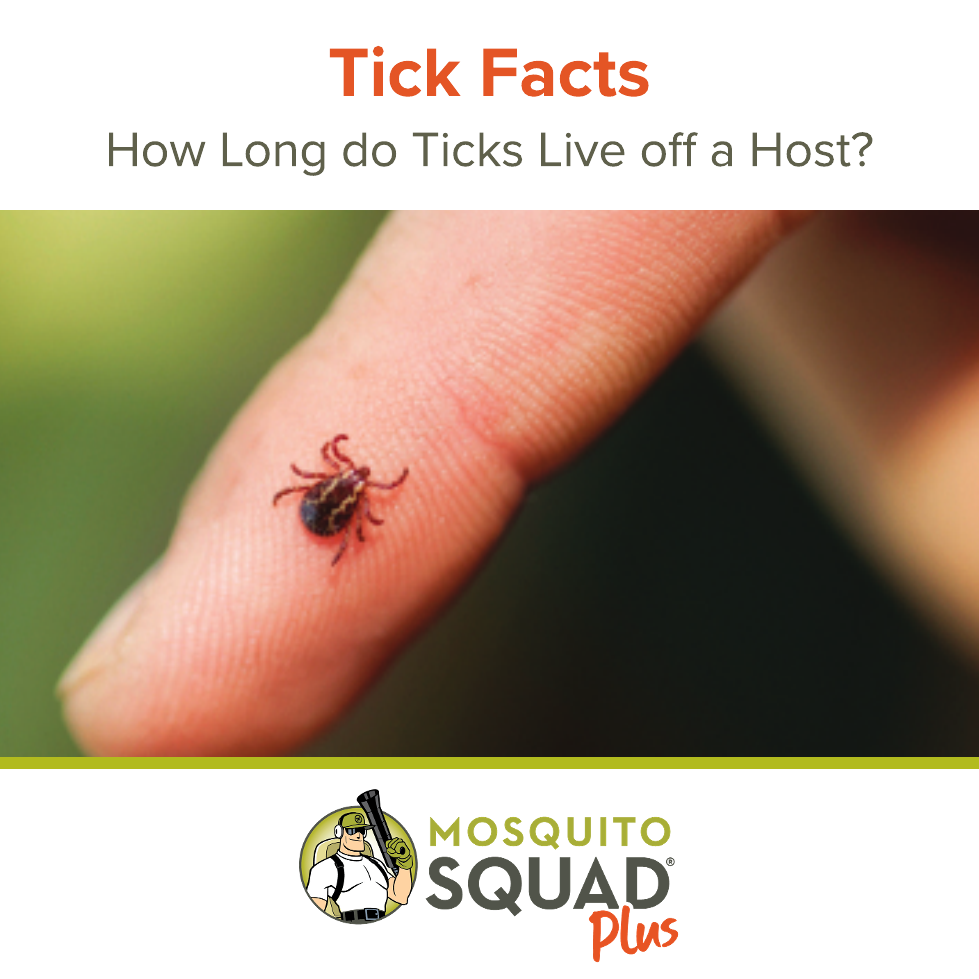
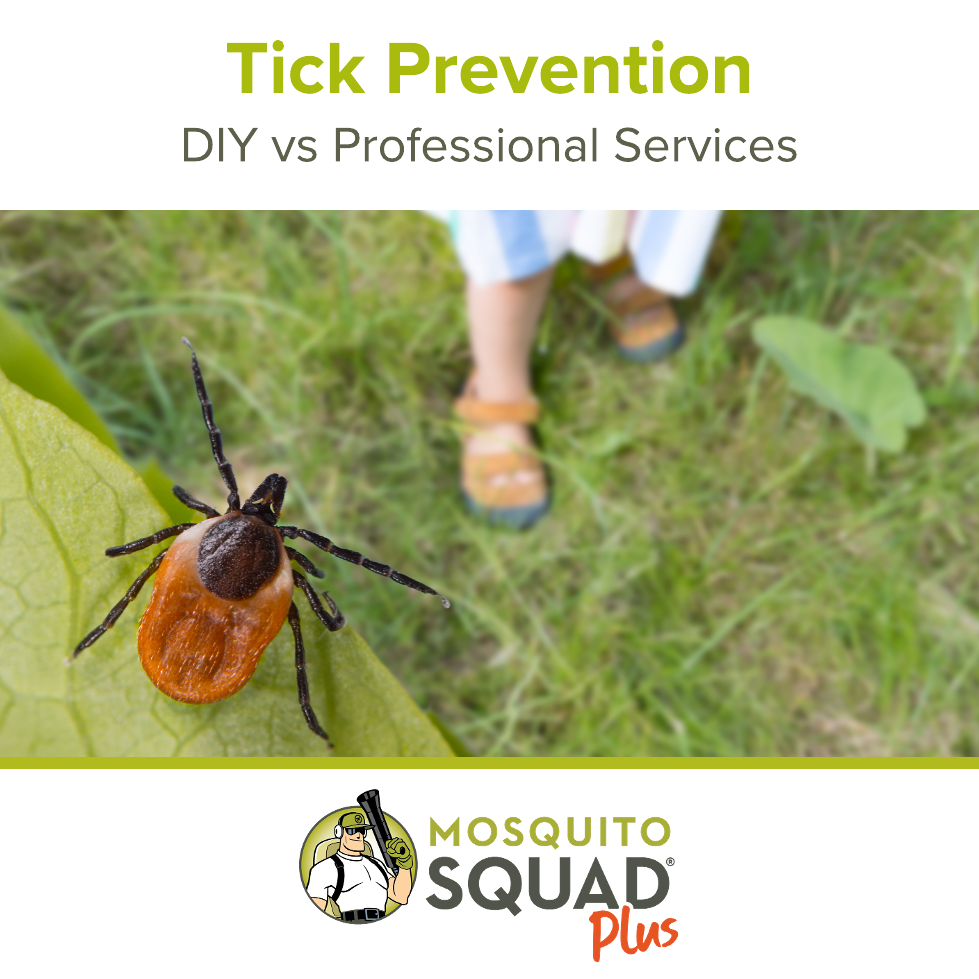
We have written at length about tick season in Vestavia Hills. That post is about terrain, and terrain is the right answer for ticks. They do not fly. They wait in leaf litter at the edge where your lawn gives way to the ravine, mostly within a foot of the ground, for something warm to brush past. Treating the wooded boundary is exactly right, and the 6 C's of tick control are built around that edge.
Apply that logic to mosquitoes and it fails. Mosquitoes fly. They do not wait at a boundary, they emerge from water and disperse outward in every direction, which means the geometry of the problem is a circle rather than a line. Treating your back edge harder does very little about a saucer forty feet from your kitchen door or a curb inlet in front of the house.
The two jobs are not opposed. Most Vestavia properties need both, and our tick control work and mosquito work happen on the same visit. But they target different parts of the property for different reasons. Mosquito control in Vestavia Hills has to follow the water, and a company that treats the tree line and calls it mosquito service is selling you tick coverage under the wrong name.
The Ridge Has Them Too, and That Is the Proof
If mosquito pressure came primarily from the creek corridors, the ridge-top neighborhoods would be comparatively clear. They are not.
Properties up along Shades Crest and the higher ground off Rocky Ridge sit well above the valley floor, with no creek anywhere near the two-hundred-meter circle. They still produce mosquito complaints. The water is on the lots and in the street system, doing what water does regardless of elevation.
We see the same pattern across the metro. Yards in Homewood nowhere near Shades Creek get bitten. Interior lots in Mountain Brook with no drainage feature at all get bitten. Our post on the Red Mountain divide covers how the ridge splits this market for moisture-driven pests generally, and mosquitoes ride partway along with that pattern without being governed by it.
The valley side does carry more pressure on average. Lower ground drains slower, holds humidity longer, and shelters more resting habitat, which is a real part of the changing season along the 280 corridor. Average is doing heavy lifting in that sentence. Your specific yard is governed by your specific circle, and we have walked plenty of low-lying Birmingham properties with almost no breeding on them and plenty of ridge-top properties producing steadily.
This is why you should be skeptical when someone quotes you a price over the phone based on your address. Your elevation tells them something about your tick exposure. It tells them very little about your mosquitoes, because two houses on the same street can sit on opposite sides of this problem depending on how each one handles water.
If you live up top and you have been told your yard should be fine, and it is not, you are not imagining it. If you live down in the valley and you have assumed the creek is a life sentence, that is also wrong. Your pressure is a function of what holds water near you, and unlike terrain, a good deal of that is inside your control.
The Species That Shows Up Late
Two mosquitoes matter here and they run on different clocks.
The Asian tiger mosquito is the daytime biter, the one that gets you while you are pulling weeds at two in the afternoon. It dominates the container habitat described above and it drives most of the summer complaints.
Culex runs later and quieter. It bites around dusk and after dark, it favors organic-rich standing water of exactly the kind a catch basin produces, and it is the group that carries disease here. The Alabama Department of Public Health identifies the Culex pipiens group as primary vector of West Nile virus to humans and horses, and notes that cases have been reported from every public health district in the state.
That has a practical consequence for timing. Mosquito complaints peak in July when the daytime biting is worst, and a lot of people cancel service in September when the yard finally feels usable again. September and October are not a quiet period for Culex. We covered the same September mistake indoors recently, and the yard side follows the same logic. Our barrier program is built to run through it, and Complete Home and Yard carries it year round for properties that want the whole envelope managed.
If you want the general shape of when to start and when to stop in this market, our post on treatment timing lays it out.
Walking Your Own Two Hundred Yards
You can do most of this in half an hour, and doing it before you call anybody makes the conversation shorter.
Start at the low points of your drainage engineering, since that is what Vestavia lots have more of. Where does each downspout end? If it feeds a corrugated extension, lift the end and see whether water runs out. Check the base of retaining walls and the bottom of terraced beds for standing water two days after rain. Look at any French drain outlet.
Then do containers, and be unsentimental about it. Saucers under pots. Tarps with a low spot. Wheelbarrows, buckets, kids' equipment, the boat cover. Anything holding a bottle cap of water counts, which is not an exaggeration about these species.
Then look up. Gutters under old canopy fill faster than people expect and a clogged section holds water the entire season. After a heavy week this all resets, which is why a wet stretch changes the math on how fast your yard rebounds.
Then walk to the street and look into the curb inlet nearest your house. If it is holding water and smells organic, that is a source, and it is the city's to address through Vestavia Hills Connect.
Last, notice when you get bitten. Daytime says containers on the property. After dark says Culex, which points at the drainage system. That single observation changes what we prioritize, and it costs you nothing to make. It is a better diagnostic than anything we can determine from the driveway. Our 7 T's of mosquito control covers the rest of the walk in more detail.
Skip the ultrasonic devices and the standalone citronella approach. We get asked about the natural treatment question constantly and answered it there.
Where We Put the Treatment
Mosquito control in Vestavia Hills, the way we run it, is resting habitat plus source reduction, worked in a circle around the structure rather than along the back boundary.
Adult mosquitoes spend most of the day resting in shade, on the underside of foliage, in ivy and ground cover, under decks, along the north side of the house. That is where the barrier treatment goes, on a twenty-one day cycle through the season, starting as low as $74 per treatment. We also treat and address the standing water we find on the property, because killing adults without touching the source means you are buying the same result again in three weeks.
For yards where the ground itself is the problem, Yard Defender works the turf and bed side. Home Shield extends the same thinking to the structure for properties dealing with more than mosquitoes.
If you want plant-based products because of a garden or hives, the natural treatment option is available. If you have a graduation party or a wedding on the calendar, a special event spray runs a couple of days ahead of it. Properties that want hands-off coverage sometimes go to an automatic misting system instead.
Two scheduling notes specific to mosquito work. If your irrigation runs on a timer, tell us which days, because a zone that cycles a few hours after an application shortens the residual on that side of the house. And if you keep a pool, a fountain, or a koi pond, tell us at booking. We flag the account so the tech knows the water is there before he arrives and treats around it correctly.
We are a veteran-owned family business and we have been treating Vestavia Hills yards since 2018. Call (205) 900-3528 or request a free quote and we will walk the circle with you, street inlet included. Our areas we service page lists every community we cover if you are not certain we run your street, and current deals sit on the special offers page.