Do Ticks Fall From Trees? What Vestavia Hills Homeowners Are Finding This Fall
Posted by Mosquito Squad Plus
October 22, 2026
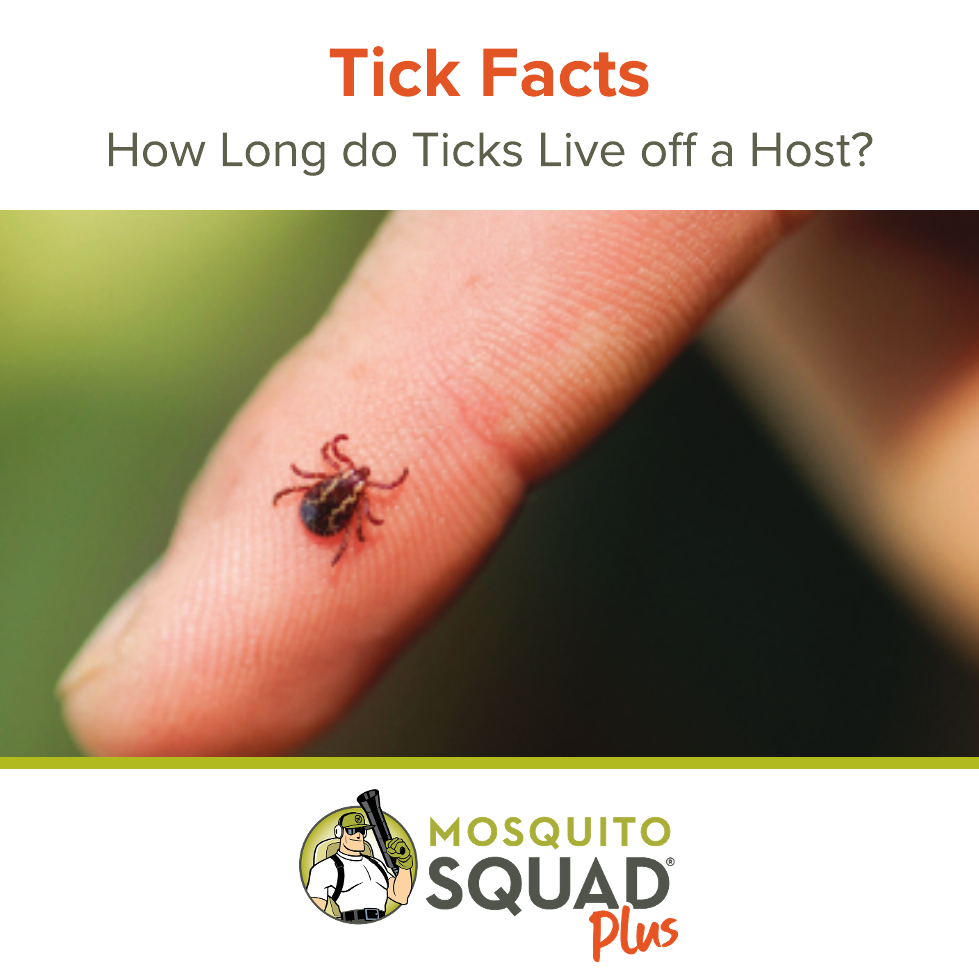
Every fall, somebody in Vestavia Hills finds a tick in their hair and looks straight up. It’s a fair reaction. They spent the afternoon in the backyard, the oaks were shedding leaves the whole time, and now there’s a tick at the hairline. Where else would it have come from?
It shows up in our own service notes, too. One Vestavia Hills account has a work order asking our techs to spray into the trees out back, because the family believes that’s where the ticks are coming from. They were still finding ticks.
It’s one of the most common tick beliefs in the country, and it’s wrong in a way that costs people. If ticks rain down from the canopy, the fix is to look up, wear a hat, maybe ask someone to treat the trees. Meanwhile the actual problem is sitting on the ground, right where it’s been all along. And in Vestavia Hills in late October, the ground is about to get a lot more crowded.
The Short Answer: Ticks Climb, They Don’t Drop
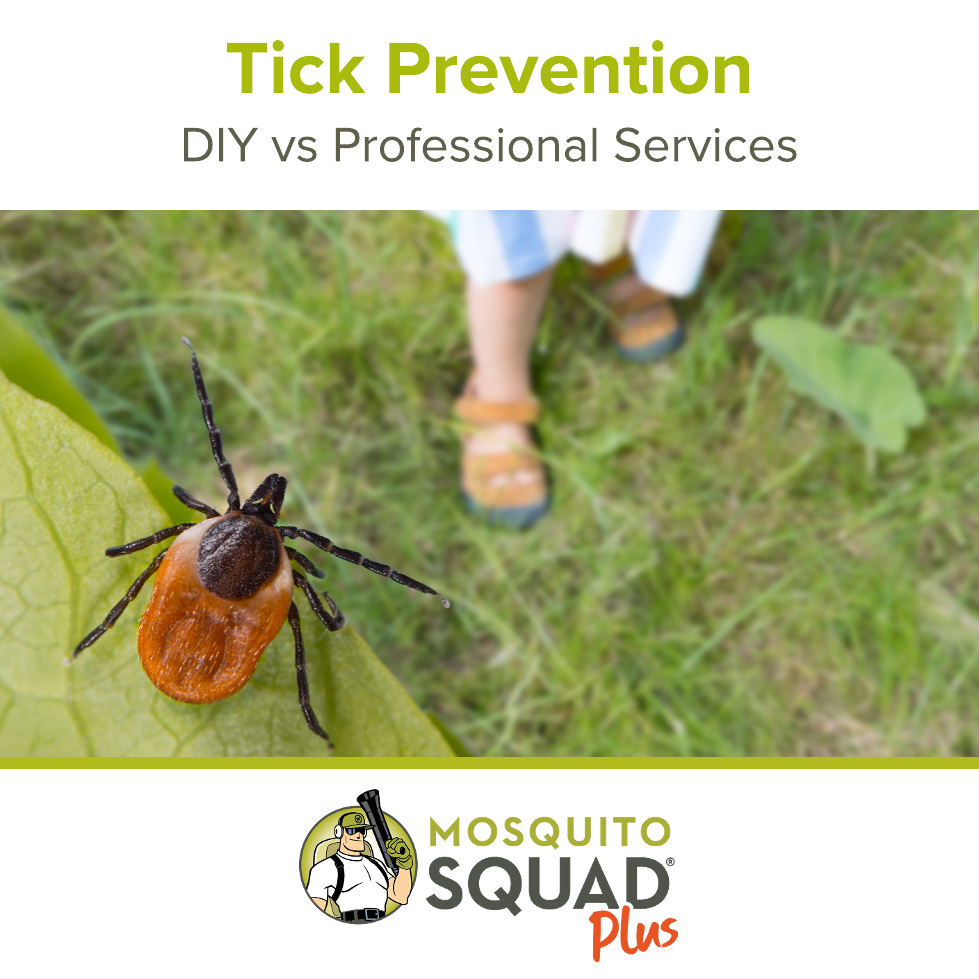
Ticks can’t fly and they can’t jump. We’ve covered that in our post on whether ticks can fly, and it holds for every species you’ll meet in a Birmingham yard. What they do instead is wait low and climb. Lone star ticks are the pushy ones and will crawl toward you across the ground, but they’re still coming from the ground.
Cornell Cooperative Extension lays out the mechanics. Ticks wait in ambush on low grass and shrubs, and once they grab onto a passing host, they climb upward by instinct. That upward crawl is why so many end up at the scalp or the back of the neck, and Cornell names it directly as the reason people wrongly conclude ticks drop out of trees and onto their heads.
The University of Rhode Island’s TickEncounter program found that adult ticks usually latch on around knee level as you brush past, then crawl up the outside of pants and keep going under an untucked shirt. URI notes it only takes a few minutes. The places they stop are wherever clothing gets in the way: waistbands, bra straps, underarms, and the hairline.
How high do adults actually wait? UConn’s tick researchers put it at about a foot up the vegetation, with younger stages even lower. A foot off the ground is the top of a leaf pile. It’s the edge of a mulch bed. It’s the lowest branch of the azalea beside the flower bed.
Picture a normal October Saturday in Vestavia Hills. You rake for an hour, sit on the retaining wall to take a break, carry an armload of leaves to the edge of the yard, and let the dog lean against your leg while you talk to a neighbor. By dinner, a tick that grabbed your jeans by the wall has had plenty of time to reach your collar. Nothing fell. It walked.
Why Fall Is Its Own Tick Season in Vestavia Hills
We’ve written about why tick season in Vestavia Hills hits harder than most of Birmingham, and that post makes the year-round case: wooded ravines, deer corridors, and tick pressure that comes from beyond your property line. Fall adds three things on top of that terrain, and they all show up at the same time.
The tick changes. Most of the summer tick talk around Birmingham is about the lone star tick, and for good reason. Fall belongs more to the adult blacklegged tick. Rutgers entomologists note that adult blacklegged ticks are active in late fall and winter, and that the females are out looking for the blood meal they need to lay eggs. University of Tennessee researchers studying ticks across Tennessee, Alabama, and North Carolina put it simply: blacklegged ticks are in their adult stage in autumn. These are the ticks deer carry along the slopes, and adults are big enough that people actually notice them, which is part of why fall finds feel so sudden.
The ground changes. Most Vestavia Hills lots have a tree line somewhere along the edge. From mid-October into December, every week puts another layer of leaves on the lawn, in the beds, and along the tree line. That layer is tick housing. Cornell’s integrated pest management program, summarizing research published in the Journal of Medical Entomology, notes that deeper leaf litter seems to create better conditions for tick questing and winter survival. Leaves hold humidity, keep the soil surface cool, and protect ticks from the weather. A yard that was mowed tight in August can have a real layer of cover at the edges by Thanksgiving.
People change. Fall is when Vestavia Hills families move back outside. Summer here is too hot to sit around the fire pit, but a 65-degree October evening is exactly what that fire pit is for. Go through our own Vestavia service notes and the outdoor spaces come up again and again: a covered pavilion one family describes as the only place they can host get-togethers, a fire pit, a back deck, a patio where everyone ends up. Those are the spots where leaves pile up in the corners and against the furniture legs, and they’re where people sit still long enough for a tick to find them. If one of them is hosting a crowd at Thanksgiving, a special event spray a couple of days ahead covers it.
Put those together and fall gives you active adult ticks, more cover than they’ve had since spring, and families spending more time near the ground than they did in July. The Alabama Department of Public Health is clear that ticks here are more active in early spring and late fall, and that the state logs tick-borne illness in every month of the year.
Fall ticks always bring up Lyme. Blacklegged ticks are the species tied to it, but Alabama is a low-incidence state, and the realistic risk here leans toward spotted fever and ehrlichiosis. Our post on Lyme disease and the lone star tick in Jefferson County walks through what’s actually being reported locally. Either way, a bite followed by a rash or fever is a call to your doctor, not to us.
Where Fall Ticks Actually Wait on a Vestavia Hills Lot
If ticks aren’t in the trees, where are they? On a typical Vestavia Hills property in October and November, they’re concentrated in a handful of places, and most of them are low, shaded, and covered in leaves.
Leaf piles and wherever leaves collect. The pile that got raked and never moved. The drift that builds up against the back fence. The corner of the patio where the wind leaves them every afternoon. Any spot where leaves sit deep and stay damp underneath.
The yard edge. On a hillside lot, this is the line where your grass stops and the slope, the brush, or the tree line starts. It’s the busiest tick real estate on the property most of the year, and fall makes it thicker. A 2024 Connecticut Agricultural Experiment Station study of residential lots found blacklegged tick density highest in the wooded strip closest to the lawn, where leaf litter covered the ground. The same study found nearly three times the ticks next to stone walls, which is worth knowing on a Vestavia lot terraced with stone or block.
Under and around outdoor living spaces. The gap under a deck. The bed beside the pavilion. The ring around a fire pit where leaves and pine straw collect. The base of a stone or block retaining wall, which on a sloped Vestavia lot is often right next to where people sit.
Foundation beds and mulch. Shrub bases along the house stay shaded and hold moisture, and fall leaves settle right into them.
The dog’s route. Every dog has a path, usually along the fence line and through whatever brushy corner it likes to investigate. Whatever that path touches, the dog collects, and then it carries those ticks to the back door.
The open middle of the lawn isn’t on that list, and neither is the canopy. When we treat a Vestavia Hills yard for ticks, the work goes low and to the edges, which is how our 6 C’s of Tick Control are built.
What Homeowners Try, and Why It Often Backfires
Most fall tick habits come from good instincts. A few point the wrong way.
Treating or watching the trees
If the trees are the suspected source, the trees get the attention. People ask about spraying the canopy, wear hats in the yard, and stop sitting under the oaks. None of that touches the leaf litter a foot off the ground, so the ticks keep showing up, and the trees take the blame again.
Blowing the leaves over the edge
This mistake matters most in Vestavia Hills, because the terrain practically invites it. On a hillside lot, the easiest place to put leaves is down the slope, over the retaining wall, or into the tree line at the back. It gets them off the lawn, and it feels like cleanup.
Research says it does the opposite of what you want. In a two-year New Jersey study published in the Journal of Medical Entomology, plots where leaves were raked or blown to the lawn and woods edge ended up with leaf litter two to three times deeper than natural edges, and the following spring they held roughly three times as many young blacklegged ticks. The researchers’ advice was to use municipal leaf collection or a contractor who hauls leaves offsite where possible, compost them, or move them well away from the parts of the yard people use. Where leaf fall is light, mulching them in place with the mower helps them break down faster.
What you do with leaves this fall shapes how many ticks are waiting at that same edge in April and May. If the slope you blow leaves onto sits beside the play set, the path to the fire pit, or the gate the dog uses, you’ve built next spring’s tick problem right where your family walks.
Waiting for the first frost
Plenty of people treat the first cold snap as the end of tick season. In Birmingham, that line doesn’t hold up. The National Weather Service office in Birmingham puts the average first freeze around November 9, which means most of the leaf season happens before it, and plenty of warm afternoons follow it. Adult blacklegged ticks don’t quit after one cold morning. The Rutgers researchers are clear that adults keep hunting for hosts through late fall and into winter, and central Alabama has a lot of mild winter days.
Counting on the dog’s preventive alone
A monthly flea and tick preventive from your vet matters, and every dog in a wooded Vestavia Hills yard should be on one. But the medicine works on the animal. It doesn’t stop a tick from riding into the house on the dog’s coat first. The CDC is direct that pets can carry ticks indoors, where those ticks may later bite people, and it recommends checking pets daily after they’ve been outside.
One Vestavia Hills household with three dogs had exactly the right instinct when they signed up. They wanted fleas and ticks handled in the yard and through the dogs’ medicine, not one or the other, and the work order flags the back deck as the spot where the dogs and the bugs overlap most. That’s how flea and tick control for dogs actually works: the vet handles the animal, and the yard program cuts down how many ticks and fleas the animal runs into. Our flea control page covers the yard side. If your dog spends time at a dog park or a groomer, the problem can look different, and our post on what the dog park sends home in Cahaba Heights gets into the brown dog tick, which is a separate case from the leaf-litter ticks in this post.
What Actually Works for Fall Tick Control in Vestavia Hills
Fall tick control in Vestavia Hills isn’t one product or one visit. It’s treating the right zones, managing the leaves so you’re not rebuilding tick habitat every week, and catching what gets through.
Start with where the treatment goes. The Mosquito Barrier Treatment we run every 21 days works on ticks as well as mosquitoes. On a fall visit, the attention goes to the zones above: the yard edge, the beds, the base of retaining walls, under decks, around the patio and fire pit, and the dog’s route. The same low-and-edge approach drives our tick control the rest of the year. For families who’d rather go plant-based, the natural treatment option kills ticks on contact too.
If the dogs live in those same leaf-covered corners, Squad Yard Defender adds a flea and tick yard treatment on top of the barrier.
Then make the leaf plan part of the tick plan. Keep the lawn, the patio, and the paths clear. Get leaves off the property or well away from the spots the family and dog use. Don’t stack them along the edge you treat. When we walk a Vestavia Hills property, we’ll point out the places where leaves are collecting against the zones that matter most.
Past the last barrier visit, Home Shield keeps the foundation and entry points treated through the cold months. The Complete Home and Yard package goes further: barrier visits every 21 days in season, then monitoring and targeted treatment through the winter. A lot of Vestavia Hills households end up there once they’ve had a fall like this one.
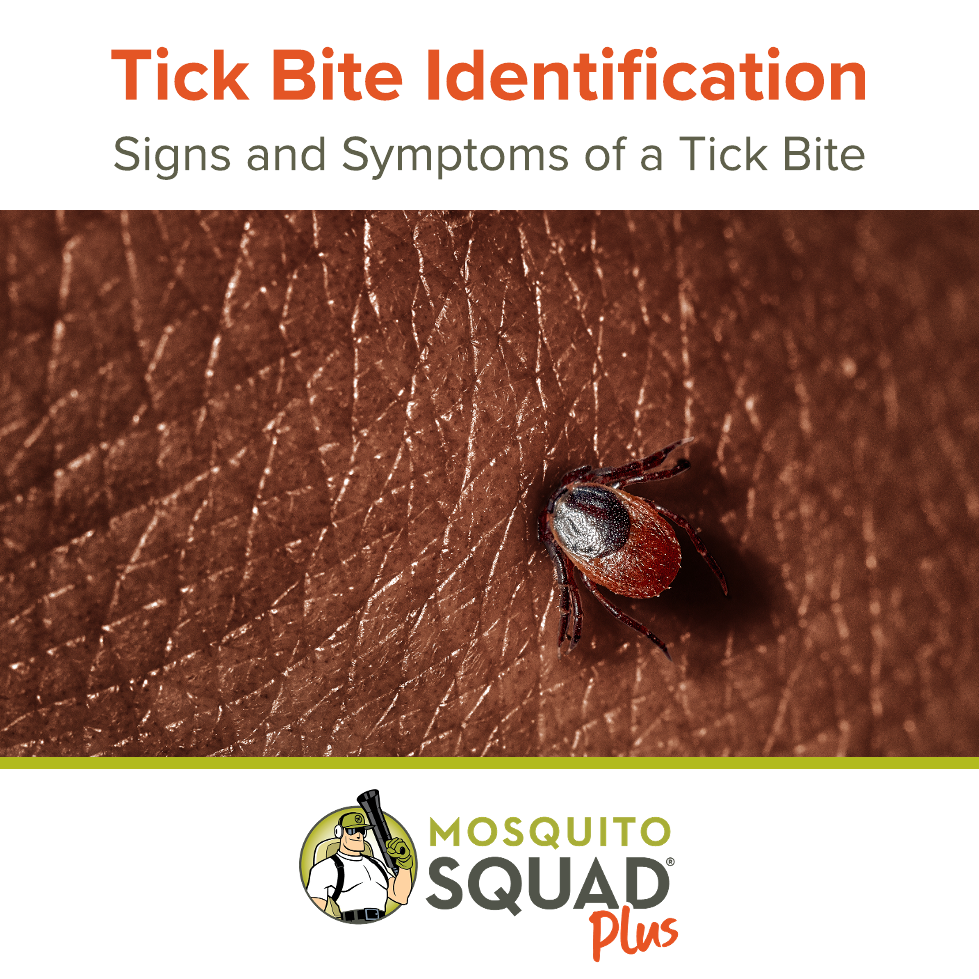
And do the checks, on the dog too. After an afternoon of yard work, check the places URI flags for adult ticks: waistband, underarms, mid-back, and the hairline. On the dog, the CDC points to the ears, around the eyelids, under the collar, under the front legs, between the toes, and around the tail. For help telling what a bite looks like, our guide on tick bite signs is a good start.
Mosquitoes don’t always clear out on schedule either. A warm October can keep them going in shaded yards, and our post on where Vestavia Hills mosquitoes come from explains why the water sources on a sloped lot matter more than the tree line. Fall leaves clog gutters and fill low spots, so the same cleanup that helps with ticks helps there too.
When to Treat for Ticks in Vestavia Hills
Right now, and then again before spring.
Our barrier routes in Vestavia Hills run through October and into early November when the fall stays mild. Those late visits line up with the stretch when leaf litter is deepest, adult ticks are moving, and families are outside the most. For a household finding ticks this month, a late-season treatment isn’t wasted money. It’s aimed at the exact window that’s causing the problem.
After that, the calendar flips. The leaf decisions made in November decide how much cover the next generation of ticks has at your yard edge in spring. Getting treatment back in place by late winter, before that generation gets going, is a lot easier than trying to take the yard back in May. Neighbors in Mountain Brook and Homewood deal with the same hardwood leaf fall and the same timing, and our Vestavia Hills service page lays out how we approach hillside lots through the whole year.
The Trees Are Innocent. The Leaves Aren’t.
The next time you find a tick at your hairline after an afternoon outside, skip the look up. Look down at the leaf pile, the wall you sat on, the strip where your grass runs out at the slope, and the dog at your feet. That’s where fall ticks live in Vestavia Hills, and that’s where the fix goes.
Mosquito Squad of Greater Birmingham is a veteran-owned family business and has been treating Vestavia Hills yards since 2018. If you need fall tick control in Vestavia Hills, call us at (205) 900-3528 or request a free quote, and we’ll walk the property and show you where they’re actually coming from.