Why Last Fall's Acorn Crop Means a Bad Tick Year in Bellbrook
Posted by Mosquito Squad Plus
July 27, 2026
Acorns piled up along the trail edges and driveway aprons around Sugarcreek MetroPark last fall, thick enough in spots to roll underfoot. Most people in Bellbrook noticed them the way you notice weather, as something to sweep off the walk and forget about. The white-footed mice living in the leaf litter behind those same properties noticed differently. For them a heavy acorn drop is the difference between a hard winter and an easy one, and the number of mice that make it to spring sets in motion a chain that ends, two summers later, in the number of infected ticks questing along the back edge of your yard.
That lag is the part almost nobody accounts for. Tick pressure in Greene County is not the same every year, and the reason it swings has less to do with how mild the winter was than with what the oak trees did eighteen months earlier. Ohio keeps records on this. So do researchers who have been tracking the acorn-to-mouse-to-tick sequence for three decades. Put the two together and the outlook for Bellbrook yards over the next two seasons is legible well in advance, which is unusual in this business and worth using.
Ohio Counts the Acorns Every Year
The state runs a formal acorn census, which is the kind of thing that sounds invented until you go looking for it. The Ohio Department of Natural Resources Division of Wildlife has conducted an annual mast survey for more than twenty years, sending staff out each summer to scan oak canopies at twenty wildlife areas and record what share of the trees are bearing and how heavy the crop looks on each one.
The 2025 results came in strong. Seventy-two percent of red oaks bore fruit against a long-term average of fifty-six percent, and fifty-six percent of white oaks bore fruit against a long-term average of thirty-eight percent. Both numbers climbed from 2024, when red oaks came in at sixty-eight percent and white oaks at thirty-four. Two seasons in a row, red oaks in Ohio produced above their long-run norm.
One honest caveat on the size of that crop. The survey grades each bearing tree from light to heavy, and while nearly half the fruiting red oaks were rated moderate or heavy, about eighty percent of the fruiting white oaks were rated light. So this was a broad crop more than a uniformly enormous one. Broad still matters, because what drives the mouse response is how much food is on the forest floor across a lot of trees, not whether any single oak set a record.
Oaks do this in boom-and-bust cycles rather than steadily, and the booms tend to be synchronized across a region, which is why an entire township can be ankle deep in acorns one October and nearly clear the next.
The reasons run back further than the fall you notice them. Extension foresters at Michigan State University point to spring pollination weather and prior-season stress on the trees as the drivers behind a heavy nut crop, with the flowering conditions that set a crop occurring well before anyone sees an acorn. Red oak acorns compound the delay, taking two full years to develop rather than one. A heavy autumn in Greene County is the visible end of a process that started at least a season earlier, which is part of why the crop is easier to count after the fact than to forecast ahead of it.
Why Mice Care About Acorns More Than Deer Do
Deer get the attention in any conversation about ticks, and for a long time the assumption was that deer numbers drove Lyme risk. Three decades of fieldwork at the Cary Institute of Ecosystem Studies challenged that, and the animal that turned out to matter most is much smaller.
The white-footed mouse is the most efficient reservoir for the bacterium that causes Lyme disease. Acorns are a primary overwinter food for these mice, so in years when the oaks produce heavily, more of them survive the winter, more of them are in breeding condition by spring, and the population that emerges the following summer is substantially larger than the one that went into the previous fall rather than modestly so.
That jump is what a larval tick walks into. Blacklegged ticks hatch free of pathogens and acquire them only by feeding, and mice are extraordinarily good at passing infection along. Researchers describe finding mice carrying fifty or more feeding larvae at once without any apparent harm to the mouse, which is precisely what makes them such effective amplifiers. A larva that feeds on an infected mouse becomes an infected nymph.
Ohio is not a bystander in this. A study of the state's tick expansion documented white-footed mice in Ohio carrying evidence of exposure to the Lyme bacterium, concluding that the full transmission cycle has established itself here rather than merely spilling over from elsewhere.
The Two-Year Fuse
The sequence runs on a fixed clock, and that is what makes it useful. A heavy acorn crop in autumn feeds mice through the winter. Mouse numbers peak the following summer. Larval ticks hatch in August, feed on those abundant mice, pick up pathogens, and then molt into nymphs that emerge the summer after that. Cary Institute researchers put it plainly: autumn acorn production is a leading indicator of Lyme risk two summers later, a relationship confirmed across roughly twenty years of field data.
Apply that clock to Bellbrook. The strong 2025 crop fed mice through the winter of 2025 into 2026, which makes this summer a high mouse summer in the oak woods around Sugarcreek Township. Larvae hatching this August will find those hosts waiting. The nymphs that carry the consequences of that will be questing in the summer of 2027.
The 2024 crop matters too, and it is the reason this season already feels heavier to some households. Above-average red oak production in 2024 fed mice into 2025, and the nymphs produced from that cohort are the ones out on the vegetation right now. Bellbrook is sitting between two loaded seasons rather than approaching one.
None of this predicts an individual bite. It describes the size of the population you are dealing with, which is a different and more useful thing than a forecast.
The Nymph Is the Stage That Matters
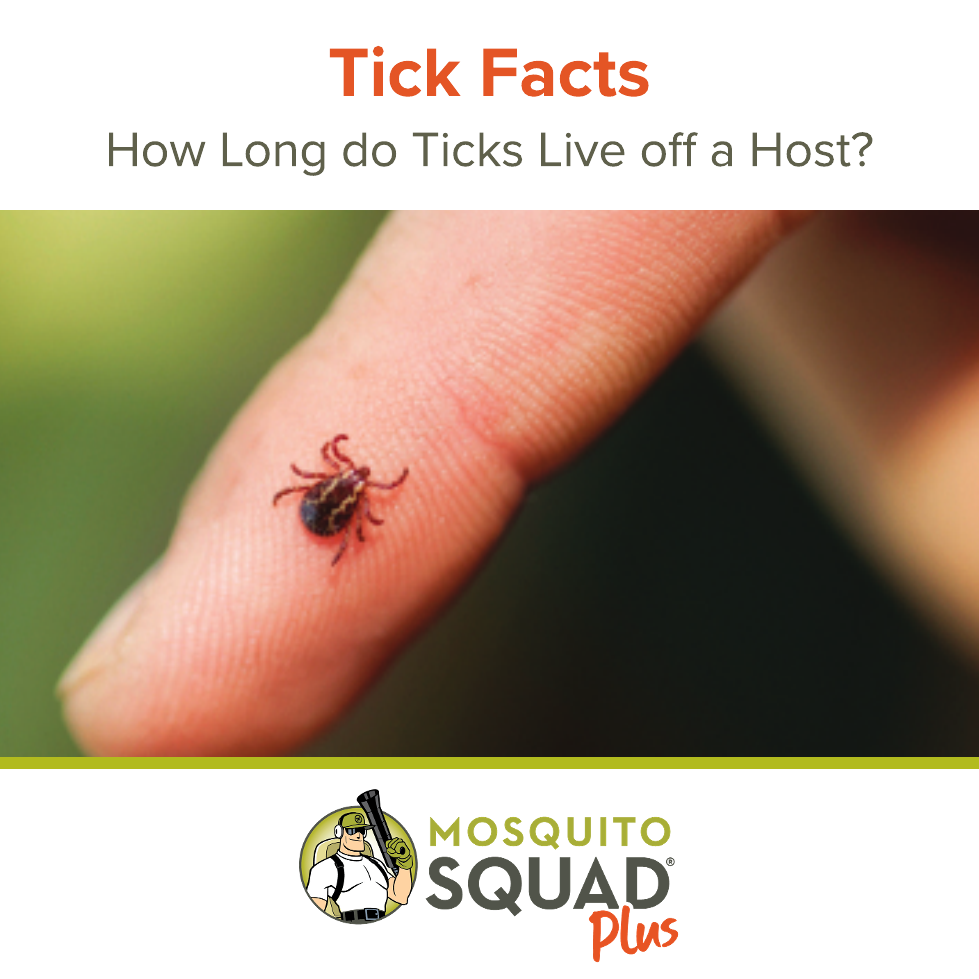
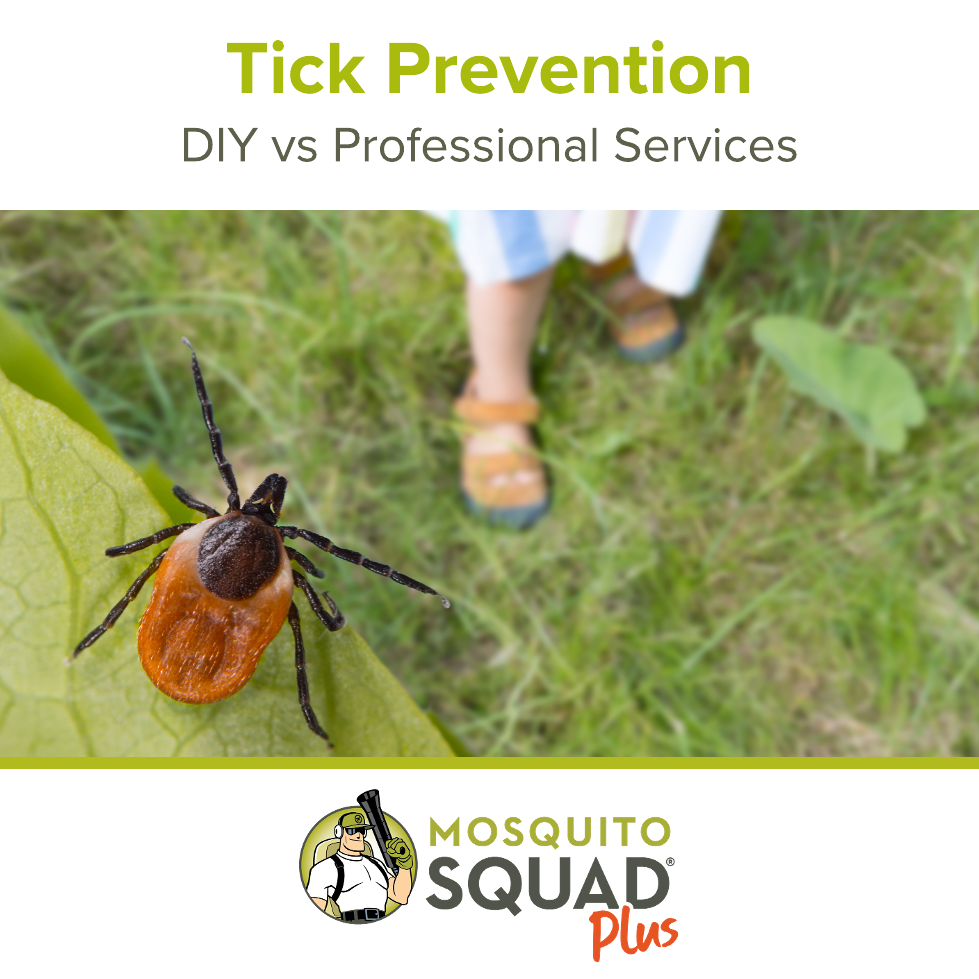
Blacklegged ticks feed once at each of three life stages, and the nymph is the one that reaches people. Ohio's health department is direct about it, noting that most human infections come from nymphs, which are under two millimeters and difficult to see, and which feed through spring and summer.
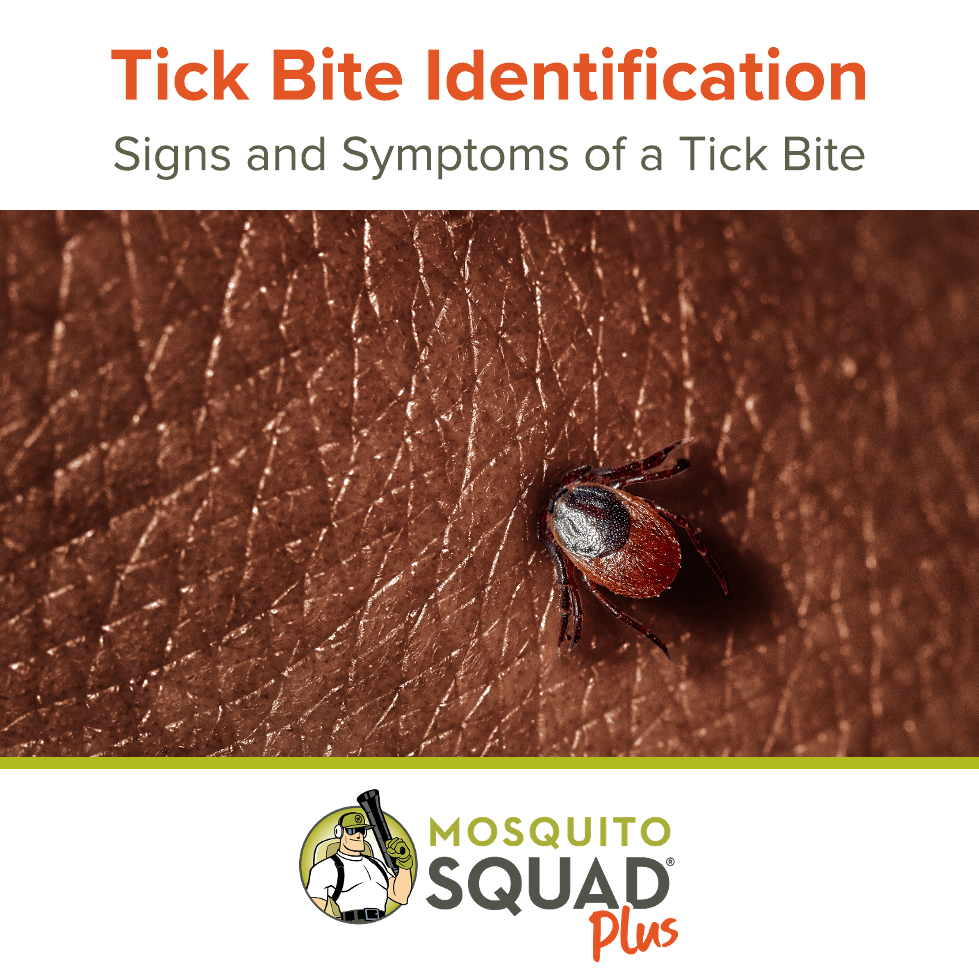
Size explains almost everything about why that stage is the dangerous one. An adult tick is large enough to be found during a shower or a tick check and removed before transmission occurs. A nymph is the size of a poppy seed. It attaches at a sock line or behind a knee, feeds long enough to transmit, and drops off without the person ever knowing it was there. The bite that causes a problem in August is frequently a bite nobody remembers from June.
The seasonal split matters for planning. Nymphs are a late spring and early summer problem in Ohio, while adults are most active in cooler months, including fall and mild stretches of winter. A property that is only treated during peak mosquito months is uncovered during a meaningful part of the blacklegged tick's year.
What Greene County Already Knows About Its Ticks
Greene County Public Health lists all three Ohio tick species as present in the county, blacklegged ticks among them, and describes the blacklegged tick as the only Lyme vector in the midwestern United States. The county also notes that the same species can carry babesiosis, anaplasmosis, and Powassan virus.
That county designation is worth pausing on, because Bellbrook does not sit in it alone. Beavercreek, Xenia, and Yellow Springs are all Greene County as well, all carry the same oak and mixed hardwood cover through their wooded margins, and all fall under the same county surveillance picture. A homeowner comparing notes with a friend across the county is comparing notes on the same tick population and the same acorn cycle feeding it.
The statewide trend behind that is steep. Ohio recorded forty Lyme disease cases in 2010 and four hundred fifteen by 2020, then more than twenty-eight hundred in 2025. Blacklegged ticks were not considered established in Ohio until 2010, so this is a new problem for the state rather than a longstanding one that finally got attention.
Two things follow for a Bellbrook homeowner. The tick that carries Lyme is here and is not going back. And the diseases involved go beyond Lyme, with anaplasmosis and babesiosis both tracked by the state and both transmitted by the same species. Lyme is the common one and the one to plan around, but it is not the only outcome.
Where Mice Concentrate on a Bellbrook Lot
If mice drive infection rates, then the practical question for a yard is not only where ticks quest but where mice concentrate. Those are related but not identical, and the second question gets asked far less often.
White-footed mice are woodland animals that use structure. The stacked firewood against the garage, the brush pile behind the shed, the stone border along a bed, the ground cover that never gets disturbed, the space under a deck, the outbuilding with a gap at the sill: these are the features that hold mouse activity on an otherwise ordinary suburban lot. Add a bird feeder dropping seed all winter and you have supplemented the acorn crop.
Leaf litter is the other half of it. Blacklegged ticks depend on deciduous leaf litter for the humidity they need to survive between hosts, and that same litter is where mice forage and travel. Properties along the wooded margins of Sugarcreek Township carry more of both, which is why two houses on the same street can have noticeably different tick loads.
Practical steps follow directly. Move firewood away from the structure and get it up on a rack. Break down brush piles rather than letting them sit through a season. Pull dense ground cover back from where people and pets walk. Reconsider winter bird feeding if the yard already backs to oak woods. None of this eliminates ticks, and any rodent control work aimed at the house is a separate job from what happens at the tree line. Reducing mouse harborage does chip at the engine driving infection rates on your specific lot.
What a Treatment Program Changes, and What It Does Not
Recurring tick control reduces the questing population on the property you own. That is the honest scope. It does not change the acorn crop, the mouse population across the surrounding woods, or the two-year cycle running through Greene County. What it changes is how many ticks are waiting in the zone your family and your dog cross every day, and across a season with elevated nymph pressure, that number is worth moving.
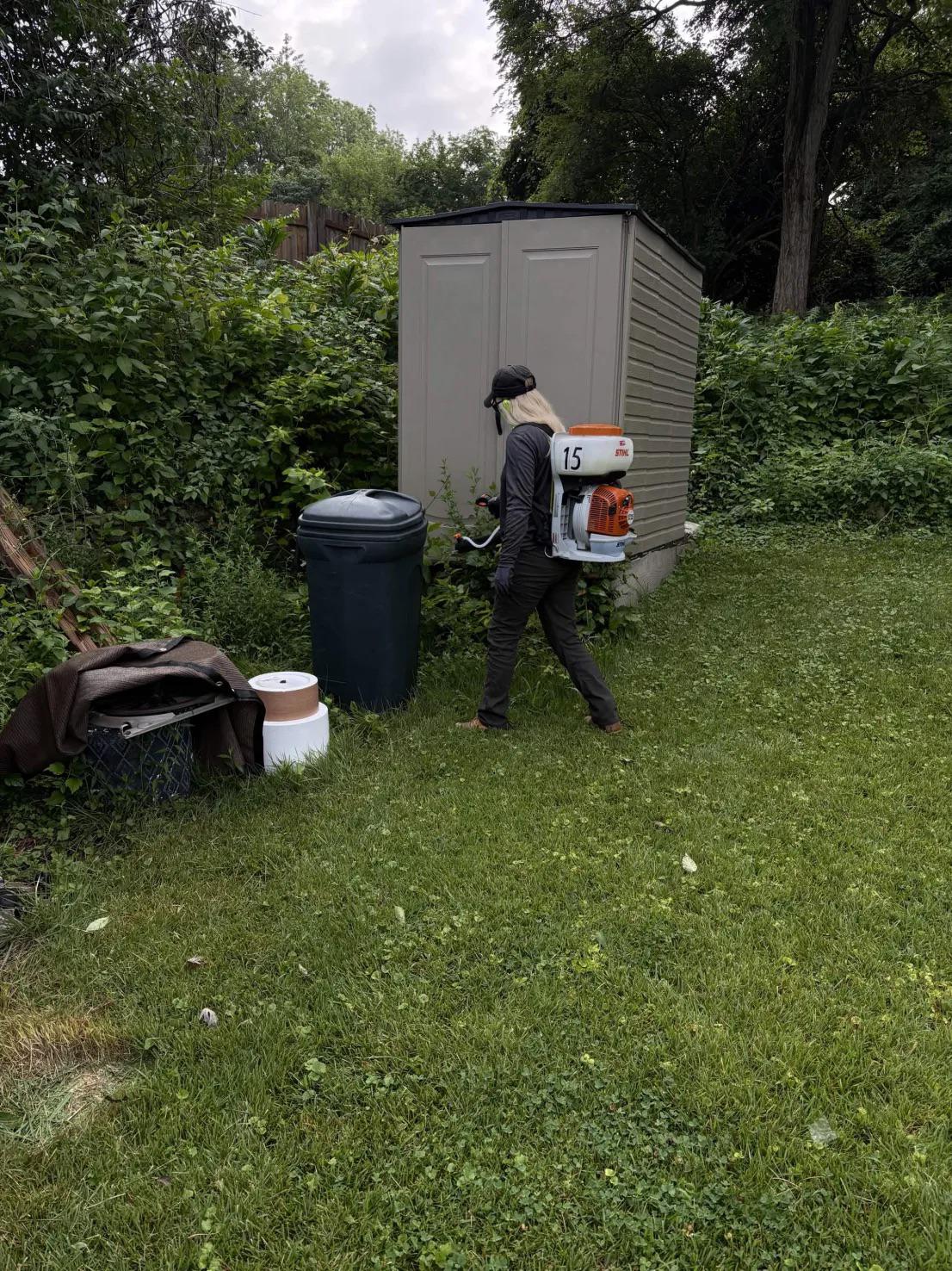
Our approach follows the 6 C's of tick control, which is a framework for treating harborage rather than spraying open lawn. Technicians work the leaf litter line, the shaded bed edges, the base of fence rows, the perimeter of outbuildings, and the vegetation where the maintained yard gives way to woods. Those are the surfaces where nymphs wait out the heat of the day, and they are the same runs mice use.
Timing carries as much weight here as coverage does. Nymph activity climbs through late spring and holds through early summer, so treatment needs to be established before that window rather than started in response to it, and adult activity in fall and mild winter stretches means coverage should extend past the point most people stop thinking about yard pests altogether. The Squad Yard Defender program pairs tick work with mosquito coverage on a recurring schedule, and Home Shield extends the same recurring logic to the structure itself for households dealing with rodents and other pests alongside the yard. All of it carries our satisfaction guarantee.
Personal prevention still does real work and should continue. Repellent, treated clothing for trail days, tick checks after time outside, and veterinary prevention for dogs all reduce individual exposure. Property treatment and personal prevention address different parts of the same problem, and households that do both come out of a heavy season in better shape than those that pick one.
Households that also fight mosquitoes off the same back edge often run mosquito control on the same visit schedule, since the barrier treatment covers overlapping ground. Our national tick map is a reasonable starting point for how the broader risk picture has shifted, though it is regional rather than yard-level, and the walkthrough on a specific property is what determines the plan.
The Bellbrook Tick Calendar
Late March into April is when the ground work should be done. Adults are active in cool weather, the season's first treatment should be established before nymphs emerge, and leaf litter management is easier before growth takes over. Properties bordering the oak woods along the southern edge of town benefit most from an early start.
May through July is the nymph window and the highest-risk stretch of the year for human infection. This is when tick checks matter most, when a poppy-seed-sized nymph is easiest to miss on a sock line or behind a knee, and when a treated perimeter is doing the most work it will do all year. It is also the stretch when kids are barefoot in the grass daily and the yard gets used hardest.
August is the larval hatch, which is the hinge in the cycle. Larvae feeding on this summer's abundant mice are what produce next summer's infected nymphs. Nothing a homeowner does in August changes the regional picture, though reducing mouse activity around the house does affect the local one.
September through the first hard freezes brings adults back out. Deer move, dogs pick up ticks on walks, and yard work resumes in comfortable weather. Coverage through fall is the piece most commonly dropped, and given the 2025 acorn crop, this is a poor year to drop it.
Planning for Next Summer, Not Just This One
Most yard pest decisions get made reactively, after a season has already gotten away from someone. The acorn data offers something better, because the 2025 crop is already recorded and the mice it fed are already out there. The infected nymphs that follow are not a matter of speculation but of arithmetic on a two-year clock, and the households that plan around that now are the ones who will not be scrambling in June of next year.
Bellbrook sits where this matters more than average, with oak-dominated woods along its southern edge, wooded drainage running through neighborhoods rather than around them, and back property lines that meet leaf litter instead of open ground. Those are the three ingredients the acorn cycle needs, and this town has all of them stacked together in a way that much of the metro does not. The farmland edges out toward Springboro and the older closed-canopy neighborhoods up in Centerville produce their own pest problems, but they are not this one.
For how the same landscape drives an entirely different pest, our post on mosquito season in Bellbrook covers the creek corridor in detail, and the three rivers post lays out the wider Dayton hydrology. The full service list is on our areas we service page.
To walk your property and put a plan together before the next nymph season, contact our Dayton team or call Mosquito Squad of Dayton at (937) 226-9709 for a free estimate.