Pest Control in Dayton, Ohio: Why Three Rivers Set Your Pest Season
Posted by Mosquito Squad Plus
August 17, 2026
Pest Control in Dayton, Ohio: Why Three Rivers Set Your Pest Season
Mosquitoes come off the low corner of a Miami Valley yard about two weeks before anybody expects them. Not off the river. Off the part of your own lawn that stayed soft after the last rain, the strip near the downspout, the ground behind the shed where the mower leaves a rut every spring. You walk past it in March without thinking anything of it. By the second week of May you cannot sit on your own patio.
That gap between when the season starts and when you notice it is the single thing we spend the most time explaining to homeowners here. It comes down to water, and in this metro the water is a permanent feature of the ground you live on rather than something that arrives with a storm.
Three rivers meet inside Dayton. The Great Miami comes down from the north, the Mad River comes in from the east, the Stillwater comes in from the northwest, and Wolf Creek joins them near downtown. Whatever suburb you are in, you are somewhere on that drainage. Understanding where changes what shows up in your yard, and when. That is the practical frame for pest control in Dayton, and it holds whether your address says Kettering, Xenia, or Huber Heights.
The Water Under Your Yard Is Fed From Above
You are living on top of a sand and gravel deposit that stays wet on purpose.
The Great Miami Buried Valley Aquifer sits directly under this metro, holds roughly 1.5 trillion gallons, and gets recharged by water seeping down from the rivers running above it. The City of Dayton pulls drinking water for around 400,000 people out of it. USGS modeling of the aquifer near Wright-Patterson describes it as glacial sands and gravels filling a buried bedrock valley, covering about 241 square miles across Montgomery, Greene, and Clark counties, with deposits that can yield 2,000 gallons a minute to a well.
What that means standing in your backyard is simpler. Coarse glacial material drains fast, so your yard looks dry on the surface a day after a storm. Underneath, the water table sits close, and the low areas on your lot stay damp far longer than the surface tells you. That is why the yard you swear drains fine still produces mosquitoes in April.
We see it most on lots where a swale crosses a back corner, where a patio was poured over what used to be a low spot, and anywhere a downspout runs out ten feet and quits.
The Flood System Worked. It Also Gave You a Neighbor.
Every homeowner in this valley lives near land that is designed to flood.
After the 1913 flood, the Miami Conservancy District built five dry dams and a levee system across the watershed. The dams have no permanent reservoir. They sit empty, catch floodwater after heavy rain, and release it slowly through concrete conduits. To make that work, the system reserves 35,650 acres of storage basin land upstream of those dams, mostly kept as parkland and farmland. Englewood, Germantown, Huffman, Lockington, and Taylorsville are the five.
Inside Dayton itself, MCD maintains 19 miles of levee and 10.5 miles of improved channel, including stretches along the Mad River and Wolf Creek.
That system has protected this valley for a century. It also permanently maintains tens of thousands of acres of periodically inundated, lightly mowed, wildlife-heavy ground, and it puts that ground directly against residential neighborhoods in Clayton, Huber Heights, and the communities near the dam reserves. If your property backs to storage basin land, park reserve, or a levee corridor, your pest pressure is not coming from your own yard care. It is coming across the line from ground nobody is allowed to develop.
Deer move through it. Raccoons move through it. Ticks and chigger larvae move with them, every pass.
There is a second effect that catches people out. Because the dams hold water back and release it slowly, ground downstream of a storage basin stays saturated for days after the rain has stopped and the sky has cleared. You look outside on a Wednesday, see sun, and assume the yard has dried. The low corner of your lot has not. That is the window where a mosquito generation gets started, and it happens most reliably on properties within a mile or two of the channel. There is more on what a full week of rain does to the season across the Miami Valley.
Which River You Live Near Changes Which Call You Make
The mechanism is the same valley-wide. What differs is which pest reaches your property first.
Along the Great Miami running south through West Carrollton and toward Springboro, the floodplain widens and the early-season mosquito calls start first. Our Springboro water table post covers how the ground there keeps certain lots damp with no rain at all.
East along the Mad River through Riverside and Huber Heights, the wooded riparian buffer runs behind hundreds of back property lines, and ticks lead the call volume rather than mosquitoes. The same is true along the creek corridors through Beavercreek and Xenia, where the bike path network doubles as a pest corridor.
Northwest along the Stillwater through Vandalia and Englewood, park adjacency drives the pattern, and chiggers dominate July.
Then there is the postwar interior. Kettering, Oakwood, and Centerville sit away from the main channels, but seventy years of catch basins and closed tree canopy produce their own supply. On those blocks the pressure is structural as much as environmental, which is a separate problem we covered in detail for older Kettering homes.
Same hydrology. Different first phone call.
Two Mosquitoes, Two Different Problems in Your Yard
You are dealing with two species that behave nothing alike, and confusing them is why so much DIY effort fails here.
The northern house mosquito, Culex pipiens, has been reported in every Ohio county. It works at dusk and after dark, and it wants water loaded with organic matter. The Ohio Department of Health names catch basins, stagnant ditches, and containers with high organic content as its breeding habitat, and identifies it as the species that spreads West Nile virus in Ohio. West Nile turned up in Ohio birds and mosquitoes in 2001 and has been here every season since.
The Asian tiger mosquito is the opposite problem. It bites in daylight, it goes for ankles, and it breeds in containers holding a few tablespoons of clean water. A saucer under a planter is enough. That species gets its own post here, on Dayton's daytime biting problem, because it is the one that surprises people.
If you dump your birdbath and still get bitten at nine at night, you are treating the wrong species. If you clear your gutters and still get bitten at two in the afternoon, same problem in reverse. A real mosquito control program has to address both, which is what the mosquito barrier treatment is built to do.
Ohio Went From Three Ticks to Five
The tick conversation in this valley changed, and most homeowners have not caught up.
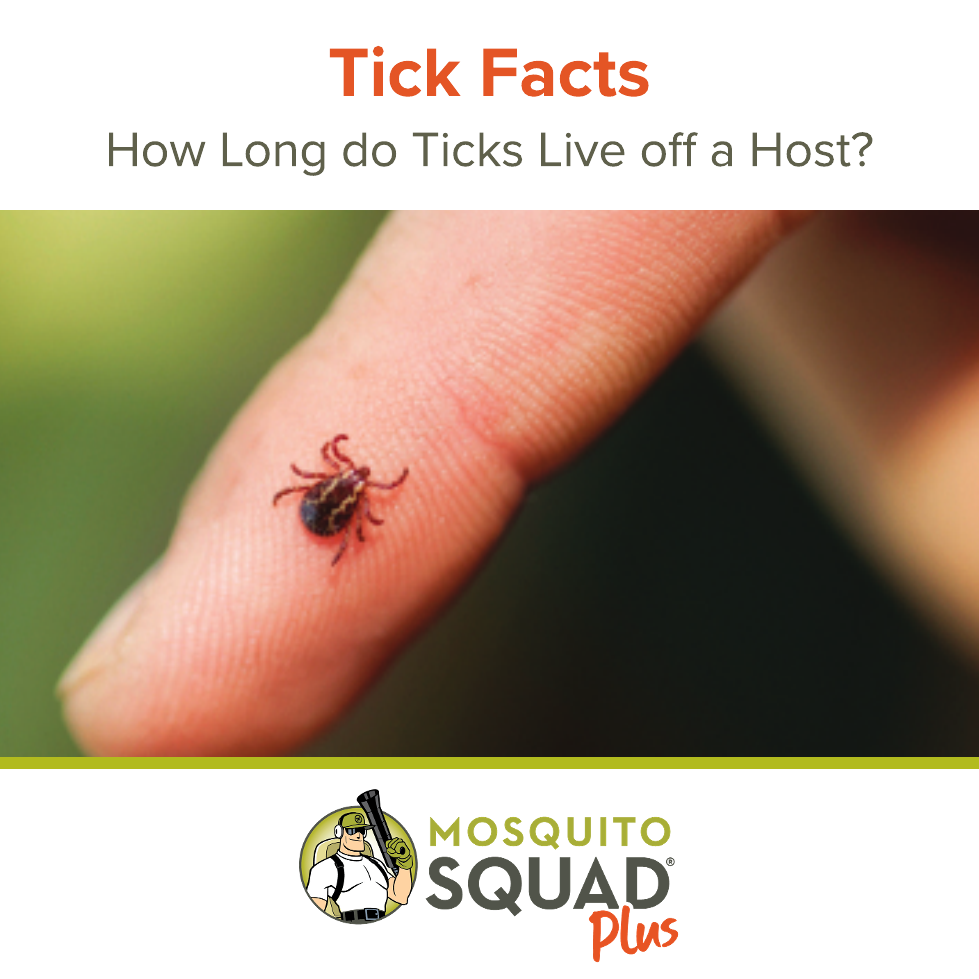
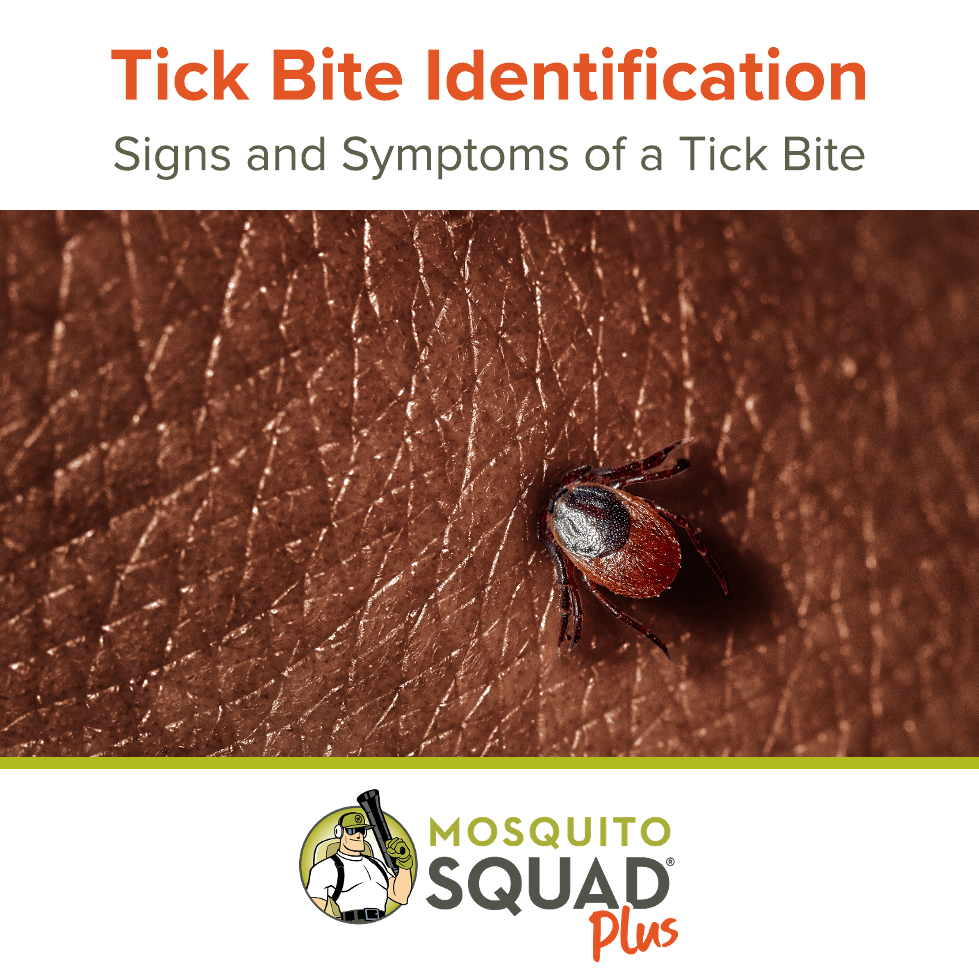
For years the answer was three species of medical importance in Ohio: the American dog tick, the blacklegged tick, and the lone star tick, all documented by OSU Extension. As of 2026, OSU is naming five, adding the Gulf Coast tick and the invasive Asian longhorned tick. They also make the point that ticks here do not shut off in winter. Any stretch above freezing, they are working.
The lone star tick is the one we get asked about most, because of alpha-gal syndrome. A CDC report published in July 2026 estimated up to 450,000 people in the United States were affected as of 2022, and ties the distribution closely to lone star tick range. It is an allergy to red meat and dairy that develops after a bite, often hours-delayed and hard to connect back to the tick.
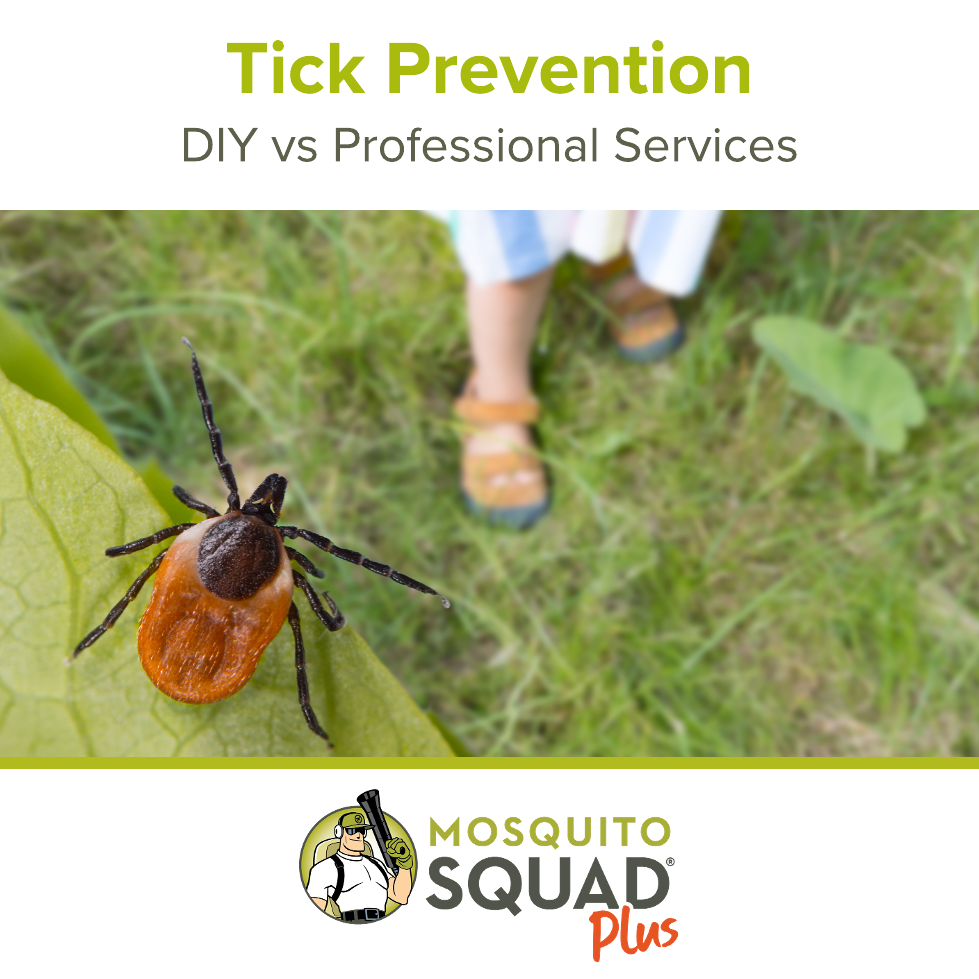
Practically, ticks concentrate in the transition strip where your mowed lawn stops and something rougher starts. If you have a levee corridor, a creek buffer, a park reserve, or an unmowed fence line behind you, that strip is your exposure, and it is usually about ten to fifteen feet deep. Your open lawn is not where you pick them up. Your back edge is.
That is also why the yard work matters as much as the treatment. Keeping that edge cut back, pulling leaf litter out of it in fall, and putting a dry mulch or gravel break between your turf and the rough stuff all reduce how far ticks travel toward the part of the yard your kids and dog use. Our tick control work targets that band directly, and the 6 C's of tick control walks through the yard changes that support it.
If ticks are your main concern, two other posts go deeper: why ER visits for tick bites hit a nine-year high, and why last fall's acorn crop predicts your tick pressure two summers out.
Chiggers Are Already Gone by the Time You Feel Them
Nothing generates more confused July phone calls in this metro than chiggers.
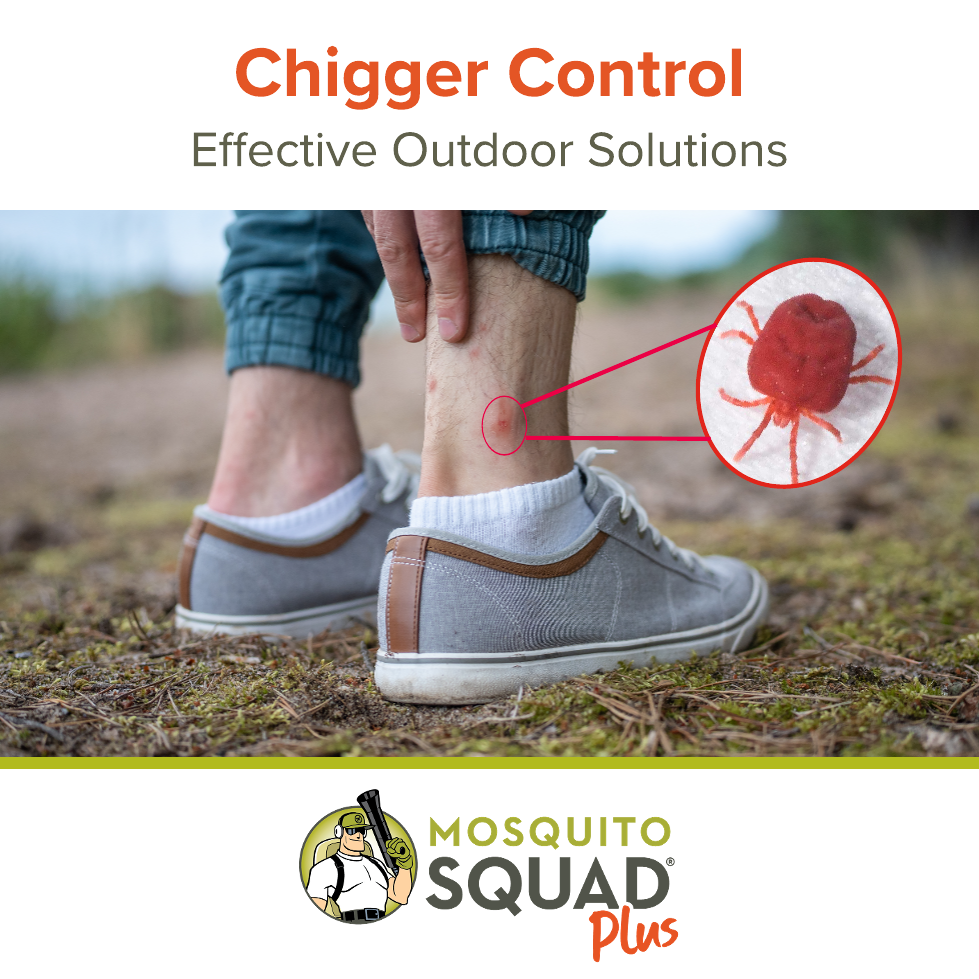
You mow a back edge in the afternoon. By that evening your sock line and your waistband are on fire, and there is nothing to see and nothing to blame. Texas A&M AgriLife Extension puts the onset at three to six hours after the bite, with the itch peaking at 24 to 48 hours. The lag is short enough that you connect it to being outside and long enough that you cannot tell which part of the yard did it. By the time you are scratching, the mite has usually detached.
That is also why the folk fixes fail. Painting the bite with nail polish does nothing, because there is nothing under there to smother.
Chiggers are mite larvae. OSU Extension documents that they overwinter as adults in soil, emerge to breed once temperatures pass 60 degrees, and reach their heaviest numbers in Ohio from June through August. The larvae climb to the tips of grass blades and wait to hitch a ride on whatever walks by. They prefer humid soil in grassy, weedy, scrubby ground, and only the larval stage feeds on people.
That habitat description is a match for the exact terrain this valley is full of. Storage basin edges, MetroPark boundaries, creek margins, the unmowed ten feet behind a fence. We have written it up for Beavercreek greenway yards and for Oakwood park edges.
If you wait until the bites show up to call about chigger control, the population has been building six weeks. Get it on before Memorial Day and your July looks different.
What Comes Inside When Your Yard Season Ends
October is when the second half of the year starts, and it catches people who think pest control ends with the first frost.
Stink bugs, boxelder bugs, and Asian lady beetles survive an Ohio winter by moving indoors. Your house is the structure they pick. They work in through soffit gaps, gable vents, tired window frames, and the seam where your garage meets the wall, then settle into the voids until spring. The ones crawling on your windowsill in April got their access last October, through openings that are still wide open today.
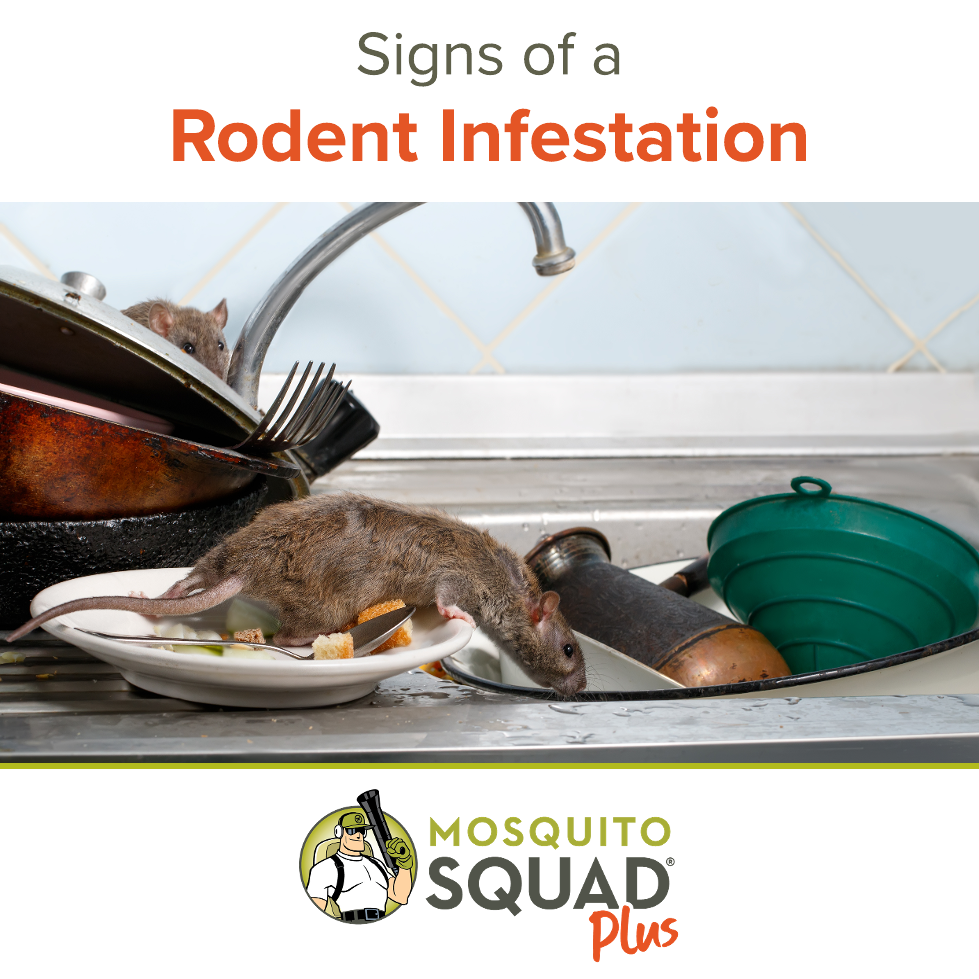
Mice are the version of this that compounds. A mouse that comes in under a garage door seal in November does not leave in spring. It breeds through the winter in the wall cavity, which is why the April call is always bigger than the November one would have been.
Your outdoor barrier does not reach any of this. Home Shield is the program that does, and it runs on a schedule matched to when these pests are moving rather than when you happen to notice them. The fall visit goes on before the entry window opens. The spring visit goes on before they come back out of your walls.
Timing is most of the value. If you call us in April with lady beetles on the glass, we can knock down what is emerging, but the population that is emerging got its access last fall. Closing that loop takes a full cycle, which is why the homeowners who get the best results here are the ones who start in September rather than the ones who start in April.
Which pest you get depends partly on your siding and your exposure. Stink bugs and boxelder bugs favor warm, sunlit walls, so a south or west face collects most of them. Rodents work the ground line instead, which puts your garage and your utility penetrations at the top of the list. We laid out the spring version of this in the Centerville April post.
How We Treat a Miami Valley Property
We run barrier treatment on a 21-day cycle from late March into October. That number is not arbitrary. In warm May conditions a mosquito generation can complete in seven to ten days, so a three-week return intercepts each new batch before it establishes. Spraying once in May and once in July gives you two good weekends and a bad summer.
When we walk your property the first time, we are reading three things: where water sits after rain, where your maintained lawn meets something unmaintained, and where your house has openings at ground level. Those three answers determine the treatment map, and they look different on a Springboro new build than they do on a 1958 ranch.
From there it is a question of coverage. The barrier treatment handles the outdoor season and is what most households here start with. Yard Defender extends the same visit into the perimeter pests, which is the right call if your problem is ants and spiders as much as mosquitoes. If you prefer botanical chemistry, our natural treatment option runs on the same 21-day cycle with a shorter residual, so it works best on properties where we can get in consistently.
Two add-ons cover the gaps. For a graduation party, a wedding, or a reunion, a special event spray goes down 24 to 48 hours ahead for a tighter knockdown on the day. For a property with real outdoor living space backing a wooded edge, an automatic misting system hits the early morning and late afternoon windows a scheduled barrier visit cannot reach.
We serve the full valley, from South Dayton and Tipp City out to Yellow Springs, and the complete list lives on our areas we service page.
If you run a restaurant, warehouse, or facility rather than a household, that is a different conversation with different priorities, and we handle it separately under commercial pest control. Roughly ninety percent of commercial work is indoor, and flies in a kitchen are a faster problem than anything happening in a parking lot. We wrote about the kitchen fly cycle separately.
Call us at (937) 226-9709 or request a quote and we will walk your property before the season gets its head start.