Harrison Mosquito Risk Peaks the Same Week Chickamauga Starts Dropping
Posted by Mosquito Squad Plus
August 17, 2026
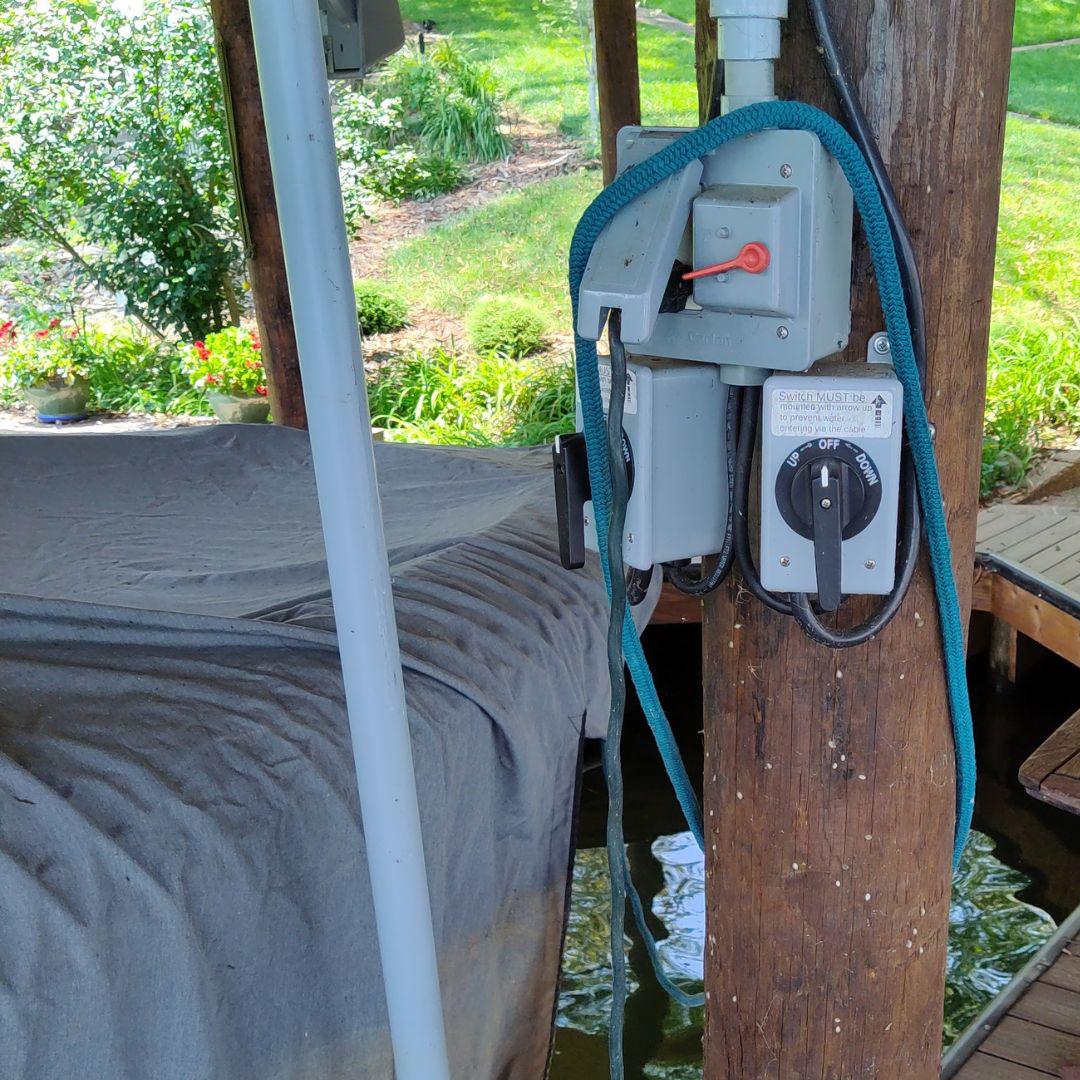
Mosquitoes get quieter in Harrison right around the time the lake starts pulling back from the docks, and most people read that as the season ending. The boats come out, the water line creeps down the bank, and evenings on the deck stop feeling like a fight.
The bugs did not leave. The ones that matter most in September just stopped being the ones you notice.
We treat properties all along this stretch of Chickamauga Lake, and the calls drop off in early September almost every year even though the pressure has not gone anywhere. What changes is that people stop looking for it. That gap between what your yard feels like and what is happening in it is why we wrote this.
What TVA Does to Chickamauga Right After Labor Day
This part is not folklore. TVA runs Chickamauga on a published operating calendar, and the fall drawdown has a start date you can circle. According to TVA's own drawdown guidance, the seasonal decline begins after the Fourth of July on Kentucky Reservoir and following Labor Day weekend on Chickamauga, Guntersville, Wheeler, and Pickwick.
Labor Day falls on September 7 this year. So the first full week of September is when the water starts going somewhere else.
If you live off Highway 58, or anywhere on the water side of Harrison, you have watched this happen every fall. It is gradual, not dramatic. TVA holds Chickamauga in a summer range of roughly 681.5 to 682.5 feet, then walks it down to around 676 feet by the end of November, with a minimum winter elevation of 675 feet to keep the navigation channel usable. That is six or seven feet over about three months.
So by late September you are not looking at mud flats. You are looking at a waterline that has slipped a foot or two down the bank, a dock riding lower than it did in July, and a few rocks showing that were not showing in June. Small enough that you register it without thinking about it. That is the part that matters here.
Harrison Bay State Park sits on about forty miles of that shoreline. TVA developed it as a recreation demonstration area in the 1930s, and it opened in 1937 as Tennessee's first state park. The bay takes its name from the old town of Harrison, which the reservoir partly covered when the dam went in. Deep into winter, when the lake is closer to its low point, people go out looking for what is left of it.
None of that is a pest problem on its own. It is the annual rhythm of living on a managed reservoir, and everybody out here plans around it. Where it causes trouble is in what people assume it means for the bugs.
Why the Shoreline Stopped Being the Problem Ninety Years Ago
The lake dropping is not bad news for mosquitoes on your property. Historically it was the single most effective mosquito control program this valley ever ran, and that is not a figure of speech.
When TVA impounded these rivers in the 1930s, the new reservoirs created enormous amounts of still water, and malaria followed. TVA's answer was to manipulate water levels on purpose. Research published through the National Institutes of Health describes the mechanism plainly: dropping water levels strand larvae and kill them through desiccation, while raising levels drowns larvae and exposes them to predators. TVA cycled the water on a seven to ten day interval during peak production season, and it needed at least a foot of vertical change to work.
It worked. Malaria was gone from the United States by 1947, and the TVA program is part of why.
So when you watch Chickamauga pull back from your bank in September, you are watching the tail end of a public health intervention that predates your house. Rate matters, and a study in PLOS One found larval densities were significantly lower under faster drawdown, with slow recession leaving a wet fringe where larvae can still finish developing. The seasonal fall decline is slower than the old cyclical program. But the direction of the effect is not in question.
We are not going to tell you the lake is breeding your mosquitoes. It is not. That would be an easy story to sell and it would be wrong.
What Culex Wants That the Lake Cannot Give It
The mosquito that drives risk in September is not the one buzzing your ankles at the marina.
It is Culex, and Culex has different taste. Wave-washed reservoir shoreline is close to useless to it. What it wants is water that sits still, goes stagnant, and gets rich with organic matter. Leaf-packed gutters. A tarp over the boat with a low spot in it. The bottom of a wheelbarrow. A corrugated drain extension with a sag in the middle. Kiddie pools nobody dumped in August. Catch basins and low spots along the road.
Every one of those is on the dry side of the waterline. Not one of them cares what TVA does with the lake.
Think about where your water sits. If you have a boat, you have a cover, and that cover has a low spot. If you have gutters under hardwoods, you have packed leaves by the second week of September. If you ran a hose to a low corner of the yard in July and never moved it, that corner is still soft. None of those care about pool elevation.
There is a timing element too. A container mosquito can go from egg to biting adult in about a week when it is warm, which means the water sitting in your wheelbarrow right now is not the same water that produced last week's mosquitoes. It resets constantly. You can dump every container on your property on Saturday and have new production going by the following weekend if it rains Tuesday.
This is why a Harrison property can feel calmer in September and still be producing mosquitoes at full tilt. The shoreline population thins out because the shoreline is doing what it always does in fall. Meanwhile the container population behind your house is peaking, because containers hold their water regardless of pool elevation, and late-summer heat runs the life cycle fast.
Our mosquito barrier treatment targets resting sites and the vegetation where adults hide during the day. That is the half of the problem you can spray. The other half is source reduction on your end, which is why the 7 T's of mosquito control put so much weight on tipping and tossing what holds water.
Why Late Season Carries More Virus Than Midsummer Does
Mosquito numbers are one thing. Infection rate in those mosquitoes is another, and it climbs all summer as the virus cycles between birds and Culex. By late August, a smaller number of mosquitoes can carry considerably more risk than a larger number did in June.
The CDC's West Nile guidance is direct about the timing: the number of people diagnosed with West Nile illness typically peaks in late August to early September. Johns Hopkins describes the same curve, with cases rising in July, peaking in August, and holding through September before dropping off in October as it cools.
Read those two calendars next to each other. Chickamauga starts dropping right after Labor Day. West Nile peaks in late August into early September. They land on the same week, and they tell you opposite things.
One is a visual cue that says the season is winding down. The other is the actual epidemiological peak of the year.
CDC also notes that risk of severe illness climbs with age, and that people 65 and older are roughly three times as likely to develop neurologic illness as people under 65. If there is anyone in that range in your household, that changes the math on a September evening outside.
We are not trying to scare anybody. Most people who get infected never know it. But the calendar mismatch is real, and September is the wrong month to relax on this particular lake.
What We Look At on a Harrison Property in September
The walk changes this time of year. In May we are looking at vegetation and shade. In September we are looking at things that hold water and have been holding it a while.
Gutters come first, especially on the shaded north side where debris packs in and does not dry. Boat covers and grill covers with standing water in the folds. Downspout extensions that sag. The corrugated pipe that runs to daylight and holds an inch at the low point. Anything stored behind a shed since spring.
Then the low ground. Properties in Harrison that back to a wet-weather drain or a slough finger have a different profile from properties sitting up on higher ground away from the water. Both get treated, and they do not get treated identically.
If your house sits back from the water on higher ground, your profile is closer to a standard Hamilton County yard and your gutters and containers are doing most of the work. If your lot runs down to the bank, you have a wider transition zone, and the vegetation along that edge holds humidity longer than the rest of your property does.
Either way, the question we are asking on your property is the same one you can ask yourself: what here is holding water that nobody has touched since spring?
Yards on the water get one more variable: irrigation. Sprinklers running a full summer schedule into September keep bed edges damp long after the rain stops. When we see a property that is dry everywhere except a strip of mulch along the foundation, the irrigation controller is usually the reason.
Our Home Shield program runs the structure perimeter year-round rather than shutting off when the calendar says summer ended. For properties that want yard coverage on top of the perimeter, Squad Yard Defender handles the broader outdoor space. If you want the full menu, the pest packages page lays out what each one covers.
How a Fall Treatment Differs From a Summer One
People assume the September visit is the August visit with a different date on it. It is not how we approach it.
In midsummer we are working adult populations that are dispersed across your whole yard. Heavy vegetation, deep shade, tall grass along a fence line. The barrier goes where mosquitoes rest during the heat of the day, and there are a lot of those places in July.
By late September your yard has fewer of them. Vegetation thins, some of it goes dormant, and the resting sites concentrate. That means the productive treatment area narrows and the sources matter more. If you have one bad container and everything else is clean, that container is now a much larger share of what is biting you.
It also means your own walk-through carries more weight in the fall than it does in June. In July, dumping one bucket is a rounding error against everything else your yard is producing. In late September, dumping one bucket can be most of the problem solved. Your effort scales up right when the population narrows.
There is less competing habitat for the product to chase in October than there was in July, so each treatment covers a larger share of what is left. That is the case for staying on service through the fall.
The Six Weeks Nobody Puts on the Schedule
The stretch between Labor Day and mid-October is the part of the year Harrison homeowners most often leave uncovered.
It happens for understandable reasons. Contracts written in April run a set number of treatments and expire. The lake looks like it is going to sleep. Kids go back to school and the backyard stops being the center of the household. Football starts.
And that is the window where infection rate runs highest and the yard is still producing.
Fall in this part of Hamilton County is not a hard stop. Warm afternoons run deep into October most years, and Culex stays active as long as the water sitting in your gutter stays liquid, which in a normal Chattanooga fall means well past the point when you have stopped thinking about mosquitoes at all.
We keep treating in Hixson, Middle Valley, and Georgetown for that reason.
The same pattern runs north toward Birchwood and Lakesite, where properties sit on the same water and watch the same drawdown on the same schedule you do.
If you want the wider view of how this valley's terrain shapes pest pressure across the whole market, we covered that in an earlier piece on Chattanooga terrain.
What Helps Between Now and the First Real Cold
Walk the property a full day after the next rain rather than during it. What is still holding water 24 hours later is the stuff producing mosquitoes.
Clean the gutters even though the leaves are not all down yet. Half-clogged gutters in September hold water for weeks.
Pull the tarps tight or take them off. A sagging cover is one of the most productive containers on most properties, and almost nobody checks it.
Dump anything you can lift. Saucers, buckets, toys, the wheelbarrow, the bottom tray of the grill. Culex needs stagnant water and time. Take away the time.
Look at your downspouts specifically. Not the gutter, the extension. If yours runs into a corrugated black pipe that goes out into the yard, walk the length of it and find the sag. There is almost always a sag.
Check the irrigation schedule. Late-season watering on a summer program keeps foundation beds wet when nothing else in the yard is.
And keep treatment running through October instead of stopping in August. If you are past your contract, special offers are worth a look before the season closes out.
For anyone who wants to keep pets and pollinators in mind, our natural treatment option is available across this market. Properties with heavier pressure sometimes go to an automatic misting system, and if you have an outdoor event on the calendar this fall, special event sprays cover a single date.
Ticks do not shut off in September either. Our tick and flea control runs alongside mosquito service, and the national tick control page covers the biology if you want it.
What Happens When the Water Comes Back in Spring
The drawdown is only half the cycle. TVA refills these reservoirs in spring, and the same shoreline that dries out in October goes back under water in March and April, which is when the shoreline vegetation and flotage that the old TVA program was designed to eliminate starts rebuilding again.
For you, that matters less than it sounds like it should, because your yard was never on the TVA program. The lake gets managed. Your gutters do not. Whatever you leave holding water through the winter is sitting there ready when temperatures come back up in late March, and the properties we find in the worst shape in April are almost always the ones that went untouched from September on.
So the fall visit is doing double duty. It handles what is biting you now, and it sets where you start in late March, which on a lake property tends to matter more than it does on an interior lot.
The Short Version
The lake going down is real, it is scheduled, and it is good for mosquito control along the shoreline. That is not the part of your property producing mosquitoes in September.
Your gutters are, along with the boat cover and that drain extension behind the shed. The mosquitoes coming out of those are carrying more virus than anything you swatted back in June.
If you are on this lake and your service stopped in August, you are uncovered for the six weeks that count most. Call us at (423) 403-3513 or get a free quote and we will walk the property with you.
You can see what neighbors around the market have said on our reviews page, and every treatment we run is backed by our guarantee.