Rat Droppings Are a Wet Clean-Up Job, Never a Broom Job
Posted by Mosquito Squad Plus
November 17, 2026
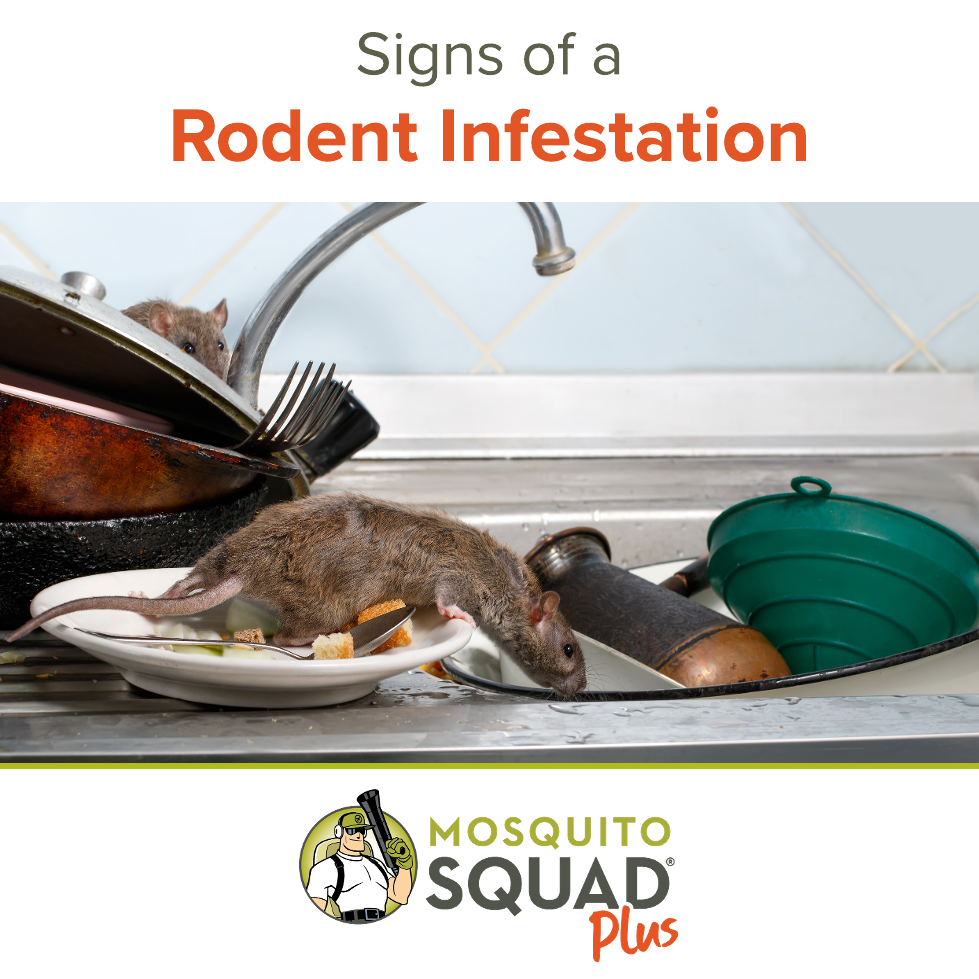
Rat droppings are dark pellets, about 1/2 inch long with pointed ends when a roof rat left them and up to 3/4 inch with blunt ends from a Norway rat. Finding them means rats have been feeding or traveling there recently, and the right first step is a careful wet clean-up, not a broom or a vacuum.
That surprises people. Finding droppings in a garage or pantry corner is common here, and at Mosquito Squad of North Orange County we'd rather you skip the broom and clean them up calmly.
What rat droppings look like
Shape and size are the giveaways. The Internet Center for Wildlife Damage Management describes roof rat droppings as about half an inch long with pointed ends, and Norway rat droppings as up to 3/4 inch long and 1/4 inch wide with blunt ends. Norway rats leave about 40 to 50 droppings a day, usually in small clumps, and fresh droppings are soft.
Mouse droppings are much smaller, about 1/4 inch, so droppings that small usually point to mice rather than rats.
Are rat droppings harmful?
They can be, which is why they deserve care rather than alarm. The CDC explains that rodent-borne diseases mainly spread to people when they breathe in contaminated air, which happens when dried droppings or urine are stirred up into tiny droplets. UC IPM lists typhus, leptospirosis, food-borne illnesses such as salmonella, and rat-bite fever among the diseases rats can carry.
The vector control district adds that the most common way people are exposed is through food or water contaminated with rodent droppings and urine. So the practical rules are simple. Don't stir it into the air, don't let it near food, and clean it thoroughly. If you think a recent illness may be connected to rodents, the CDC's advice is to talk to a healthcare provider.
Cleaning up the way the CDC recommends
The CDC's rodent clean-up guidance comes down to five steps, listed in the order we'd follow them.
- Open the doors and windows and let the space air out for 30 minutes before you start.
- Put on rubber or plastic gloves.
- Mix a disinfectant of 1.5 cups of household bleach in 1 gallon of water, which is 1 part bleach to 9 parts water.
- Spray the droppings and any urine until they're soaked, then let it sit for 5 minutes, or as long as your disinfectant's label says.
- Don't sweep or vacuum droppings, urine or nesting material at any point. Both put particles into the air.
The CDC page has the rest of the process, including how to dispose of what you wipe up, and it's worth reading in full before a bigger clean-up like an attic or a shed.
Other clues around a North Orange County home
Droppings are rarely the only sign. UC IPM's list of things to check matches what homeowners around here tend to find.
- Droppings around pet bowls, pet food bins or recycling bins
- Scratching or running in the attic or a drop ceiling at night
- Fruit that's been eaten on the tree or gnawed after it falls
- Rats running along utility lines or fence tops at dusk
- Nests behind boxes or in drawers in the garage
- Greasy rub marks along beams, pipes and walls
Where you find droppings tells you something too. Droppings near the garage door point to a ground-level entry, while droppings in the attic suggest roof rats coming in from above.
Keeping rats from coming back
Clean-up handles what's already there. Prevention is what keeps you from doing it all over again. Rats need food, water and a way in. UC IPM recommends sealing every opening larger than 1/4 inch with steel wool, wire screen or sheet metal, since rats chew through plastic, foam, wood and caulk. Store pet food and birdseed in sealed containers, pick up fallen fruit, and keep trash lids tight.
Sanitation only works if you keep it up. If you're weighing how quickly to act, our post on the damage pests do to Yorba Linda homes covers the harm pests can do to a house over time.
When it makes sense to call us
If droppings keep turning up after a clean-up, or you're finding them in more than one place, that's the point where most people decide to bring someone in. Our rodent add-on to the Complete Home & Yard Package puts rodent control alongside year-round pest protection for your home, priced to your property with a free quote. Many of the signs you need pest control apply in any season, not just spring.
You can reach Mosquito Squad of North Orange County at (657) 217-2679. We're a family-owned business in Placentia, and the quote is free.