ER Visits for Tick Bites Are at a Nine-Year High. Here Is What That Means for Your Cincinnati Yard.
Posted by Mosquito Squad Plus
June 4, 2026
The CDC said it in April 2026 and Hamilton County Public Health repeated it loud enough that anyone paying attention should have heard it. Weekly emergency department visits for tick bites are at their highest level nationwide since at least 2017. Nine years of data. The Midwest is leading that number, not the South, not Appalachia. The Midwest. Which means the counties surrounding Cincinnati are part of the story driving that national headline, not just reading about it from a safe distance.
This is not a theoretical concern for Hamilton County homeowners. Hamilton County Public Health issued a formal tick season warning this spring naming the Lone Star tick specifically as an active threat in this county. Jeremy Hessel, environmental health director at Hamilton County Public Health, put it plainly: the Lone Star tick actively seeks out a host, which is a concern for people enjoying Hamilton County's forests and parks. Dr. Stephen Feagins, the department's medical director, added that early detection of tickborne illness is crucial for avoiding a lifetime of health complications like meningitis, arthritis and heart issues.
Those are not boilerplate public health statements. Those are your county health officials naming a specific species, in your county, right now, in the middle of peak tick season.
The question for a Cincinnati homeowner is not whether the Lone Star tick is here. It is here. The question is whether your yard is set up to reduce how often it finds you.
Ohio's Tick Numbers Are Not a Distant Trend
Before getting into what the Lone Star tick specifically does, it helps to understand what the broader tick picture in Ohio looks like right now, because the numbers have moved fast enough that most homeowners are working with outdated assumptions.
In 2010, Ohio documented 40 cases of Lyme disease. By 2020 that number had grown to 415. In 2025, according to the Ohio Department of Health, reported Lyme disease cases reached 2,830. That is a nearly sevenfold increase in five years. ODH Director Dr. Bruce Vanderhoff issued a public warning as spring opened this year specifically because of that trajectory.
The Ohio Department of Health's own vector-borne disease surveillance data confirms Lone Star ticks identified in Hamilton County and Montgomery County. The CDC's updated Lone Star tick range map, revised through 2025, now shows the species established in Ohio as part of a broader northward expansion confirmed in more than 30 states. Established means at least six ticks of a single life stage or multiple life stages collected in the county within a 12-month window. It is not a sighting. It is a confirmed breeding population.
The Lyme disease surge is driven by blacklegged ticks, which is a separate species from the Lone Star. But the two pressures are running simultaneously in Hamilton County, and most Cincinnati homeowners are not tracking either one on a timeline that matches when the ticks are actually active.
What Makes the Lone Star Tick Different From Every Other Tick in This County
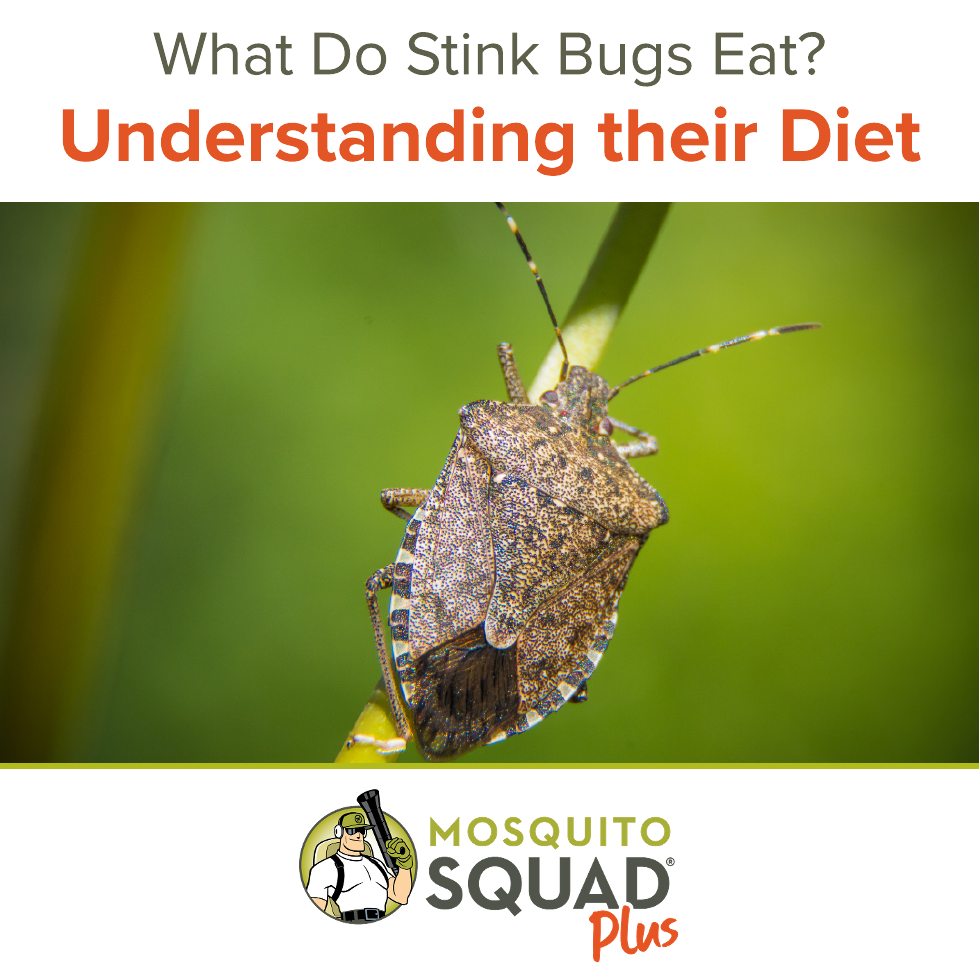
Ohio has three tick species of primary medical concern. The Ohio State University Extension tick factsheet documents the blacklegged tick, the American dog tick, and the Lone Star tick as the species Hamilton County homeowners are most likely to encounter. Each behaves differently, peaks at different times, and carries different risks. Understanding which one you are dealing with changes what you should be doing about it.
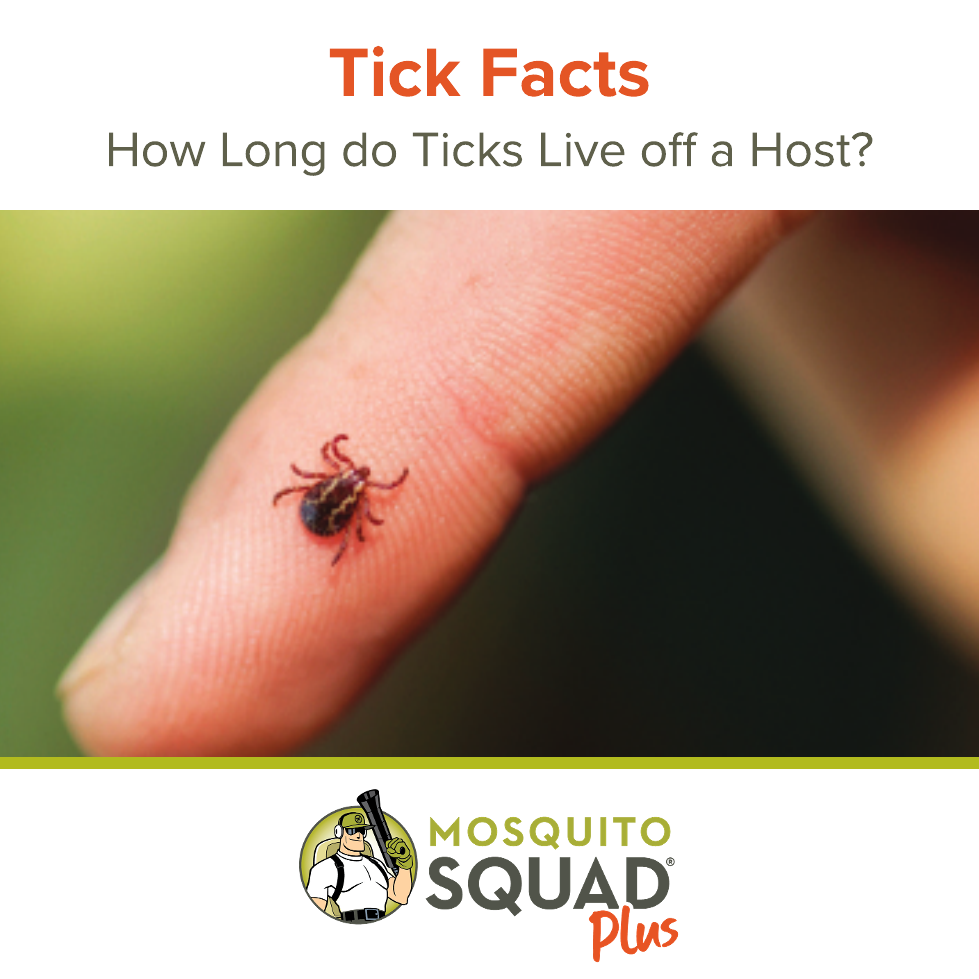
The blacklegged tick is the Lyme disease vector. It is small, it waits passively on vegetation for a host to brush past, and it concentrates in the wooded edge zones where maintained lawn meets unmaintained vegetation. Its nymphs, roughly the size of a poppy seed, peak in May and June and are responsible for the majority of Lyme transmissions because they are nearly impossible to spot before they have been feeding long enough to transmit the bacteria.
The American dog tick is larger, more visible, and less medically significant in most Cincinnati neighborhoods, though it carries Rocky Mountain spotted fever and tularemia.
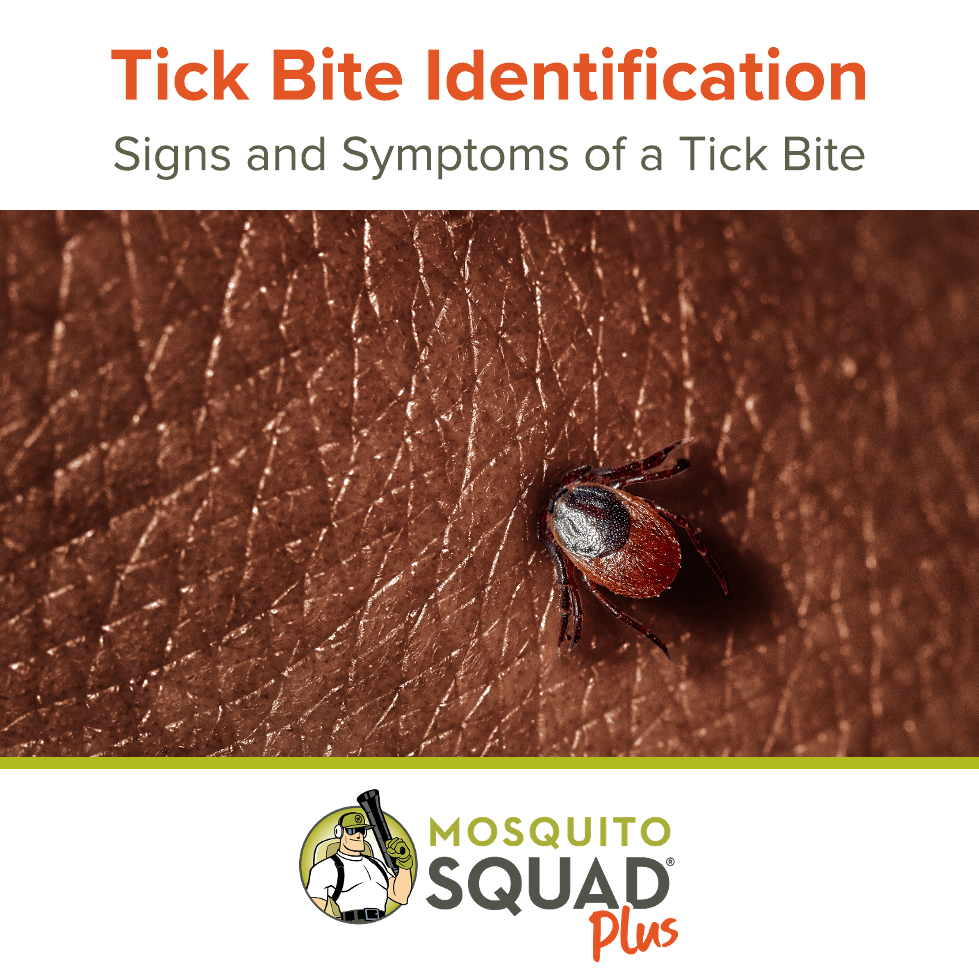
The Lone Star tick is the one in the news right now, and it is in the news for a specific reason. It does not wait. The CDC documents the Lone Star tick as a very aggressive tick that bites humans and actively pursues hosts rather than waiting passively on grass blades. It responds to carbon dioxide, heat, and movement, which means it comes toward you. Homeowners in Hamilton County regularly report finding multiple Lone Star ticks attached after spending only a short time in a yard with wooded edges or fence line vegetation. One pass through a brushy back lot boundary is not one tick encounter. It can be several.
Entomologists at Ohio State University have noted that the risk is highest for people spending time near the brushy borders of wooded areas. That describes the back fence line of most established suburban properties in Blue Ash, Indian Hill, Madeira, and Loveland. It describes the wooded buffer behind a Clermont County lot in Day Heights. It describes the shaded garden border of nearly every property in Deer Park where a mature shrub line has been growing against the back fence for forty years.
The tick is active March through September in Ohio. That window is open right now.
Alpha-Gal Syndrome Is the Part of This Story Most Homeowners Have Not Heard Yet
The Lone Star tick transmits ehrlichiosis, tularemia, Southern Tick-Associated Rash Illness, and Heartland virus. Heartland virus has no vaccine and no known cure. Those are real concerns. The one getting the most attention nationally right now is alpha-gal syndrome, and it deserves a plain explanation because the way it works is genuinely unlike anything most people have encountered in a tick context before.
The CDC describes alpha-gal syndrome as a serious, potentially life-threatening allergic condition that develops after a Lone Star tick bite. The tick transfers a sugar molecule called galactose-alpha-1,3-galactose into the human bloodstream during feeding. The immune system mounts a response to that molecule. Afterward, when the person eats beef, pork, lamb, venison, or products derived from mammals including certain dairy products and some medications, the immune system reacts. Symptoms range from hives and stomach pain to full anaphylaxis. In a New Jersey case documented recently, a man died from complications linked to alpha-gal syndrome, making it the first documented AGS-related fatality in the United States.
Here is the part that catches people. The reaction does not happen immediately after eating. The CDC documents that symptoms typically appear three to six hours after consuming red meat or mammalian products, not while the person is at the table. By the time symptoms arrive, the connection to the meal is not always obvious. By the time anyone connects it to a tick bite that may have happened weeks or months earlier, the patient has often already seen multiple doctors for what looked like food poisoning, irritable bowel syndrome, or unexplained allergic reactions. A 2022 survey found that 42 percent of primary care providers had not heard of alpha-gal syndrome. The condition is not a notifiable disease, which means it does not appear in the same surveillance systems that track Lyme disease.
The CDC documents more than 110,000 suspected alpha-gal syndrome cases in the United States between 2010 and 2022. Researchers estimate the true number may be as high as 450,000. The CDC's MMWR geographic distribution report placed Ohio inside the high-prevalence zone for positive alpha-gal antibody test results. Hamilton County sits in the middle of that zone.
Jeremy Hessel from Hamilton County Public Health named alpha-gal syndrome specifically in this spring's tick warning. Your county health department is telling you this is a local concern, not a southern states story.
Where the Lone Star Tick Lives in a Cincinnati Yard
This is the practical part, and it is where most homeowners have the biggest gap between what they think and what the research shows.
The middle of the open lawn is not where the tick pressure is. Research published in Entomology Today found that nymphal tick density was highest at the wooded edge of the lawn-forest transition zone, where leaf litter and scattered undergrowth create the humid microclimate ticks need to survive. Maintained turf was among the lowest-density areas on the same properties. The tick population is not evenly distributed across your yard. It is concentrated in specific zones, and those zones are predictable.
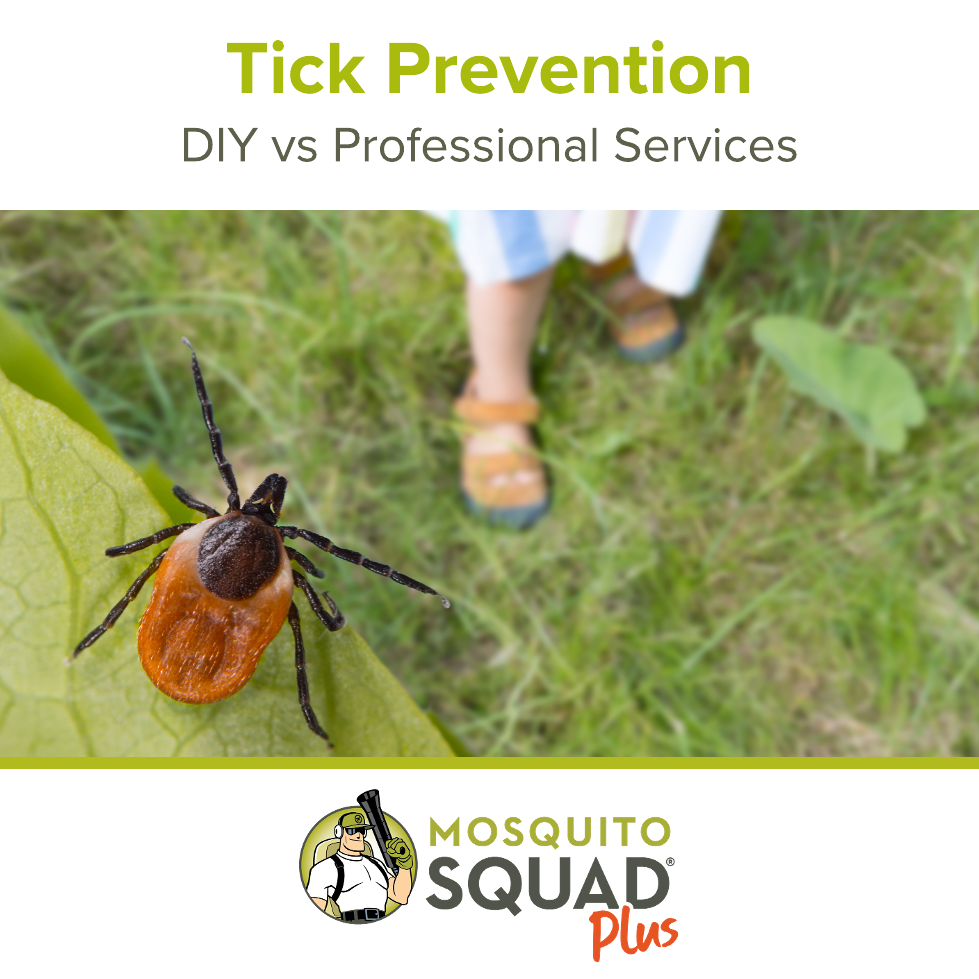
In a typical Hamilton County suburban yard, those zones are the back fence line where leaf litter accumulates against the wood. The shaded strip under the mature shrub border along the foundation. The unmowed margin between the maintained lawn and a neighbor's naturalized vegetation or a drainage easement. Any property edge that backs up to wooded green space, a park boundary, or a creek corridor. These are the spots where a Lone Star tick nymph is waiting, and the nymph stage is the stage most responsible for human exposure because at roughly the size of a poppy seed it is functionally invisible until it has been feeding for hours.
For properties near the Little Miami River corridor or adjacent to any of the Five Rivers park system green spaces throughout the metro, wildlife movement is the delivery mechanism. Deer moving through the drainage corridor behind the back fence carry adult Lone Star ticks. When those deer pass through your property edge, they drop ticks. The ticks do not stay on the deer. They establish in the leaf litter and vegetation along the path the deer walked, which is exactly the back fence line most Cincinnati homeowners walk past without thinking about it every single day.
What Homeowners Usually Try and Where It Falls Short
The instinct is right and worth following. Tick checks after outdoor time. Long pants and permethrin-treated clothing for yard work. Hot dryer cycle after coming inside. Removing leaf litter from the back fence line. All of it helps at the margins.
But none of it changes what is living and reproducing in that fence line. Most Cincinnati homeowners near Indian Hill or along the Loveland trail corridor wait until a bad summer experience prompts the first call. By that point the nymphal peak has already run through and the population has been quietly building since March. The tick that bit you in May was not a one-off encounter. It was a population that nobody interrupted.
OSU Extension now runs the Buckeye Tick Test laboratory, which can test a submitted tick for pathogens for $50 with results in 72 hours. Useful after a bite. Does nothing about the yard that produced it.
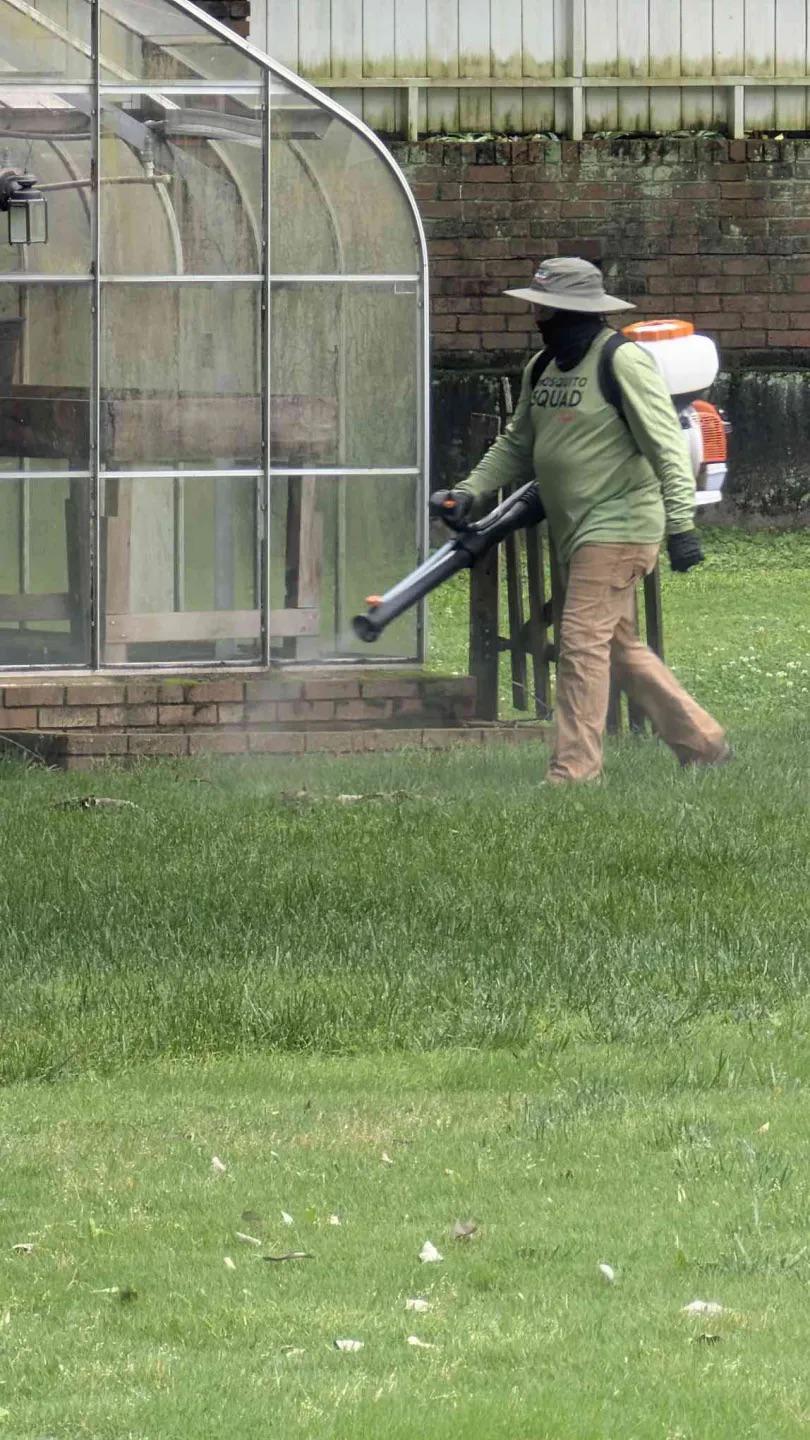
Our tick control program follows the 6 C's of Tick Control and targets the leaf litter accumulation along the back fence, the shaded bed edges under canopy, the low brush at the property perimeter, and the transition zones where the maintained lawn ends and something less managed begins. That is where the ticks are. That is where the treatment goes.
The Mosquito and Tick Connection in Hamilton County
The tick pressure and the mosquito pressure in Cincinnati peak across overlapping seasonal windows, which means the treatment approach that handles both on the same recurring schedule is more efficient and more effective than addressing them separately.
The Cincinnati Health Department reported 24 West Nile positive mosquito pools in 2024, compared to a 10-year average of six. Hamilton County Public Health confirmed the county's first human West Nile case of 2025 in Sycamore Township. The mosquito season and the tick season are both running longer and hitting harder than historical baselines suggested they should. Both are driven by the same underlying conditions: milder winters, expanding deer populations, and a warming Ohio Valley corridor that gives every pest species a longer active window each year.
A mosquito barrier treatment running on a 21-day recurring cycle from late March through October, combined with tick control targeting the edge zones on the same schedule, is the program that consistently produces a usable yard through the full active season. For properties that prefer botanical-based chemistry, the natural mosquito treatment runs on the same schedule with essential oil active ingredients. The 7 T's of Mosquito Control framework covers the systematic property assessment approach for the mosquito side of that program.
For properties with significant outdoor living space, an automatic misting system can supplement the recurring barrier treatment. For outdoor events this summer, a special event treatment applied 24 to 48 hours before the event provides tighter knockdown on top of the recurring program.
When to Act and What to Watch For
Peak tick season in Hamilton County runs March through September according to Hamilton County Public Health. The Lone Star tick nymphal peak runs May through July, which is the window with the highest human exposure because nymphs are small enough to miss on a tick check and active enough to reach you across open ground. That window is open right now.
The practical signals in a Cincinnati yard that conditions have arrived are specific. The dog comes in from the back yard and you find something on the base of the tail or between the toes on the first warm walk of spring. You spend a Saturday afternoon pulling weeds along the back fence and find small dark specks on your socks that were not there when you went outside. A family member develops a rash, fatigue, or joint pain in the weeks following outdoor activity and nobody can explain where it came from. Any of those is the tick population announcing itself from the zones it has been building in through the spring.
The treatment program that changes the season starts before those announcements. Not in response to them.
If the back fence line has not been treated and you are spending time in the yard right now, the population is already ahead of you. The Mosquito Squad of Cincinnati covers Hyde Park, Blue Ash, Indian Hill, Loveland, Madeira, Deer Park, and communities throughout Hamilton and Clermont Counties. Reach out and we will walk the property with you before peak nymphal season closes. Call us at (513) 666-5354.