Why Ooltewah's New Subdivisions Get Fire Ants the Old Neighborhoods Never Had
Posted by Mosquito Squad Plus
July 20, 2026
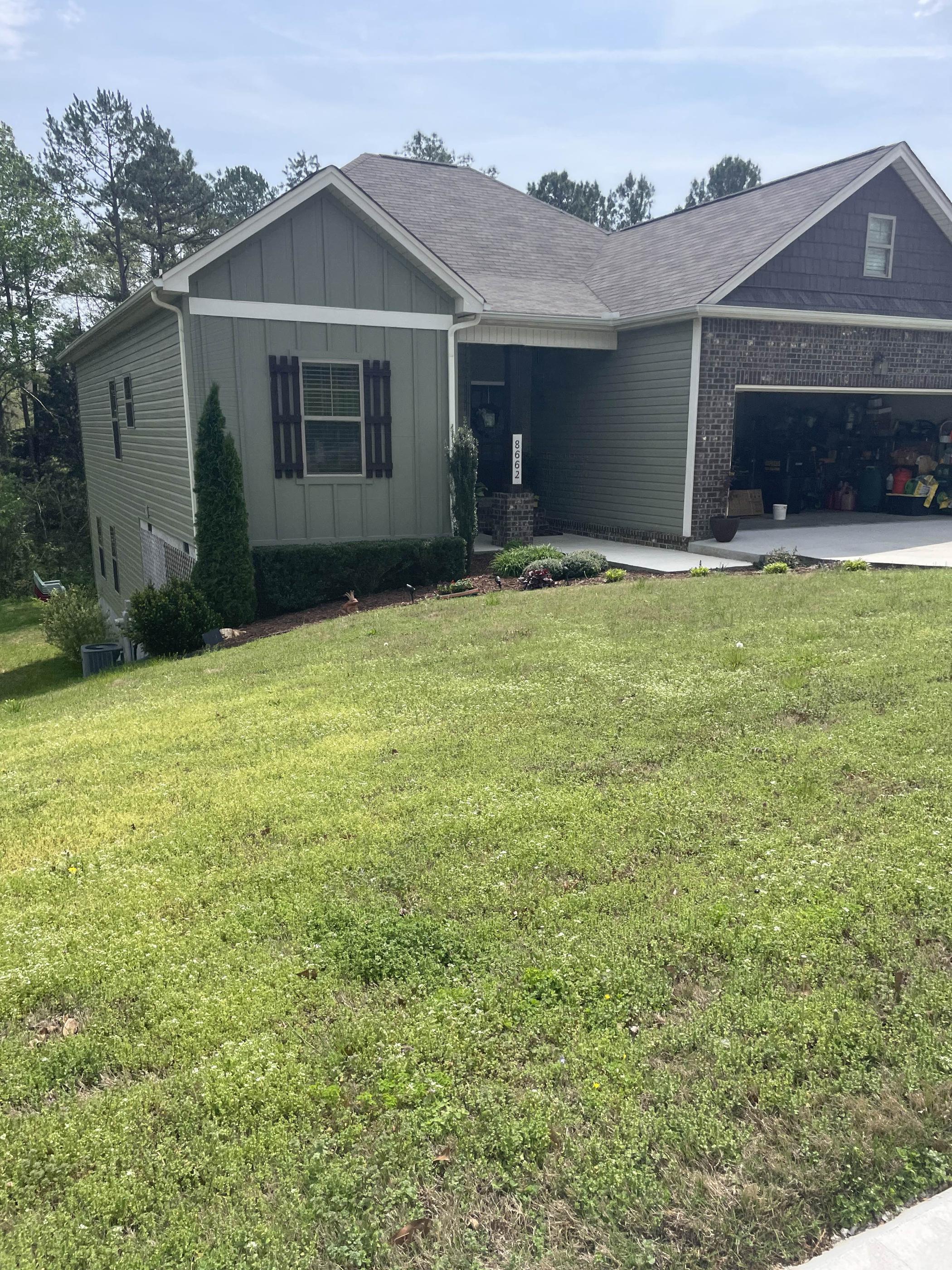
Buy a brand-new house in one of the subdivisions going up off Ooltewah-Georgetown Road and you can watch it happen on a predictable schedule. The sod goes down over freshly graded red clay, barely rooted. You close in spring. By the first week of July there are hard dirt mounds pushing up through the new grass, and when the mower clips one, the ground boils. Meanwhile the established neighborhood a half mile away, the one built in the nineties with settled lawns and mature trees, does not have them.
That gap has nothing to do with luck or with how well anybody keeps their yard. It comes down to one thing that separates a two-year-old subdivision from a thirty-year-old one, which is how recently the dirt was torn up. Fire ants are a disturbance pest, and Ooltewah is building faster than almost anywhere in the Chattanooga metro. Those two facts run into each other in the new lawns going in across this corridor every season.
Fire Ants Follow the Bulldozer
Most of the pest stories in a growing area go the same way. A subdivision goes up against wooded land, and the mosquitoes and ticks that already lived in those woods are still there when you move in. That is a real dynamic, and it is the one behind the wooded edges of Ooltewah and the tick season there. Fire ants do not work that way.
The red imported fire ant is not a woodland insect waiting at the tree line. It is a pioneer that colonizes open, sunny, disturbed ground, and a construction site manufactures exactly that. When a developer clears trees, strips topsoil, grades a lot flat, and lays sod, the result is a wide expanse of bare and freshly turned earth in full sun with no established competition in it. To a fire ant queen looking for a place to start a colony, that is prime real estate. The University of Tennessee runs a dedicated program on this insect, and the picture across fire ants in Tennessee is consistent: they thrive in cleared, sunny, open areas rather than shaded mature landscapes.
It helps to understand what a colony really is. A single mature fire ant colony can hold well over a hundred thousand workers built around one or, in many southern populations, several egg-laying queens. The mound is the visible piece, but the colony is a deep network of galleries, and a colony with multiple queens can split and bud off new colonies nearby without a single mating flight. Drop that reproductive machine onto a blank graded lot with no competition and it spreads across the neighborhood on its own clock.
The older neighborhood down the road is a harder target. Decades of dense, established turf, mature root systems, and settled soil leave little of the open bare ground a founding queen wants, and any colonies that did move in years ago have reached a kind of equilibrium. The new subdivision is a blank slate. That is the whole reason the new lawns get mounds the old ones do not.
They Also Arrive in the Truck
Habitat is only half of it. The other half is that fire ants get physically imported into a new development with the materials that build it.
This mechanism is well established, and it is the entire reason the federal government regulates the movement of certain goods. The USDA's Animal and Plant Health Inspection Service runs a quarantine on imported fire ants that restricts moving nursery stock, sod, hay, and soil-moving equipment out of infested areas, because those are the things that carry colonies to new ground. Tennessee's Department of Agriculture enforces the same restrictions on soil, sod, and nursery plants, noting that fire ants spread far faster through this human-assisted movement than they ever do on their own.
Now think about what arrives at a new subdivision. Pallets of sod grown on a farm somewhere else, often in the fire ant belt to the south. Truckloads of fill dirt from a borrow pit that could be anywhere. Nursery trees and shrubs with soil around the roots. Grading equipment that worked another site last week. NC State's extension service puts the consequence plainly: fire ant mounds discovered in previously uninfested areas are frequently traced to landscaping performed at commercial and residential developments. The building process does not just create fire ant habitat. It can deliver the fire ants too.
The quarantine rules are supposed to catch this. Sod, soil, and equipment leaving an infested area are meant to be inspected or treated first. In practice, a lot of material moves within the infested region without much friction, and a single overlooked pallet of sod or load of fill can seed a colony that fans out across a subdivision over the next couple of summers. From the homeowner's side, none of that paperwork is visible. What is visible is a mound in the new backyard that was not there at closing.
Why Ooltewah Specifically
Every growing suburb deals with some version of this. Ooltewah gets a concentrated dose because of how fast and how recently it has grown.
Ooltewah sits in eastern Hamilton County, and along with neighboring Collegedale it has been the fastest-growing part of the county. The University of Tennessee's state data center documented the unincorporated parts of Hamilton County adding more than ten thousand residents since 2020, among the highest gains anywhere in the state. The same build-out is running through Apison and the Georgetown corridor, and local builders describe the Ooltewah area as having more new construction inventory than any other submarket in the metro. Land that was wooded acreage or open farm ground a few years ago is now subdivisions with names on brick entrance signs.
That conversion is the part that matters for fire ants. Open pasture and cleared farm ground being scraped and regraded into lots is close to an ideal setup for colonization, sunny, disturbed, and freshly worked, right at the moment new sod and fill are being trucked in on top of it. A corridor that adds subdivisions year after year is a corridor that keeps generating fresh colonization sites faster than the ants could ever find on their own.
That means a large and growing share of Ooltewah yards are exactly the young, recently disturbed, sod-over-graded-clay lots that fire ants colonize first. Ooltewah does not have some special fire ant history driving this. What it has is an unusual concentration of brand-new ground, and brand-new ground is what these ants want. The pest pressure is riding in on the growth itself.
What a Fire Ant Sting Does to You
Homeowners moving in from farther north sometimes have never dealt with these ants and do not take the first few mounds seriously. That changes fast the first time someone stands in one.
A fire ant does not sting once and leave. Workers grip the skin with their jaws, then sting repeatedly in an arc, injecting an alkaloid venom that produces the burning sensation the ants are named for. Texas A&M's extension service, which has studied this insect as thoroughly as anyone, describes the characteristic reaction: a white fluid-filled pustule that forms a day or two after the sting, along with the risk of secondary infection if it breaks. For most people that is painful but not dangerous.
For a smaller group it is more serious. A peer-reviewed review of fire ant health impacts found that in infested areas roughly a third of the population is stung each year, that about one in five stings produces a large local reaction, and that a smaller share, on the order of one to two percent, causes a systemic allergic reaction that can range up to anaphylaxis. In a household with small children who play in the grass, or a family member with a known sting allergy, a colonized new lawn goes past nuisance and becomes a real reason to treat.
Pets are exposed too. A dog that noses into a mound or a cat that walks across one gets the same swarming, repeated stings a person does, usually on the paws, face, and belly where the coat is thin. Fire ants are also drawn to electrical equipment and have a documented habit of nesting around AC units, irrigation boxes, and utility housings, which on a new lot full of fresh equipment is one more reason not to let a colony settle in and multiply.
Why the Mound You See Is the Wrong Target
The instinct when a mound appears is to pour something on it. Boiling water, a gas-station ant killer, whatever is under the sink. Sometimes the mound goes quiet. Often it reappears a few feet away within a week, and now there are two.
The reason is that a fire ant colony is not the mound. The mound is a solar chimney the ants use to regulate temperature, and the colony itself, including the queen who is the only individual that matters for killing it, sits in a network of tunnels that can run several feet down and out. Disturbing the surface without reaching the queen often does nothing but prompt the colony to relocate, and a stressed colony can split into multiple new ones. Treating mound by mound as they appear is a losing game on a property where new colonies keep arriving in the sod and flying in from every disturbed lot nearby.
This is where the approach that works comes in, and it is the one extension entomologists have recommended for years. Often called the two-step method, it pairs a broadcast bait, which foraging workers carry down and feed to the queen, with targeted treatment of individual problem mounds. The bait works slowly and reaches the part of the colony you cannot dig to. The mound treatment handles the ones sitting next to a doorway or a swing set that you cannot wait on. Used together and kept up over the season, they bring a property under control in a way that neither does alone. Our fire ant control follows that logic, and on a new-construction lot it is a program, not a one-time visit, because the pressure keeps renewing as the surrounding development continues.
Fitting Fire Ant Work Into a Whole-Yard Plan
Fire ants rarely show up as the only pest issue on a new Ooltewah lot, which is why they usually get folded into broader coverage rather than treated in isolation.
The same freshly graded, sunny yard that suits fire ants also tends to collect the general ant control problems that come with new construction, from odorous house ants to the nuisance species that find their way toward a new foundation. Our Squad Yard Defender targets the ground-level pests a mosquito barrier alone does not reach, and for households that want the yard and the structure handled together, Home Shield runs year-round and covers ants, spiders, roaches, wasps, and rodents alongside the fire ant work. The fullest option, Complete Home and Yard, rolls fire ant and general yard management in with structural coverage, which fits the layered pressure a new subdivision lot tends to carry.
Because most new Ooltewah buyers are also dealing with mosquitoes off the creek corridors and ticks off the wooded edges, the fire ant program usually rides alongside a mosquito barrier treatment on the 21-day cycle that keeps the whole yard manageable through the long Tennessee River valley season. One visit schedule, several problems handled.
Timing Fire Ant Treatment in Ooltewah
Fire ants do not follow the same calendar as mosquitoes, so the timing is worth understanding on its own.
Colonies are most active and most visible in the warm months, and the best windows for broadcast bait are spring and fall, when foraging workers are out looking for food and will carry the bait back to the queen efficiently. Mid-summer heat can drive foraging down into the cooler hours, and the dead of winter shuts it down, though in the mild Tennessee River valley colonies rarely go fully dormant.
Fresh mating flights, which is how new queens rain down onto open ground to start colonies, come with warm weather after rain, exactly the conditions a new Ooltewah summer provides in abundance. On a property where the surrounding lots are still under construction, treating on a consistent schedule matters more than picking a single perfect date, because the source of new colonies is not going away until the neighborhood is fully built out.
There is a reasonable case for starting a new lawn on a program in its first season rather than waiting for the problem to establish. A yard that goes down as sod over graded clay is at its most vulnerable to colonization in exactly the window when it is also least defended, and getting ahead of that is easier than clearing an entrenched infestation later.
What We Do in Ooltewah
Mosquito Squad Plus is a veteran-owned family business, and one of our owners lives in Ooltewah, so the way new construction reshapes pest pressure in this corridor is something we see at home, not just on the route. We have treated Ooltewah yards since 2012, and we work the newer subdivisions here the same way we work the more established neighborhoods over in Red Bank, which is to say differently, because the ground tells a different story. You can see the full list on our service area page.
When we walk a new Ooltewah property, the first thing we read is the ground. How recently was it graded. Where did the sod come from and how new is it. Which parts of the lot get full sun. Where is the fill dirt piled, and what is still under construction next door. Those answers shape a fire ant plan the way a wood line shapes a tick plan, and on a fresh subdivision lot they point somewhere different than they would on a settled older property.
You do not need to be home for service. We send a reminder before every visit and a notice when we are done, and every treatment is backed by our guarantee. Call (423) 403-3513 or request a free quote. Current special offers are posted, and our reviews will tell you what your neighbors think.