Hornet Removal in Chattanooga Starts with Reading Your Own Yard
Posted by Mosquito Squad Plus
July 14, 2026
Most hornet calls we take in Chattanooga begin with an insect and no nest. Somebody in Hixson has big wasps working the hummingbird feeder every afternoon, or something enormous keeps cruising the deck in East Brainerd at dusk, and the homeowner has already circled the yard twice without finding anything to point at. The hornets are obviously coming from somewhere. Where is the whole question, and it is one you can usually answer yourself from a safe distance, which is what the four reads below are for.
The good news is that hornets are readable. They fly in straight lines when they are loaded, they keep schedules, they leave marks on plants, and they behave differently near home than they do out foraging. A homeowner who knows the four reads below can usually locate the source from a lawn chair, without a ladder and without getting within fifty feet of anything that stings. Across our two-state footprint, from the Tennessee side down through the North Georgia valleys, the reads work the same way, because hornets have never once checked which state they were nesting in, and we treat both sides the same.
The First Read: Which Way Do They Leave
Start with the insects you can already see. A hornet at your feeder, your grill, or your fig tree is a forager, and foragers commute. Watch one finish its business and note the direction it departs, then watch the next one, and the next. Foraging hornets fly loaded and direct, and after ten minutes of casual observation you will have a bearing, the way beekeepers have lined out wild hives for centuries. Two bearings from two spots in the yard cross somewhere, and that somewhere is worth a long look with binoculars before anyone walks toward it.
Volume tells you distance. One or two visitors a day means the colony could be three properties over and is probably not your problem to solve. Steady traffic all afternoon means the source is close, and a constant stream in one line means you are practically underneath it. This single read sorts more situations than any other, because it separates the yard that has hornet visitors from the yard that has a hornet address, and only one of those needs removal.
Water sharpens the read. Hornet colonies drink constantly through a Tennessee Valley summer, so birdbaths, pool edges, dripping spigots, and creek banks make excellent observation posts, and the traffic there tends to be steadier than at food sources. Time of day matters too. Watch in the first hour after sunrise or the last hour before dusk, when foraging shifts change over and the commute concentrates, and a flight line that looked like random wandering at noon resolves into a clean bearing.
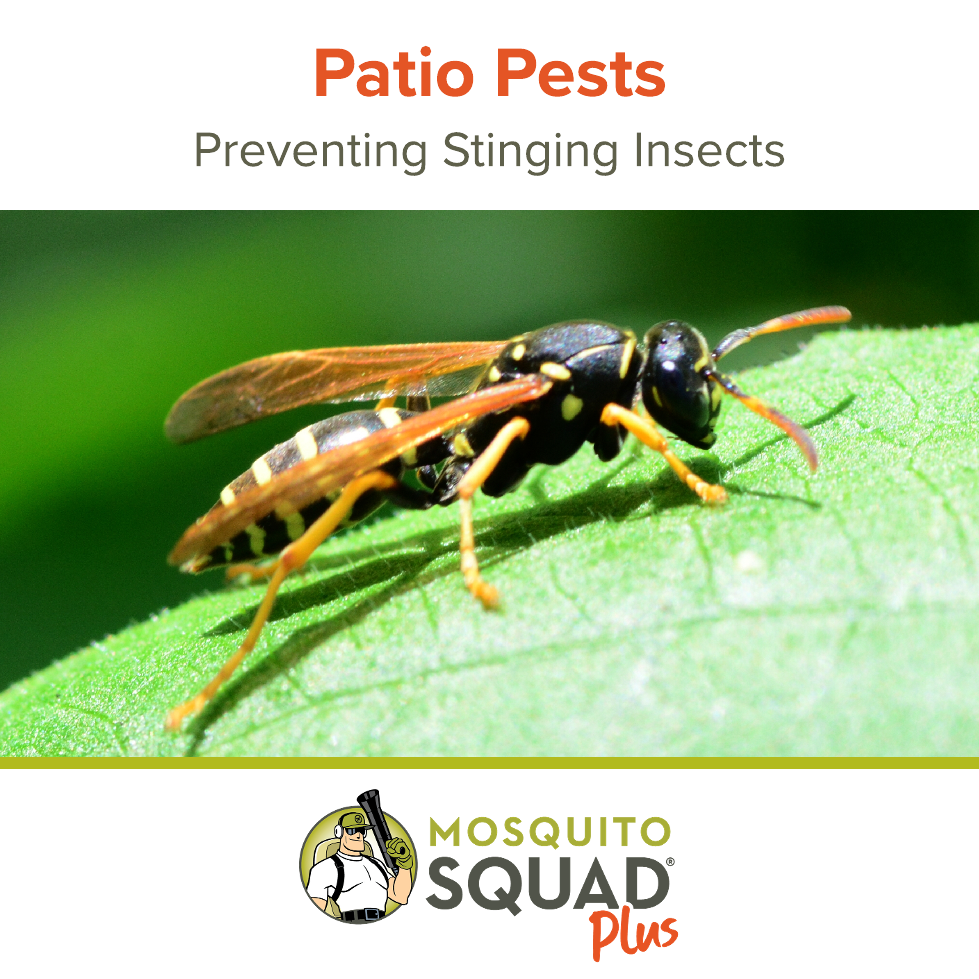
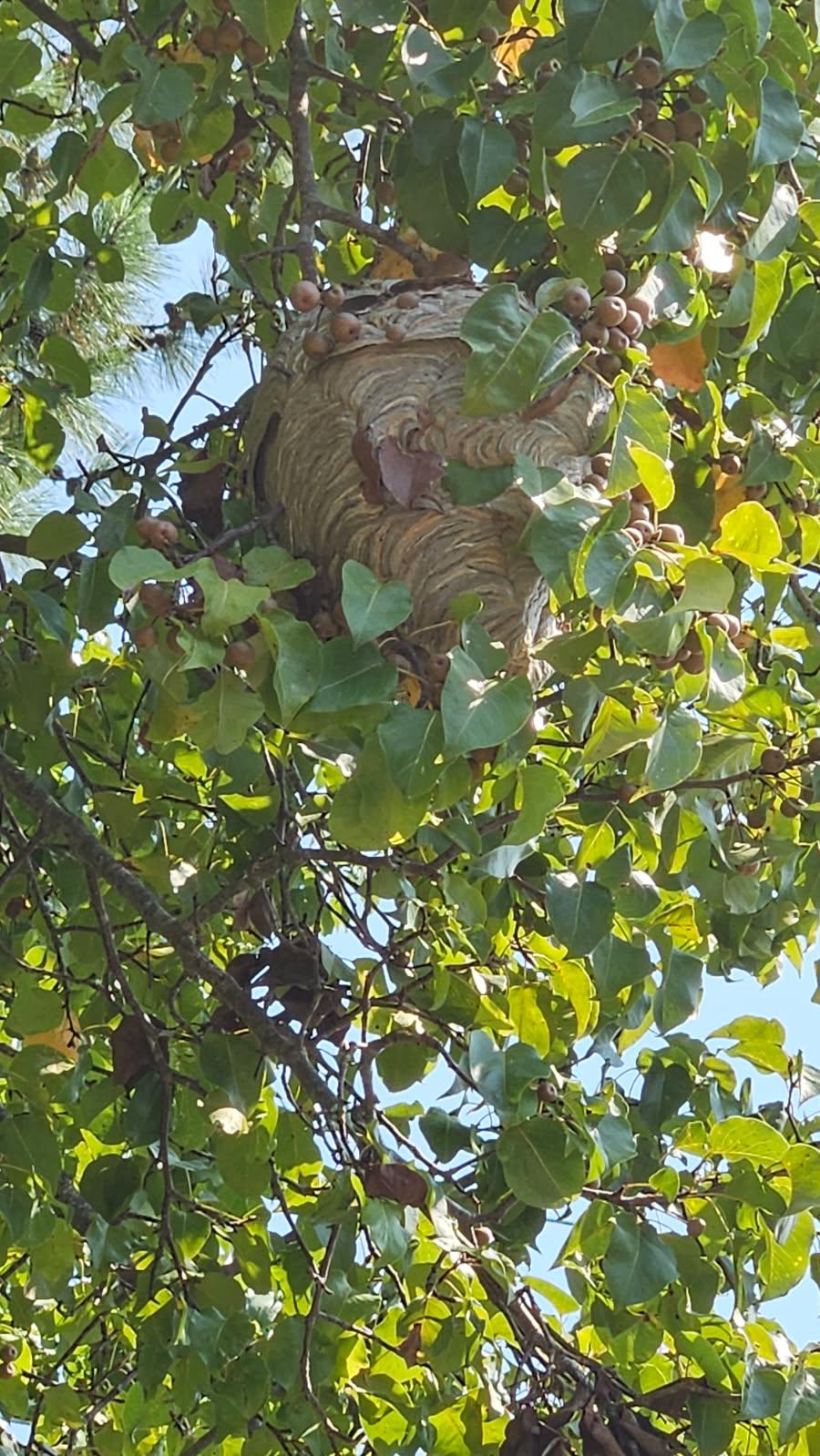
While you count, note the insect itself. A stout black wasp with a bone-white face is a bald-faced hornet, and somewhere nearby a covered paper nest the size of a melon or better is hanging in a tree, a shrub, or against a structure. The University of Kentucky's entomology program rates these colonies among the most difficult and dangerous stinging insects a homeowner can meet, and the read-from-a-distance approach exists precisely because of them. Something bigger, brown and gold and well over an inch, is a European hornet, and that read leads somewhere different.
One more read belongs in the set because getting it wrong hurts. If the traffic you traced goes down instead of up, into a hole in the lawn, a bank, or the base of a retaining wall, you are not reading hornets at all. Ground traffic is yellowjackets, the mower's ambush specialists, and a colony underfoot demands even more distance than one overhead, because the first warning most people get is the sting. The read is the same, the destination decides the species, and both destinations mean stop walking that direction.
The Second Read: One Hole With a Schedule
The European hornet is the largest hornet in the United States, and the University of Georgia's C1354 publication notes it is particularly common in Georgia, which our Ringgold and Fort Oglethorpe route sheets confirm every August. It does not hang a nest where you can see one. It builds inside hollow trees, wall cavities, and attic voids, so the read is traffic: very large hornets entering and leaving one specific opening, on a schedule, all day. A knot hole in an oak, a gap where the soffit meets the brick, a slipped piece of fascia on a garage. One hole, steady commerce, big insects. That is the whole signature.
The numbers behind that little hole deserve respect. Per UGA, a founding queen lays roughly 500 eggs across her season, and a mature colony runs 800 to 1,000 workers, which is more than double what a bald-faced nest carries. The pre-war framing and original soffits of Red Bank give those queens exactly the settled cavities they scout for, East Ridge adds mile after mile of mid-century trim gaps and gable vents, and the older housing of Rossville carries the hollow street trees that serve the same purpose on the Georgia side. The established blocks of Cleveland on the Tennessee side and Dalton on the Georgia end round out the corridor.
If you find the hole, UGA's guidance carries one instruction in bold-letter spirit: do not close the entrance. A sealed opening does not end a colony of a thousand hornets, it redirects one, and the redirect frequently ends inside the house. Mark the location from a distance, keep people and mowers away from the approach path, and leave the opening exactly as you found it until the colony inside is dead.
The Third Read: What the Shrubs and the Porch Light Tell You
Two more signs surface before most people ever spot a hornet address, and both get blamed on the wrong culprit. The first is on the landscaping. European hornets girdle twigs on lilacs, young maples, and ornamental shrubs, stripping bark to drink the sap underneath, and the pale ringed damage gets attributed to rabbits, deer, or disease all summer while the colony responsible grows quietly inside a wall fifty feet away. Fresh girdling on the shrubs is a hornet read, and it means the source is close, because nobody commutes far for sap.
The second sign arrives after dark. On the Tennessee side, UT Extension's SP290-A fact sheet exists because homeowners kept asking why something huge was knocking on the window at night, and the answer is that European hornets keep working after sunset and track toward light. Heavy repeat visits to the same lit windows, night after night, put the colony on or near your structure. UT's fact sheet even lists the low-effort mitigation while you arrange the real fix: yellow bulbs at the entryways, which sit at the end of the spectrum these hornets barely register. Tennessee's stinging insect bench runs deep, and the state's SP341-M fact sheet counts eleven yellowjacket species here, so the night knock is one of the few behaviors that identifies a species all by itself.
The Fourth Read: Terrain That Hides Nests at the Wrong Eye Level
Chattanooga adds a wrinkle to nest-finding that flat markets never deal with, and it is the reason the standard advice to look up fails here. We already wrote about how this region's terrain shapes pest pressure, and hornets exploit it in a specific way. On the brow lots of Signal Mountain, Lookout Mountain, and Walden, the canopy falls away below the house, and a bald-faced colony can hang at deck height or below it, in the treetops downslope, where nobody's search pattern ever points. Homeowners scan their own eaves and shrubs, find nothing, and never once look over the rail into the crowns twenty feet out and ten feet down.
Valley yards run the opposite problem. Where subdivisions back up to wooded ridges in Hixson, Middle Valley, and Ooltewah, the colony sits inside the tree line, technically off the property and completely invisible from it, while its foragers treat your patio as the neighborhood grocery. The flight-line read is the only one that finds these, because the bearing points into the woods and stops being ambiguous about it.
The water adds a third terrain pattern. Lots along Chickamauga Lake in Lakesite and Harrison combine shoreline drinking water, dock structures, and wooded slopes on one property, which is a complete hornet economy in a single parcel, and the wet stretches this region is known for keep it all running. We covered what a soaking week does to the mosquito math here, and the hornets bank the same moisture through sap flow and prey abundance. Either way, the terrain lesson is the same: search where the insects tell you to search, not where the pest control articles written for Ohio tell you to look.
What Not to Do With What You Found
Reading the yard and treating the yard are different skills, and the second one does not come in an aerosol can. A located bald-faced nest is a colony of several hundred insects that respond to vibration and spray as a single organized grievance, and the EPA's stinging pest guidance puts established colonies squarely in the category of jobs for protective equipment. UGA's own Stinging and Biting Pests circular walks through the over-the-counter approach and still assumes an escape route and re-treatment, which is a lot of contingency planning for a Saturday. The CDC's stinging insect page supplies the reason contingencies matter: severe venom reactions occur in people with no allergy history on record, and mass defense compresses a season's worth of stings into seconds.
If you want to hand off your reads in the most useful form, a photo helps, taken with respect for range. Zoom from a distance instead of walking closer, catch the insect at a feeder or on a plant, never at the nest, and if the source is a hole in a structure, photograph the whole wall face so the entry's position is obvious in context. A blurry picture with good location information beats a crisp close-up that required standing directly under the colony to take, and nothing about identification is worth triggering a mass defense event.
One more read worth settling, because Georgia search traffic asks constantly. The oversized hornet you found is not a murder hornet. The northern giant hornet has never been found in this region, and the invasive yellow-legged hornet that turned up in Georgia in 2023 was detected around Savannah, a state's width away from our valleys. What you have is a European hornet, resident here for well over a century, impressive to look at and entirely manageable. It is a big insect with a long local history and a routine solution.
What Hornet Removal in Chattanooga Involves
When we arrive, the first thing we do is repeat your reads with trained eyes and better equipment. We confirm the bearings, walk the structure, glass the downslope canopy on brow lots, and establish how many colonies the property is supporting, since the conditions that fed one usually feed a second. We also listen, which surprises people. A mature colony in a wall cavity is audible at close range on a quiet evening, a low papery working hum behind the drywall, and more than one homeowner has met their hornets through a bedroom wall before ever seeing one outdoors.
Then the plan follows the species and the site. Hanging colonies are fully eliminated before anything is removed, colonies in cavities get the treatment delivered into the void itself with the entrance left open until nothing living remains, and every job closes with a barrier application, because a site that raised a successful colony advertises for a new queen the following spring. Timing shapes the work too: a colony handled in June is a fraction of the same colony handled in September, so the reads pay best when they happen early.
This operation has been veteran-owned and run in this market since 2012, and the approach we take is the one on the why Mosquito Squad Plus page, backed by our guarantee. For the properties that produce hornet work, which are usually the same wooded-edge properties producing everything else, the Home Shield package covers the structure's perimeter, our tick and flea control handles the ground game those same tree lines generate, and the pest packages menu fits the program to the lot. The boundary we always state: automatic misting systems are built for mosquito pressure and do that work well, and a colony living inside a wall or hanging in a treetop requires targeted treatment at the source, so we match the tool to the problem instead of the other way around.
The full identification library sits on our wasp and hornet control page, and every community we cover on both sides of the line, from Soddy Daisy down to Ringgold and out to Rome, is on our areas we service page.