Pantry Moths on Cape Cod: Where They Come From and What to Do About Them
Posted by Mosquito Squad Plus
October 19, 2026
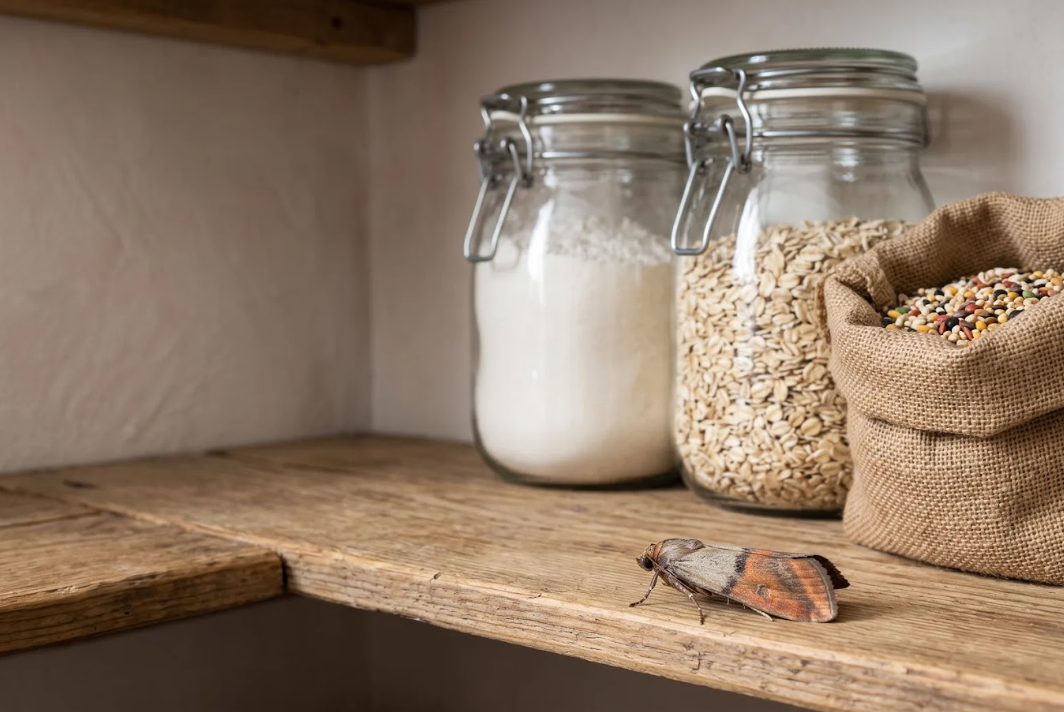
Pantry moths often start in food you bring home rather than through a crack in the wall. The Indian meal moth is the usual culprit: its larvae feed on flour, cereal, birdseed, and pet food, and the moths fluttering near your kitchen light are the adults. Here is how to find the source and what actually ends the cycle.
How Pantry Moths Get Into Cape Cod Kitchens
Eggs are tiny, and they can ride in on packages from the store, the bulk bin, or a bag of birdseed. The adult moths do no damage themselves. The harm comes from the larvae, which feed on dry goods, so finding the infested food matters more than chasing the flying moths. UConn Extension notes that the moth itself does no damage.
Signs of Pantry Moths and Where to Look
Adult Indian meal moths have pale gray wing bases and reddish-copper tips (Maine Department of Agriculture, Conservation and Forestry). They are often found near windows and light fixtures (University of Illinois Extension), so a moth near the kitchen light is often the first clue.
The damage comes from the larvae, creamy white caterpillars with brown heads that leave silk webbing in food. Mature larvae wander away from the food to pupate, which is why you may spot them on walls, ceilings, or countertops (Texas A&M AgriLife Extension). Check flour, cereal, pasta, dried fruit, nuts, and spices, and do not skip birdseed and dry pet food.
A Step-by-Step Pantry Reset
- Empty the pantry, shelf by shelf. Check every package, including unopened ones, for webbing, larvae, cocoons in the seams, or clumped food.
- Throw out anything infested. Seal it in a bag and take it outside.
- Vacuum and wipe the shelves. Get into the corners, including where walls meet the ceiling. Wipe the shelves with soap and water and remove loose shelf paper, which gives larvae places to hide.
- Store what is left in tight containers. Glass, metal, or thick plastic with tight lids work better than the original bags.
- Rotate your stock. Buy smaller amounts and use older packages first.
Skip the insecticide spray. UConn Extension does not recommend insecticides for pantry pests. If you would rather have help finding the source, you can request a free assessment online.
Where the Source Hides
Birdseed and pet food stored in a garage or basement are common sources, and damp storage makes them worse. University of Maryland Extension notes that stored product pests multiply faster at higher humidity, so a damp garage or basement is a worse place for birdseed and pet food than a dry kitchen shelf.
If you close a seasonal home, empty the pantry and garage of flour, cereal, and birdseed before you leave. This matters across the Cape, whether you live in Yarmouth, Dennis, Sandwich, Chatham, or Provincetown. If you find droppings instead of webbing, you may have mice rather than moths, and that calls for a different approach.
Still Seeing Moths After a Pantry Reset?
Schedule Your Pest Treatment Today! If moths keep coming back after you have emptied, cleaned, and restocked, a hidden source may still be in the house: birdseed in a garage, pet food in a closet, or larvae pupating in a crack you have not reached. Cape Cod Mosquito Squad can help you track down the source. See our services, the Cape Cod towns we serve, or call (508) 507-7143 or request a free assessment online. Cape Cod Mosquito Squad is locally owned and operated, serving Cape Cod since 2014 and fully licensed in Massachusetts (License AL-0054568).
Sources: UConn Extension: Pantry Pests and Their Control | Texas A&M AgriLife Extension | Maine Department of Agriculture, Conservation and Forestry | University of Maryland Extension: Indian Meal Moth | Utah State University Extension. This post is for general information and is not medical advice.