Why Common Ant Baits Keep Failing You in Manhasset
Posted by Mosquito Squad Plus
August 26, 2026
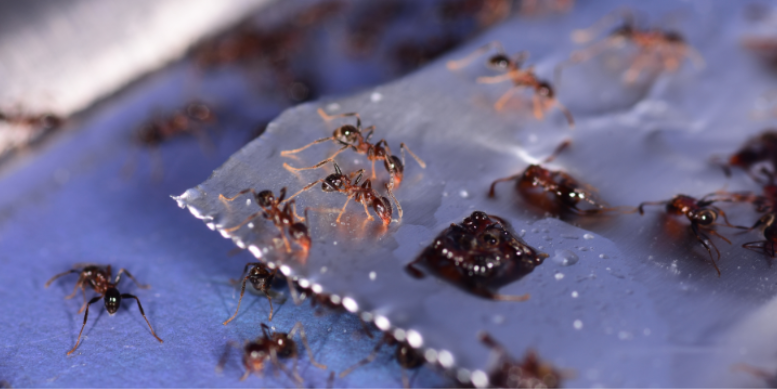
Trying to control ants often feels like putting out a forest fire with a garden hose.
You set up bait stations and remove scout lines, but within a day, the ants are back for more. And that’s because putting out bait stations and removing visible ants is only scratching the surface of your ant problem.
Scout ants are a small fraction of their entire colony (which could be thousands of ants). Whenever you dispose of that small fraction, they just send more scout ants out to find food and water sources to grow their colony.
So, why do these common ant baits keep failing you? And what actually works to get rid of ants?
You Could Be Baiting the Wrong Species
This one might surprise you: not all ant baits work on all ant species.
Baits are formulated around specific feeding preferences, and if the bait doesn't match the species you have, ants will smugly ignore it and keep going about their business.
On Long Island, the most common ant species homeowners deal with include:
- Odorous house ants - attracted to sweets and moisture, these are the most frequent indoor invaders and one of the most frustrating to control.
- Pavement ants - drawn to grease and protein, these show up along foundations, driveways, and in kitchens.
- Carpenter ants - not after your food, but after moist or damaged wood where they tunnel and excavate galleries and build nests.
- Fire ants - less common but present, these are aggressive and require very specific treatment approaches.
An extra note: some species of ants run multiple satellite colonies (in addition to their main nest). This means removing one entire colony location would only slightly reduce your ant issue. Because, even after one colony is removed, the rest of the colony moves on without skipping a beat. And soon enough, they’ll be in your kitchen again.
It’s All About Bait Placement
Even with the right bait for the right species, bait placement is just as important.
Here are a few common bait placement mistakes:
- Placing bait where ants are visible - rather than along the actual trail they're using to travel between the nest and the food source.
- Not using enough placements - there needs to be plenty of placements strategically placed in order to reach a large colony.
- Having competing food sources available to ants - this includes crumbs, pet food, and open trash that make the bait less appealing.
- Treating only indoors - typically, the ant colony’s main location is outside, so that needs to be treated as well.
Sugar and Protein Play a Role
Ant feeding preferences shift across the season based on colony needs.
In spring, colonies coming out of winter often prioritize protein to support new brood development. By summer, preferences shift toward carbs and sweets. So, when a bait seems to “stop working,” this is likely the reason. Season by season, their nutritional priorities change and adapt.
Be Patient
When it comes to ant control, this age-old saying applies:
It’ll get worse before it gets better. You might notice that when a bait is working, it can look like your ant problem is getting worse before their populations drop.
What’s happening: worker ants are picking up the bait and bringing it back to their colony. Then, activity increases because everyone is getting the signal to eat what’s available. So, it might be your first instinct to intervene and clean up the ant trail.
But don’t. Cleaning the trail destroys the chemical path worker ants are using to find the bait. So, intervening with extra sprays or cleaning the trail defeats the purpose. Be patient and let the bait do its work.
How Professional Ant Control Boots Out Ants
Professional ant control starts with identification. Knowing which species you have determines the treatment approach. From there, trained technicians target the exterior colony and the entry points.
This targets ant colonies at the source, not just the visible ants.
And when ants try to push into your home, Home Shield pushes them out. This treatment targets your exterior foundation, eaves, and entry points with EPA-registered products. No indoor sprays or foggers required.
So, if you're dealing with ongoing ant issues in Manhasset or anywhere across Long Island, here’s the answer: create a plan that addresses the colony and boots them out.
Tired of ants coming back no matter what you do? Call Mosquito Squad Plus of Long Island at (631) 203-1252 or contact us online for a free quote.