Are Deer Eating My Landscaping in the Fall?
Posted by Mosquito Squad Plus
November 17, 2026
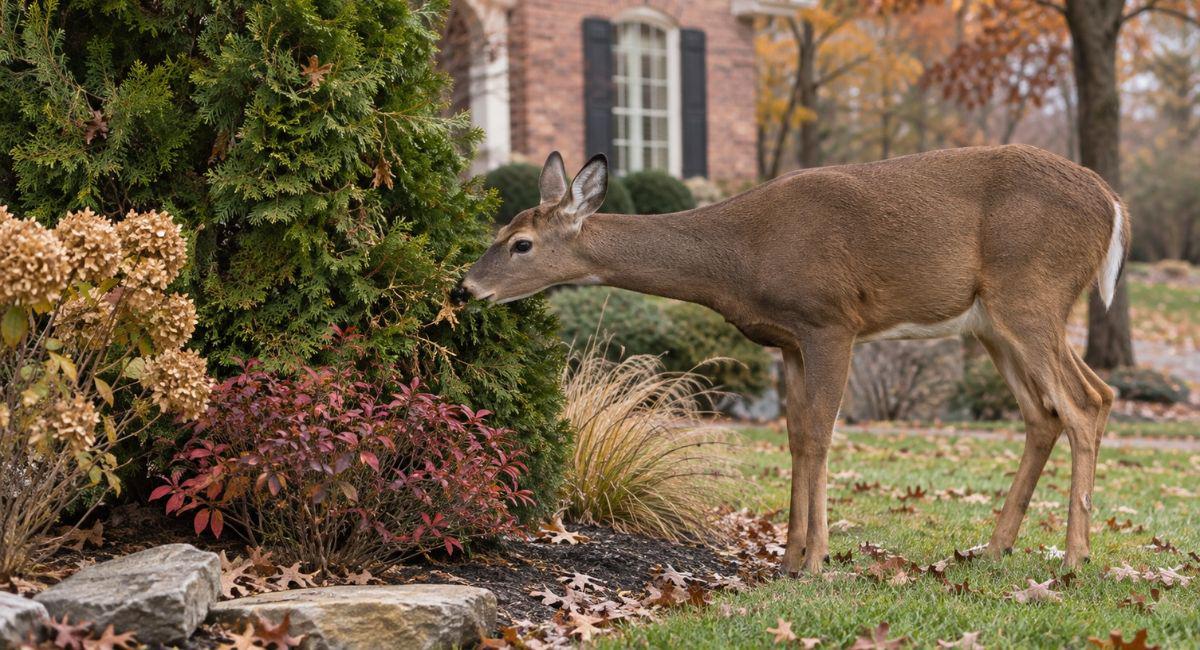
Yeah, they just might be! Deer eat landscaping plants throughout the year, but their feeding habits change as autumn arrives in Greater St. Louis.
If you’ve begun to notice suspicious damage to your shrubs, ornamental plants, or juvenile trees, a hungry deer could be the culprit. And with colder weather approaching, your landscaping might become an even more attractive food source for deer.
Why Do Deer Eat Landscaping Plants in the Fall?
Though it might not be obvious by the state of your landscaping, white-tailed deer are actually selective eaters. What’s more, their preferred food sources change with the seasons. Access to abundant vegetation from spring and summer has waned, and food sources have become less available.
In Missouri, deer are known to feed on acorns, agricultural crops, fruits, and other seasonal foods during autumn. As winter approaches, their reliance on woody vegetation, like twigs and shrubs, increases. But some evergreen landscaping plants might provide another food source throughout the year. Arborvitae, yews, and hemlocks are all susceptible to deer browsing. They might also feed on needles and twigs of certain evergreen trees.
What does all this mean? Unfortunately, your carefully maintained landscaping might offer exactly what they’re looking for this time of year.
And if you live in an area with wooded surroundings, you’re likely especially familiar with these four-legged foragers.
How Can You Tell if Deer Are Eating Your Landscaping?
While they don’t leave calling cards, deer often do leave evidence behind. Look for ragged or torn branches. Deer tear vegetation rather than making clean cuts. Shrubs and young trees might appear noticeably thinner, especially at heights deer can reach. Look for tree trunk damage, such as stripped bark, where male deer have rubbed their antlers during the fall. Be on the lookout for more obvious clues, like hoof tracks and droppings.
It’s important to note that not every damaged plant or tree is evidence of certain deer activity. It might rather indicate rabbit, rodent, or insect activity. It could even be a result of environmental conditions.
How Can You Protect Your Landscaping from Deer This Fall?
There are steps you can take to discourage deer from dining on your favorite plants and trees. Physical barriers, like fencing or netting around vulnerable shrubs and young trees might offer practical protection.
Deer control by Mosquito Squad Plus includes a customizable repellent that deters deer if not by smell, by flavor. If you’re looking to eliminate the hassle of covering or caging your landscaping plants and trees, professional deer control could be the ideal solution for you.
In addition to providing effective deer deterrence, you can be assured that our deer control sprays are not harmful to the deer, other animals, humans, or the environment!
Where Do We Offer Deer Control in Greater St. Louis?
Mosquito Squad Plus is pleased to offer outdoor pest control services throughout the Greater St. Louis areas, including these towns and more.
- Afton MO Deer Control
- Clayton MO Deer Control
- Concord MO Deer Control
- Kirkwood MO Deer Control
- Ladue MO Deer Control
- Maplewood MO Deer Control
- Saint Ann MO Deer Control
- Town and Country MO Deer Control
- University City MO Deer Control
Choose Mosquito Squad Plus for deer control in Greater St. Louis!
Call Mosquito Squad Plus of Greater St. Louis today for deer spraying near me. Get in touch with us by filling out our form online or calling us at for a free quote.
We additionally offer a 100% satisfaction guarantee. If you are not satisfied with your pest control treatment, call us within 21 days for a complimentary repeat treatment.