ER Visits for Tick Bites Are at a Nine-Year High. Here Is What That Means for Your Dayton Yard.
Posted by Mosquito Squad Plus
June 4, 2026
A professor of immunology at Johns Hopkins Bloomberg School of Public Health said it plainly at a national tick briefing on May 5 of this year. Unfortunately, it seems we are in for a very bad year when it comes to ticks. That was not a local health department issuing a seasonal reminder. That was one of the country's leading infectious disease researchers telling a national media audience that the data heading into 2026 tick season was pointing somewhere nobody wanted it to point.
The CDC confirmed the same week that weekly emergency department visits for tick bites are at their highest level since at least 2017, with the Midwest reporting 40 ER visits per 100,000, second only to the Northeast in the country. Ohio is in the Midwest. Montgomery County is in Ohio. The Lone Star tick confirmed in Montgomery County by Ohio Department of Health surveillance data is the same species Johns Hopkins researchers watched aggressively move north in their field collections this spring, the same species the national media has been covering for weeks, and the same species now showing up in Dayton yards in ways most homeowners have not been told about.
This is not a warning about something that might arrive. It is a conversation about something that is already here and already active in this season.
What the Data Actually Says About Dayton and Montgomery County
The Ohio Department of Health's vector-borne disease surveillance update lists Lone Star ticks identified specifically in Montgomery County alongside Hamilton County, Jackson County, and a handful of other Ohio counties. That is not a news report or an estimate. That is ODH's own field surveillance confirming the species in your county.
Montgomery County also recorded 28 West Nile positive mosquito pools in the 2025 surveillance cycle, one of the higher county totals in Ohio outside the major urban centers. Public Health Dayton and Montgomery County responded by spraying Wegerzyn Garden Center and Sandalwood Park after mosquitoes at those locations tested positive for West Nile. Those are two parks most Dayton homeowners drive past regularly. The mosquito pressure that produced those positive pools is the same pressure building in residential yards across the surrounding neighborhoods right now.
Ohio's tick-borne disease trajectory is not subtle. Lyme disease cases statewide went from 40 in 2010 to 415 in 2020 to 2,830 in 2025. That is a nearly sevenfold increase in five years. ODH Director Dr. Bruce Vanderhoff issued a formal public warning at the start of this season specifically because of where that trend line was pointing. Dan Suffoletto, public information manager for Public Health Dayton and Montgomery County, has been consistent in urging residents to be aware when spending time in areas where ticks are present. The awareness message and the surveillance data are pointing in the same direction.
What Makes the Lone Star Tick Different From What Most Dayton Homeowners Picture
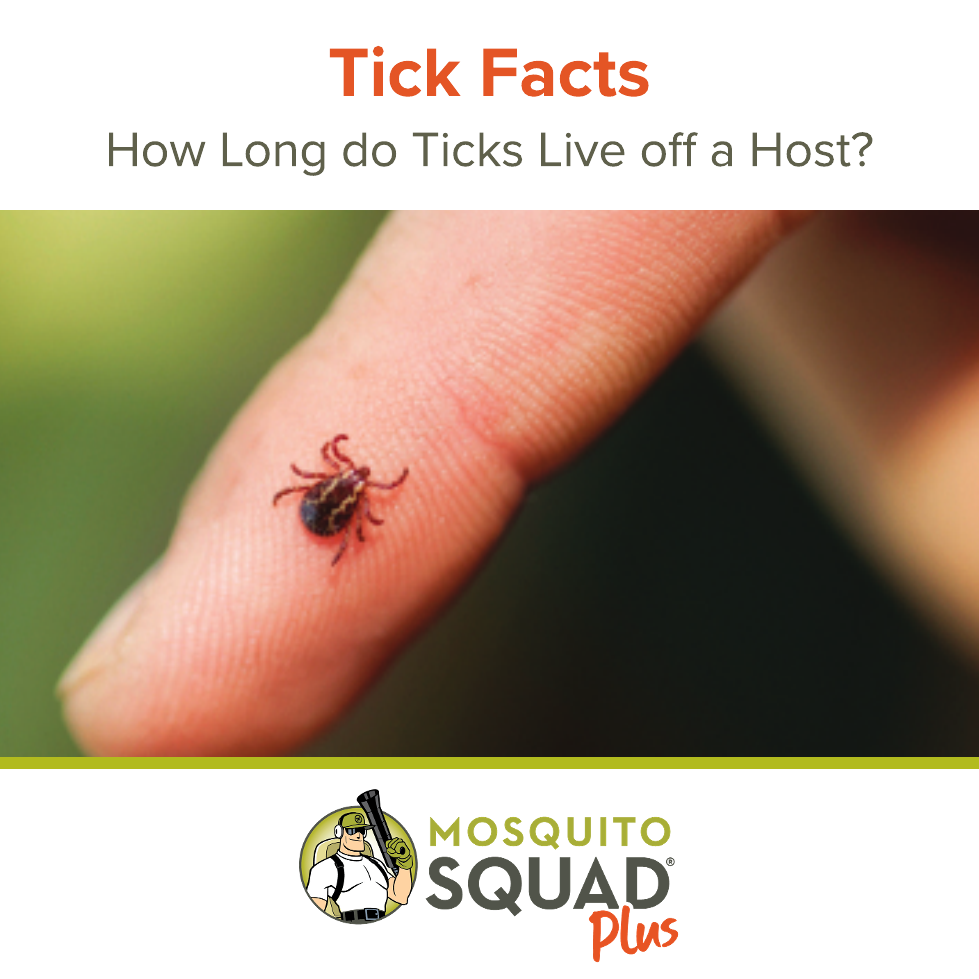
When a Dayton homeowner thinks about ticks, they usually picture the blacklegged tick, the Lyme disease vector. It is small, dark, and waits passively on vegetation for a host to brush past. That picture is accurate for one species. The Lone Star tick works completely differently and understanding the difference matters for how you think about your yard.
The CDC documents the Lone Star tick as a very aggressive tick that bites humans and actively pursues hosts rather than waiting. It detects carbon dioxide, heat, and movement and comes toward them. At the Johns Hopkins May 2026 tick briefing, a researcher described watching Lone Star ticks in field collections and noting that the species is aggressively moving north and really taking over at sites where it is now established. Homeowners regularly report finding multiple Lone Star ticks attached after spending only a short time outdoors near wooded edges or brushy fence lines. One walk along the back property line is not one tick encounter. It can be several.
The Ohio State University Extension tick factsheet documents three tick species of primary medical concern in Ohio. The blacklegged tick carries Lyme disease. The American dog tick carries Rocky Mountain spotted fever and tularemia. The Lone Star tick carries ehrlichiosis, Heartland virus, tularemia, and Southern Tick-Associated Rash Illness, and its bite triggers alpha-gal syndrome. Heartland virus has no vaccine and no known cure. That is the species now confirmed in Montgomery County at the same time that Johns Hopkins researchers are calling 2026 a very bad year for ticks nationally.
The Five Rivers MetroParks Problem Nobody Is Talking About
This is the Dayton-specific piece that the national news coverage misses completely. The Five Rivers MetroParks system manages more than 16,000 acres of preserved green space throughout Montgomery County and surrounding counties, with parks sitting directly inside or immediately adjacent to residential neighborhoods across the entire metro.
Hills and Dales MetroPark sits on the Kettering and Oakwood border with 63 acres of mature wooded ravines, spring seeps, preserved wetlands, and dense woodland floor that has been building organic depth since 1907. Wegerzyn MetroPark runs along the Stillwater River. Eastwood MetroPark and RiverScape MetroPark sit along the Great Miami River corridor through downtown. Englewood MetroPark covers more than 1,000 acres along the Stillwater northwest of the city. Cox Arboretum MetroPark, Germantown MetroPark, Possum Creek MetroPark, and Twin Creek MetroPark spread through the southern and western portions of the metro.
Every one of those parks maintains the wooded corridors, creek buffers, naturalized edges, and undisturbed ground cover that white-tailed deer use as movement corridors throughout the year. The deer do not stop at the park boundary. They move through drainage easements, wooded lot lines, and the green-space buffers connecting the parks to the residential neighborhoods surrounding them. Adult Lone Star ticks ride those deer. When deer pass through your back property line on the way from one green space to another, they drop ticks in the leaf litter and vegetation along that path. That path is the same back fence line most Dayton homeowners walk past without thinking about it every day of tick season.
For properties in Kettering backing up to the Hills and Dales boundary, in Oakwood along the park edge, in Centerville near Sugarcreek MetroPark, in Bellbrook along the Little Miami corridor, and in Springboro near the creek drainage systems of Warren County, the wildlife movement delivering tick pressure into residential yards is not theoretical. It is happening on a nightly schedule that no homeowner controls.
Alpha-Gal Syndrome Is Already in the National News. Here Is the Montgomery County Connection.
If you have seen the Lone Star tick coverage in The Hill, on PBS, or in your social feed over the past few weeks, you have already read the general alpha-gal explanation. The tick bites you. A sugar molecule enters your bloodstream. Your immune system learns to react to that molecule. The next time you eat beef, pork, lamb, or venison, the reaction arrives three to six hours later and looks like food poisoning, a stomach bug, or an unexplained allergy until someone finally orders the right blood test. First documented death in the US confirmed in New Jersey. More than 110,000 suspected cases between 2010 and 2022, possibly 450,000 when accounting for misdiagnosis. You have read that story.
What you have not read is the Montgomery County version of it.
The CDC's MMWR geographic distribution report places Ohio inside the high-prevalence zone for positive alpha-gal antibody test results. Ohio is not on the edge of that zone. It sits inside it alongside Arkansas, Missouri, Tennessee, Virginia, and Kentucky, the states the CDC names as highest prevalence in the country. The New England Journal of Medicine research on Lone Star tick range expansion documents that expansion as a direct driver of rising alpha-gal case counts. And the ODH vector-borne disease surveillance data confirms Lone Star ticks are now established in Montgomery County.
The national story and the local story are the same story. The tick is here. The pathway from your back fence line to that unexplained dinner reaction exists in this county right now. That is the piece the national coverage cannot tell you. That is the piece worth knowing before peak nymphal season closes.
The Mad River Corridor and What It Does to Tick Pressure in the Eastern Metro
The Lone Star tick story in Dayton has a specific geography that matters more than the general warning most homeowners are reading in the news. The Mad River runs through Riverside and Huber Heights from the northeast before meeting the Great Miami in downtown Dayton. The wooded riparian buffers along that corridor, the preserved green space along the Mad River trail system, and the naturalized edges where suburban development meets the river terrain create exactly the transition zone habitat where Lone Star ticks concentrate.
Properties in Huber Heights and Riverside with back property lines running toward the Mad River corridor are dealing with tick pressure delivered by the same wildlife movement that uses that corridor year round. The Little Miami River corridor through the eastern portions of the service area runs the same dynamic in the opposite direction. Both corridors feed wildlife into the residential landscape on the same schedule, and neither one is going to be managed by anything other than treatment on the residential side of the property line.
OSU Extension entomology research and Entomology Today field research both identify the transition zone between maintained lawn and unmaintained vegetation as the primary tick habitat zone. That strip of shaded fence line, mature shrub border, leaf litter accumulation, or brushy back lot edge is where the Lone Star tick population concentrates in a Dayton yard. The open lawn in the middle of the property is the lowest pressure zone. The edge is where the problem lives, and the edge in most Dayton residential lots runs directly toward a wildlife corridor, a MetroPark boundary, or a drainage easement that connects to one.
What Homeowners Try and Where It Comes Up Short
The instinct is right. Tick checks after outdoor time. Long pants and permethrin-treated clothing for yard work. Hot dryer cycle after coming inside. Leaf litter cleared from the back fence. All of it helps and all of it is worth doing.
What it does not do is reduce the population producing the exposure. The Lone Star tick on your back fence line is reproducing on its own schedule whether you checked yourself thoroughly or not. One missed nymph at the sock line on a Saturday afternoon is all it takes for a bite nobody connects to anything until weeks later when something starts going wrong at the dinner table.
Most Dayton homeowners assume proximity to Hills and Dales or the MetroPark edge is just the price of living near something beautiful. It is not a fixed cost. It is a manageable one. Public Health Dayton and Montgomery County recommends habitat modification steps that genuinely help reduce attractiveness to ticks. Do all of those. And then treat the population the habitat modification alone cannot reach.
OSU Extension runs the Buckeye Tick Test laboratory for $50 per tick with results in 72 hours. Right tool after a bite. The recurring tick control program is the tool that prevents it.
Running Both Programs Together Through Peak Season
The tick season and the mosquito season in Dayton run simultaneously, with meaningful overlap from late March through October. Montgomery County's 28 West Nile positive mosquito pools in 2025, the confirmed Lone Star tick surveillance data, and the Five Rivers MetroParks wildlife corridor pressure all operate through the same active window in the same neighborhoods across the same residential yards.
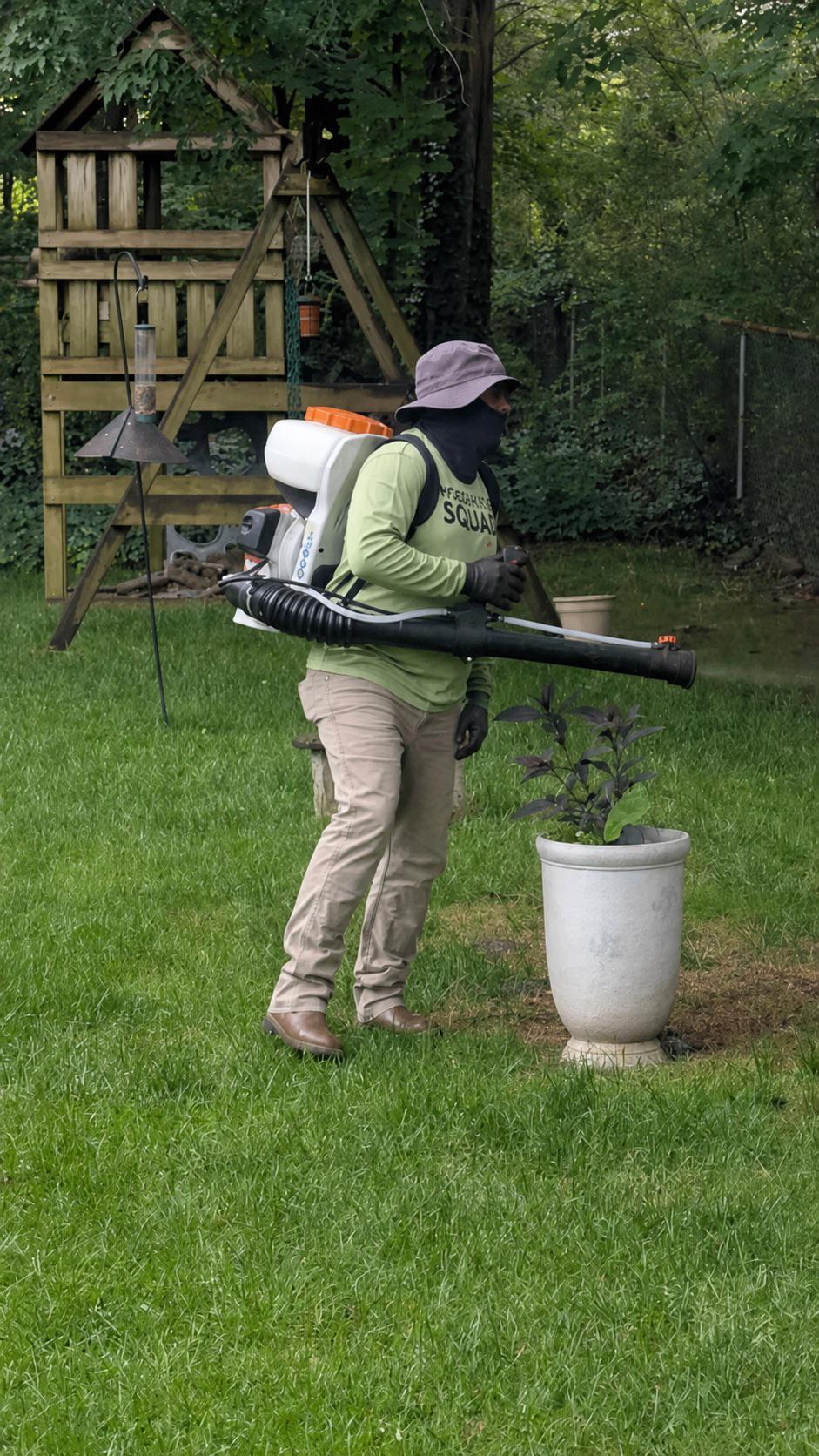
A mosquito barrier treatment running on a 21-day recurring cycle through the outdoor season, combined with tick control targeting the edge zones on the same schedule, is the program that addresses both pressures without two separate service visits. For properties that prefer botanical-based chemistry, the natural mosquito treatment runs on the same 21-day cycle with essential oil active ingredients. The 7 T's of Mosquito Control framework covers the full systematic property assessment for the mosquito side. The 6 C's of Tick Control covers the tick side.
For outdoor events this summer, a special event treatment applied 24 to 48 hours before the event provides tighter knockdown on top of the recurring program. For properties with significant outdoor living space near any river corridor or MetroPark edge, an automatic misting system can supplement the recurring treatment during the morning and late afternoon activity windows when both Asian Tiger mosquitoes and questing ticks are most active near the patio or deck.
When to Act
The Lone Star tick is active March through September in Ohio. Peak nymphal activity, the stage most responsible for human exposure because the nymphs are too small to spot easily, runs May through July. That window is open right now. Tick bites are rising faster than they have since 2017, Johns Hopkins says 2026 is shaping up to be a very bad year, and the Midwest is second in the country for ER visits from tick bites. None of that is background noise for a Montgomery County homeowner with a wooded back fence line or a yard that backs up to a Five Rivers MetroPark boundary.
The Five Rivers parks are not going anywhere. The Mad River corridor is not going to stop moving deer through Huber Heights back yards. The catch basins under Kettering's streets are not getting replaced this season. None of those conditions are fixable. The population that uses them is addressable. The Mosquito Squad of Dayton covers Kettering, Centerville, Oakwood, Springboro, Bellbrook, and communities throughout the greater Dayton area. Reach out and we will walk the property with you. Call us at (937) 226-9709.