Why Fairfield Mosquito Control Is a Different Job Than the Cincinnati Hills
Posted by Mosquito Squad Plus
July 6, 2026
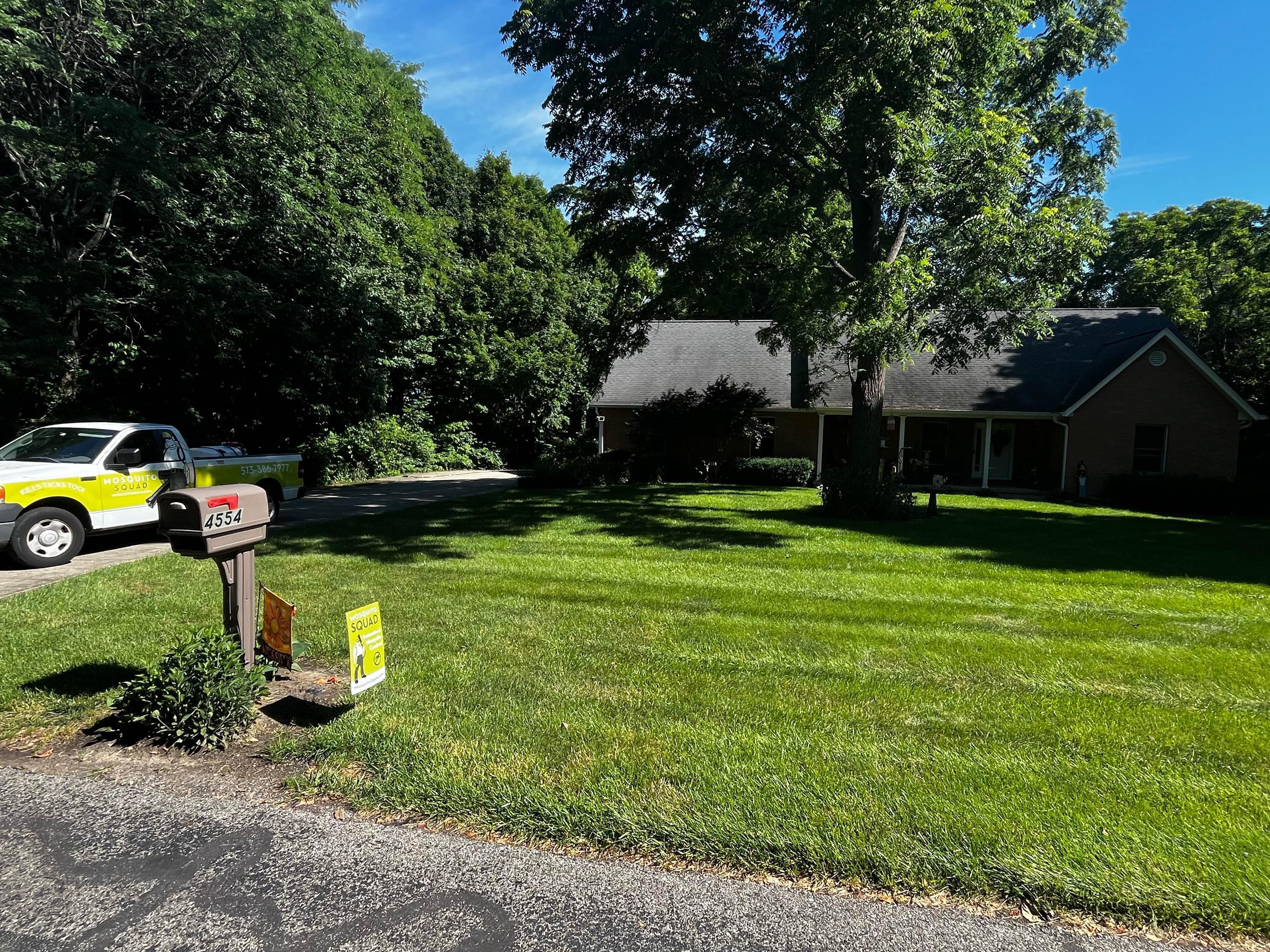
You can tell a lot about a yard's mosquito problem by whether the water runs off or sits. Up in the hills on the east side of the metro, in Hyde Park or Indian Hill, a hard rain sheets down the slope and is gone by evening. Out here in Fairfield, on the flat ground near the Great Miami, that same rain finds every low spot in the yard and stays there. That difference is the whole story, and it is why Fairfield mosquito control is a genuinely different job than the work we do across town.
Most homeowners do not think about their yard in terms of drainage until the bites start. But the flat river-bottom ground that makes Fairfield easy to build on and easy to mow is the same ground that holds water long enough to raise mosquitoes. The hills breed mosquitoes in the shaded creek folds. Fairfield breeds them in the open, in the standing water that sits in a yard that never quite drains, and in a dozen containers most people walk past every day.
The Ground Under Fairfield Is Built for Standing Water
Fairfield sits on the flat plain of the Great Miami River, and that geography does two things to a yard. The first is obvious once you look for it. Flat ground drains slowly. After a good Ohio thunderstorm rolls through in June, the water that would run off a hillside in twenty minutes can sit in the low corner of a Fairfield backyard for two or three days. That is more than enough time for mosquitoes to lay eggs and for those eggs to hatch, because the whole aquatic stage of a mosquito can turn over in a little over a week when it is warm.
The second thing is the river plain itself. When the Great Miami comes up after heavy rain and then drops back down, it leaves behind pools and saturated low ground across the floodplain. Ohio's most common pest mosquito, the inland floodwater mosquito, is built exactly for this. It lays its eggs on damp ground above the waterline, and those eggs sit and wait, sometimes for a long time, until the next flood or heavy rain covers them and triggers a hatch. So a Fairfield yard can look bone dry for weeks, then produce a wave of mosquitoes a few days after the water comes up. People blame the timing on bad luck. It is not luck. It is the floodplain doing what a floodplain does.
This is the part that trips up folks who moved to Fairfield from one of the hillier east-side neighborhoods. They treated their old yard one way, they bring the same habits here, and it does not hold, because the pressure is coming from a different place. On a slope you are fighting shade and creek edges. On the Fairfield flat you are fighting water that will not leave.
The Mosquito Most People Never Suspect
Here is where it gets counterintuitive. A lot of Fairfield homeowners assume mosquitoes only bother them at dusk, so they plan around it. They come inside when the sun gets low and figure they have beaten the problem. Then they get eaten alive at two in the afternoon pulling weeds in the flower bed, and they cannot figure out why.
The answer is the Asian tiger mosquito. According to Ohio State University Extension, the Asian tiger mosquito is common across southern Ohio, and it does not follow the dusk-and-dawn schedule people expect. It is an aggressive daytime biter, most active in the early morning and late afternoon, and it will follow you around the yard for another shot. It is aggressive enough that federal invasive-species trackers rank it among the world's more troublesome invasive insects, in part because it outcompetes the native mosquitoes that were here before it.
You can spot it if you look. It is small and dark with sharp white striping, including a single white line running down the middle of its back. It likes shade over open sun and tends to go for your ankles and lower legs first, which is why people get lit up standing still in a shady flower bed. If a mosquito chases you into the garage in the middle of the day, that is what you are dealing with.
What makes the Asian tiger such a problem in a neighborhood like Fairfield is where it breeds. It does not need a creek or a pond. It is a container breeder, which means it lays eggs in small pockets of standing water close to the house. The saucer under a potted plant. A kid's toy left in the grass. A clogged gutter. A tarp over the woodpile. A bucket by the shed.
Old tires are the classic example, and we still find them behind sheds and along fence lines all over Fairfield. A tire holding an inch of rainwater is about as good a mosquito nursery as exists, which is how this species spread across the country in the first place, hitching rides in shipments of used tires. Its flight range is short, so if Asian tigers are biting you in the yard, they almost certainly hatched in your yard. That is actually good news, because it means the problem is one you can do something about.
There is one more trick this mosquito has, and it is worth knowing because it explains why the problem comes back. According to University of Florida research, Asian tiger eggs can survive dried out for up to a year, then hatch once rain refills the container they were laid in. So dumping a bucket once does not end it. The eggs stuck to the sides of that bucket are still viable, waiting for the next rain to fill it back up. That is why the water part of this has to be a weekly habit, not a one-time cleanup, and it is a big reason a Fairfield yard that got knocked back in June is buzzing again by late July.
What Fairfield Homeowners Try First
Almost everybody starts with the hardware store, and it is easy to see why. The shelves are full of things that promise to fix this, and some of them do a little.
The citronella candle and the clip-on fan repeller will buy you a small bubble of relief right where you are sitting, but they do nothing about the population breeding twenty feet away, and the first breeze cancels them out. The hose-end yard sprays you attach and blast around the perimeter can knock down adults for a day or two, but they wash off with the next rain and they never touch the water where the next generation is coming from. The bug zapper is worse than useless for mosquitoes. It mostly kills harmless beetles and moths while the mosquitoes ignore it entirely, because they are cued to the carbon dioxide you breathe out, not to light.
None of this is a knock on homeowners. These products are marketed hard and they sound reasonable. The problem is that they all treat the symptom, the adult mosquito biting you right now, and none of them deal with the two things that actually drive a Fairfield mosquito problem: the standing water raising new mosquitoes and the shaded resting spots where the adults wait out the heat of the day.
What Actually Works Out Here
Effective Fairfield mosquito control comes down to two moves done together, and neither one is a candle.
The first is getting rid of the water they breed in. This is the free part, and on flat Fairfield ground it matters more than it does almost anywhere else. Walk your property once a week and dump anything holding water. Tip the plant saucers, empty the buckets, flip the kids' toys, clear the gutters so they drain, drill a couple of holes in the bottom of the trash and recycling bins, and change the birdbath water every few days.
Anything you cannot empty, like a low spot that always ponds or a drainage ditch that stays wet, is worth pointing out to us so we can factor it into the plan. The CDC's guidance on controlling these mosquitoes comes back to the same core idea, which is to empty, scrub, and turn over anything holding water once a week, because that is the single most effective thing anyone can do against container-breeding species like the Asian tiger.
The second move is treating the places the adults actually live. Our mosquito barrier treatment targets the shaded undersides of leaves, the dense shrubs, the fence lines, and the shady resting spots where mosquitoes ride out the day between meals. It works on contact and keeps knocking down the population that lands on treated surfaces for up to about three weeks at a stretch. It is the same source-first thinking behind our 7 T's of mosquito control, which is really just a checklist for going after mosquitoes where they breed and rest instead of chasing the ones already biting you.
On a Fairfield lot, we pay particular attention to the low, damp, shaded corners where the flat ground holds moisture, because that is where the resting pressure concentrates. For homeowners who would rather go a different route, we also offer a natural mosquito treatment built on essential oils, which is a popular pick on the family-heavy streets over here.
The reason the professional side of mosquito control matters is coverage and consistency. You can do the water part yourself, and you should. But treating the resting sites correctly, on a schedule that stays ahead of the breeding cycle rather than chasing it, is the part that actually holds a yard through an Ohio summer.
And because mosquitoes in this area can carry disease, keeping the population down is doing a little more than protecting a cookout. To be straight about it, the day-to-day risk from any single bite here is low, and researchers consider the Asian tiger a less efficient disease carrier than some other mosquitoes. But West Nile is a real presence in Ohio, the Asian tiger is a documented vector of several illnesses, and fewer bites around the house is simply a lower-risk situation for the people and pets living there. The same visits also help with the tick control side of things, since the shaded, damp edges that shelter resting mosquitoes are the same spots ticks like to wait.
When to Start in Fairfield
Timing is where a lot of Fairfield yards lose the season before it starts. People wait until they are getting bitten to make a call, and by then the population has a head start you spend the rest of the summer trying to catch.
The mosquito season in this part of Ohio really gets going once nighttime temperatures settle above the low fifties, which around here usually means April into May. That first warm, wet stretch of spring is the signal. The overwintered eggs start hatching, the first generation comes up, and every generation after that compounds if nothing interrupts it. Starting treatment early, before that first wave matures and lays the next batch, is far easier than trying to claw back a yard that is already saturated with mosquitoes in July.
The floodplain adds one more wrinkle worth watching. After any big rain event that brings the Great Miami up, expect a bump in mosquito activity a few days later as the floodwater eggs hatch. If you are on a maintenance schedule with us, that bump is already accounted for. If you are not, a heavy-rain week in midsummer is often the moment a manageable Fairfield mosquito problem turns into a miserable one.
If you are not sure what you are dealing with, whether that daytime biter is an Asian tiger or where the water is coming from, that is a normal thing to be unsure about, and it is exactly the kind of thing worth a look. We would rather walk the property and show you the breeding sites than have you keep buying candles that were never going to work.
Get Ahead of It
Mosquito Squad of Cincinnati has been treating yards on both sides of this metro since 2013, the flat river-bottom lots in Fairfield and the neighboring Butler County towns like Forest Park, Hamilton, and West Chester, plus the hillside lots across town. We treat them differently because they are different. We are a veteran-owned family business, and we know that a Fairfield yard's mosquito problem starts with water that will not drain and containers nobody thinks to check, not with the creek folds that drive the hills.
There is no long-term contract and no pressure. We walk your property, find where the mosquitoes are actually coming from, and give you a straight quote backed by a satisfaction guarantee. If it is not right, we come back and make it right.
Call us at (513) 666-5354 or request a free quote and we will get you on the schedule. The sooner we look, the more of the season we can save.