Hornet Removal in Cincinnati: What Homeowners Should Know
Posted by Mosquito Squad Plus
July 14, 2026
Cincinnati spent the spring of 2025 listening to Brood XIV, and nobody who lived through it has forgotten. The Ohio Department of Natural Resources tracked that emergence across Hamilton, Clermont, Butler, and Warren counties, which is a map of our service area with different labels on it. A year later, the whole region still has its radar tuned for large, loud insects, and it shows in our call log. Every July we field a wave of Cincinnati hornet calls that open with some version of the same sentence: there is a giant hornet in my yard and it keeps coming at me.
Here is what a decade of those calls has taught us. Before anyone talks about hornet removal in Cincinnati, the first job is figuring out which of three insects is on the property. The dangerous one hangs a nest that gets meaner by the week, the sneaky one lives inside walls and hollow trees where there is nothing to see, and the huge one that scares people the most cannot hurt anyone. Homeowners who get the identification right save themselves money, stings, or both. Getting it right from a safe distance is easier than most people expect, and that is most of what this post is about.
The Biggest Hornet in Cincinnati Is Not a Hornet
Start with the insect behind the majority of panicked July calls. The eastern cicada killer is the largest wasp in Ohio, and a big female pushing two inches of black and rust-colored body with yellow markings is a properly alarming thing to meet beside your patio. They arrive in late June and July, right on schedule with the annual dog-day cicadas they hunt, and they favor exactly the spots where homeowners spend summer: sunny, well-drained soil along driveway edges, patio slabs, walkways, and playground borders. Per Ohio State University Extension, the female digs a burrow in that loose soil, hunts down cicadas, paralyzes them, and hauls them underground to feed her young.
Now the part that changes everything about how you respond. Males patrol the burrow area aggressively, hover at face height, and will dive at anything that moves through their territory, including you, your kids, and your dog. Males also have no stinger. The performance is all bluff. Females can sting but essentially never do unless they are grabbed, stepped on barefoot, or trapped in clothing. There is no colony, no shared nest to defend, and no group response, because every burrow belongs to a single female working alone.
So the scariest looking wasp in the yard is also the one that carries the least risk, and most of the time the honest professional answer is habitat adjustment rather than treatment. Cicada killers want bare, dry, sunny soil. Thicker turf, mulch over exposed beds, and irrigation that keeps the ground from baking usually convince next summer's females to dig elsewhere. When a sunny slope in Loveland or a pool deck border in Symmes Township collects a dozen burrows and the dive-bombing becomes unlivable, treatment is reasonable and we do it. But if what you have is two burrows by the mailbox, we will tell you that plainly instead of selling you a removal you do not need.
One more note for the truly worried. The Asian giant hornet has never been confirmed in Ohio, and cicada killers are the insect most often mistaken for it. If you find something you cannot square with anything in this post, the Ohio Department of Agriculture maintains a reporting portal where you can submit photos and put the question to rest.
The Hornet That Earns the Fear
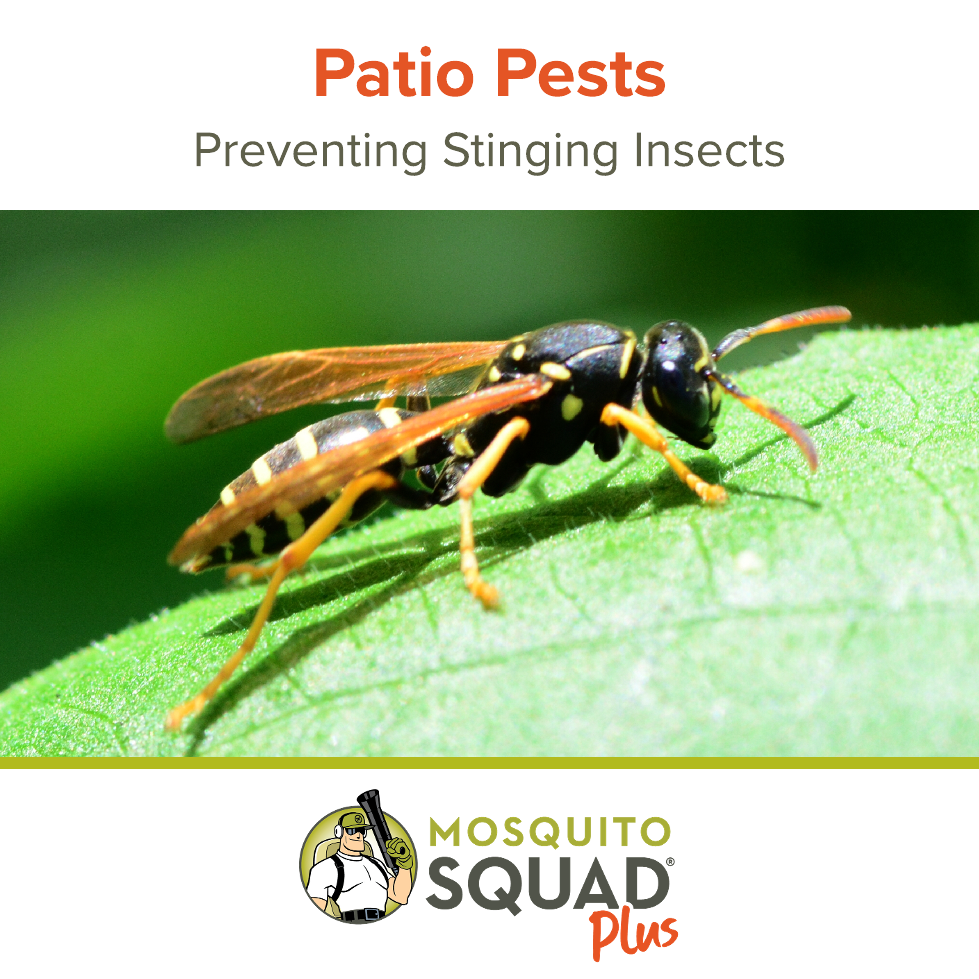
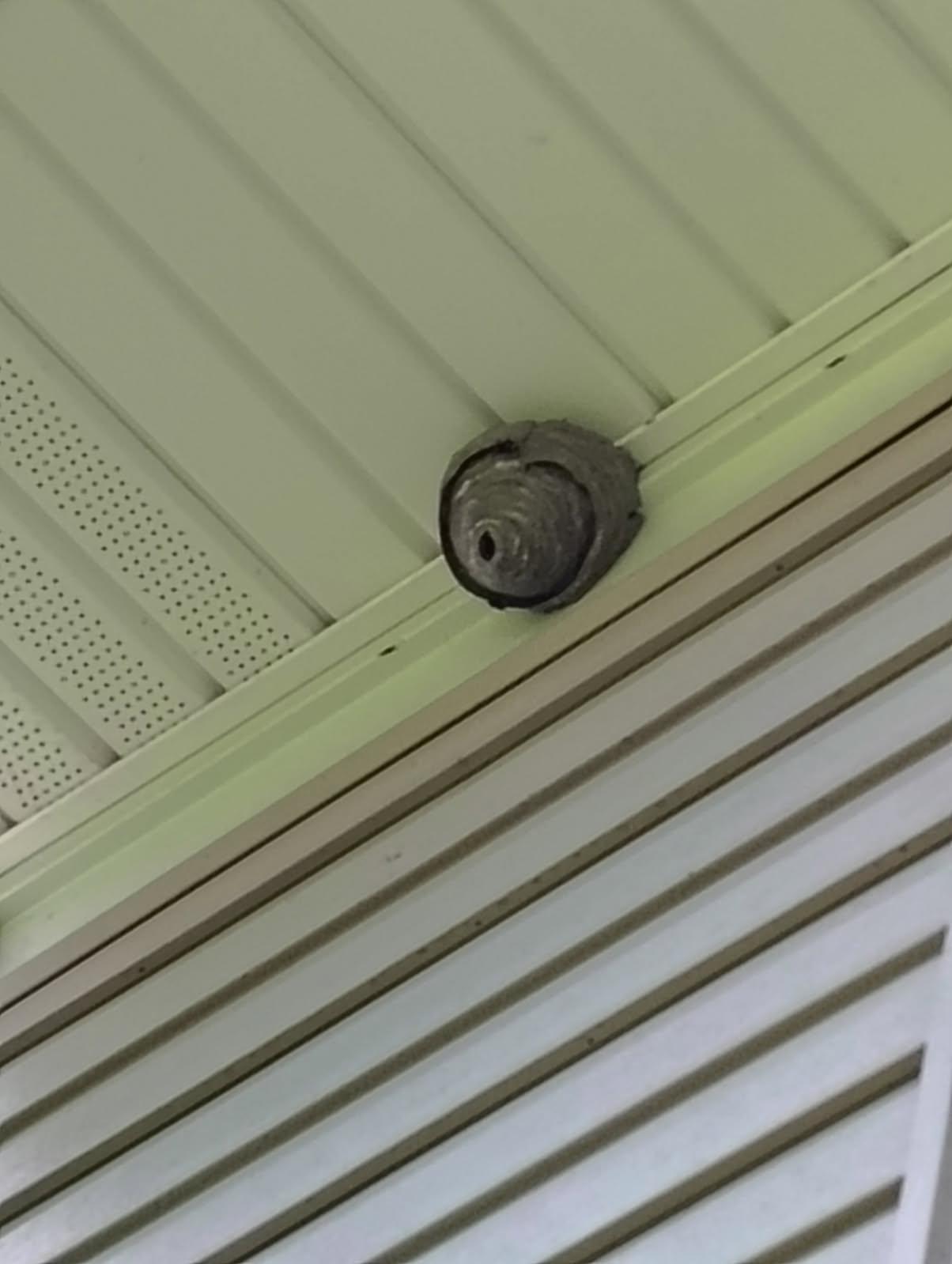
The bald-faced hornet is the reason hornet removal exists as a service. Black with a white face, around three quarters of an inch long, it builds the enclosed gray paper globe that hangs from tree branches, dense shrubs, and occasionally deck framing or an eave. The University of Kentucky Entomology program puts late summer colonies at 200 to 400 hornets and rates them far more difficult and dangerous to control than ordinary paper wasps. Each one stings repeatedly, and the colony responds to threats as a unit. A bumped branch or a stream of spray against the outer envelope reads as an attack, and the defensive response arrives all at once.
In Cincinnati those nests concentrate where mature tree structure meets daily activity, which describes the east side almost perfectly. The wooded lots and bridle trail edges of Indian Hill, the old growth along the Little Miami in Terrace Park, the established street trees of Madeira, and the ravine edges threading through Hyde Park all offer the anchored, sheltered branch structure a bald-faced queen scouts for in April. We wrote about what those same wooded lots do for mosquito pressure in our post on Indian Hill's summer secret, and the stinging insect version of the story runs on the same fuel.
The west side runs its own version of the same math. We wrote about how White Oak's tree coverage shapes mosquito season there, and the same mature shade canopy that holds humidity for mosquitoes holds anchor points for bald-faced queens. Neighborhoods with fifty year old trees over the sidewalks carry more aerial nest pressure than neighborhoods with saplings staked in fresh mulch, on either side of town, and no amount of tidy landscaping at ground level changes what is happening thirty feet up.
The timeline matters as much as the geography. A nest discovered in July has been growing since April and will keep growing into September. Colony population climbs, foraging range widens, and defensive triggers get more sensitive as the season ages. The nest you are watching from the kitchen window is the smallest and calmest it will ever be today.
The Hornet You Will Not See
The European hornet is the only true hornet in Ohio, over an inch long with chestnut and yellow coloring, and it almost never gives you a gray globe to find. Per Buckeye Yard and Garden Line, Ohio State's extension outlet, European hornets nest in hollow trees and wall voids and do not nest underground, which puts their colonies inside the one kind of real estate Cincinnati's older neighborhoods have in abundance.
The pre-war blocks of Norwood carry exactly the kind of settled frame housing a scouting queen reads as an invitation, and the older streets of Reading and the mid-century stock of Mt. Healthy offer the same wall voids, deep soffits, and aging trim gaps. Our own home base of Deer Park is built from the same era of housing, so we see this species in our own neighborhood every summer. The hollow old street trees on those blocks give a queen the same shelter the walls do.
The colony announces itself in oblique ways. The most common is steady traffic at a single opening, a knot hole, a gap at the soffit line, a hole in a trunk, with very large hornets moving in and out on schedule. The strangest is the one OSU documents and homeowners never expect: European hornets fly at night, are drawn to light, and will charge lit windows and porch lights hard enough to rattle the glass and the people inside the house.
A third clue shows up on the landscaping. European hornets strip bark from twigs and branches to reach the sugars underneath, leaving pale girdled patches on lilacs, young maples, and ornamental shrubs. Homeowners tend to blame rabbits or disease for that damage and never connect it to the hornets, which buys the colony another month of quiet growth. Any of these three signs in an older neighborhood is worth an inspection, because a wall void colony can run 200 to 400 workers by late summer and it only grows until frost.
Sorting Them from the Driveway
You can usually make the identification without getting anywhere near sting range, and it comes down to where the insect goes home.
Watch the flight path for a minute. If the big wasps are dropping down to holes in bare soil, hovering low over the lawn, and squaring off with each other in midair, you are watching cicada killers, and the correct emotional response is mild annoyance. If traffic leads up into a shrub or tree and disappears into an enclosed gray paper structure the size of a melon or bigger, that is a bald-faced colony and nobody should go closer.
If large hornets are filing in and out of a single hole in a wall, soffit, or hollow trunk, or something heavy is hitting the windows after dark, treat it as a European hornet colony until proven otherwise. A photo from a safe distance is usually all we need to confirm any of the three before we arrive, and the full identification rundown lives on our wasp and hornet control page.
Two things not to do while you sort. Do not poke, prod, or throw anything at a suspected nest to see what happens, because the answer with a bald-faced colony is several hundred hornets showing you. And do not plug a hole that has insect traffic, even at night, even with the best of intentions, because sealing a live European hornet colony inside a wall is how they end up in the hallway.
The sorting is worth five minutes of your time because it decides everything downstream. One of these insects needs nothing from you. The other two need a plan, and the plans are different.
Where DIY Goes Wrong, Species by Species
The failure mode is different for each insect, which is part of why the hardware store aisle serves Cincinnati homeowners so poorly here.
Spraying cicada killer burrows is mostly a waste of a Saturday. Each burrow is one female, there is no colony to collapse, and the sunny soil conditions that attracted her are still advertising to every other female in the neighborhood. The fix that lasts is changing the ground, and no can on the shelf does that.
Bald-faced nests punish partial effort. The spray can reaches the hornets near the surface and the entrance, and the remaining few hundred exit in a defensive wave with you standing at the base of the tree holding the empty can. A partially treated colony is more agitated and more trigger-sensitive than an untreated one, and the EPA's stinging pest guidance is direct about leaving established colonies to people with proper protective equipment. The CDC's stinging insect guidance adds the reason the stakes run higher than people assume: severe reactions occur even in people with no known allergy history, and a colony defense delivers many stings in seconds rather than one.
European hornets in a wall void turn the usual instincts against you. Spraying the entry can push activity deeper into the structure, and sealing the hole while the colony is alive sends hornets hunting for another way out, which is sometimes into the living room. Even treating after dark, the old standby, fails here, because this is the one species that is awake and flying at night. The order of operations matters, the colony has to die before the entry closes, and getting that order wrong inside an occupied house is a miserable way to learn.
What Hornet Removal in Cincinnati Involves
Every job starts with confirming the species and mapping the activity, because the property that produced one nest usually has the conditions for another. Our technicians trace flight lines, walk the eave and soffit lines, check hollow trunks and dense shrub interiors, and look at ground conditions while they are at it. When the answer is cicada killers, we say so, walk you through the habitat changes, and treat only if the infestation warrants it. Honest identification is cheaper than unnecessary treatment every single time, and our guarantee backs the work we do recommend.
The inspection also looks past the property line in one specific way. Late season hornets forage well beyond their nest, so heavy hornet traffic through a yard with no nest on it often traces back to a colony in a neighbor's tree or a strip of woods behind the fence. Knowing that before treatment starts shapes the plan, because treating the yard the hornets fly through while ignoring the colony they fly home to produces a satisfied invoice and an unsatisfied customer. We would rather tell you where the problem lives, even when the answer is complicated.
For a bald-faced colony, the sequence is elimination first, removal second. The colony is treated with proper equipment at the time of day it is least responsive, and the nest comes down only after the activity is confirmed dead, since pulling down a live nest is the single most reliable way to turn a bad situation into an emergency. For a European hornet colony in a void, treatment reaches the colony inside the cavity before anything gets sealed, in that order, so nothing is driven into the house. Both jobs finish with a barrier application around the structure, because successful nest sites leave chemical cues that recruit next spring's queens, and breaking that cycle is the difference between solving this year and renting a solution.
Most properties calling about stinging insects in July are also carrying mosquito and tick pressure, and it is worth solving the season rather than the symptom. Our Home Shield package protects the structure's perimeter, Squad Yard Defender covers the broader yard, and the full menu of pest packages lets us fit the program to the property. One honest boundary on tools: automatic misting systems are built for scheduled mosquito defense and do that job well, but no misting system resolves an established colony in a tree or a wall. Those need targeted treatment at the nest, and we will always tell you which tool the problem calls for. We have serviced this market from Deer Park since 2013, the why Mosquito Squad Plus page covers how we work, and every community we treat is listed under areas we service.