Commercial Pest Control in Cincinnati: What Over-the-Rhine Restaurants Are Really Up Against
Posted by Mosquito Squad Plus
June 29, 2026
Some of the most atmospheric rooms in Over-the-Rhine (OTR) sit four floors underground, inside 170-year-old brewery lagering tunnels that bars and restaurants have turned into cellars and lounges. They are gorgeous. They are also a near-perfect illustration of why commercial pest control in this neighborhood is a different job than anywhere else we work. Cool, dark, humid, connected to the old underground, and sitting under blocks packed with kitchens. If you wanted to design a building to challenge a pest program, you could not do much better than the historic restaurant stock of OTR. The cellars were dug to hold a constant cool temperature for fermenting lager, and the same conditions that made great beer in 1875 make great harborage for cockroaches in 2026.
We have walked enough OTR kitchens to know the pattern. The dining room is gorgeous, the food is excellent, the building is a hundred and forty years old, and the pest pressure is coming from three directions the owner cannot see from the front of house. The drain. The shared wall. The basement that connects to something older underneath. A restaurant in a 2015 suburban strip center deals with one of those on a bad week. A restaurant on Vine Street can have all three running at once on a Tuesday, which is exactly why a program built for the suburbs falls apart downtown.
So here is the honest version of what commercial pest control involves for a Cincinnati restaurant, what it costs you when it is done wrong, and what the historic core actually demands from a provider.
Why the Historic Core Changes the Pest Equation
Over-the-Rhine holds the largest contiguous collection of 19th-century Italianate architecture in the country, roughly 360 acres of it, and over the last two decades it has become one of the densest restaurant and bar districts in the Midwest. Vine Street, Main Street, Race Street, and the blocks around Findlay Market are wall-to-wall kitchens. That density is wonderful for a night out and genuinely hard for pest control, because in a row of attached historic buildings, no restaurant is an island. The German cockroach in the kitchen at one address does not respect the property line in the shared basement. Neither does the mouse traveling the joist line behind the shared wall.
The building stock is the other half of it. These are brick structures from the 1870s and 1880s, many sitting on stone foundations over basements and sub-basements that were cut into the hillside when the breweries needed cold storage. A modern building is poured to seal. A historic OTR building has settled for a century and a half, and it has the gaps to prove it: mortar joints that have opened, utility penetrations cut and re-cut by a dozen different trades, basement walls that meet old tunnels and abandoned cellar networks. The University of Kentucky's entomology extension notes that a house mouse can squeeze through a gap no wider than a pencil, and an old brick building offers a thousand of them. Exclusion in a structure like this is not a weekend project. It is the whole game.
Then there is the part most people never think about. Ohio State University's entomology extension documents that the American cockroach, the big one people call a water bug, breeds in sewer and underground networks and invades structures from below, favoring warm, humid microhabitats. That is a precise description of an OTR basement connected to old infrastructure. The roach pressure in a historic downtown restaurant frequently is not coming in the front door. It is coming up from underneath, through the floor drains and the cellar, on a schedule the owner never set.
Rodents and Roaches Are the Foundation, Not an Add-On
In commercial restaurant work, rodent and cockroach control are not two services among many. They are the floor everything else stands on, because they are the two findings that close a kitchen. A restaurant can have its patio mosquito program handled and its dumpster fly pressure managed and still fail an inspection on a single mouse dropping in a dry-storage room.
The reason rodents sit at the center comes down to what they cost beyond the obvious. The University of Kentucky's entomology research is direct: the greatest economic loss from rodents is not what they eat but what has to be discarded because of contamination, plus structural damage from gnawing. Penn State Extension adds the mechanism most restaurant owners have lived through, noting that mice chew on electrical wiring in a way that causes structural damage and fires. In a commercial kitchen that means a chewed cooler line, a walk-in that fails overnight, and a Saturday of spoiled product. Mice also transmit salmonellosis when food-contact surfaces meet contaminated droppings, which is the exact scenario that ends a health inspection.
Cockroaches carry their own version of this. The EPA notes that cockroach droppings and body parts can trigger asthma, and that roach allergens play a significant role in asthma in urban areas, which is the kind of liability a food operation in a dense neighborhood does not want attached to it. Roach presence is a contamination and reputation problem before it is anything else. Here is the part that trips people up: there are two different roaches doing two different jobs. The German cockroach is the species that actually lives and breeds inside the warm equipment of a kitchen, behind the dish machine and under the line, where it is wet and warm and nobody looks. The American cockroach, the big one, rides up from the basement and the drains. A real program has to account for both, which means treating the harborage inside the kitchen and the entry pathway from below at the same time. Knock down one and ignore the other and the kitchen is never actually clean. It is just between flare-ups.
This is why the inspection-and-placement work matters more than the spraying. Mice forage only short distances from the nest, usually within ten to twenty-five feet, and travel tight against walls and edges. German cockroaches stay close to moisture and warmth and rarely travel far from harborage. You do not solve either problem by walking the room with a sprayer. You solve it by reading the building, finding where the activity actually concentrates, and placing equipment and treatment based on the structure. In a historic OTR restaurant, that reading takes longer and matters more, because the building has more places to hide.
The Drain Is the Thing Nobody Wants to Talk About
Walk into a fly problem at a Cincinnati restaurant and the owner almost always points at the back door or the produce. Nine times out of ten, the answer is lower than that. It is the drains.
Floor drains, grease traps, and mop sinks accumulate a film of fats, oils, grease, and organic sludge on the inside walls of the pipe, in the spots a surface mop never touches. Drain flies and fruit flies lay their eggs in that biofilm, the larvae feed on it, and the adults emerge straight up through the drain opening into the kitchen. This is the single most misdiagnosed pest problem in food service, because the breeding source is invisible. You can bleach the floor every night and still have flies, because bleach runs straight through and does nothing to the organic layer cemented inside the pipe. The fix is bacterial or enzymatic drain treatment that actually digests the biofilm where the flies breed, paired with keeping P-traps charged so dried-out drains stop acting as open doors from the sewer line.
For an OTR building, this is compounded by age. Old plumbing, old grease traps, and floor drains that tie into century-old lines give small flies more breeding surface and more travel path than a new building does. A restaurant that shares a building or a basement with a neighbor can be doing everything right and still fight flies that are breeding two doors down in a drain nobody is maintaining. That is not a spray problem. It is a sanitation-and-source problem, and the program has to treat it as one or the flies come back every single week. The same logic runs through the whole facility: you read the indicator, you find the source, you treat the source.
Health Inspections Raise the Stakes
In Cincinnati, the commercial pest program is not a comfort measure. It is a compliance requirement with a public paper trail. The Cincinnati Health Department's registered environmental health specialists inspect every food-service operation, and the results are posted publicly through the city's records system. Hamilton County Public Health does the same for operations outside the city limits. A pest finding is not a private conversation. It is a record a customer can pull up before they decide where to eat.
The volume is real. A 2023 review of local food-safety data by the WCPO I-Team found that more than a hundred area restaurants, groceries, and food-service establishments were cited for rodent violations in just the first half of that year. Most stayed open while they corrected the problem, because inspectors generally try to work with operators rather than shut them down, but the violation still lands on the public record. The FDA Food Code, which Ohio's food-safety rules are built on, requires a facility to be maintained to prevent pests and treats a documented pest management program as part of demonstrating control. The industry standard goes further still. The National Pest Management Association's food facility standards align with food-safety regulation and are what serious third-party auditors measure against.
What that means in practice is that a Cincinnati restaurant needs more than a guy who shows up and sprays. It needs a defensible record: where the stations and monitors are, what was found at each visit, what was done about it, and what the trend looks like over time. An inspector who finds a roach has found a problem. An inspector who finds a roach and a documented program actively managing the risk has found a manageable situation. The documentation is the difference between a one-line note and a follow-up inspection with your name on the public portal.
What a Cincinnati Restaurant Actually Needs From a Provider
The honest checklist is shorter than most providers want it to be, but every item earns its place.
First, a real walkthrough before a number is ever quoted. Pricing that comes over the phone without anyone looking at the drains, the dish pit, the basement, the shared walls, and the back dock is a guess, and a guess gets corrected later in ways you will not enjoy. Commercial pricing in this market is quoted per property after a physical walkthrough, with no long-term contract holding you to a program that is not working.
Second, exclusion has to be part of the conversation, not an upsell after the fact. In a historic OTR building, sealing the entry points is where the program succeeds or fails, and a provider who only wants to talk about spray frequency is selling you a subscription to a problem rather than a solution to it.
Third, a service interval that matches the biology, not the route. National chains tend to spray monthly because monthly is efficient for their trucks. Most kitchen pests run faster than that. German cockroaches can complete a generation in roughly three months under kitchen conditions, and small-fly populations turn over in days, which is why a real program treats on the pest's actual cycle and stays on the harborage between visits rather than leaving a door-hanger and driving off.
Fourth, documentation you can hand an inspector or a health auditor without flinching. In a city where the inspection record is public, this is not paperwork for its own sake. It is the thing that protects your name on the portal.
And fifth, a guarantee that means something between scheduled visits. Our commercial work carries a 100 percent satisfaction guarantee with free re-treatment between regular visits for the covered pests, because a program that only works on the day the technician is standing there is not a program. When something shows up between services, the right answer is that we come back, not that we will catch it next month.
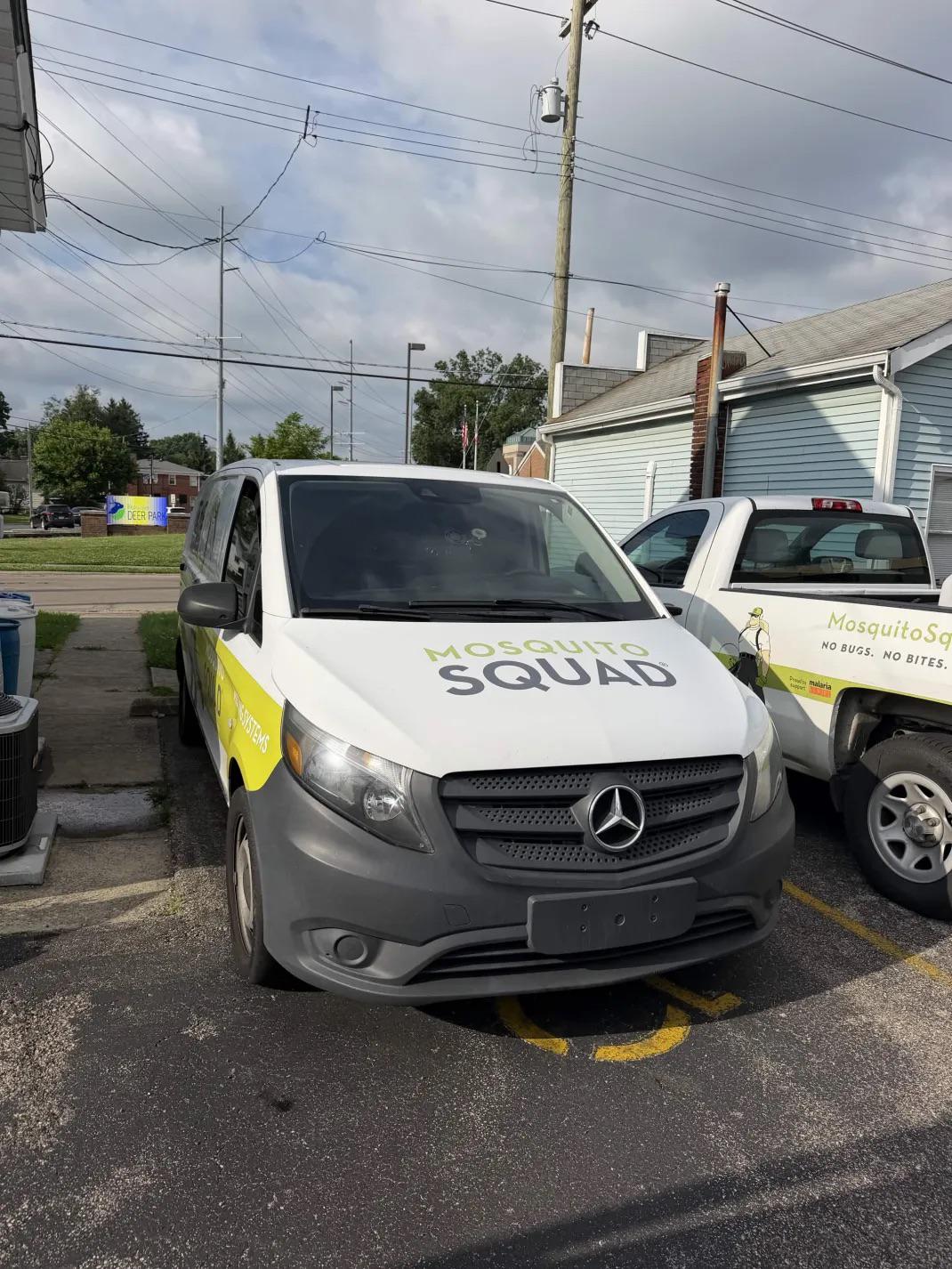
We are a veteran-owned local team and we have been treating properties across Cincinnati since 2013, from the historic core through the neighborhoods, and our office sits over in Deer Park. The same attention we bring to a wooded chigger problem out on the estate lots of Indian Hill and Blue Ash is what a Vine Street kitchen needs in a different form: somebody who actually reads the building instead of running a route. We cover commercial rodent control and the full range of commercial services for restaurants, bars, and food operations, and we map our service area across greater Cincinnati through our areas we service page. The restaurant on Vine Street and the cafe in a suburban strip are not having the same pest conversation, and the program should reflect that.